
저자: ChuckCarnevale · 외국인
요약 보기
결론: 현재 시장이 고평가 상태라 향후 3~5년은 배당 수익과 저평가 배당주 중심 전략으로 시장을 상회할 여지가 크다. 시장 전망: S&P500은 고평가 구간이며, 적정 PER 15배 회귀 시 연 -5.4% 수준의 손실이 예상된다. 최소한 정상 PER(약 17.5배) 회귀만 해도 연 약 1% 내외에 그칠 것으로 본다. 분석 방법: 조엘 그린블라트 매직포뮬라 스크린으로 고품질·저평가 기업을 추린 뒤, 배당을 지급하는 종목 중 배당수익률 상위 4개를 비교했다. 필립모리스인터내셔널(PM): 배당수익률 약 6%, PER 약 15배로 적정 근처. 2022년 기준 연 약 11.9% 기대수익. 2008년 이후 누적 배당은 원금의 약 86%로 S&P500 대비 두 배 이상이나, 총수익률은 시장에 못 미침(연 3.6% vs 7.8%). IBM: 배당수익률 5.29%, PER 약 10.5배로 저평가. 배당은 2001년 이후 꾸준히 증가(연 14% 안팎)했으나 실적 부진으로 자본차익은 거의 없음. 밸류 정상화 시 연 8.4% 수익 가능성을 제시. ABBV: 배당수익률 4.96%, PER 약 9.6배로 매우 저평가. PER 15배 회귀 시 향후 2~3년간 연 약 42% 수익 가능성을 제시. 분사 이후 총수익·배당 모두 시장을 상회. 버라이즌: 배당수익률 높고 PER 약 12배. 성장성은 낮으나(예상 성장률 -1%) PER 13.5배 회귀 시 배당 포함 약 9% 수익 기대. 장기 총수익은 S&P500에 크게 못 미쳤고 배당 중심 투자처로 제시. 결론적으로 배당 성장 포트폴리오는 소득 측면에서 시장을 쉽게 앞설 수 있고, 밸류에이션을 신중히 보면 총수익에서도 장기적으로 시장을 이길 수 있다는 취지다. 저평가 종목은 인내심이 필요하다는 점도 강조.
다듬은 글
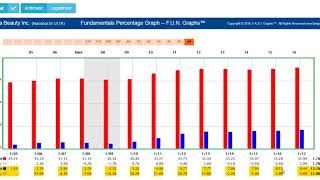
hello everybody this is chuck carnevale co-founder of fast graphs the fundamentals analyzer software tool and of course one of the founding partners here of the dividend kings this is the part two of my series where i ran a screen using the magic formula website based on joel greenblatt's book the little book that beats the market and i ran a screen and you know one thing about joel greenblatt's book it won't necessarily produce dividend growth stocks which is my primary focus however as it was i ran a screen using mega caps the largest caps and what i did come up with was a list of about 30 and i whittled that down to 13 companies that were actually high quality dividend growth stocks in their own right and of the 13 i chose they were all either attractively valued or close to it all but three of them were actually attractively valued and what i'm doing with this continuing series i'm going to do two or three more videos covering this series and today i'm going to look at the top four dividend yielding stocks that i screened there and i'm going to also compare to the s p 500 and what i really want to talk about here is that you know the idea behind joel greenblatt's book was how to beat the market of course that's a pastime of many many investors we hear the criticism of you know most active managers don't beat the market but as i pointed out here they don't really tell you why they don't beat the market and there are a lot of issues if you're running money for example a big fund you can have withdrawals coming in and you know new money coming in at inappropriate times there's a lot of reasons why plus as i pointed out they also don't necessarily describe or define what active management is because in my experience the greatest managers the ones that i admire the most at least are actually long-term buy and hold managers in other words they're hardly active now they're selective you know they are very careful they're all value investors the ones that i like of course known as missed evaluation as many of you know me by but they are picking stocks that they feel have the right characteristics fundamentally speaking they have the growth potential that they're looking for and you know of course they might use it for different kinds of objectives which i'm going to talk about here and what i've got is i'm going to show four stocks today that actually are quite different i want to make that point however they all showed up on joel greenblatt's screen remember his screen is primarily based on return on capital and then he's using evaluation reference of earnings yield which he does differently than i do but his earnings yield number is also very very interesting as well but the idea is to find a high quality attractively valued stocks and of course i narrowed that down to high quality attractively valued stocks that pay a dividend so the four companies i'm going to cover here are theoretically capable of beating the market under joel greenblatt's thesis but more importantly there are different ways that you can beat the market one of the ways that i talked about in the written portion here is you can beat the market by producing more dividend income so if you're a retired investor or thinking about retiring or just an investor that's looking to supplement your income a quality dividend growth portfolio can do that not only can it supplement your income but if it's successfully constructed it can also give you an increasing income stream each year and that's the primary goal and i believe it's relatively straightforward that i'll explain why here in a moment that you can outperform the s p 500 oh quote unquote the market from an income perspective a heck of a lot easier than you might on total return but interestingly enough as i'm also going to illustrate you can also if you're careful with valuation as i always you know profess and talk about you can also in the long run beat the market as well on a total return basis however there's not a lot of instant gratification in value stocks because one thing people need to consider when they're considering value investing is you know value stocks especially in a bull market like we're in today are usually at a value because they're unpopular for some reason question of course is are the reasons valid or invalid and but if you could find an unpopular stock and then exercise the patience to hold it long enough eventually fundamentals will rule out and you'd do well but in the meantime as i'm going to show you here with these four research candidates that i'm showing today you can do quite well on an income basis while you're waiting so let's go ahead and take a look at it what i've got here is a fast grass portfolio review and what i'm showing you are the four stocks with the highest yield of the 13 that i essentially weeded out of the original 30 lifts that i produce running the magic formula screen and i've listed them here in order of dividend yield you'll notice philip morris international has a yield of just under six percent that followed by ibm at 5.29 percent followed by ab v at 4.96 percent followed by verizon and then of course i'm including the s p 500 here which is only yielding 1.78 so what first off you should know this and be able to see here is that i'm starting with a significant yield advantage over the s p so if my goal is income i'm already ahead of the game because i've got more dividend income current yield dividend income than the s p is capable of producing but then i also talked about total return so i want to point out i'm going to go through these very quickly there's only four of them i'm going to start by looking at the s p which will be my fifth example but what i want to do here is i'm going to essentially calculate the performance potential of these stocks based on where they sit and where their valuation is so let's start with the s p 500 and let me make a couple of points here i've got a normal fair value reference line of 15 the orange line on the graph and then i've got a normal market p e ratio of about 17.55 on the graph that's the blue line and as you can see for most of the time the s p trades within those two valuation references there are times when it gets below that like it did during the great recession and even in 2011 coming out of it coming into the 2001 recession you can see the market was actually very overvalued and today i believe the market's overvalued again so as far as that goes this is something i think is very important you know beating the market as an example when it's undervalued is a challenge for any investor i believe though beating the market when it's significantly overvalued as long as you've got a three to five year time horizon is actually a lot more straightforward in other words if i run this calculation i'm going to go from today's price and i'm going to go out on the forecasting that we have on the graph here for the next two years basically and point if the market traded at a 15 p e ratio i.e reverted to the mean and moves back into a fair valuation reference like it had all these years here you know you'd be looking at a negative 5.4 annualized rate of return a total loss of 17 mitigated somewhat by some dividend opportunity so drops it down to a total loss of 12 annualized at 5.4 percent for the year if i'm a little more generous if you will with the market and say let's assume the market only goes back to its normal you know recent normal valuation i still have you know a pretty poor result i've only got a three percent loss in terms of growth but counting dividend income i would actually be able to eke out you know 1.9 percent and end up with a total annualized rate of return of less than one percent annualized or we'll we'll say breaking even so the point is because of the high valuation i'm seeing in the market here i believe it's going to be a lot easier to beat the market over the next five years or so than it was over the last five so let's go on to the four stocks that i'm featuring in this video and let's start with the highest yielding philip morris international now this is a tobacco stock it's a spin-off from what is now known as altria which was originally mo or the original philip morris and you know philip morris international courses the international division so the company was spun off in march of 08 so it has a relatively short history you can see its earnings have been decent they've grown at about five percent we did have a few years of really good growth and followed by a couple of negative years and otherwise earnings growth has been reasonably flat over the last four or five years but interestingly enough you see this idea of valuation being so important here because you can see where the stock price tracked earnings again stayed within this normal p e and fair value theoretical fair value pe pretty consistently did get pretty overvalued in 2007 and by the way that would have really put you to disadvantage even to the market because you know for the next couple of years you lost 35 percent of your money but that's the importance of valuation from a standpoint of going forward though the company is attractively valued now with an earnings yield about 6.51 percent using the inverse of the pe that's not the greenblatt earnings yield i might add has a dividend yield of almost six percent and you go out to the you know year end here 2022 based on consent's current consensus estimates you'd make about 11.9 percent that's obviously significantly more than what the market was capable or is expected to produce as i just showed you but even more importantly look at the amount of dividend income now let's look at this company it was moderately maybe tad overvalued here but we're going to start at the beginning where evaluation was decent at about 17 times earnings and now it's you know down a little bit at 15 times earnings but let's compare this track record of this company over its history to the market and what you'll see here i think you'll find interesting number one is from a standpoint of cumulative dividend income it produced more than twice as much income as the market as the s p 500 if you will so if you're looking for income you know and trying to you know support a lifestyle and beat inflation with your income forget capital appreciation for a moment you can see that the yield on cost what i like to call growth yield would have gone from about three percent in 08 when you started and last year you earned over nine percent had you invested 10 000 on march 31st 2008 now the total dividend was 8 600 that's a return of you know roughly 86 percent of your investment versus only 3 380 in the market now where you didn't do well was you ended up with a modest capital appreciation of 5 000 in other words you turned 10 000 into 15 000.
that's about a 3.6 growth annualized growth return versus 7.8 annualized growth in the s p you ended up with 7.3 versus 8.9 so you did not outperform the market in this example on a total return basis but you dramatically more than double the amount of income and you also were fighting inflation with your income stream you can see that your income would have increased substantially year after year after year okay so that's philip morris international the highest yielding of the group now the next one is ibm now this is a much maligned company and there's some very interesting aspects here that i'm going to cover very quickly number one first i want you to see the dividend record which is really quite excellent the dividend has increased from 55 cents a share in 2001 all the way out to 6.51 expected for this year it last year it paid 6.43 so we've had very very consistent dividend growth but we have had very weak operating results however those operating results are expected to improve ibm is considered a company in transition now i own this stock and i've owned it for several years now and i'm not doing well on capital appreciation as you can see by this graph but i'm doing extremely well on dividends and dividend growth but if i look at the low valuation here the p e is only 10.5 the blended pe that gives me a very attractive earnings yield of 9.5 and i get a dividend yield to 5.29 because keep in mind this company does pay out about half of its profits in terms of dividends to shareholders at least for the last couple of years that's been the number it's actually been you know 45 to 50 percent that's the area below the white line here now if i calculate performance potential assuming that this stock goes back to a 15 p e ratio which it you know did numerous times in the past it has it in several years i will admit that in fact if i shorten this time frame dramatically you'll see that the market has been valuing this stock in a much lower evaluation since we've had you know this kind of law in the market so the p e ratio here this blue line is a p e ratio of 10.1 right so i might even want to just measure performance based on the stock price going only to that 10.1 even though we expected to grow and i still would get an 8.4 annualized rate of return which is superior to what i showed you that's you know the expectations of the market based on its current valuation so what we have here is an opportunity to make money going forward assuming this company does get its mojo back it does begin to grow again and we see the valuation return to historical norm now from the performance perspective just like we did with philip morris international once again we see a significant i'm going back a much longer time frame here all the way to 2000.
before i do that i want to point something out ibm was very very overvalued at that point in time it's very very undervalued right now and it's had rather spotty track record but notwithstanding all that in other words those are the reasons for what the performance you're going to see right now still generated a almost just a break even capital appreciation turning ten thousand into thirteen thousand one seventy that's a one point four percent annualized but even then even with its high valuation at the time and as you remember the market was highly valued back then as well we ended up significantly out producing the s p on total dividends 6 000 in total dividends versus 4 500 in the market over this time frame but we did lose out quite a bit on total return so ibm has not been a great total return company but if you were an income investor you saw a 14 increase in your dividend growth annually average annual compound annual growth rate of 14.3 average growth of 14.7 and you can see your income would have grown substantially so ibm has outproduced the s p on income even though it's been at a big disadvantage over this time frame based on high valuation and recent poor operating results you know in recent years here so let's move on to our third example which is abv now this is a spin-off from abbott labs and so it spun off i want you to notice it was undervalued it's grown at 15 since it was spun off it is currently trading at a blended p e of 9.6 which is very very low gives a really substantial earnings yield of 10.38 and a very attractive dividend yield of just under 5 4.96 but the valuation and the expected growth higher even in the market really gives us an incredible opportunity here assuming this stock moves back to just a 15 p e ratio that's all we're looking for and this is actually known as 15.05 because it's above 15 and i'm using p equals growth rate but we could be making an annualized rate of return over the next two or three years of almost 42 percent per annum and you know more than double our money in a short period of time by buying this company cheap but let's look at how it compared to the market from both the total return and the dividend since its inception now since it was started out undervalued as i pointed out even though it's undervalued today a ten thousand dollar investment would have grown to twenty seven thousand eight sixty eight even in its undervalued state it actually did outperform the market which if you recall is overvalued today over this time frame that's the time frame december 31st 2012 to yesterday's close now the dividend income is even more remarkable it generated almost three times as much dividend income so here we have market beating on both counts it beat the market on total income and it beat the market on total return and capital appreciation as well and and i want to point out the dividend has grown substantially now that's a little overstated because this company's you know dividend payout ratios have been about half and they did have a couple of years when they really lavishly increased the dividend the first year was over 300 so i'm not expecting 40 dividend growth however what i would be expecting with this company would be dividend growth in the 7 8 9 10 range going forward but what you see here is obviously an opportunity to beat the market on all accounts by taking a position in avv a company that even though it's undervalued and measured against an overvalued market it's still outperformed on all counts great company in my opinion the next example is verizon now verizon is not really a growth story so much they've gotten a little better growth if i shorten this time frame by several years the growth rate goes up to about five percent so it's done a little better but more recently this year it's expected to have a negative growth rate of one percent but the stock is very cheap only trades at 12 times earnings you can see historically the orange line here is 13.46 times earnings because of its low growth only 2.4 percent so you know just assuming that only goes back to 13.46 times earnings over the next two years it would generate a nine percent rate of return attributable to its dividend plus you know some modest capital appreciation even though this company is not really expected to grow very much now this stock was also overvalued at the beginning so if we go ahead and look at it from the standpoint of comparison of performance we do see where the payout ratio got pretty high by the way on a couple of years when they had some kind of struggling earnings but let's look at its long-term performance now once again in all four cases we see the company dramatically outperforming the s p on total income here we had very modest dividend growth of only three percent but we would have taken ten thousand dollars invested in november 30th of 2000 and we'd have received 7298 dollars in dividends versus 4548 using an equal investment in the s p however the ten thousand dollars would have only grown to eleven thousand that's a you know less than a one percent annualized rate of return so we dramatically underperformed the s p on a total return basis here but we did produce substantially more income but that was because it was overvalued and it's undervalued and we're dealing with a market today that's overvalued and this has not been a great grower this is primarily an income opportunity but it does offer some capital appreciation potential here even growing back to modest p e ratios going forward anyway the point of this story is there's a lot of different ways to skin a cat you're really looking at four really in my view completely different companies here they all have out produced the market on total income and that's the main point that i want to emphasize here some of them have not produced the market on all counts and all of them are in a position if valuation has any meaning over the next two or three years to outperform the market going forward remember you can't buy the pass you can only buy the future anyway i hope you enjoyed this if you liked the video hit my subscribe button don't forget to ring the bell so you can be notified of future videos like this i look forward to talking to you again very soon appreciate you watching the video and hope you got something out of this there's different ways to beat the market you can beat it on total return you can beat it on income and if you're smart and pay attention to valuation you can often beat it on both if you're careful anyway it's been chuck carmel saying thanks for watching


Comments 0