저자: JamieDimon · 외국인
요약 보기
결론: 제이미 다이먼은 미국 경제의 단기 호황과 높은 인플레이션 가능성을 언급했으나 투자 종목에 대한 직접적 가격 전망은 없었다. 주제 1: JP모건 보스턴 30억 달러 인종 평등 투자 - JP모건이 보스턴에 30개 지점을 열고 주택담보대출, 기업금융, 교육 등에 30억 달러 투자 계획을 발표함. - 주택대출 80억 달러, 저소득·소수인종 지역 중심 운영. 주제 2: 교육 성과 측정 및 디트로이트 사례 - 교육은 투입이 아닌 결과(취업률 등)로 측정해야 한다고 주장. - 디트로이트에 컨설턴트 팀을 파견해 도시 재건을 지원했다고 설명. 주제 3: 포스트 팬데믹 경제 전망 - 보복성 소비와 막대한 재정 부양금으로 향후 수년간 강한 성장 가능. - 인플레이션은 실재하는 우려이나 일시적이 아닐 수 있으며, 10년물 금리 3% 수준까지는 감내 가능하다고 언급. - 재정 지출을 성과 기준으로 집행해야 생산성과 성장을 높이고 적자 부담을 줄일 수 있다고 주장. 주제 4: 사무실 복귀와 재택근무 - 직원 약 60%가 사무실 근무, 하이브리드 근무 비중은 약 30% 수준으로 전망. - 대면 업무가 도제식 학습과 아이디어 교류에 중요하다고 강조. 주제 5: 미중 관계 - 중국은 1인당 GDP, 식량·에너지 등에서 취약하며 심각한 문제를 안고 있다고 평가. - 미국은 제도와 혁신에서 우위를 가지며 교육과 자국 문제 해결이 핵심이라고 주장. - 중국과의 경쟁은 존재하지만 과도한 공포는 불필요하다는 입장. 출연자 전망: 단기 성장 낙관, 인플레이션 경계, 자산가격 방향에 대한 구체 발언 없음.
다듬은 글
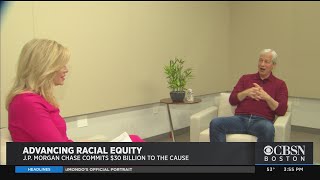
jpmorgan chase is in the midst of committing 30 billion dollars to advancing racial equity across the country from education to housing and business loans the investment bankers are hoping to try to root out systemic racism which has plagued our society for decades and afford minority populations a better chance to succeed i sat down with jp morgan ceo jamie dimon who was here in the boston area and he shared with me his motivation for this initiative jpmorgan chase has committed 30 billion dollars to advance racial equity and that means investing a lot of money in boston why boston yeah so first of all boston was my hometown for eight years i went to tufts university i worked here went to harvard business school but it's also a great town i mean i love the town it's got a huge money management huge capability we're opening we have investment banking private banking now we have 30 branches here which is new and they're doing quite well and when we come in we try to do everything which includes philanthropy uh financing entrepreneurs of color affordable housing mortgages for black families and so we're just making the same effort here we're doing a lot of other places and you've talked about breaking down barriers of systemic racism how does the bank do that where will the money go yeah so eight billion for mortgages and we actually track it so we actually look at where we have loan officers where we need them go to lmi neighborhoods majority minority neighborhoods how many loans are we making last year how many would make this year higher higher trained loan officers we're hiring trained black financial advisors affordable housing basically number of units so that's 12 billion dollars for that those by those not that's not philanthropy there is philanthropy around certain education things start-up funds for certain homeowners and uh so we try to we try to track everything at a very detailed level and it takes place at the local level so i can say whatever i want in corporate headquarters but the question is what do we do in boston for the black community and on these efforts we're trying to make and how do you measure success it's going to be area by area how many mortgages you make loans higher how many savings accounts we open the branch is doing quite well but uh we have something we call a community branch where it's bigger and you bring in the community for you hire from the community and you bring in the community for financial education small business education et cetera so we're pretty tough on ourselves and we're going to report it to the world we're not going to hide it we're trying to be very clear what we're trying to accomplish sure i know seven million dollars last year went to edvester's which is a non-profit which helps the boston public schools uh in that area it's going to be more career and college-oriented goals when it comes to the housing and banking those metrics are very clear in education how will you measure it yeah so here's what i want to do education is a tough one but i think we've got to learn to measure education by output by outcome how many kids went through that process was a high school or community college and did they get a well-paying job and so the educators and the business can help because we know we're training not just us but any bank or any company might need ai or cyber or advanced manufacturing skills or something like that but it should be the outcome so like i'm i'm in favor making schools free i think if you don't have the outcome you're you can end up wasting a lot of money so which we try to work with doing in new york with local community colleges i know we've i've visited here uh a year or two ago can we get his jobs so to me it's just the process business has to be involved the local community colleges have to be involved the teachers have to be supportive and understand what what kind of training is needed so sure our acting mayor in boston kim janey remarked uh just a few weeks ago the net worth of the average boston family is over 250 000 the net worth of the average black family in boston is eight dollars so is employment a big part of this you talk about a diverse inclusive workplace you want to make sure that you have a very diverse population working for jp morgan absolutely and so of the 30 branches i think like 30 percent are in lmi neighborhoods when we go to those neighborhoods we do a lot of local hiring so you're hiring from the community uh so absolutely so and then things like you know just the mortgage i forgot the exact numbers but i think 65 of white americans own a home it's something like 45 or 50 percent of black americans and the home that biggest part of that wealthy just about is the home so we just get more mortgages to to to black folks to get them in their homes then they can start building that wealth that we all that have been built up for years by uh some of the white families so you have to do all of these things there's no magic bullet you have to do them all well we have to do for a same period of time business has to do it government has to do it schools have to do it and then we can start to bend this curve a little bit and you've been doing a lot of this work in detroit for several years now a comparable sized city are there any lessons or any experiences that you've learned in detroit where you talked about deploying a lot of human capital to give advice have consultants help the city rebuild there and improve economic conditions any lessons there that can be applied to boston detroit is where we learned it all right we went to detroit with the mayor we had great relations the mayor and he was like anyone who could help us build this city civic society business he was not anti-business anything i need and we went and we sent teams of people like 50 60 75 people what do you need he needed uh affordable housing which we can obviously help he needed more for black folks he needed advice for not for profits so he could double the output with these kids being trained in jobs so we actually sent in effectively consultants our own people from around the world from mumbai singapore new orleans to advising not-for-profits and it works he's got his street lights on the ambus is there quicker his education is getting better and you know of course it's hard but it works and so he would tell you that the people capital the human capital is more important than money we can applaud the exceptionals of america freedom of speech freedom of enterprise the principles on which this nation was born it is still if you travel the world it is still the shine light city on the hill that does not mean we can't acknowledge our flaws now all countries have flaws and and i think we can do both and i i don't like when people tear down the country it's done wonderful things and yes it did some terrible things as has every country this planet by the way and so uh and then you know just so we we should try to fix that but i don't like tearing down the united states of america not to ignore it but keep perfecting the imperfect union right let's talk about the post pandemic economy just quickly you anticipate a boom yes you so there's not the market this is the economy you're going to have probably one of the strongest economies you've seen uh ever maybe ever in the history of possibly america and it can easily go on for years because there's a lot of unspent stimulus money there's more stimulus money coming there's qe the pandemic thank god these vaccines you know we're all people want to get out restaurants we see travel domestic travel for you know for leisure is now higher than was precovered there's certainly a lot of pent up anticipation for activity and then there's that little concern obviously the government is spending trillions of dollars unemployment benefits have been extended through the fall to the point where a lot of businesses can't find workers how worried are you about inflation it is a legitimate concern so in the short run let's enjoy the growth i do think it is inflation i don't think it's be temporary hopefully is contained you know hopefully it's low and not too bad and rates go up a little bit if you have a very strong economy with kind of not bad inflation rates go up even if you go up to three percent of the ten-year or two percent of the short end we'll be fine now if it's higher than that which is possible i mean you know i've being a risk manager yeah yeah we've never seen this kind of deficit spending ever okay except in world war ii but half that money spent on a war larry summers wrote about the potential for overheating the economy and nobody seems to really be worried about no it's a legitimate concern we should be worried about it and but you know on the other hand you're going to have this good growth and people go back to work and i think people will be very happy about that and then you'll have hopefully not too bad inflation but uh but but one of the other important factors that's why it's so important that this money be spent wisely sure if we spend the money and we actually build highways and we actually fix the bridges and we actually train the kids but the outcomes how many miles did you build how many kids got good jobs if we spend it wisely that will increase productivity increase growth reduce inflation you know reduce the deficit you know relative to what it would have been and if we waste it and you know so i'm like a fanatic now like let's make sure every dollar someone's responsible for and we know what the outcome we expect is and then we track to the outcome and the american public is entitled to that the government shouldn't just take trillions of dollars and not say hey here's what i owe you i'm going to get you these kind of jobs and i'm going to do these kind of things not how much you spent outcomes yeah that's certainly going to be the fight in congress about how the president is going to pay for this um you famously this week said you're done with the zoom meetings you're canceling them all and you want to get back to the office is it time for america to get back to the office yeah safely i mean my view is that you you most of us learn by the apprenticeship system you learn by making mistakes you learn about other people you have spontaneous combustion of ideas the office is important and obviously local laws will matter but other than that we were expecting people to start going on may 17th we said you know one day could just come in try it out it's very safe most people get sick get sick at home on the weekends and a lot of these kids that we talk about who love it they're out all weekend they're not staying home in their apartment protect themselves and pandemic so i'm a little skeptic that it'll get much more background and yes of course you have more hybrid working it accelerated that we already already had a bunch of that anyway so uh do you expect 20 30 of the workforce might work from home one or a couple of days a week yeah a hundred million people go to work every day and uh included among them is not the press 40 million people don't go to work every day and people don't really even know those numbers so jp morgan we estimate about 60 will go to work every day our branch has been open the whole time we have operations functions risk functions cash fault functions where you need the people there physically and then a lot of people there's already hybrid bankers they you know they travel half the time so yeah we estimate 30 percent of people have some kind of hybrid schedule you know it might be two days in three days out or vice versa something like that and but people like you know you need to come in and to like you guys go to your newsrooms and you learn a lot you know if you stay at home you're not going to learn a lot and i've taken into a skeletal uh staff over the last year but as vaccinations uh pick up and as the numbers begin to fall you you expect people to go back and we're hoping we're expecting 50 on average by by mid-july and you mentioned infrastructure i've been working in new office every day for since june you've been every day you've been back you're one of those people that needs the office you enjoy the interaction yes and you think that i'm on this road trip i saw 70 clients last night i did some of the harvard business school students i saw our management team it's doing all the great expansion in boston and it's fun and you learn a lot i learned from my clients i learned from the management team i learned from listening to the professors here and yeah i like these road trips and as much as people valued zoom over the last year i think a lot of people are tired they want to see people in person can i ask you one quick question in your annual letter a couple of weeks ago that you put out there was a little he was very optimistic there's a little warning in there about china and i always wonder from someone from your position what should the average american worker be thinking about or paying attention to when it comes to china so it is the most important relationship for the next hundred years these two countries but just but here's the american public our gdp per person 65 000 theirs is 10.
they have serious problems what they know about i'm not making criticizing them they don't have enough food war and energy we do we've got the best institutions of the world the most prosperous nation in the world the most innovation in the world we have wonderful neighbors in mexico and canada and the great military barriers called the atlantic in the pacific they have surrounded by korea philippines japan indonesia vietnam pakistan india and russia but they have a tough road to go they still have hundreds of millions of people live in poverty a huge amount of corruption and they're trying to attack those problems so america hasn't lost its hand there are serious issues we should focus on trade fairness of trade you know securities and stuff like that i'm hoping the bind administrators will do that kind of privately and quietly but but properly uh but we we have nothing to fear of china like people are making out to be and we we should make sure we fix our own problems yeah because because we are the arsenal of democracy that's based upon the most prosperous nation the planet so let's keep the nation prosperous let's keep people educated and happy and healthy fix our problems and we're going to do fine against china but we are in competition and and so we should know that and but to me that's just another argument why we should win these other things they have been going around the globe making a lot of moves well everybody's been very focused on the pandemic the their sort of belt and road initiative sort of vaccine diplomacy as it's become called uh but if the 20th century was the american century can we do it again yes yes we you like in 20 years our gdp per person be 85 or 90 000 a person those would be like 60.
okay there are demographics very good and you can't replicate these american universities and the american know-how and skill and innovation so let's keep it healthy i mean i think our own our worst enemy has been ourselves our inability to do infrastructure immigration all these possibly spoke about it hasn't been china doing well you know and we should be very clear and so we still have that most prosperous nation and and the other thing is as they get bigger and more complex you can't macro manage the economy that much anymore it gets a little more complicated than that and they're going to have another series of problems so no the game's not over here but we need to focus on education absolutely all right jamie dimon from jp morgan thank you for taking the time today thank you

Comments 0