
저자: The Motley Fool · 외국인
요약 보기
미국 선거 직후 선물시장의 급등락을 짚으며, 정치 뉴스와 투자 판단을 분리해야 한다는 점을 강조한다. 과거 데이터상 선거 후 12개월 평균 수익률은 11% 대비 14%였고, S&P 500은 1950년 이후 중간선거 12개월 뒤 모두 상승했다고 소개한다. 1953~2024년 기준으로 정치적 임기만 골라 투자하기보다 장기간 시장에 머무는 것이 더 나은 결과를 냈다는 데이터도 언급한다. 이어 AMD가 매출과 조정 EPS에서 예상을 웃돈 실적을 발표해 AI 인프라 투자가 실제 매출로 이어지고 있다는 점을 짚는다. 데이터센터 매출은 전년 대비 거의 두 배인 85억 달러로 사상 최고를 기록했고, 4분기 가이던스는 170억 달러로 제시됐다. 반면 AI 투자의 ROI와 수주잔고의 실제 매출 전환 여부는 아직 불확실하다고 평가한다. 마지막으로 CVS가 보험과 약국 사업을 두 개의 상장사로 분리한다는 계획을 소개하며, 수직 통합 전략의 한계와 의료 소비자에게 미치는 영향, 규제 환경을 논의한다. 전반적으로 특정 종목의 매수·매도 권유 없이 원문의 관점과 근거를 정리한 내용이다.
다듬은 글
The markets are cheering the end of the election. MLYool Hidden Gems Investing starts now. Welcome to Mley Poolool Hidden Gems Investing. We're going to talk today about AMD and also a split at CVS, but we have to start with the news of the day. We This is not a politics podcast and we're not going to make this political.
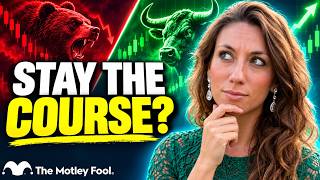
So that that is not our role as investors, but politics and elections do impact markets. We saw that with Brazil a couple of weeks ago and Lou I think this is a good opportunity to remind investors that these are kind of things that we need to think about separately. I was looking at the reaction to uh futures markets last night stocks were down suddenly we wake up this morning stocks are up huge on the exact same piece of information.
So put us in put into perspective what should you be thinking as an investor whether your team won or lost last night. Well, my first thought is is this is finally proof to what we all say and no one believes is just don't trust the future markets. They're too thin to really tell you what's going on.
But yeah, look, the mly fool ran the numbers and we shouldn't be surprised by the today's reaction. The average 12-month return after an election is 14%. That's versus 11% for any random 12-month period. Okay, why is this? It really doesn't matter if it's RD or whomever wins or whatever. We don't like uncertainty.
We like certainty. What happened is yesterday we didn't know what the future held. Today we know. And what we found is as investors, markets can handle almost anything thrown at it over time. What it doesn't like is not knowing what it has to handle. Just the simple act of going from it's almost election time to the election has happened.
that just that creates a premium in the markets because we assign a premium to whatever we call certainty. Yeah, Rachel, this is always one of those things that I think it's easy, especially if you're deep in politics, to think, oh, if this happens, then therefore this in the market. And so often it's almost the opposite.
And you need to just keep that eye on what's going to happen 5, 10, 15 years down the road because there's there's not a direct correlation between what happens in the ballot box and what happens on the stock market. Yeah, I mean that's absolutely the case. There's some interesting data behind this as well.
You know, Lou named a few key points. Another thing I'll raise, so the S&P 500 has actually finished in positive territory in the 12 months following every single US midterm election since 1950. That's a if if I have my math right, that's a perfect 19 for19 track record with an average gain of about 15%.
And again, this goes back to the idea of having some certainty. It's not about specific party platforms. It's very much once that legislative landscape clears, the market tends to stir surge because corporations have a more predictable environment in which to operate, in which to deploy capital. There was another study I saw that actually tracked a hypothetical $10,000 investment in the S&P 500 from 1953 to 2024 and it essentially revealed that if you only stayed invested during Republican presidencies, your portfolio grew to around $100,000.
If you invested during Democratic presidencies, 500,000, but if you ignored the politics and stayed fully invested, your money compounded into over $1.4 million. So, I think the point here is the long-term trajectory of the stock market. It's very much dictated by the macro realities, the actual, you know, performances of the individual businesses, obviously in monetary policy, inflation cycles, but how, you know, the outcome of an election is not something that we as long-term investors should try to build a portfolio around.
Ultimately, you know, focusing on diversifying your asset allocation, investing according to your interests, your time horizon, and again, that time in the market that always beats trying to time any cycle, including a political one. Yeah. And I just want to double down on the fact that oftentimes the reaction is very different than you think.
I've been following the solar industry for a very long time. You would think in the past 15 years, there was times that that that was a winning trade because of elections and a losing trade. it was almost always the exact opposite. So, a lesson that I have learned myself as an investor. So, the important thing from here is, and I'm glad you brought up because a lot of the Solar Socks are up big today.
Yeah. It's a lot easier to run for office than it is to be in office because slogans are easier than legislation. We talk about this a lot, but look, somebody can say, "I want to do blank," but you now have to go to Washington, negotiate with other people, other things. Things don't change quickly. So the lesson should be don't overreact.
Don't just do kind of caveman investing like this party say this good, this party say this bad. Uh data con center construction stocks. Sterling, comfort systems, all these companies that have just jumped up thanks to the construction boom both down 15% last time I looked. I don't know where data centers, you know, go from here.
And I certainly get that. Yes, there were a lot of data center referendums or uh kind of pseudo referendums on the ballot, but I almost guarantee you that the 15% drop today is an overreaction relative to what is new or what has changed. We'll see if it's an opportunity. I think it could be. But look, it's just knee-jerks are almost always incorrect when it comes to politics and you shouldn't trade in as if anything other than that is true.
All right, enough of the politics. So, when we come back, we're going to get to AMD's results. More on that in a moment. Welcome back to the show. One of the big earnings reports over the past 24 hours was AMD. So, this is one of those interesting names. It's not the biggest name in chips, but it is kind of a bellweather, if you will, for the AI trade currently.
So, Rachel, what did we learn from a stock that despite popping 6% today is down about 19% over the past month? Yeah, well, we know a lot of stocks related to the AI trade have been under pressure in recent weeks, and AMD has been no exception, but this was a really fantastic report. They beat on both the top and bottom lines.
Revenue came in at over 13 billion, adjusted earnings per share of $29, which was quite a bit above the $1.95 consensus estimate. But one of the biggest takeaways is the capex that's flowing into AI infrastructure. It's translating into tangible revenue for a lot of companies. AMD is no exception. You know, we know that the the hyperscalers, right, Microsoft, Meta, Alphabet, they're buying chips at a historic pace.
AMD is showing that data center infrastructure spending is not only sustainable, that it's accelerating. So, their data center segment revenue nearly doubled year-over-year to a record 8.5 billion. So, Nvidia is far from the only player that's capturing this windfall. But there was also something that was really interesting which was kind of an unexpected resurgence in server CPU demand which is being driven by Agentic AI.
So Agentic applications like Meta's newly released Muse require really powerful uh traditional server CPUs to handle autonomous virtual machines. These run for hours on end. Um CEO Lisa Sue, she said that data center CPU and GPU growth are moving hand in hand. they actually uh had upbeat guidance of $17 billion for Q4.
So AMD has also said that they have essentially re-engineered their entire supply chain. They're locking down the wafers, the advanced packaging substrates, the high bandwidth memory required to support more than double their data center revenue through 2027. So this is a win obviously for AMD, but it's also I think a bigger win broadly for the space.
There is been this concern of, you know, an AI bubble, but there's really tangible corporate earnings here. You know, this isn't just big tech throwing money into a black hole. That's really building infrastructure that's driving software and hardware demand. And and AMD is certainly one example of that.
I don't know if I'd go so far as to say this shows everything is okay or that everything's real there. What this shows me is that um the music hasn't stopped yet and that there is still a lot of plans to do a lot of things and that hasn't changed. Whether or not that all the backlog is converted over time, we'll see whether or not like all of this spending now turns into productive revenue.
We will see. It hasn't also answered the question of ROI which is going to factor into this. But yeah, what we know is and especially after a couple of weeks of like just kind of I I don't know if investors are really pricing in AI being the AI trade being dead, but this is a reminder that plans have not changed.
I do think too it is I mean is it great news for Nvidia? Because I think that I mean we already knew AMD you've got TPUs, you have tranium, all of these competing chips seem to be growing like crazy. Yeah. I I don't think it's a bare case for Nvidia because I think there's still plenty of business to go around.
But I do think the best Nvidia growth days due to AI might be behind us and I think that the AMD results would suggest that there's some meat on that though. Yeah, it will be interesting to see what results look like not only from Nvidia uh when they report their quarter. they're on a little bit of a wonky uh calendar.
So, they will report be reporting I think in about a month or so, but also what happens over the next few quarters because these questions that you you raised, Lou, about what's the ROI? What is the spending going to be in 2027 and then into 2028, we're we we haven't seen that those market questions, those higher interest rates impact ordering yet.
We haven't seen that impact the actual construction of data centers yet. There's a big lag between those indicators being shown by the market and that actually impacting results, but definitely good results from AMD for right now. So, we'll see if that is AMD specific or something that's a tailwind for the industry overall.
When we come back, we're going to get to CVS going from consolidator to deconolidating. You're listening to Molly Fool Hidden Gems Investing. Welcome back to the show. For decades, it seems like CVS has been in consolidation phase, adding more and more stores. Then they got into the insurance business, but that hasn't worked particularly well for investors.
The stock's up just 5% in the past decade. Rachel, this morning they announced that they're going to be splitting the company into two. What do we need to know? And is this is this the kind of move that's going to ultimately work out? Yeah, so they're going to split into two separate publicly traded companies.
This is very much kind of unwinding what has been really a decadesl long uh vertical consolidation strategy. I mean, one of the most notable examples of this was back in 2018 when they acquired Etna. I I think they're seeing the writing on the wall that trying to be, you know, the quarter drugstore, medical provider, insurance giant all at once, that has not created long-term shareholder value.
But I I thought the long receipts were going to be the the moat for that business. Well, that that's what some said, right? No. Yeah. This this has been honestly a very very difficult few years for CVS. I'm not particularly surprised that they've announced this plan. I think it very much remains to be seen what kind of value it will create.
But essentially the separation plan, it's supposed to conclude by early 2028. So they're going to have CVS pharmacy. That'll be the retail focus side, right, with the thousands of brick-andmortar drugstores, the minute clinics, pharmacy operations. Then they'll have CVS Health that's going to bundle uh the pharmacy benefit manager, Caremark, Etna, and then their premium care assets into one.
One of the reasons they've had such a difficult time the last few years, so the integrated PBM and insurance models have been under a lot of legislative scrutiny in Washington over rising healthcare costs. So maybe there's this idea that a clean break could unlock trapped shareholder value. But even the standalone retail pharmacy side, they're in a really long-term secular battle against, you know, the digital uh giants like Amazon, the insurance side, is seeing surging utilization costs, shifting government reimbursement models.
So, I'm not necessarily sure that either of these two companies are are ones that I would want to be a buyer of uh even in their standalone state. But certainly, I do think that splitting the company in two makes sense. Maybe one ends up becoming an acquisition target. That remains to be seen. Yeah, Lou, this this seems to be one of these deals that it just never works out well for consumers and CVS kind of became quasi monopoly.
Uh you know, depending on where you're at, maybe you maybe are lucky and you have a Walgreens sitting next to a CVS. Uh but you know, they consolidated more and more power as you get into insurance. You get kind of siloed. Seems like that just didn't work out well as it hasn't for a lot of these companies over the past decade or two.
This is I mean look healthcare in this country is a mess period and I think CBS is I mean they they I think were trying to solve some of that mess with some of the deals they did and they just created new messes because look at the end of the day there's a fine line between synergies and conflicts of interest and when you're dealing with someone's life versus like you know just the price of an aircraft engine vertical integration takes on new vibes then and have political consequences and a lot of consequences.
is uh they might have been getting a kind of ahead of the politics here. Uh not just kind of with this election, but it just there's kind of bipartisan support that owning botharmacies and the pharmacy benefit managers doesn't isn't good for consumers. Yeah. So shocking. Yeah. Yeah. No. And and with good reason, right?
The same reason it works for the business makes it difficult for the consumers. And again, when you're talking about people's health, it's a difference, you know, than than most businesses. I, you know, Rachel's probably right. I'm not going to buy either of these. Uh CVS Pharmacy, we saw how this worked out for Walgreens.
They're not public anymore. I doubt that CVS Pharmacy is destined to be a public company long term. CVS Health, who knows? I think the combination of the insurance PBM and these senior clinics which I think are very important to the story just because of the Medicare exposure. Maybe there's a good business there.
I think that's more intriguing. But healthcare is hard. Yeah. This is this is one of those places where getting corporate America into the pharmacy business and you know all all the potential synergies and and operations at scale. I grew up in a world where you just knew Bob's pharmacy down the street and it seems like that kind of worked out better for everybody, ironically.
Uh, but there's probably no going back to that. So, we'll see if some sort of digital solution uh is something that can disrupt this industry because consolidation hasn't been its friend. As always, people on the program may have interest in the stocks they talk about, then the Molly Fool may have formal recommendations for or against.
So, don't buy or sell stocks based solely on what you hear. All personal finance content follows the Molly Fool's editorial standards and is not approved by advertisers. Advertisements are sponsored content and provided forformational purposes only. To see our full advertising disclosure, please check out our show notes.
For Lou Whiteitman, Rachel Warren, and Dan Boyd behind the glass, I'm Travis Williams. Thanks for listening. We'll see you here tomorrow.


Comments 0