저자: 미상 · 외국인
요약 보기
마이클 베리가 George Noble의 공개서한을 공유하며 SpaceX IPO의 나스닥100 편입 규칙 변경이 패시브 펀드(401k 포함)를 통해 내부자의 엑시트 유동성이 된다고 주장. 기업가치 1.75조달러, 매출 약 150~160억달러(PER·PSR 약 56배), 유통주식 5%, 편입 후 가중치 3배 조정, 잠금해제 해제 시점(2026년 12월 중순~하순) 등을 근거로 제시. 반대 측 시각(ARK Invest의 저평가 분석, 개인 접근성 확대 주장)도 소개하며 과도한 공포를 경계.
다듬은 글
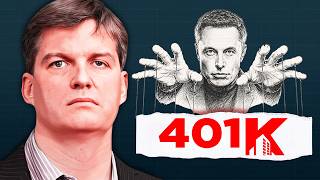
Michael Burry just endorsed something that should concern every American with a retirement account. A 40-year Wall Street veteran named George Noble published an open letter calling the SpaceX IPO the most shameless structural manipulation of a major index I've ever seen. Burry shared it with over a million followers and said two words, "Must read." And if Noble is right, every dollar in your 401k is about to be used for something you never agreed to.
But here's what nobody is telling you. This isn't actually about SpaceX. SpaceX might be a great company. The problem isn't the company. The problem is the pipe that connects your retirement savings to Wall Street. And what Burry is endorsing is the idea that pipe just got quietly rerouted. And the people who rerouted it are the same ones who profit when your money flows through.
Let me show you exactly what happened. In February 2026, Nasdaq published a proposal to change how companies enter the Nasdaq 100 index. This is the index behind QQQ, one of the most widely held ETFs in the world. The proposal rewrote rules that had been in place for decades. On March 30th, the changes were finalized.
One day later, on April 1st, SpaceX filed its S-1 with the SEC to go public at a valuation of $1.75 trillion. The timing is hard to ignore. Now let me give you the numbers, because the numbers are what make this real. SpaceX is targeting a $1.75 trillion valuation. Some reports say it's already been pushed above 2 trillion.
On its first day of trading, SpaceX would be the sixth largest company in America, bigger than Berkshire Hathaway, bigger than Walmart, Visa, and JP Morgan combined. They want to raise $75 billion. That's three times the largest IPO in United States history. But here's the number that actually matters.
SpaceX is only releasing 5% of its shares to the public, 5%. 95% stays with insiders. Elon Musk alone holds 46% of the company. The total amount of SpaceX stock that will actually be available for anyone to buy is roughly 87 billion dollars out of a company valued at 1.75 trillion. That's the float.
Remember that number because everything I'm about to show you comes back to it. Annual revenue, 15 to 16 billion dollars. Profits before interest and taxes, about 8 billion. That puts the price to revenue ratio at 56 times. For comparison, Apple trades at about eight times revenue. Microsoft trades at about 12 times.
Even Nvidia at the absolute peak of the AI boom was trading at around 35 times. SpaceX is entering the market at a valuation that assumes everything goes right for the next 10 years. And your retirement account is about to be on the buying side of that bet, whether you want to be or not. Let me explain why.
Think of it like buying a house. You find a house listed at 500,000 dollars, but the seller says you can only buy one room, the bedroom. And the price for just the bedroom is 500,000, same as the whole house. You say that's insane. Nobody would agree to that. And the seller says it doesn't matter because I found a buyer who has no choice.
Their contract says whatever room gets added to the house, they buy it automatically. No negotiation, no inspection, no price check. They just buy. That buyer is your index fund. That room is SpaceX. And the contract is the rules of the Nasdaq 100. Rules that just got rewritten so SpaceX can walk right in.
Here's how those rules used to work. When a company went public, it had to trade for months. The index committee would evaluate it. There were liquidity requirements, seasoning periods, standards that had to be met before a company could enter the Nasdaq 100. Every single company currently in the Nasdaq 100 earned its spot over time.
The new rule, effective May 1st, 2026, says if a newly listed company has a market cap that ranks within the top 40 of current NASDAQ 100 members, it gets added after just 15 trading days. That's 3 weeks. No seasoning period, no liquidity requirements. NASDAQ is calling it fast entry. SpaceX at $1.75 trillion easily ranks in the top 40, which means roughly 3 weeks after it starts trading in June, SpaceX could be in the NASDAQ 100.
And the moment that happens, something mechanical triggers. But here's the part that George Noble flagged letter. The part that made Burry say "must read". NASDAQ also changed how they weight stocks with low float. Under the old system, if a company only had 5% of its shares available to the public, it would get a tiny weight in the index.
Makes sense. There's barely any stock to buy. Why would you weight it heavily? Under the new system, any stock with less than 20% free float gets weighted at three times its actual float percentage. So SpaceX with a 5% float gets treated like it has 15%. The funds have to buy SpaceX as if roughly $400 billion of stock existed, but only $87 billion actually does.
Think about that. $500 billion of fund money chasing $87 billion of available stock. The price goes up, not because SpaceX became more valuable, because the buyers have no choice. They are contractually obligated to purchase. And who's on the other side of that trade? Who's selling into that forced demand?
Insiders. The ones holding 95% of the shares, waiting for exactly this kind of pressure. This is what Burry endorsed when he shared Noble's letter. This is what Noble meant when he called it the most shameless structural manipulation of a major index he's ever seen. And this is what the phrase exit liquidity means.
Your money is the exit. Insiders walk out with cash. Your 401K walks in holding shares at a price that was inflated by the very mechanism that forced you to buy. Now, I know what you're thinking. I don't own QQQ. I never bought a Nasdaq 100 fund. I don't invest in tech stock. This doesn't apply to me." Pull up your 401k, actually look at what's inside it.
If you work for a company in America and you have a 401k, there's a very strong chance you're invested in something called a target date fund. It has a year in the name. Vanguard Target Retirement 2045, Fidelity Freedom 2040, T. Rowe Price Retirement 2035. You probably picked it when you started your job because HR said it was the easy option and it sounded simple.
Here's what's inside that fund. It holds index funds. Those index funds track the S&P 500, the Nasdaq 100, international stocks, and bonds. You didn't pick them. The target date fund picked them for you. And when the Nasdaq 100 adds SpaceX, your target date fund, through the index funds it holds, will buy SpaceX with your retirement money, automatically, without asking.
You didn't choose to invest in SpaceX. You didn't evaluate the business. You didn't look at the 56 times revenue multiple and think, "Yeah, that seems fair." Nobody asked your opinion. Your 401k just does it because the index said so. And this isn't some niche issue affecting a small group of people.
160 million Americans have a 401k or similar retirement account. In 2026, nearly 95% of Vanguard's 401k participants are in target date funds. 95% and 48% of all US investment fund assets are now passive, up from 19% in 2010. Almost half of all the money in the American stock market is on autopilot.
It doesn't think. It doesn't analyze. It follows the index. And the index follows whatever rules Nasdaq decides to write. Because when Nasdaq announces SpaceX is entering the index on a specific date, every hedge fund and every proprietary trading desk on Wall Street knows exactly when your 401k has to buy.
So, they buy first, they buy the day the announcement is made. They buy the week before the inclusion date, they drive the price up, and then they sell to your fund at that higher price on the day the index rebalances. It's called front-running. It's completely legal, and your retirement account pays for it every single time a company enters the index.
You just never see the bill. Now, let me show you something from SpaceX's actual S-1 filing that almost nobody is talking about. SpaceX has a dual-class share structure. The shares available to the public, class A shares, give you one vote per share. The shares insiders hold, class B shares, give them 10 votes each.
So, even if you bought SpaceX directly, not through an index fund, your voting power would be 1/10 of an insider's. But, that's not the unusual part. Facebook has dual-class share, Google has them, Snap has them. It's become standard in Silicon Valley. Here's what's not standard. In SpaceX's filing, there's a specific provision about CEO removal.
At most public companies, the board of directors has the power to remove the CEO. That's basic corporate governance. It's the whole point of having a board. At SpaceX, Elon Musk can only be removed by a vote of class B shareholder, not the board, not a public shareholder vote, only the class B holder, which Musk himself control.
A Harvard Law professor named Lucian Bebchuk flagged this as rare. He said removing the CEO is usually a decision left to the board. SpaceX took that power away entirely. So, let me lay out exactly what your 401k is buying when it automatically purchases SpaceX shares. You get exposure to 5% of the company, 1/10 the voting power per share compared to inside, no ability to influence who runs it, no say in strategy, compensation, or capital allocation, and no recourse if something goes wrong.
You're buying a ticket to watch, you're not buying a seat at the table. And the lock up period, the standard rule that prevents insiders from selling their shares for 180 days after an IPO, it exists specifically to protect public investors. To make sure the people who built the company can't take your money and immediately walk out the door.
The banks underwriting the SpaceX IPO are reportedly considering waving it entirely. No lock up. Insiders could start selling whenever they want, from day one. And even if they keep a lock up, it's expected to expire sometime between December 15th and December 27th, 2026. Christmas week, the lowest trading volume of the entire year.
When you are with your family, opening presents, not checking your retirement account. That's when insiders get their first chance to sell. The timing is not an accident. Now, this pattern isn't new, and the history is important because it tells you exactly what to expect. When Uber went public in May 2019 at a $69 billion valuation, insiders couldn't sell for 6 months.
Then, the lock up expired in November. In the weeks leading up to that date, Uber stock dropped 17%. Trading volume tripled to over 40 million shares a day. SoftBank sold 2 and 1/2% of its stake. TPG dumped 4%. Regular investors who bought at the IPO price watched almost a fifth of their investment disappear, while the people who built the company cashed out.
Facebook went the other way. When its lock up expired in November 2012, the stock was already trading at half its IPO price. But insiders held. They didn't sell. And over the next 2 years, Facebook recovered and became one of the greatest investments of the decade. But here's the critical difference.
Facebook was already profitable. Facebook had real revenue, real users, real ad dollars. The valuation was steep, but the business was backing it up with cash flow. SpaceX has $15 billion in annual revenue supporting a $1.75 trillion valuation. That valuation only works if Starlink grows from 10 million customers to 50 million or more.
If revenue goes from 15 billion to 60 billion. If entirely new business lines like direct to cell satellite service and Mars missions actually scale to commercial viability. All of those things might happen. SpaceX might be the most important company of this century. But right now, today, those are projections, not results, not cash in the bank, projections.
So, when insiders sell and they will sell because that's the entire point of taking a company public, they're selling a stock priced on what SpaceX might be worth in 2035. And your 401k bought it at that 2035 price in 2026. That's exit liquidity. Your retirement money walked in, their money walked out.
And the index fund that made it happen didn't even ask you first. Now, before you take everything in this video as the final word, I want to be fair because this channel doesn't exist to scare you. It exists to help you think clearly. And thinking clearly means looking at the other side even when the data sounds convincing.
ARK Invest published a detailed analysis arguing SpaceX could actually be undervalued. Their case is that Starlink is growing faster than any telecom network in history. The total satellite connectivity market is worth a hundred and sixty billion dollars at scale. SpaceX's 50% EBITDA margins are higher than almost any tech company on Earth.
And the reusable rocket business has no real competitor. SpaceX launches more rockets than every other company and every other government on the planet combined. If you believe in the future of space, this might be the single most important investment opportunity of your lifetime. Some analysts also push back on the exit liquidity framing entirely.
They say allocating 30% of IPO shares to retail investors is three times the normal amount. Most regular people have never had access to a company like SpaceX. It's always been locked behind $250,000 private equity minimums. Letting everyday investors buy in through Fidelity, Schwab, and Robinhood isn't exploitation.
It's access. And they argue the NASDAQ fast entry rule isn't manipulation. It's modernization. The old rules were written when the biggest IPO in history was Alibaba at 25 billion. SpaceX is 75 billion. The system needed to update for companies at this scale. And honestly, they could be right. SpaceX might be worth $2 trillion.
Starlink might become the most important infrastructure company of this generation. The stock might double in its first year and make everyone who bought in look like a genius. I'm not here to tell you which side is right. I'm here to show you what's actually happening and let you make your own decision.
And what's happening is this. Michael Burry, the man who spent 3 years studying every mortgage contract in America before betting against the housing market and making 800 million dollars when it collapsed, just told over a million people that the structure of this IPO is designed to benefit insiders at the expense of passive investor.
That doesn't mean SpaceX is bad. It means the structure is worth understanding before your money gets committed to it without your input. So, what should you actually do with this information? Because understanding the problem without acting on it is just entertainment. And this channel isn't entertainment.
It's about helping you make better decisions with your money. If you have a 401k through your employer, step one is the simplest and most important thing you can do. Log in and look at what you own. Click and see your fund. If it's a target date fund, see what index funds it hold. If any of them track the NASDAQ 100 QQQ, QQQM, or any NASDAQ linked fund, your account will automatically buy SpaceX shares when it enters the index.
That's not speculation. That's literally how index funds work. Most people have never clicked past the fund name. Do it once. It takes 5 minutes. And those 5 minutes will teach you more about your retirement than the last 5 years of ignoring it. Step two, understand the timeline. SpaceX is expected to list in June 2026.
Under the fast entry rule, it could be in the NASDAQ 100 by early July. If there's a lockup period, it expires in December. So, between July and December, your 401K is buying and insiders can't sell. After December, insiders can sell and your retirement money is on the other side of that trade. That 6-month window is when you want to pay attention.
Step three, decide what you're comfortable with. Some 401K plans let you change your allocation. You can move from a target date fund to a specific S&P 500 fund, a bond fund, or a different index that doesn't track the NASDAQ 100. That's your choice. Nobody can make it for you and nobody should. And step four, the most important one, don't panic.
I'm not telling you to sell your index fund. That would be a terrible decision for most people. Passive investing still works. Over the last 30 years, index funds have outperformed the vast majority of professional stock pickers. The structural issues that Burry and Noble are pointing out are real, but they're a cost that comes with the convenience of not having to manage your own money day-by-day.
Every system has costs. The question is whether you know what they are. What Burry is really saying underneath all of this is something much simpler than people think. He's saying, "Know what you own. Know how it works. Know who's on the other side of the trade." Most Americans don't. 160 million people have a 401K and most of them couldn't name a single fund inside it.
They don't know their money gets automatically redirected every time a company enters an index. They don't know the rules of that index can be changed. They don't know their retirement savings can become, in Burry's words, someone else's exit liquidity. Now you know and there's a big difference between someone who invests and someone whose money is just along for the ride.
The question is whether you see it, too. The SpaceX IPO is in June. When it prices, when it enters the NASDAQ 100, when the lockup expires, I'm covering every step. If you want to understand what each of those events means for your money before it happens, subscribe so you don't miss it. I'll see you in the next one.


Comments 0