
저자: 미상 · 외국인
요약 보기
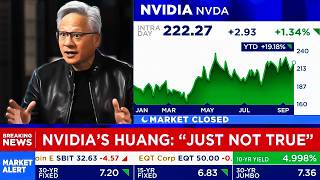
엔비디아 CEO 젠슨 황은 미국 내 칩 생산에 향후 4년간 수천억 달러를 투자할 계획이라 밝혔고, 전 세계 컴퓨팅 CapEx가 2030년경 연간 1조 달러에 이르며 그중 대부분이 AI에 쓰일 것이라 전망했다. 딥시크 R1은 추론 모델로서 긍정적이라는 입장이다. 패널들은 엔비디아가 저평가(약 19배 PER)라는 낙관론과 함께 관세 영향은 제한적이라는 시각을 보였다. 한편 양자컴퓨팅 관련 행사와 관련 종목 약세가 함께 언급됐다.
다듬은 글
Nvidia to invest in the US. Our Silvana Henao is here with that and much more. Silvana, good morning. Hey Frank, good morning. That is right. And as you mentioned earlier, shares of Nvidia are on the move after their nearly 2% pop yesterday. CEO Jensen Huang telling the Financial Times his company plans to spend several hundred billion dollars to source US-made chips over the next four years, including those from Taiwan Semi and Foxconn.
Now, this coming after Huang shared his vision with Jim Cramer on Mad Money last night on the trillion still yet to be spent. The world's computing CapEx is on its way to a trillion dollars annually by the end of the decade. So, we're fairly certain of that. We're also very certain that the vast majority of that will be used for AI.
And so, our opportunity as a percentage of a trillion dollars by the end of this decade, um is is quite large. Now, on DeepSeek, Huang adds concerns over its R1 model are completely wrong, telling CNBC it's actually a quote fantastic thing. R1 DeepSeek was a fantastic thing. And the reason for that is because R1 is the first open-sourced reasoning model.
What makes R1 incredible is that it reasons. That's why the answer is so good. And it breaks the problem down step by step. It uh asks itself while it's thinking. It comes up with several different options for the answer. Staying with Nvidia, Reuters is reporting CoreWeave is eyeing a $47 to $55 per share price target for its IPO.
The report says that price range for the Nvidia-backed AI startup would result in a 2.3 to 2.7 billion billion-dollar offering. Um Nvidia is one stock that rallied yesterday. Nvidia CEO Jensen Huang says his company is set to spend hundreds of billions of dollars on chips and other electronics manufactured in America over the next four years.
That's according to an interview Huang gave to the Financial Times. In it, he also said Nvidia is now able to produce its most advanced systems in the US, partnering with Taiwan Semiconductor and Foxconn. Nvidia coming off a day in which its CEO made a variety of headlines at the company's GTC conference in California.
Huang said orders from more than 3 million flagship Blackwell chips from four top cloud providers actually underrepresented demand. He expanded on the demand the company is seeing later on on CNBC's Mad Money. The world's computing CapEx is on its way to a trillion dollars annually by the end of the decade.
So, we're fairly certain of that. We're also very certain that the vast majority of that will be used for AI. And so, our opportunity as a percentage of a trillion dollars by the end of this decade, um is is quite large. The Nvidia CEO made a number of other headlines. He said Nvidia sees only a little short-term impact from President Trump's tariffs.
And on Chinese AI startup DeepSeek, Huang said fears that similar models wouldn't need to use as much computing power. Those beliefs were misplaced. Really pretty interesting. Um I got to catch parts of the interview. And about the tariffs, he said, "Look, we're already onshoring. We're going to be within a couple years, we're not going to think about tariffs at all." And it's like that's the idea, I think.
But he was he said, "We're talking to TSMC, talking to others Right. to to start building everything here." And I saw one of the he calls it a chip. I mean, it's a freaking looks like a laptop almost. They're so big. There's so much going on. And it's just my And it's mind-boggling to me. The architecture, the the electronics that are It's not even electronic.
I don't even know what it is. It's It's circuit Thank god for electrical engineers. All right. Well, that kind of takes us to Nvidia and the GTC event. You obviously spent a couple of days there, more than that. You sat down with uh with Mr. Jensen Huang, of course, on our show at the 10:00 and then a a lot longer as well on Mad Money, sort of breaking down his outlook for the company.
Take a listen. We now have to build AI infrastructure for three industries. For the cloud, Right. for enterprise IT, and for robotics. Well, that's In the end, that's the world. This is Yeah, we're going to we're going to be the foundation for the world. The world, hopefully, yeah. Foundation for the world.
That's that's, you know, pretty significant ambition, I guess, Jim. I wish I could say it was just hubris. The market seems to think it is. Stocks selling for arguably 19 times earnings. I think it's all wrong. I think Nvidia is an inexpensive stock. 1 trillion total addressable market for the cloud, 1 trillion for autonomous vehicles, 1 trillion for robots.
The robots I saw, David, were really the stars of the show. They were remarkable, whether they be little droids or whether it be robots that I had a very robust discussion with. The only thing they wouldn't talk about is tariffs. They're much better at sweeping floors and putting things in the dishwasher.
I mean, we had a conversation yesterday about robots, um quite a a significant one. So, I don't want to go down Well, there it is, actually. All right. Yeah. one cute robot. The one on the right is protective tariffs. The one on the left is saying, "Listen, just reciprocal." And then I said, "Yo, you know what?
That's all I need to know. Goodbye. Sell everything." I mean, that's what people are doing. I think that the Look, you know that there's a bit of optimism out here about the president. Okay. I I don't know if we have a We have a We have a a 7-second clip about what Jensen's saying about the president in his meetings and how he's he's actually going to bring uh some manufacturing here.
He doesn't really manufacture anything, but he'll use Taiwan Semi. Well, yeah. Taiwan Semi is going to be People are telling me that it's going to be manufacturing a lot of the chips you know, to just paraphrase what Jensen told you that are going to be made here for Nvidia, right? And Nvidia is still the go-to for all the GPUs that are needed to obviously power this AI revolution we're talking about, not to mention those little robots that you were looking at there, not to mention autonomous cars potentially and so many other uh other things that he was talking about.
So, yeah, that's that's going to happen, I guess, Jim. Um Right. But I you know, investors when it comes to Nvidia, they're just looking at 28 and discounting back and All right, it's fine. But it's believe It's never going to see the kind of growth that that it saw last year or the year prior when it when obviously the revolution was in its early stages.
Well, I I think that Jensen feels that the last year at this time, he had a good business. Now, it's a hundred times more than he thought literally in 365 days. Again, the stock is saying, "Don't believe what that man says. Just ignore him." I can't do that. He's too good. He's too rigorous. I'm against the sellers who come out every single morning.
And one day, and I had got in a moment of exasperation said, "They've turned the greatest company we have in this country into a meme. The traders don't know what they're doing." What does that mean? It means that the people who are selling it right now at 9:00 11 after 9:00, they don't know the difference between, I don't know, a power a gas-powered drill and a battery-powered drill.
Do you? I don't know. I hope so. One has more torque. Just say the word torque, okay? Torque. Torque. I dropped the term at scale when I was with Nvidia, and now I've switched to torque. All right, you're using torque. You need more torque. We need more torque, David. Yeah, we're going to need a bigger boat.
All right. But Nvidia is up. Nvidia is up. Are you That's very nice. No, it was down a dollar just a few seconds ago when the jokers, the cowboys Look at that. The cowboys. You have Dak Prescott, 250 million, whatever. I just like David, this is an example of what I'm talking about, the clown show that exists before the market opens.
Nvidia was at 118 and three and 30 cents when we were slamming them down at Trader Vic's. And now it it was at 116 when I got up, and now it's at 118. Tell me about what that's worth. What does the market do before the at 4:00 a.m. that is so special and stupid? It's not I don't know why you focus on it.
You should begin You start to focus on the market when it opens at 9:30. and I have no one to talk to. I I know. Well, you do a good job talking to yourself. I talked to the at 5:00. I yelled at the screen then. Yeah, I watched Frank when I was in Singapore last week. Yeah. Cuz it was 5:00 in the afternoon there.
Um Nvidia is down about 800 billion in market value since its top. Um that obviously is larger than the market cap still of more or less Eli Lilly and Walmart. Um it would be its worst performing quarter since the third quarter of 2022, but it is hanging in there at least in this session and still up 30% for the last year, Jim.
Well, you know why? Because he's talking quantum today, and that's another another ridiculous thing that everybody's excited about that's not going to be good for three to five years. And today's event, where Nvidia's founder CEO Jensen Huang, he's going to share the stage with 14 quantum CEOs. Not all of them are, you know, CEOs of publicly traded companies, but there's going to be It appears to be really an attempt to rebuild the relationship with the quantum computing sector.
And and the timing is particularly noteworthy as well. It was announced this quantum day just one week after he made those CES comments in January. And following Tuesday's announcement in his keynote that Nvidia is also developing a quantum computing research center in Boston. So, you could see that his tone, I guess, is more pleasant, not pleasant, but just more optimistic about the technology.
And despite today's gathering though, quantum stocks continue to trade down heading into the event and remain substantially below their previous highs. The ongoing volatility really underscores the speculative nature of investments in this emerging technology sector, which we continue to cover given that volatility, guys.
Yeah, absolutely, Christina. And good to point that out. A lot of these companies are either very early stage, very low revenue, and have massive runs on the speculative flow. What I wonder about in in the context of Jensen Huang's comments about quantum back then, and maybe he wants to kind of, you know, unwind a little bit of that skepticism.
Is there any inherent technological rivalry here? In other words, if the magic hopes of what quantum computing can do come to realization relatively soon, does that somehow counter uh Nvidia's business and its kind of bets that it's laid in terms of how the future's going to look? Well, I guess it would mean that you would require less hardware, right?
If so, if they're able to uh provide extremely advanced computing, uh you know, in the near term, you may not need as much hardware. And it almost uh you can parallel that with the deep seek comments, right? So, the deep seek a large language model that was able to be built on less advanced chips. And if quantum computing is able to find that technology so advanced, then perhaps that could be a negative.
But I'm sure Nvidia, given their uh their array of revenue streams, they would find a way to capitalize that on the near term or already doing so. They're just not publicly saying. .



Comments 0