저자: TomLee · 외국인
요약 보기
9월은 시장 심리가 위축되어 있어 오히려 강세 가능성이 크다는 주장. 인플레이션 우려는 9월 초 고용보고서와 8월 CPI(2.4% 예상)로 완화될 것이며, 9월 금리인상 확률이 0에 가까워질 수 있다고 봄. 과거 8,000pt 전망은 빗나갔지만 'wall of worry' 구간으로 보고 매수 기회로 해석. 암호화폐는 변동성 축소 후 한 달 새 30% 상승했고, 주식도 바닥이 오늘일 수 있다고 언급. AI 데이터센터 반대 여론은 중간선거 이슈로 부각되겠지만 이후 AI 투자수익률 스토리로 주식이 다시 오를 것이라고 봄.
다듬은 글
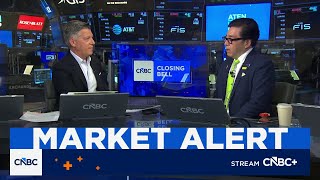
Will September live up to its historical reputation, or does the market have enough inertia for stocks to continue to rise? Let's ask Tom Lee. He is the head of research at Fundstrat. He is a CNBC expert and is back with us for the 9th post. Welcome back. Nice to see you, sir. It's nice to have you with us this month, which has already begun.
How are you feeling? You know, people are entering September with caution because markets are falling, oil is rising, profitability is rising, and everyone is talking about seasonality. I will act contrary to popular opinion. I think everything points to September actually being a strong month for stocks.
Why? I think, first of all, inflation concerns will probably subside this month. On Friday we will receive a report on the state of the labor market. Next week comes the August CPI, followed by, of course, the FOMC rate decision in September. I think the sequence of these events will show that inflation is weakening, and the chances of a September hike may drop to zero.
You assumed that the index would reach 7,900 or 8,000 points in August. Yes, of course, that didn't happen. So are you being overly optimistic about the market, ignoring the challenges you yourself mentioned? Inflation , higher interest rates, expensive oil, escalation in the Middle East, and other issues surrounding AI, data centers, etc.
Yes. Of course, it makes sense to worry about these things, but 7900-8000 is a level at which investors should be optimistic. Because it is when everyone is optimistic that markets usually peak. These highs were set in August when people were cautious, and they are cautious now too . So I think this is a "wall of worry" that should be used for buying.
As you know, fears of war have historically been a buying moment, and the AI sector still has strong fundamentals. It is interesting that there are now more and more calls for caution. Yes. From different sides. Scott Rubner of Citadel Securities has already talked about this a lot on the air. I'll repeat that because he says that the short-term risk-reward ratio has changed, and he points out: the returns were great, but they're in the past.
They are already behind. Retail investors continue to buy , but historically their activity declines in September . Systematic exposure has resumed. Corporate demand will fade. "Black window" periods are returning, so repurchasing shares will be impossible. And after a significant drop in volatility, this period of stability is also behind us.
He says he would use force to reduce risks and add cheap protection. He further adds that this does not mean a wider " bearish" reversal, but only a tactical adjustment. What do you think about this? Eh, these are all valid comments. Interestingly, this seems to me to describe most of the crypto trading last month.
You know, volatility fell, retail investors decreased , and we saw a rapid 30 percent growth. The cryptocurrency, oddly enough , historically outperforms the S&P by about a month. So, I think the situation is very similar for stocks. I mean, the bottom for stocks could even be today. But I actually believe that the crypt recovery could have happened for many different reasons.
The Treasury Secretary's intervention in the bond market draws more attention to the $40 trillion deficit and everything that goes with it . So why do you think that what could have been a one-off moment actually has potential? Well, I think when I look at the stock market today, one of the most talked about issues is inflation and the fact that it remains high.
You know, we wrote about this last night: Fed research shows that the core PCE measure may be in error due to, quote, "the impact of software and accessories," meaning flash memory. This accounts for a third of all hyperinflation this year, but most people don't encounter flash memory inflation in their daily lives.
No, but they face inflation, for example on gasoline. True. So, gasoline, unfortunately, is something the Fed can't control, but other components of inflation look stable. Core PCE, when adjusted, is almost identical to the CPI, which is 2.4%. So if we get a CPI reading of 2.4 next week, I think the market will stop worrying so much about inflation.
Do you think people are becoming too cautious too soon? Because JP Morgan's trading department is moving to a tactically cautious- neutral position. Wells Fargo is also becoming cautious about stocks. Are all these people wrong? Well, as you know, they're probably not wrong, but when everyone becomes cautious, it means that the consensus has already taken such a scenario into account.
And if the economy is not going to fall sharply, this caution means that stocks can rise even on bad news. This is the moment when the last seller sells. That's when the markets recover. We've been talking a lot, and every time you've been on lately, the issue of data centers has come up, and it's now reached a boiling point, or at least approaching it.
What impact do you think this will have on the broader market in early September? This is a real problem because, as we've discussed, it resonates with voters, and we see Republican governors supporting it and advocating for moratoriums. I just think the AI industry needs to do a better job of explaining the benefits, and I think they've gotten that message already.
This creates jobs and benefits users , and of course it is strategically important for the United States. So I think this will definitely be a major theme even during the midterm elections. But once that's behind us, I think the AI ROI story will be key, and these stocks will go up again.


Comments 0