
저자: MohamedEl-Erian · 외국인
요약 보기
관세 90일 휴전으로 단기 경제활동이 일시적으로 늘고 성장 둔화 후 약간의 인플레 상승이 예상됨. 공급망 재편(C+2/3)은 단기 인플레, 장기 디플레 요인. 관세 10% 수준으로는 리쇼어링 유도가 어려움. 무역 체계는 분절화 vs 미국 중심 공정 체계로 50/50. 유가는 OPEC 방문 등 변수에 따라 달라짐. 연준 금리 인하 기대는 축소될 가능성.
다듬은 글
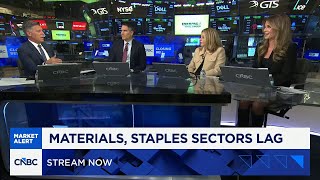
Let's continue this conversation. I'm curious to know what Mohamed El-Erian thinks about this. He is here with us, chief economic advisor to Allianz and president of Queens' College, Cambridge. The markets are liking what they're hearing right now. It's a 90-day truce. Will the next 90 days be very volatile, or do you think it will be linear?
It won't be linear. And you will be very frustrated when you hear the opinion of economists like me, because you will be reminded of President Truman asking for a one-handed economist, since there are so many issues at stake. What we know for sure is that the first thing you heard was about whatever your Fed rate cut probability was. Now it's about fewer cuts and more. And what we know for sure is that economic activity over the next 90 days will be higher than it otherwise would have been, if only because people want to take advantage of a short-term window. On top of that, there are all sorts of issues to be resolved. We need to understand not only the economics, but also the political and national security implications of all this.
Explain this to us, though. I think that was a question Joe was trying to ask Scott Bessent. The idea was that we should see in the economic data a kind of paralysis that had changed capital investment and consumer behavior. There are still economists who say we will see it in the numbers. We'll see. Only that hasn't been the case so far. They are surprised not to have seen them. They say, "Oh no, it's not this month. We need to look ahead to June. We need to look at July. Will we see it?" The answer is that I don't know, but I suspect so. Soft data has collapsed. The hard data has been incredibly strong, which is why economists looking at the soft data extrapolate from it, just as those looking at the hard data extrapolate from it.
My feeling is that we will have an economic slowdown. We will have slightly higher inflation, but most CEOs will remain on hold. Let's see what happens next. What impact does this have on employment, though? Because that's another thing we think Jerome Powell would be monitoring anyway. Yes. I don't think we'll have any spike in unemployment. I think CEOs are just waiting. They don't want to make big decisions that have long-term consequences. If you fire someone and make a mistake, you have to find another one and retrain them. So for any decision with long-term implications, people will wait for now.
Mohamed, you were really dovish on inflation, and I remember teasing you that you thought 3% was okay. You said two and a half to three, and you said the only reason I'm at two is because of which country decided on two? New Zealand in 1990. You said it's just the New Zealand rate. So now the tariffs will have a 90-day pause. The prospect of tariff-induced inflation has faded today. Why immediately say that the growth side looks better instead of saying, "Oh, there probably won't be inflation"? Why not free the Fed from having to lower rates, since they don't have to worry about inflation, and lower mortgage rates to help the economy in case there's some hangover and unemployment? Why not get ahead of the game? Why not do it since inflation is not a problem? Thus, the impact on inflation is ambiguous. Before, we had a total embargo on trade with China. The result is that many activities would not have taken place. Now some activity will take place. Good for growth, but it will come at a higher price. Bad for inflation. That's why there are so many different forces at play.
I think the main question you have to ask yourself is: if you were a CEO, Joe, what would you do? If you had to make important decisions, what would you do right now? Well, I would bring everyone back to the office five days a week. That's the first thing I would do. I would do it too. What else would we do besides this? Definitely, I wouldn't have any relationships with anyone who works at the company. I think that would be my second, isn't that important? And you mean a real strategic move. So what you're hearing now, for example, is that in the past, we understood that our supply chain had to be China plus one, China plus something else. Now we think it must be China plus two or three. If you go down that road, it means reorganizing supply chains. Right. I am trying to say: how much of this comes back to the United States? Is it encouraging investment in the United States, or is it just trying to keep the Trump administration happy? And if he did, so what?
I think if the administration makes it clear that our real focus is revenue and reshoring, which means tariffs will remain permanently high, then we're going to go back. But if you hear them talking about a fairer trading system and how we've increased tension and then reduced it, then don't bring it up. Let's say we have a 10% tariff across the board, which is almost like our version of a VAT. I know they're not the same thing, but what would that mean in terms of revenue? Would you be happy about that? Do you think this could actually slow down economic growth? So it won't bring in massive revenue. Companies are recalibrating, but they won't reshore. 10% is not enough to push companies to reshore. So it is likely that they will move to other countries. Of course, people will have much more diverse supply chains, and we can decide that this is a good thing. Likely inflationary in the short term. Correct. Inflation in the short term, deflation in the long term. That's absolutely true on this point.
Yes. That's why you're going to get very frustrated as more and more economists weigh in, because there are so many possibilities right now. When I was here last, I told you that we are on a very bumpy road to two destinations. One is fragmentation, and the other is a trading system in which the US is stronger and fairer. Now we are slightly more inclined towards the second probability, but it is a 50/50 situation. You're missing oil at $58 or $57; that's another reason why inflation might not... right. Correct. And you also think it goes back up. Will it stay here at $63, or is it possible that it was a supply problem and goes back down, or is it a knee-jerk reaction? Or do you think so? It will depend on President Trump's visit to three OPEC countries. It's coming, and we'll see what happens.



Comments 0