
저자: HowardMarks · 외국인
요약 보기
투자는 개념은 단순하지만 실행은 어렵다. 공격형은 좋은 장에서 강하고 방어형은 나쁜 장에서 강하며, 둘 다 잘하기는 어렵다. 중요한 것은 나쁜 장에서 덜 잃는 것이고, 가장 큰 실수는 바닥에서 파는 것이다. 감정을 통제하고 장기간 꾸준히 투자해 복리를 활용해야 한다는 주장.
다듬은 글
I never try to make investing sound easy. It's not easy. Uh a friend of mine wrote a book about investing. He had a very attractive title, simple but not easy. The concepts of investing are simple. Well, all you have to do is go out and find the the ones that will perform better than the rest. Simple but not easy to do in practice.
And you know, as I said, I don't try to make uh investing sound easy. I I I I show it for for what it is, but if you are conscientious and hardworking, and if you have a a a a workable philosophy, and if you understand your own limitations and your biases, and if you have control of your emotions, I think you can do a good job on balance over time.
And that's all any of us should hope for. Uh as I said earlier, you nobody can produce uh returns that are always great. Uh in fact, if if you think about it, most people and most strategies have a bias. Either it's either they have an aggressive bias or a defensive bias. And the uh the aggressor does really well in good markets,
Yes. but loses quite a bit in bad markets. The defensive investor does pretty well in the bad markets, but doesn't participate much in the good markets. It's very unlikely that anybody can do both for you, outperform in the good times and outperform in the bad times. Now, our bias is toward outperforming in the bad times.
And everybody, you know, the mantra uh for investors is beat the market, beat the market. I want to beat the market. I want to beat the market. Why? You know, I've never had anybody tell me cogently why it's important to beat the market when the market does well. When the market does well, everybody makes a lot of money.
Why isn't that good enough? Why do you have to outperform a market that's performing well? In order to outperform, generally speaking, you have to have an above average helping of risk and and correlation and volatility. And that's fine in the good markets when you make more, but what happens if if it turns out that we have a bad market instead and and you lose more?
That's not much fun. I think the time when it's important to outperform is in the bad markets. Everybody else is losing a lot. It feels wonderful to only lose a little. But if you can combine bad years in which you lose much less than the other person with good years in which maybe you do the same, obviously your long-term result will be a higher return less volatility and a higher comfort level throughout.
And and I think that the comfort level cannot be overstated because the cardinal sin of investing is not buying something that doesn't work out. The cardinal sin of investing is getting out at the bottom. Everything that happens conspires us to make us do the wrong thing. When when the economy's doing well and the companies are reporting good results and the prices are rising every day.
People get excited. They become optimistic and they buy and buy more at as the prices go higher. But then, if something goes wrong and and the economy and the company start to do a little less well and and the uh security prices are falling, people get depressed and they start to sell. And the lower the price goes, the more they sell.
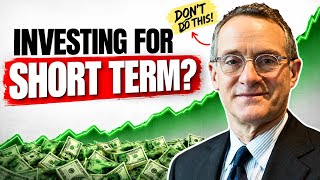
Well, my mother told me buy low, sell high. But our emotion tries to make us buy high and sell low. This is the worst possible thing. And so and so the most important single thing is is to invest diligently, patiently, over a long period of time. Allow compounding [clears throat] to work and don't get out at the bottom.
Uh and uh you know, if if you can be what we call a contrarian and do the opposite. If you can get out at the top and invest aggressively at the bottom, that's the best of all worlds, but it's not easy. So, if you merely can avoid getting out at the bottom, then you're ahead of most people. And you know, we have uh been able to uh facilitate that for our clients.
Everyone wants to buy at the bottom and sell at the top. But Howard Marks says that it's incredibly difficult to do consistently. Instead of trying to time the market, focus on investing regularly, stay patient, and giving your money time to compound. When markets crash, many investors panic and sell near the bottom, missing the recovery that follows.
The key to building wealth isn't perfect timing. It's staying invested through the ups and downs and letting the compounding work for decades. As Howard Marks says, you don't need to catch the bottom or the top. You just need to stay in the game long enough for compounding to do the heavy lifting.



Comments 0