원문 보기
We've heard from some leading CEOs like Dario Amodei, Sam Altman, Elon Musk, who said we need to ere are informants who say that the end of humanity could come within 10 years. Do you agree with this? Well, first of all, artificial intelligence technology is incredibly powerful. It can, of course, bring incredible benefits, and it can also be applied to terrible applications.
So we have to make sure that when we develop this technology, we develop it safely. And the industry is moving from developing AI technology that becomes capable, meaning in the first half of this year we went through a transition where AI became useful. And he became useful. The demand for it is incredible.
Generating tokens with these AI products is now profitable, and in fact incredibly profitable. So many companies are implementing it. Uh, OpenAI's latest Astra is incredible. We use it everywhere. Uh, we use Cloud Code . We use Cursor. Uh, uh, SpaceX, a SpaceX AI product. Uh, we use, uh, Cognition. So, the capabilities of technology have reached an extremely useful state.
And so these companies are moving from a lab trying to launch a technology to a company that's making products. So, actually, even calling it a laboratory says something. They were engaged in research for the first 10-15 years. And now, suddenly, in almost the last 6 months, the industry has gone into a high production ramp-up mode .
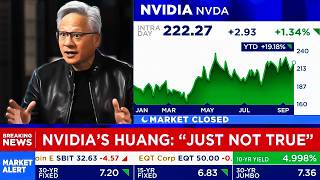
So I think all these, um, reactions that are happening are part of this transition at its core. Are these correct estimates of what might happen? Will we all, as some say, disappear in a decade? No, that's absolutely not true. And this is such a narrative, hmm, hmm, it's dramatic. He attracts a lot of attention.
Yes. Of course, obviously, this attracted the attention of the press. And, um, I think that essentially they care deeply about making sure that the products are made safely . They move from the lab to engineering. Hmm, they have to dedicate a lot more of their researchers, a lot more of their computing to security.
This, um, in the case of product development, there's an engine, there's a design part of it, there's a capability part, and there's a verification part. At the beginning of any industry, most engineering is focused on making the product work. And then when the product matures and goes out into the public, a lot of the engineering, I have to do is verification, testing, evaluation, validation, benchmarking, um, testing against standards, um, making sure that the product they're delivering, um, is reliable, um, it functions properly, um, it lives up to the promises of the product.
So it makes perfect sense that right now, during this transition, they should shift a significant portion of their capabilities to AI security. I think that's the point. Hmm, I think any reports of the drama of this are unnecessary. This is, to be honest , hmm, hmm, too much drama, irresponsible. Now it's based on facts, now it's based on science.
So is this wrong? Well, that's wrong because it's not based on science. Their concern is not misplaced. I just want to make sure that the underlying concern is correct. It's no different than when I just got off the plane. I am very glad that the entire ecosystem and the air travel industry are taking safety seriously.
And all the people working around the clock are more people working on air safety, airplane safety, and air travel safety than on creating new types of airplanes. So that makes sense. And we're just going through the same thing . You said we don't need any new laws. We don't need any new rules. But you just said here that you support protectionist measures in major industries.
Why not support the equivalent of an FDA or FAA for AI? Well, before we come up with new new laws and new rules, let's enforce the existing laws and existing rules. There are all kinds of laws and rules. You know, we live in a country of laws. And that's why we feel safe and under control, and we have all kinds of laws and regulations that apply to each of these applications, whether it's food, or, um, air travel, or, in particular, artificial intelligence.
So, what's missing? Tell me about the missing part. I'm curious to know your thoughts on why you think there are no missing pieces when someone like Dario Amodei or Sam Altman says, "We would like to see regulation." I think I answered that in the case of both labs, um, one lab had four cybersecurity incidents caused by them.
In the other one, hmm, there were a few more. And so, um, earlier, and in both of these incidents, there are a lot of laws to deal with . You have cybersecurity laws, unauthorized access, um, um, you have liability for damages, you have, you know, all sorts of obligations related to cybersecurity. Well, you have all sorts of product-related obligations.
And so if your product causes harm, if your product doesn't work as you promised, and if you have contracts with companies for service level agreements, there are a lot of laws associated with that. The point is that you should apply them first. And don't let this end-of-the- world story make anyone exempt them from laws that already exist.
Now read between the lines. There are many...They're not really asking for more laws. They are asking to be exempted from the laws we have . And I think that's a problem. We have many laws. So let's apply them first. So do you think these companies are asking for regulation in a sense because they don't want to deal with this issue themselves and take responsibility for what they create?
Well, they go from a lab to a company that makes products. From a business that does not generate revenue from customers to a business that generates revenue from customers. And this transition must be extraordinary because they do it so quickly. And these are the two most prominent technology companies in history.
There are incredibly talented researchers there. They do a great job, but that doesn't change the fact. The fact is, they are going from a lab to a manufacturing services company, generating tens of billions of dollars in revenue, expecting it to be hundreds of billions of dollars in revenue. Both are increasing their computing power at a rate no company has ever seen in human history.
And, uh, and, and deservedly so, because their products are good, and they're useful, and people want more of them, and they like to generate more revenue, and their investors want to see them grow. And all this is good. But there are laws. There are product liability laws, and those product liability laws should be tested on the current incident and, um, company.
Well, then we'll see what happens next. Then we'll see. Yes, yes, yes, yes. Do the obvious first. Do the practical first, and then we can talk about the theoretical. But don't talk about the theoretical without doing the practical . In making the argument for the absence of additional government regulation, I'm curious to know...
No, I'm in favor of enforcing existing laws. You are not advocating for additional state regulation at this point. What to do? Right. So, if that's the premise... Until we know what's missing, until we know what's missing, why add more laws? So, on that note, I wonder if you have more confidence in the four or five CEOs who are controlling this technology than you do in additional regulation?
Do you trust them to do the right thing and allay some of the concerns here? They are certainly capable of doing the right thing. What they do...What they move from and what they move to is understandable. First, they are all young CEOs, beginner CEOs. I've been doing this for 33 years, and I have the advantage of , you know, hindsight , sitting here in the back seat and thinking about my business...
But the thing is, they're going through this transition. It's not easy to start a company, create organizations , create products, create industries, create businesses, go public. It's all new, and it's all happening at the same time. So I understand the enormous scale of the challenges they face. And I am also very confident in the capabilities of their teams.
These are extraordinary people. So you trust, you trust. I believe in them. I believe in people. I also sympathize with the circumstances . I do not approve of distractions and thoughts about the end of the world. And I would rather they focus on the things that I know they are focused on. Their engineers fully understand that the incidents that have happened to them require them to create safer sandboxes, isolation, and containment of their experiments.
I'm sure they realized that they needed to monitor all their software much more closely when it was running during testing and evaluation. I'm sure if their software interacted with external clouds and other services, they should let people know. And if incidents occur, they should publicly share the information so that the entire industry can learn from it and we can all improve.
This is how the cybersecurity industry works. You know, I just want you to know, there are cyberattacks happening all over the world right now. And all over the world, engineers are feverishly working to fix their software, improve it, and increase its vulnerability. These are incredibly complex systems.
The fact that we have open source software and open source software so that all companies can protect themselves and update their software is one of the reasons why the industry works, and it works right now as we speak, and we have each other's backs. There are hundreds of companies working together as a community.
And, um, you and I have the main asymmetric advantage – many defenders against attackers. And so there are a lot of things that need to be sorted out regarding the incidents that they had , but that doesn't change the fact that they are now getting back to grounding in engineering. They are going to improve their engineering.
They are going to invest a lot more in assessments, benchmarking, and testing. And it's just a good transition for them. I'm curious, you know, when Americans look at you, you're the CEO and founder of Nvidia, this incredibly most valuable company in the world. Why on this particular security issue, why should Americans trust your perspective when the success of your company, your net worth, is directly tied to the sale of chips?
The success of our company is directly related to the secure deployment of products and services. If the computing industry doesn't deliver value to the world safely and productively, we won't deliver the tremendous positive impact we have so far. If we don't continue to do this, our value will diminish.
And so, it is for our personal and industrial benefit that this new class of software, called AI, can be safely created and delivered to the world. We have to do this, you know, we have to balance this responsible optimism. The reason we do what we do for a living is because we believe it is great for the world.
We believe we want our children to be a part of this. My children are part of this. We want all our families to be a part of this. We want a future where there is less human suffering, where companies can be more productive, where we can acquire knowledge faster. We want all this in the future. We want to deal with the aging population.
We want to have sustainable energy and use the market forces of AI to transition the world to sustainable energy. We want all of this. But we must do it responsibly and safely. And we must do all this maturely so as not to scare other people with dramatic and historical predictions of the future that simply do not correspond to reality.
The problem here is the race with China. Hmm. The argument was that we cannot slow down the progress of artificial intelligence so as not to lose to China. Do you think this is a valid argument? Hmm, as advice to every CEO and every industry, every student, every professor, every member of American society, we want America to be as prosperous as possible.
The more prosperous we become, the richer our economy, the more we can provide for social security, the more we can provide for national military security, the better we can be citizens of the world and support the challenges , trials, grief, pain and suffering of other people, the more philanthropic we can be as a nation.
So I would advise every American citizen, everyone in America, to move in one direction as much as possible. So, should we slow down, and will that affect the race with China, America's standing in the world? We must move as quickly as possible, regardless of anyone else. It's not like , um, if China discovered a cure for cancer , that would be great for us.
If China invented a new sustainable energy technology, that would be great for us. If China became a leader in many areas of science and mathematics, and we could learn from them and benefit from that , that would be great for us. But listen, we are a powerful nation. This is a nation of extraordinary capabilities, extraordinary innovators.
I am proud to be part of the American technology industry, which I consider one of the three pillars of our national treasure . Of course, our financial system is one of them. Of course, our military is one of them. You know, the industry that I serve and that I'm a part of, the technology industry, is certainly one of our national treasures .
We are going to move as quickly as possible, but how important is it that we move as quickly as possible, but we should never deliver products before they are ready, deliver products that are unsafe, and no one expects us to do that. But everyone expects us to succeed and help America be as prosperous as possible.
David Sachs told me earlier this week that he believes that if we slow down the pace of AI development, it could cause enormous damage to the American economy, the American military, and put the United States at a disadvantage. So I just want to be clear, do you think we should be accelerating AI development now, given where we are compared to China?
First of all, David is incredibly smart ...um, he's thoughtful, he's deep, he's pragmatic. Um, he's one of the greatest American patriots. Um, um, it was an honor to know him. And, um, I met him when he was a White House advisor. And, um, an incredible, incredible person. Um , um, I don't quite understand the context of what he said, but I'm pretty sure he wants America to move as fast as possible, but not faster than it should.
We must move as quickly as possible, but not faster than necessary. And if we do that, if we compromise security, this cannot happen . Um, if you violate safety and supply unsafe products that put people at risk, we have all sorts of laws that will go after you. So the companies developing these technologies have a great incentive to do the right thing.
And I'm completely confident that they are completely confident because they have an incentive to do so. They have the ability to do this, and we will create advanced artificial intelligence in a way that is safe for society. Dario Amodei says we should stop selling chips to China. The quote is: don't sell powerful artificial intelligence chips or semiconductor manufacturing equipment to China.
What is your response to this? Well, uh, we have to make sure that the technology created by America benefits America first and foremost . Every country will do this. Every company does it. Every father does it. Every company does it. Every industry does it. Every nation does it. And in the case of America...the United States has decided, and I very much support, that we provide the best Nvidia technology to American companies first .
And so we are in the generation we call Vera Rubin. Vera Rubin launches mass production. We are several years ahead of China in this technology. And, um, it becomes available to Dario and Sam, and you know, to American labs and, um, American industry, and that's exactly what we're doing, and we're excited to do that.
On the other hand, remember that AI is a five-layer cake. This is not just a model. The AI industry is represented by the energy sector, the chip sector, the model sector, where they are the model level, where they are. You could argue that there are six or five layers, but above that is essentially the data layer and the application layer.
And we need every one of these levels, every one in America, to win. We want us to win in the energy sector. We like to be the world leader in the chip sector. We want to make sure that every app company... I love the fact that FedEx is going to be an AI company. I love the fact that Walmart will be an AI company.
We need every company in America to be an AI company. Not just one company, not just two companies. Remember, take a step back and remember what AI is. AI is intelligent digital intelligence. Why is it possible that every company in America is not supported and has no digital intelligence capabilities?
And so, of course, every company will be a company of the future with digital intelligence or artificial intelligence as part of the company. And that's why I want everyone to win, including the chip industry. And so you disagree with Dario's position that we shouldn't sell energy? I completely disagree that we should ban all American products from China.
American companies must have cutting-edge capabilities. But then , after that, every level of the American AI technology stack, including traditional companies and AI-driven companies, in every industry and every chip company, must serve the world, compete for the world, serve the world, have a market, capture market share, capture economic prosperity.
It's all about competition. America is competition. And we should go out and compete, not seed entire markets. Our market is not for sowing. Our market does not belong to him for reproduction. We must compete for the global market. I'm going to ask you about President Trump and your relationship with him.
Um, do you agree with President Trump? You are one of his closest advisors in the field of technology and artificial intelligence. He has many advisors. He has many advisors. And he's a great listener. Um, he has a wide circle of people he communicates with. I'm curious, and I...that's one of the reasons he sees these difficult situations.
Well, speaking of which, you know, he said this week that he thinks the concerns , the fears about the dangers of AI are a hoax. The potential to destroy humanity through AI is a hoax. Do you agree with President Trump on this? Oh, yes. We just started talking about this. I completely disagree with this.
I agree...I completely disagree that AI is going to destroy...it will be the end of the world...er, in 2030. You agree. The president calls this fear a hoax. Do you agree with his characterization of this? Um, I was just at the All-In Summit, listening to you talk to him on the phone. Well, I don't want to speak for him.
I'm asking you about yourself. I think the statements about the end of the world, ahem, spreading fear throughout America, ahem, and the people who do it make no sense to me. So, they are probably doing this for ulterior reasons. Um , it's, uh, maybe it's political, maybe it's something else, maybe it's just attention-grabbing, maybe so they can get you a great interview.
Um, I don't know what the reason for this is, but, uh, no matter how you characterize it, uh, 2030 won't be the end of the world. There is a 0% chance that this will be the end of the world. So, uh, I think it's unnecessary to scare people. This is irresponsible, and I do n't know what their motives are.
However, uh, what he said about some of the other things, so that's one thing he said. The other thing he said was that, uh, we don't need more rules. Uh, we need to apply the current rules that we have. This is a very practical, very smart thing. And we just talked about this , and I agree with that.
He also said something interesting, uh, about his ability to make sure that AI would n't have that kind of impact on Americans. Uh, do you agree that President Trump has the ability to repel and prevent an AI crisis while he is in power? You know him, you've talked to him. Does he have such an ability?
I, as the leader of America, with all the laws and regulations that we have now, uh, and recognizing the incidents that we have now before us, uh, I believe that we have the necessary laws and regulations to address these things. So he can repel it, you think. I do, because America has our...our system already has a lot of laws and regulations that apply to a lot of different sectors of products and services.
And so, I think he's saying practical things. Um, and uh, I...And, and, as we said before, I think we have a lot of laws and regulations, and they should be enforced. I have two quick questions for you . Um, you will be attending a state dinner with Chinese President Xi Jinping. Is that correct? Next week?
Next week, yes . If you had the opportunity to talk to him about this situation we're in right now, the one that's so troubling to Americans, what would you say to the President of China? Um, I would say that, um, I'm excited to see AI technologies move from labs to truly useful capabilities in products and services.
And as that happens, it would be good for, um, all the countries that are developing and improving AI to do it in a way that we share best practices. Um, maybe they were setting, um, global standards for, um, product expectations. They worked more closely. Uh , yes, yes. Of course , they worked more closely.
Um, I mean, if we want... Look, they want China to be safe. They want China to have the advantages of artificial intelligence. They want China to prosper, just as we want the United States to prosper. I'm glad they have ambitious expectations and aspirations. I want...I wish every country... Do n't you wish that every country had aspirations and ambitions for a better future?
And I like that about them. Um, as they develop technology, uh, we have to make sure that we collaborate with each other as much as possible . Of course, there are areas where we cannot work together for some reason. Um, maybe it's just military reasons? Well, it could be military reasons. There may be, uh, other national security reasons that may arise, and uh, that's something that governments have to decide.
Apart from that , I think it would be great for us to collaborate in every way possible. Um, can I ask you about your personal ...your status here? I mean, I would neglect...We all know that Jensen Huang is a very successful CEO of Nvidia. You are a billionaire. You said that some of your fellow billionaires here in California are spending millions fighting Proposition 40, the billionaire tax, so to speak .
You said that if California passes it, you can totally pay it. Why do you see this differently than many of your colleagues? I am not against paying taxes. Why not? Listen, I don't like it, I don't like it when tax money is wasted. I like that our country is efficient and works effectively. But I also support, uh , everything this country stands for.
Uh, I support, uh, all of our government officials, uh, in their civic duty to, uh, make America great and better. Uh , I love, I love the infrastructure that we have provided for all our citizens. I love what she created, uh, for me. Uh, you know, this is me - the ultimate American dream. And and, uh, if it weren't for this country, education, uh, the ability to start a new company, to make your dreams come true, uh, and let merit be, uh, the reason for your success, and your, your efforts, your resilience, your innovation, uh, let that be the reason for your success.
If it weren't for why I'm here, I would n't have met all the people who made Nvidia possible. I wouldn't have met my wife at school. I mean, the list goes on. I, you know, I love this country in every possible sense. And it's not perfect, but it's incredible. And so, you know, I had the honor of traveling the world.
And I, you know, sometimes I look back at my country, and, uh, all of our trials and tribulations and discussions, you know, the mess in our country, you know, in a lot of ways that's what makes it beautiful. And, uh, that's what makes her work. And, uh, that's why I'm happy to be a part of it. Even if you might pay around $8 billion over 5 years, is it still worth it?
Well, I think, first of all , I'm glad you said that. Hmm, the fact that I can afford to pay $8 billion in taxes over 5 years is a privilege. Not that it wasn't $8 billion . The thing is, I can afford to pay $8 billion . And so on, uh ...I'm not afraid to pay taxes. I'm just afraid of being poor. And I have no problem contributing to the development of others.
I like to pay everything I have...I'm known for saying I want to pay all of our employees as much as I can , and I do. Instead of paying people as little as possible for their work, I try to pay people as much as possible. It's...It's a privilege to be successful. And...you know, honestly, I'm happy to do it .
Uh...I feel like it's a privilege, it's a responsibility. And, um, nothing would bring me more joy than being able to pay even more taxes. Wait, are you asking to pay more taxes? Well, the more you earn, the more taxes you pay, so I agree with that. This is true. This is true. With this. Well , Jensen, thank you.
Um, we have time for a few more questions, do I want to respect your time ? I have all the time in the world. Oh, do you have one? This is my team. Perfectly. Well, I think I want to ask you about something that's really bothering a lot of Americans right now . Many people don't want data centers. Yes.
in their yards. Yes. This is rare bipartisan unity. The negative reaction is bipartisan. Nvidia powers many data centers. What do you say to people who say, "We don't want this in our neighborhoods?" Well, first of all, I would say that, um, we're sorry we didn't come talk to you sooner. We should have come and talked to them earlier.
Um, before you even built a giant data center in some community, rural area , small town , you know, I grew up in a town of 600 people. And I went to school with 300 kids, and those 300 kids were the same. It was Olean-Olean in Kentucky. That's all. And if, uh, out of nowhere, a data center popped up right next to a grocery store, um, I think I would be alarmed.
And so I think first of all, we need to engage communities long before we, uh, build data centers. And I think, uh, all my colleagues, uh, recognize that today. You know, it all happened so fast, and it happened all over America so fast. Sometimes we just didn't realize it and didn't have the opportunity to be polite.
To be a visitor in a new city. However, I will also say that data centers are also improving extremely, extremely rapidly. The cooling system is now circulating water. We use hot water to cool data centers, so the amount of energy required, the amount of cooling required is dramatically reduced. We must provide the energy we consume to power plants.
We should even contribute to the local power grid by increasing its reliability. And one of the things that the United States is increasingly realizing, using the market dynamics and the market forces of artificial intelligence, and this incredible investment phase, is that for the first time in a hundred years, we have the opportunity to invest in all kinds of sustainable energy.
If a certain city wants solar energy, if you know, if it's nuclear energy, whether it's fusion, whether it's hydropower, then today every form of energy production is being considered , and funds are being invested in each one. And this is a fantastic moment. If we want a sustainable future, then in the next five years there will undoubtedly be a lot more fossil fuels used, but in the coming decades we will see all sorts of applications of sustainable energy thanks to artificial intelligence.
And so, I would say, I would also say that there are so many great stories of cities that have benefited from investment from data center builders. Uh, you know, their community centers have improved, new schools, new baseball fields, new roads, lower property taxes. All this is being discussed. And that's why I think data center builders should reach out to communities.
Let them know that they are considering building in the community. Let them know that the conversation includes the possibility of modernizing their city, lowering taxes, lowering their electric bills, and there should be some minimum spending. There should be certain expectations regarding the aesthetics of these data centers.
I think they should be better designed. They could be better designed. A new approach to data center design. While the main challenge is really to make something beautiful, that's only part of the equation. I think that today no one considers the aesthetics of a data center as part of its functionality, and we should consider the electricity, water, and resource bills that go into it.
This seems to be the main issue for people protesting these data centers. And so these things, um, um, water consumption, are already a myth. Now these data centers use less water. Evaporation no longer occurs. They use less water than a swimming pool, which evaporates year-round. So I think all of this is kind of historical and understandable, um, but it's a myth right now.
Rising energy bills are actually the opposite. Most of these data centers, all of these data centers, have to contribute to the network, and, um, if they contribute to the network, it makes the network more resilient. They reduce the cost of electricity. Um, it seems like you're trying to say that people should reconsider their decision to have such centers in their area.
But you should still do it beautifully. It should still be made more aesthetic. The retreat should be further away from cities because, as you know, there's a lot of traffic, noise, etc. in these data centers. So you just have to be smart about these things. We, you know, we should have, we should have, uh, gone very early and had a dialogue with the communities before we showed up.
It happened so quickly, and so, uh, it's unfortunate, but we can do much better in the future. You founded this company. You founded Nvidia as a gaming chip company. You were sitting in Denny's... Mhm... 30 years ago. Mmmm...I was a dishwasher at Denny's . Yes. Dishwasher. That's where I am...I love Denny's.
I love Denny's. American diner. Who? Yes. Did you ever think , when you were a dishwasher at Denny's , that you would find yourself at the forefront of the debate about AI and the end of humanity? Me No, I was just really, really focused on washing dishes, uh, like no dishwasher has ever washed dishes.
And , uh, I was the best dish peddler of all the dish peddlers who ever cleared tables. Uh, you know, I brought enthusiasm to almost every job I had. It doesn't matter what it was. You seem to bring the same level of enthusiasm to your work today. Let's move forward. This is important. This is an important conversation.
I'm glad we're leading it . And, um, I want to make sure that the American public understands that this industry is going to... It's our responsibility to create technology safely. Just as the pharmaceutical industry must safely create drugs, the automotive industry must safely create cars, and the aviation industry must safely build airplanes, this industry will safely create artificial intelligence.
We must take responsibility for this. Number one. Number two. Uh, don't let myths and ridiculous dramatic stories keep us from being optimistic about these incredible possibilities. We don't want to be the country that invented the technologies of this industrial revolution, but for this country to be left behind.
Don't let this happen. I don't want this to happen to my children. I don't want this to happen to your children. Can you explain what data centers actually do? Hmm. And why AI can be useful. Good. So, that's a really great question. First, as you know, a few hundred years ago, about 350 years ago, the modern industrial revolution began.
Electricity was generated. It was a mistake, it was a magical thing, almost a mythical thing, where you could, uh, put water into this machine, and out of it came this invisible technology called electricity, and we could transport energy around the world, replacing candles, and, uh, furnaces, and, uh, wood stoves, and so on.
Steam engines. And so we made this new industry possible, and an entire industry was built on it. Then the second industry, the next, the last industrial revolution , uh, was about the information age, and we made it possible , by building these data centers, the unification of the Internet, so that we could, uh, find anything.
And so, the first, pre- industrial revolution , allowed us to feed anything. Now we can find anything. And where we are today, we have created a technology called artificial intelligence. Given the information, given the context, he can reason about the information you provided to respond and do whatever he wants.
He can even use tools. For example, instead of you and I using a web browser, we either used PowerPoint, Excel, or, you know , a 3D design tool called AutoCAD, Blender, or something like that. This software can reason about what you asked it to do, take in the context, the information you need, your intentions, and it does the work for you .
And the latest generation from OpenAI called Astra is incredible. You simply tell Astra, “Here’s a picture of my yard. Um, here are some more examples that I would like, maybe a pool or a garden that I would like to put there. I want you to turn this into a design file now for my gardeners and my carpenters so they can do this yard for me or design that house for me.
"Um, build this house for me." And now Astra uses all the necessary tools and images you have provided it with and creates CAD files for your house, kitchen or backyard. This is incredible. This is exactly what AGI does. However, what we need is that we now need new infrastructure. Instead of an energy generator, instead of a data center for the internet, we now need a factory.
This is an artificial intelligence factory. Energy comes into it, data comes into it, and these numbers we call tokens, but are essentially reformulated into intelligence. I know it sounds complicated, but essentially energy comes in, intelligence comes out, and it's essentially an artificial intelligence factory.
Input-output. Input-output. It's that simple. And of course, these factories have a lot of computers that Nvidia makes. And so the question now is , how big will this industry be? It turns out that almost every part of the economy and every person, we like to know something. We like to do something.
Maybe we like to, you know, automate our shopping. Maybe we want to automate vacation or travel planning and find the best fares. And so on. I just gave you an example, maybe we want to improve our yard or design a new kitchen. And that's why every industry has information work. And the world's industry is estimated to be a hundred trillion dollar economy, and of that, about fifteen trillion dollars would benefit from more intelligence than it has now.
And so these factories are a layer that wraps around every country, every company will use them , and that's why there are so many of these data centers. This will be a multi-trillion dollar industry. Now the question is, how do we think about these data centers from an American perspective? And so we have to realize that this is the first time in a hundred years, well, at least the first time in 50 years, that we have the opportunity to reindustrialize the United States, that is, to bring manufacturing back to the United States.
Of course, this is the production of something invisible. Just like before that there was electricity production and automobile production. Right. You can't... This isn't the production of atoms, this is the production of electrons, okay? If you want, it's invisible. And, uh, but it's still production.
And it creates all kinds of manufacturing jobs all over the United States, as you know. Builders, electricians, installers, designers, construction workers – all are incredibly busy as they build multi-trillion dollar artificial intelligence factories across America. And what really excites me is that for the first time in decades, the workers, builders, and artisans of our country have a wonderful chance.
And they're all enjoying such prosperity now, and I love seeing that. We really do have a shortage of electricians and construction workers, but this is just a great opportunity for the United States to reindustrialize , to become a manufacturing nation again, for us, I mean, to create opportunities for workers and all the construction workers in our country, and to get construction and manufacturing going again.
And so, I think it's incredible. This creates all kinds of jobs. Many people don't view data centers as a manufacturing story. So, I think it's interesting. This is true. Yes, it's just a new version of production. As I said earlier, electricity production is an industry. Electricity generation is an industry, and there are people who build these plants, and, uh, it needs to be built.
It is being built by builders . And data centers just produce a new version, and this new version of the production is invisible. These are numbers. I know it's strange to be production numbers, but that's essentially how it is. . Friday was a mixed day in the market as oil fell and yields rose. It was also a day of quarterly triple-digit witching, which is probably one of the main reasons why we saw so many stocks make significant moves before the close on Friday.
This is when stock options, index options, and index futures expire at the same time, which can lead to significant fluctuations during the last hour of trading. Overall, it was a positive day for most AI hardware and for companies involved in data center construction. The surge in AI hardware stocks on Friday is likely a continuation of what we saw on Thursday following Jensen's comments.
When he said he expected Nvidia to sell twice as many chips next year as it did this year. I expect Nvidia to sell twice as many chips next year as we did this year. And, um, and the reason for that is because, uh , AI has contributed so much to the benefits of different industries, different economies, and you can see that in almost every country where we are, people want to invest in AI.
This commentary assumes that Nvidia will grow revenue in fiscal 2028 by more than the 70% that Nvidia targeted in its recent earnings report. And, of course, this is positive for the entire AI infrastructure supply chain and the stocks of all the companies involved. In other news, Inscape has filed for an initial public offering .
At the end of August, Inscape had 25,000 active GPUs and plans to deploy an additional 436,000 Nvidia GPUs tied to contracts totaling approximately $101 billion . Nvidia and Inscape are closely related , and Nvidia has significant influence over Inscape through equity financing and guarantees. This will be an interesting IPO to watch.
As with all neo- clouds, if you are considering investing, you need to remember that this is a capital-intensive business and share dilution is a very real risk. This doesn't always mean that these stocks should be avoided completely, but it is a very real risk to be aware of. In other news, the New York Times reports that Anthropic is moving forward with its IPO plans, and the company is expected to have $100 billion in annual revenue this year.
As I said earlier this week, if companies operating on a cutting-edge model slow down their development pace on the front end and direct additional compute power to inference workloads rather than training, you could see revenue growth and margins look better in the short term. I'm not saying that this is their motivation for calling for a new level of growth, but I'm just mentioning it because it's an important context to consider given that Anthropic is preparing for a public sale.
We also have news about memory. SK Hynix Solidigm is considering building its first NAND factory in the US, possibly in upstate New York. In other news, China's CXMT is preparing to enter the NAND flash memory market. CXMT has traditionally focused on DRAM, and according to Reuters, CXMT plans to set up a NAND R&D production line at a new plant in Beijing.
This will put CXMT in competition with its domestic rival YMTC. In other news, DigiTimes has published a new report based on comments from Micron executives, which states that memory is increasingly defining the performance limit for artificial intelligence systems. They also indicated that expanding manufacturing supplies is becoming slower and more difficult.
The report suggests that significant new memory shipments may not start arriving until 2028, along with a greater use of long-term customer agreements and custom memory designs. It is worth noting that strategic agreements with Micron customers are concluded on a "take or pay" basis and are usually valid until 2030.
They are very different from the long-term deals of past cycles. Additionally, Micron is collaborating with several companies to co- develop products tailored to the specific needs of these customers. It's been a crazy week for the artificial intelligence ecosystem. I don't want to sound like a broken record, but I know there are people who only watch these videos on the weekends.
So let me summarize some of my thoughts from last week, just in case. Last weekend, Dario Amodei of Anthropic published an essay arguing that companies developing advanced models should step forward. This has sparked a lot of debate throughout the industry. And there are so many intersecting themes involved in this situation.
Politics, geopolitics, upcoming elections, upcoming IPOs, competition from open source, regulatory capture . There is so much confusion in the situation that it has caused a lot of confusion for market participants. This confusion and uncertainty caused many stocks of AI hardware companies to open lower on Monday.
As I said Monday night and throughout the week, I don't expect calls to accelerate development on the front lines to have any . There are several reasons for this . First, it is important to understand that words and actions are two very different things. Pay attention to what these companies are doing .
In fact, on Monday we learned of another multi-billion dollar computing deal involving Anthropic, and many have been pointing to Anthropic's hundreds of billions of dollars in computing deals, even as management has called for an acceleration of development on the front lines. So, that's the first one.
Pay attention to what they do more than what they say. OpenAI's CFO has also been on CNBC for the past year, and I've had so many opportunities to drive growth that I'm still very focused on getting more compute to make that flywheel work. This doesn't sound like a company that intends to slow down its spending on AI infrastructure.
Furthermore, even if companies developing front-end models slow down the release of new front-end models, there are not enough computing resources today to fully meet the demand for current front-end models. Even if advanced model learning slows down, demand will still grow for use and inference, enterprise deployment, sovereign government bonds, cybersecurity, and more.
And we will likely see new use cases uncovered even from current cutting-edge models, which should lead to even greater demand for tokens in the future. Another thing I said in the video on Monday night is that if the companies developing the advanced model do what they promise, they're probably going to allocate a pretty large amount of compute to things like estimation, monitoring, and reconciliation.
This is potentially a fairly large new source of computing demand that many market participants weren't even considering earlier this week. And I was glad to hear Jensen confirm it on Tuesday in his interview with Jim Cramer. Listen to what he said. In fact, if anything happens at all, it's that we used to have learning and inference systems, gigantic systems.
Now we will have another third system. This third system essentially tests environmental testing laboratories. And so these testing systems are going to be extremely large so that we can have products that are functionally functional, capable, safe and secure. And this requires huge data centers for testing them.
So, we just created another new demand for AI. Yes, that's great. When I put all the pieces together, I honestly don't expect the pace of development at the frontier to have any . And again, if there is a slowdown in edge learning, we will likely see companies at the edge directing the additional compute coming into the network to inference workloads rather than training.
This will allow them to meet greater demand and could potentially positively impact revenue growth and profitability in the short term. This is especially relevant given their upcoming IPOs. In the long term, a greater focus on testing could negatively impact the profitability of Frontier's business model.
But in the short term, this could serve as a temporary positive as they prepare to go public. Over the next month and a half, I think we're likely to see an increase in inflammatory rhetoric around things like AI safety and data center construction. Some of the fears are well-founded, while some are just pure fantasy.
I am politically independent, and nothing I say is motivated by politics . With that in mind, I can't help but notice that this situation is becoming a hotly debated topic in the run-up to the election. Now, after the election, I wouldn't be surprised if we see a cooling of the inflammatory rhetoric.
I'm not saying it will go away, but I think we may see it to the point where market participants can start to focus on other issues. I hope for things like profit growth and improving fundamentals . Keep in mind that Jensen is expected to attend President Trump's state dinner for Chinese President Xi Jinping on September 24th.
This could affect Nvidia's short-term price dynamics, given all the controversy surrounding Nvidia's access to China over the past year. We may also receive information from the Taiwanese Micron workers' unions about a possible strike any day. One of Micron's employee unions began mediation with the company on Friday.
And mediation involving another Taiwanese labor union is scheduled for Monday. Union leadership previously stated that if they do not receive a satisfactory response from Micron after these meetings, they may move to a formal vote on whether to authorize a strike. So keep that in mind if you're considering trading Micron stock ahead of the earnings announcement .
Taiwan is Micron's main manufacturing hub , so we need to monitor the situation just in case. I honestly have no idea how this situation will develop in the short term. I don't know what the results of the mediation will be. If a strike occurs, it will most likely be a short-term negative for stocks.
Nevertheless, even if the strike happens, I expect the situation to be resolved eventually. Be prepared because we may get important news about the situation on Monday after the meeting. Looking ahead, we will have Micron earnings on September 30th after the market closes. And then is too long ago , he was very seriously raising very e moment is how much of a stake shareholders through any viabln the dark today due to lack of demand, like fiber optic cable talked about supply constraints in built on conditions of reduced demand.
They don't blindly build , hoping that demand will eventually appear. No, they are builustomer. And 2026 will be a pivotal year for is, accordingly, the reason we are seeing a shift in demand for logical inference. This catch the attention of market participants and make them realize that AI infrastructure will hav for at least the first half of 2028 , possibly longer .
Therefore, implementing gene systems on a large scale. hen we talk about nd I quote, " inference on devices on ramping up production, rolling it out to clients. NVIDIA Grock 3 LPX is fully in stretching ny bubble bursting. With all of this in mind, I seriously think NVIDIA has a lot more to offer. at you need .


Comments 0