저자: 미상 · 외국인
요약 보기
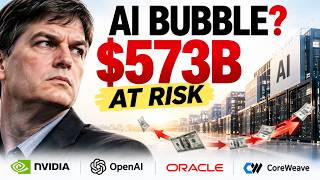
마이클 버리가 AI 인프라 투자에서 순환 금융(벤더 파이낸싱) 리스크를 경고하며 2000년대 초 통신장비 버블과 비교한다. 약 573억 달러 규모 AI 관련 자금조달이 같은 기업·고객 간에 순환하며, 수요가 기대에 못 미치면 CoreWeave, Oracle 등 레버리지가 높은 기업이 취약하다고 주장한다. 다만 순환 관계가 곧 사기나 필연적 폭락을 뜻하지는 않으며, GPU 임대가격·가동률, 데이터센터 공실률, 차입비용 추이를 모니터링해야 한다고 결론짓는다.
다듬은 글
Michael Burry is the legendary investor best known for predicting the US housing collapse before the 2008 financial crisis. His massive bet against subprime mortgages made him hundreds of millions of dollars and was later immortalized in The Big Short movie. Now, he's sounding the alarm again, this time on AI.
Let's see what his prediction is and is that making sense? There is approximately 573 billion dollars in disclosed AI-related financings. These aren't necessarily independent investments. Many are connected to the same companies, the same customers, and the same promises of future AI spending. Here is a simplified example.
Nvidia invests in an AI company like OpenAI. OpenAI commits billions of dollars to purchasing computing capacity. Cloud providers, including Oracle, build massive data centers to meet that demand. And those data centers purchase thousands of Nvidia GPUs. See what's happening? Money flows from Nvidia into the AI ecosystem and some of it eventually returns to Nvidia through GPU sales.
These are real commercial transactions, but they create an important question. How much of this growth is supported by paying end customers? And how much depends on investors continuously injecting new capital? That's the circular financing risk Michael Burry is highlighting. Here's why Michael Burry's warning is particularly interesting.
We've seen something similar before. During the late 1990s, telecom equipment giants like Lucent and Nortel were selling billions of dollars of networking equipment, but many of their customers couldn't actually afford it. So, what did these companies do? They lent money to their customers, who then used that money to buy their equipment.
Think about that. The suppliers were effectively financing their own sales. As long as investors kept providing capital, everything looked great. But, when demand failed to meet expectations, the entire system began to unravel. Telecom companies went bankrupt, equipment orders collapsed, and billions of dollars in financing turned into losses.
Here's the lesson. The internet wasn't a bubble. The internet changed the world. But, that didn't stop the companies financing its infrastructure from losing enormous amounts of money. And Michael Burry believes AI investors may be making a similar mistake today. Not every company in this network faces the same level of risk.
On the screen, I've ranked some of the key companies involved in this financing network from higher to lower risk, along with the main reason each company could be vulnerable. If you're interested in any of these companies, or especially if you already own their stocks, these are risks worth paying attention to.
Let's start with Coreweave. Coreweave relies heavily on debt to purchase GPUs and build AI infrastructure. It then rents that computing capacity to customers. The problem is that if AI demand weakens, GPU utilization could fall. At the same time, newer and more powerful chips could make older GPUs less valuable, reducing the value of the collateral supporting some of that debt.
Falling demand, depreciating assets, and high leverage, that's a dangerous combination. Next is Oracle. Oracle is committing enormous amounts of capital to AI infrastructure, supported in part by long-term customer agreements. But, there's a timing problem. Oracle has to spend enormous amounts of money today, while much of the revenue is expected to arrive over many years.
If AI demand grows more slowly than expected, or major customers struggle to fulfill their commitments, Oracle could face pressure on free cash flow, leverage, and returns on those investments. Then we have OpenAI and Anthropic. Both companies are growing extraordinarily fast, but they're also making enormous long-term commitments to computing infrastructure.
So, the key question is actually very simple. Can future AI revenue grow fast enough to justify the massive infrastructure commitments being made today? And this brings us to the next chart. Here, I've listed the key signals investors should monitor for each company. Things like free cash flow, debt levels, GPU utilization, capital expenditures, customer concentration, and revenue growth.
If you're invested in any of these companies, these are the numbers I would watch closely. Because if Michael Burry and Ares are right, the first warning signs of trouble may show up in these metrics before they show up in the stock price. So, is Michael Burry right? Possibly. But there's an important distinction.
Circular business relationships don't automatically mean fraudulent revenue, and they certainly don't guarantee an inevitable crash. AI demand could continue growing rapidly, and these massive infrastructure investments could eventually generate enormous returns. But Burry's warning raises a question investors shouldn't ignore.
What happens if AI revenue grows more slowly than the infrastructure being built to support it? The most vulnerable companies may not be the ones developing the best AI models. They may be the ones carrying the most debt, and making the biggest investments based on the most optimistic assumptions about future demand.
And that's the real risk behind the AI boom. So, if we want to know whether Burry's warning is actually starting to come true, there are three things I would watch very closely. First, can end-user AI revenue continue to grow fast enough? For companies like OpenAI and Anthropic, we need to watch whether actual revenue and cash flow can eventually grow enough to support their enormous computing costs and long-term infrastructure commitments.
Second, are we starting to see signs of overcapacity in AI infrastructure? Watch GPU rental prices, GPU utilization rates, and data center vacancy rates. If capacity keeps growing while utilization and pricing begin to fall, that could be an early warning that infrastructure supply is growing faster than real demand.
And third, is financing starting to tighten? Watch companies like CoreWeave and Oracle. Are borrowing costs rising? Is free cash flow deteriorating? Are debt maturities becoming harder to refinance? If those signals begin appearing at the same time, Burry's argument becomes much more concerning. And that's the key takeaway from this entire story.
The technology can succeed. AI can change the world, and the investment can still fail. This is Stock Deep Dive. Thanks for watching and subscribe for more in-depth investment analysis.
Comments 0