저자: JeffreyGundlach · 외국인
요약 보기
연준 FOMC 기자회견 후, 인플레이션 상방 리스크(기저효과·유가·관세)로 물가 상승이 예상되지만 연준은 고용 악화 시 금리 인하 쪽으로 기울 것으로 봄. 장단기 금리차 스티프닝이 금리 인하 기대를 반영한다고 해석. 고용 지표(2s10s 12개월 이동평균, U3 실업률 36개월 이동평균, 연속실업수당 청구)를 주시하며 경기침체 전조 가능성 언급.
다듬은 글
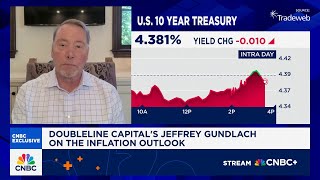
as we welcome in Jeffrey Gunlock. He's the CEO, CIO, and founder of Double Line Capital. Good to see you. It's always great to have you on these Fed days. Jeffrey, what was your biggest takeaway from what you heard from the chair? It seemed like kind of a repeat of the last press conference, except I think his messaging was a little crisper uh this time around.
Last time it was sort of like we don't know anything, which doesn't sound very good. And this time it was sort of wait and see. And we're getting to a point, I've talked about this at the meetings all year, where we started the year in January with the Fed saying we're in a great place. Um because everything was kind of going their way.
And now with the adjustments to the SEP uh in March and now today, they're kind of incrementally moving in the wrong direction. you know, inflation has come down, but as you just referenced, Jay Powell knows, just like everybody, I think, knows that there's upside risk to inflation numbers. And meanwhile, the unemployment rate, while it's pretty well contained, there's some very worthwhile, not high frequency, but long-term indicators that are that are worrisome on the employment rate going higher.
On the inflation side, you basically know that the base effects, meaning the numbers that are rolling off from a year ago are very low numbers. On the CPI, there's a zero and a 0.1 rolling off the next two months. So those will probably be replaced with numbers that are higher than that. And so the Fed knows the inflation rate is going to be probably worse at the next meeting and perhaps also at year end.
So they upgraded their inflation forecast. the three things, you know, you got the base effect I just said. You also have oil, which is up. Obviously, it could be a short-term spike based on tensions, but it's up over $10. It's up 20%. And every $10 that crude oil goes up if it's sustained, adds about 04 to the headline CPI.
So, we've got the base effect, probably going to add a couple tenths to CPI. You've got crude oil if it sticks maybe adding 4/10 uh between now and year end. And then you've got the tariffs of course which are very unknown. And one thing that's clear from Powell's uh answers to the questions is he thinks tariffs are inflationary.
There's all kinds of arguments that it might slow down, you know, destroy demand, slow down the economy and all that, but it's basically he believes it's inflationary and someone has to pay it and that might mean that margins could be incrementally uh lowered and of course we've seen earnings um estimates go down moderately for this year.
So, um, the mandate keeps getting the dual mandate keeps running into increasing tensions and at one point, that's why I think he said wait and see. At some point, one of these dual mandates is going to win out over the other one. And I think and and they're going to have to pick one. And I think they will pick the the fighting the rise in unemployment more than fighting the rise in inflation.
It seems like we're getting being prepared for higher inflation numbers that are very likely to happen. And he talks about maybe there's a one-time effect from tariffs and that that dissipates in 2026, but maybe it won't. And so we'll have to see what what happens with that. But in the bond market, what we've seen is a steepening yield curve.
We've seen long rates going up substantially more than short-term interest rates, which is the bond market's way in my view of taking sides and saying it looks to me like they're going to say we're going to cut rates even though inflation is probably higher than 3% between now and year end. And so if the unemployment rate goes up, they're probably going to be uh more likely to cut rates even if the inflation rate's at three and a half percent.
the the two indicators that I'm really focusing on for the employment rate is the yield curve of course has steepened and deinverted and uh the indicator I think is the most valuable is the one-year moving average of the twos 10's yield curve because when it goes positive on a 12-month moving average basis that's for the past 35 years that's been right at the front end of a recession and it is above now its 12-month moving average so we're going to monitor that very carefully in the in the months ahead.
The other thing is the U3 unemployment rate which is at 4.2% now versus its 36-month or three-year moving average. And when that crosses above its three-year moving average going back all the way to 1990, so 35 years, you've seen that right when it crosses above, you're at the front end of a recession.
And that has already happened, but it's not yet it's not accelerating. in the past when it goes above its 36 month moving average it accelerates. That has not happened yet. And so what we're watching very carefully is uh is the uh continuing claims which have been rising for the last two years and they foreshadowed the moderate increase we've had so far in the U3 unemployment rate.
But continuing claims keep rising and if so we're going to be watching that on a on a real-time basis because if that's continues to move higher it strongly suggests to me the unemployment rate will be moving higher. Also one thing I want to point out is poor Jane Powell has been dealing with 5 years of incredibly unusual data.
you know, the money printing and then the the surge in uh, you know, the bottle chain, the the supply chain problems and then the the reversal of all of that and now we have these tariffs and now we have all these tensions in the Middle East affecting the most important commodity for inflation, which is oil.
So, I understand his wait and see approach, but in the end of the day, I'm just trying to divine the meaning of the bond market. I think they we believe that they're going to uh be more likely to cut interest rates even against a rising CPI or PCE as we move forward through the end of this year and into 2026.
And so I I believe that this yield curve steepening is a trend that has been uh in place for a while now and I think it's going to continue uh with the Fed likely to keep pressure lower on short-term interest rates. I do think it's interesting that there is no talk whatsoever of a hike. I thought there were some questions in the Q&A that were relevant to that point, but it's clear that everyone on the Fed thinks that the next move in rates is lower.
And that further corroborates my idea that ultimately when the mandate comes into detention, they're going to uh look for the to improve employment rather than to uh to fight fight inflation as long as it's moderately above 3% only. So that's kind of my takeaway for the meeting. Not a lot of new information, but it is a very very uh a lot of moving parts going on with economic day and tariffs and war.
I mean, what what else what else can you throw into that uh equation other than some sort of natural disaster?


Comments 0