저자: MohamedEl-Erian · 외국인
요약 보기
중동 전쟁과 호르무즈 해협 봉쇄로 에너지 가격·금리 충격이 발생하며, 에너지 충격→인플레이션→수요 파괴→금융불안의 4단계 경로를 거칠 수 있다. 영국·유럽은 1~2단계, 에너지 자립도가 높은 미국은 더 늦게 3단계에 진입. 해협이 재개방되어도 인프라 손상으로 인플레이션은 3~4% 수준에 머물고 금리도 높게 유지될 전망. 전쟁 장기화와 에스컬레이션 가능성이 높다.
다듬은 글
We are living in a world that is subject to more frequent and more violent shocks. And those shocks can have an unthinkable element to them. Now, there's a good reason for that. We've lost unifying themes. We've lost the rule of law. Impunity has become um the flavor of the year, if you like. There's no longer the checks and balances that were holding nations back to certain behavior.
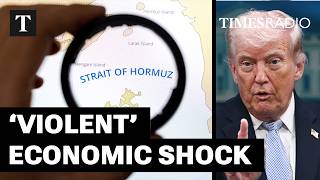
And what we're seeing is more frequent and more violent shocks to the global economy. President Trump says tonight's deadline for Iran to reopen the Strait of Hormuz is final. If the Iranians agree, and it's a big if, global trade will flow much more freely. But the economic wounds will take a very long time to heal.
The impact on oil and gas prices will linger. Mohamed El-Erian is chief economic adviser at Allianz, the insurance giant. He explains why the war has so many knock-on effects. Everyone is hurting. They're hurting from higher energy prices. They're hurting from higher interest rates. Some are soon going to hurt from physical lack of physical supplies of energy.
In terms of who's hurting the most, you would have to go to Asia because they are the least energy independent. And already we've seen steps to reduce consumption. And over there, they're looking not just at higher prices, but they're also looking at significant significantly lower growth. And we are in this, you've described it as a sort of paralyzing tug-of-war.
Can you explain what you mean? Yeah, I mean, there's a an economic logic that few people realize. And it will continue until we get a circuit breaker in the war. Phase one is higher energy prices, higher interest rates. We felt that in the first two weeks of the war. Phase two, the price shock becomes much broader.
So, it develops into inflation. That is what we are feeling now. Phase three, you get what's called demand destruction. Economic activity declines, unemployment goes up. So, it's no longer just a price shock, but it's also a growth shock. Some countries are entering phase three now. Not the UK, but some countries are entering phase three.
Phase four, which I hope we never get to, is not only do you get economic damage, but you get financial instability. And that in itself becomes a drag on economic growth and well-being. That phase three demand destruction, in practice, what does that look like? So, first you get people who can no longer afford certain things because their disposable income has been eaten up.
Um paying for petrol means you pay you have less money to pay for uh things elsewhere. The second element of demand destruction tends to be the governments try to discourage consumption. You've seen some developing countries, for example, close everything after a certain hour to try to lower energy consumption.
And then you have higher interest rates in all this. As inflation fears go up, interest rates go up and stay up. And that also means that borrowing costs are higher and companies invest less. You mentioned that that isn't the UK yet. The UK and the EU are potentially a bit better positioned, but how long do you think they'll be able to sustain that position for?
So, the UK and and the Eurozone, the EU, are in phase one and phase two. Energy shock, higher interest rates, and an inflation in the pipe. Um they can stay there for three to four weeks, but if this war if the disruptions of the war continue, then they will enter phase three as well. The well-placed, ironically, is the main warring party, the US, because they have energy independence, so they will enter phase three much after the UK and Europe.
I mean, it's a very difficult question to answer, and we don't know, do we, when the Strait of Hormuz will be reopened, but let's say it was reopened at Donald Trump's latest deadline, so by the end of today, UK time. Does the UK avoid entering stage three? Mostly. Um, it won't avoid inflation. Um, and it it's really sad, because if you look at the data in January, it was getting brighter.
Inflation was coming down to the Bank of England's 2% target and was got likely to stay there. Um, the Chancellor had more fiscal headroom, so more fiscal policy flexibility. And there was some evidence that growth may pick up. All that has changed. Um, and even if the straits are open tomorrow, there has been long-term damage to infrastructure.
And that means that inflation is likely to be three to three and a half, if not three and a half to four. Interest rates are likely to remain higher than they would be in otherwise, and the fiscal headroom is less than it would have been otherwise. What impact does Donald Trump's threats have on all of this?
So, if he if he carries out his threat of attacking infrastructure, civilian infrastructure, you should expect Iran to carry its counter threat that it will do the same. And suddenly, the disruptions become so deep that when the war eventually ends, which it ends, it would not be like a light switch.
We're not going to turn things back on. It's going to take years to get back to normal, which means continuous supply disruptions. And then you have to ask the question, what does Iran look like after the end of the war? Is it stable or is it unstable? And what does that imply for other countries? So, lots of questions the longer this war goes on and the bigger the damage to lives and livelihoods.
So, the risk is actually if Donald Trump carries out on his threats, what we then see is an acute upturn in aggression from both sides, actually, a deeper entrenchment of how serious the situation is. That's correct. You know, if you try to solve this in terms of a quick end to the war, you have four things that you have to deal with.
First, the three major warring parties, Iran, Israel, and the US, have different objectives, including between the US and Israel. Second, all three think they're winning. So, there's no desire um or no necessity to end it. Third, the US, as the most influential party, does not have enough influence to force outcomes on everybody else.
And finally, it's an asymmetrical war. And as you know, Rosie, asymmetrical wars can last a very long time. So, unless you relax one of these four conditions, unfortunately, escalation becomes the path. Are we then seeing a sort of long-term implications already now for who holds the global economic power?
So, I think we've understood that choke points are important. And there are several choke points, but there's a much bigger message. Is that we are living in a world that is subject to more frequent and more violent shocks. And those shocks can have an unthinkable element to them. Now, there's a good reason for that.
We've lost unifying themes. We've lost the rule of law. Impunity has become um the flavor of the year, if you like. There's no longer the checks and balances that were holding nations back to a certain behavior. And what we're seeing is more frequent and more violent shocks to the global economy. A fascinating conversation there that I had earlier with Mohamed El-Erian, the chief economic adviser at Allianz.
And you do get this If Donald Trump ratchets up to the point he has done, saying I will bomb Iran into the Stone Age, we will then see some form of retaliation from Iran ratcheting up on a similar level. And what do we then end up with? We've got no indication there that Donald Trump has achieved his aims of reopening the Strait of Hormuz, which wasn't even an aim at the beginning of this war, because he had underestimated the degree to which Iran could choke the entire global economy.
What of the other One of the other war aims to say we would obliterate Iran's nuclear capacity? I'm not sure we've got any intel on whether this military intervention from America has done anything to help better achieve that. One of the bits of analysis I was reading actually on this, which I thought was quite interesting, was about how the rest of the Gulf leaders are feeling at this point in time.
And that all the way through the various rounds of fighting, their their wants, their needs really have gone completely unheeded. And they were arguing against a new round of conflict in the first place. They were urging Trump to keep negotiating. They were facilitating in some cases those negotiations with Iran as well.
They They were personal visits from the crown The Saudi crown prince, from leaders in the from Emirati leaders, other regional officials as well. Trump still went ahead. And he listens to Benjamin Netanyahu in all of this. And so what you're talking about there, I think, Rosie, that escalation is because of the because the ear of Trump is Benjamin Netanyahu's to do with as he pleases, basically. That seems to be where we're at at this moment.

Comments 0