원문 보기
There is a strange thing Charlie Munger spent decades watching. Not market crashes, not recessions. Not inflation, not wars. Ordinary people. Good people, hard-working people. Destroying their own wealth. And the strange part? Most of them never even realized they were doing it. Not through stupidity, not through bad luck.
But because they quietly broke three invisible rules of compounding. Rules so simple they almost sound boring. And yet breaking even one of them can quietly cost you hundreds of thousands of dollars. Sometimes millions. The tragedy? Most people never notice the mistake until it's too late. Because compounding is strange.
At first, it feels like absolutely nothing is happening. Like pushing a tiny snowball uphill, wondering if all this effort even matters. And then one day, the snowball becomes an avalanche. And suddenly everyone says, "Wow, they got lucky." No, they stayed, and that changes everything. Imagine two investors.
The first person wakes up every morning checking stock prices, reading headlines, watching YouTube predictions, listening to people screaming, "This stock will explode! The market is crashing! Sell now!" Every week something new steals their attention. Crypto, hot stocks, fear, predictions, panic. They spend years running, but somehow never really move forward.
Now imagine someone else. Quiet, boring, patient. They invest steadily, ignore the noise, go back to living life. No drama, no excitement, just patience. Charlie Munger loved people like this because he understood something most investors never learn. Wealth is not built through excitement, it's built through endurance.
And here is the uncomfortable truth. Research has repeatedly shown something shocking. The average investor often earns far less than the market itself. Not because investing doesn't work, but because emotions get involved. Think about that. The market might return 8% 10% but many investors get far less.
Why? Because human beings love doing exactly the wrong thing at exactly the wrong time. When prices go up people feel smart, excited, confident, so they buy. When prices crash fear arrives, suddenly the future feels dangerous, so they sell. Buy high, sell low, again and again and again. Like running frantically on a treadmill while boring investors quietly move ahead.
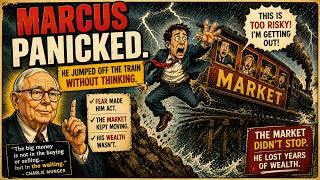
Charlie Munger once said something brutally honest. The big money is not in the buying or selling, but in the waiting. And that sentence alone could change your financial life. But here's where almost everybody breaks. The flatline, the silent years, the years where investing feels completely pointless.
Imagine planting a seed year one, nothing year three, still small year seven. You're wondering if this thing is broken. And meanwhile your friend bought a flashy car. Someone online made money trading options, crypto exploded. Everyone else seems to be winning while you feel stuck. This is the dangerous moment because most people quit right here.
They mistake invisibility for failure. But compounding works underground first, like roots growing beneath the surface. You don't see the growth but growth is happening. Quietly, patiently, silently, and then suddenly everything changes. Charlie Munger understood something strange about wealth. At first growth looks disappointingly flat.
Then eventually it bends upward like a hockey stick slowly slowly. Then suddenly fast. But the painful truth most people quit right before the curve starts working. Imagine climbing a mountain for years tired, exhausted, frustrated and then giving up one step before the view. That happens in investing every single day.
People walk away not realizing they were closer than they thought. And that brings us to Marcus. Because Marcus made the same mistake millions of investors make one emotional decision that quietly cost him years of wealth. Marcus wasn't reckless. He wasn't stupid actually. He thought he was being smart.
And that's exactly why what happened next is so dangerous. Marcus believed leaving the market would protect him. What he didn't realize was that the most expensive mistakes in investing often feel safe when you make them. Marcus was not irresponsible. He had a good job, a family, bills, responsibilities.
He wasn't trying to gamble. He simply wanted to protect what he had. And for years he did the right things. He invested steadily month after month small amounts. Nothing dramatic. Nothing exciting. Then came the storm, a market crash. Suddenly the news turned dark. Headlines screamed fear. People panicked.
Friends started saying this is different. The economy is collapsing. Get out while you still can. Everywhere Marcus looked fear felt logical. The market dropped again. And again, and again. One night, he looked at his account. Years of savings suddenly looked smaller. And fear whispered something dangerous.
Protect what's left. So, Marcus sold everything, and for the first time in months, he felt relief, safe, protected. Like he had escaped danger. But, here's the problem. Nobody talks about. The market doesn't send invitations when recovery begins. Because something strange happens in investing. The best days almost always arrive near the worst days.
Think about that. The biggest recoveries often happen when fear still feels strongest, when nobody feels confident. When headlines still sound terrifying, Marcus waited, and waited, and waited. 6 months became 1 year. 1 year became 2. And during that time, the market quietly recovered without him. Not only recovered, it surged.
The train he jumped off kept moving, and Marcus stood at the station watching it disappear. Years later, Marcus said something painful. I thought I was avoiding losses, but I was really avoiding recovery. And that mistake cost him far more than the crash ever did. Imagine this. You're crossing a strong bridge during a storm.
The wind is violent, rain everywhere. Thunder shaking the sky, and suddenly, everyone around you starts screaming, running, jumping into chaos below. Fear spreads fast. So, you think, maybe I should jump, too. But, here's the truth. The bridge was never broken. The storm was temporary. And investing works the same way.
The market feels dangerous right before it becomes rewarding again. That's the first silent rule of compounding. Stay invested long enough for compounding to work because every time you leave, you interrupt the machine. You unplug compounding. And restarting is harder than people think. But Marcus isn't the only person who quietly destroyed wealth.
Because there's another mistake that feels completely harmless. Waiting. Elena had good intentions, always. She wasn't reckless. She wasn't irresponsible. She simply believed something millions of people believe, I'll invest later. Later when life settles down. Later when income increases. Later when she feels ready.
At 25, she delayed. At 30, still delaying. At 35, life got busy. Mortgage, career, family, and somehow later quietly became years. Then one afternoon she met an old friend. Someone she hadn't seen in years. And the conversation changed everything. Her friend wasn't rich, didn't earn dramatically more money.
Didn't win the lottery, didn't own a business. Yet somehow her investments had quietly grown into something meaningful. Elena was shocked. Same salary, similar lifestyle. So, what was different? Time. That was it. Time. This is where Charlie Munger loved talking about something deceptively simple, the rule of 72.
A tiny piece of math that feels almost unfair. Here's how it works. Take 72, divide it by your return. If your investments grow around 8% annually, money roughly doubles every 9 years. That means $10,000 becomes $20,000, then $40,000, then $80,000, then $160,000, and eventually the numbers stop feeling normal because compounding starts multiplying itself like rabbits multiplying quietly in the background.
But here's the painful part. Elena waited 15 years. 15. And those years, they cost her an entire doubling. One missing doubling sounds small until you realize it can mean hundreds of thousands of dollars later, sometimes more. Imagine two people climbing ladders, same effort, same discipline, same monthly investment, but one person starts early.
The second starts late. The early investor gets one invisible advantage. More ladder, more time. And time is everything because in investing the magic is not usually how much you invest. It's how long money gets left alone. Charlie Munger understood this deeply. He once said, "The first rule of compounding is to never interrupt it unnecessarily." And most people interrupt it in two ways, fear and delay.
Marcus lost years because he left. Elena lost years because she waited. Different mistake, same outcome. Less compounding, less wealth, less freedom. And maybe this part is uncomfortable, but someone needs to say it. There is no perfect time to invest. No magical moment, no future version of yourself suddenly becoming fearless because waiting for certainty often becomes permanent hesitation.
Meanwhile, time keeps moving quietly, indifferently, whether you act or not. The train leaves either way. The question is simple. Are you on it or standing on the platform saying, "Maybe next year."? Now, here's the strange thing. The person who often wins at investing is usually the most boring person in the room.
No flashy predictions, no dramatic trades, no genius strategy. Just quiet consistency, and that brings us to David, the man who accidentally discovered one of the simplest wealth machines ever built. David never looked rich, never sounded rich, never acted rich. Actually, most people thought he was boring.
No hot stock tips, no crypto obsession, no dramatic predictions, no market genius. While everyone around him chased excitement, David quietly built a system. Every month he invested automatically, no matter what. Good economy? Invest. Bad economy? Invest. Market crash? Still invest. Recession? Still invest.
He treated investing like brushing his teeth. Not exciting, not emotional, just normal. Still invest. Meanwhile, everyone around him was busy chasing shortcuts. One month, this stock will explode. Next month, crypto is the future. Then AI stocks. Then the market is doomed. Everyone looked busy. Everyone sounded smart, but strangely, very few people actually got wealthier.
David noticed something. The loudest investors often had the weakest results, because excitement feels productive, but consistency builds wealth. David discovered something powerful. The market already had a machine, and the machine had existed long before him. An incredibly boring machine. One that quietly rewarded patience.
He stopped trying to beat the market, stopped trying to predict it, stopped chasing perfection. Instead, he simply owned the market. Broad, diversified, low-cost, patient. And year after year, small coins turned into something larger. Not instantly, not dramatically, quietly, like feeding tiny logs into a fire.
At first, barely any heat, barely noticeable. But eventually, the fire became impossible to stop. And this is where Charlie Munger's wisdom becomes uncomfortable, because wealth often looks boring while it's being built. Most investors fail for a strange reason. They quit right before things become interesting.
Imagine digging for treasure. You dig for years. Nothing, dust, rock, frustration. Then one day, you quit. One foot away from gold, you never know how close you were. Compounding feels exactly like this. For years, it looks unimpressive. Imagine digging for treasure. You dig for years. Nothing, dust, rock, frustration.
Then one day, you quit. Then suddenly, growth accelerates. The tiny snowball becomes enormous. The small plant becomes a giant tree. The slow stream becomes a massive reservoir. And people watching from the outside say, "Wow, they got lucky." No, they stayed long enough. That's all. After watching investors for decades, Charlie Munger understood something most people never do.
Compounding is simple, but human emotions make it difficult. And hidden behind wealth are three silent rules. Simple, quiet, non-negotiable. Rule number one, don't interrupt compounding. The market will scare you repeatedly. Crashes will come. Fear will feel intelligent. Everyone will suddenly sound certain, and in those moments your greatest temptation will be leaving.
But remember, Marcus, the recovery often arrives when fear still feels strongest. The storm passes. It always does. The question is, did you stay on the ship or jump overboard? Rule number two, start before you feel ready. Most people overestimate money and underestimate time. They think, "I'll invest when I make more." But the truth, time matters more than perfection.
Start imperfectly. Start small. Start scared, but start. Because delayed action quietly becomes regret. Remember, Elena. Waiting 15 years didn't just cost time, it cost an entire doubling. And in compounding, missing one doubling changes everything. This one surprises people because wealth often comes from boring decisions.
Not excitement, not brilliance, not prediction. Boring, steady, patient, like placing one brick every day. Tiny effort repeated long enough until suddenly you're standing in front of a castle. David understood this. He stopped chasing shiny distractions. And simply trusted the process. While others restarted over and over again, David quietly kept building.
And eventually, the machine became unstoppable. And here's something Charlie Munger understood better than most people. Money itself is rarely the real goal. Because eventually, the conversation changes. You stop asking, "How much money do I have?" And start asking, "How much freedom do I have?" Freedom to choose.
Freedom to rest. Freedom to say no. Freedom to spend time with people you love. Freedom to stop trading time for survival. That's the real dividend. Not cars, not status, not impressing strangers. Time, peace, choice. That's what compounding quietly buys. Charlie Munger once watched generations of people make the same mistake.
Chasing shortcuts. Leaving too soon, waiting too long, mistaking boredom for failure. And meanwhile, quiet investors kept winning, slowly, silently. Almost invisibly, until one day their tiny snowball became a mountain. So maybe the question isn't what stock should I buy? Maybe the better question is, can I stay patient long enough for compounding to change my life?
Because wealth is strange at first. It whispers. Then one day, it roars. And the people who win are rarely the smartest. Usually, they're just the ones who stayed. So tell me honestly, are you Marcus, Elena, or David? No judgement, just honesty. Because the best time to change your financial future might be today.
Comments 0