
저자: StanleyDruckenmiller · 외국인
요약 보기
드러켄밀러는 엔비디아를 2조달러 시총 이후 매도한 것을 후회하며, 기술적 고점 판단과 손실 매도 원칙을 설명. 자신은 감정적이지 않고 매수 근거가 사라지면 손실이라도 정리한다고 밝힘. 영상 해설자는 그가 엔비디아를 너무 일찍 팔았다고 강조하며 성급한 이익 실현과 종목 교체를 경계하라고 함. 엔비디아 향후 방향에 대한 명시적 예측은 없음.
다듬은 글
Do you generally sell early? No, I mean embarrassingly I I did an interview on Nvidia. I think it was like 370 or something and I said this is one we're probably going to own for a few years. But I didn't think it was going to go to 900 in a year. Uh and to over $2 trillion market cap. I think it had started like 100 billion or 150 billion.
It was something crazy. Um So no, I don't necessarily sell early. I'm a technician, so I usually wait for tops. Um Nvidia had no top. I just thought um What does that mean? Just want to explain what does it mean to have a top? A top is something the rate of change of it's going up changes and it tends to flatten out for quite some time.
The trick is in the technical world that could end up being a bull flag where it just consolidated for a bit and then it did a new leg or it could be a top where that was it that was it. And [clears throat] How do you know which is which? You don't. You have an opinion and you express it. Sometimes you're right and sometimes you're wrong.
With Nvidia um there was no top. But I just I've [snorts] I've analyzed the semiconductors industry not particularly well, but since the 1970s and it's a cyclical industry. Mhm. And I knew Nvidia had staying power and was had 4,000 software engineers, so it wasn't just hardware. You know, they have a CUDA, this thing called CUDA software that they do to to make their GPUs.
But I just thought once it went through 2 trillion this is just too much and worst case it'll have a big correction and I'll get another chance and of course I didn't get another chance. Oh, you may. Yes, I may. You think you will? Uh I don't know from this price. I assume I will or I would have bought it back.
I don't mind buying something back higher than I would. I don't like it, but I'm perfectly willing to buy something back higher than I sold it. Some people can't get themselves to do it. Oh, I can. I'm The one thing I'm strong on is I'm not emotional. But um You never had a down year. No. A stupid question.
Why is that important? No good reason. I think it's it's important because other people talk about it and uh my investors loved it when I had investors because um you know, they have this stuff in our industry is you know, called risk-weighted return. I'm not big on that, but I will say it's a stressful job and there's less stress if you don't have big drawdowns.
I have had significant drawdowns in inner years. So, part of the down year is just luck. So, what does a drawdown do to you? I get uh anxious, upset, uh I You still get upset even though it's only your money? Yes. Yeah, I'm just um I'm a very competitive person even if it's just my own money. I I wish I wasn't, but I am and uh it's probably one of the reasons my results are as good as they are, but I'd prefer myself not to be um it's a bit of a sickness, but it works for me.
Who do you compete against? I compete against what I would call the opportunity set and if there was a great opportunity set that year and I missed it, um I'm disappointed in myself. Like if I'm up 20 and I think I should have been up 50, I'm disappointed in myself. Mhm. If the opportunity set was basically to be up 10 or 15 and I'm I'm up 20, I'm thrilled.
I mean, the good the good thing about being an investor is always a good reason to hit yourself in the head, right? I don't know whether that's a good thing about our business. It's It's just but it's it's probably the bad thing about our business and for some reason I like to hit myself in the head.
I always measure from the top. But you are quick at selling your losers. What's the key to that? If the reason I bought a stock is no longer the case, I don't care what I paid for it. And if I bought it at 60 and it's 50 because the market's discovered the problem before me, Mhm. I have I have no emotion whatsoever.
Um Soros was the same way. I didn't really learn it from him, but it was certainly reinforced like after a while, Nikolai, you also develop enough confidence that you're not afraid to clean the slate and start over cuz you have the confidence that you'll be successful again and you're not going to sit there in a lazy position that you're not that sure about anymore.
Just clean house and if you've been doing it for decades and it's worked, you kind of have the confidence to take a loss and not worry about it too much. Mhm. Once I'm out, I'm out. You said you don't have feelings. What do you What do you mean by that? Did I say I don't have feelings? I have a lot of feelings.
You mean about taking losses? Yeah, just What I mean by that is I think one of the reasons Church work we have the reason there's support and there's um there's resistance is the resistance is a bunch of people that bought it at 60 and it went down and they've been waiting for 3 or 4 years for it to get back to 60 while they could have been in something else that was going up the whole time.
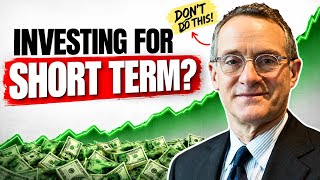
Um I just don't care what I paid for a stock. It's absolutely irrelevant Mhm. uh in terms of my investment process going forward. What if I told you even the greatest investors in the world consistently get one thing wrong, timing the top? Take Stanley Druckenmiller, one of the best ever to do it, a man who never had a down year in his entire career.
Think about that for a second, not even once, and yet he still made a mistake. He sold Nvidia too early. Yes, that same Nvidia. He later admitted he was disappointed, not because he lost money, but because he underestimated how big the opportunity really was. And that's the lesson most investors completely miss.
We are obsessed with booking profits. We sell winners too early thinking, "Okay, this is enough. I'll find a better opportunity." But here's the truth, finding multiple great opportunities in the stock market is extremely rare. We should stop constantly jumping from one stock to another. Druckenmiller did not fail because he picked the wrong stock.
He failed because he did not stay long enough. So, next time when your stock goes up, ask yourself, "Am I selling because the story has changed or just because the price has gone up?" Because sometimes the biggest mistake isn't picking the wrong stock. It's leaving the right one too early.



Comments 0