저자: CharlieMunger · 외국인
요약 보기
버크셔 해서웨이 부회장 찰리 멍거가 경기 호황과 통화 완화의 효과, 그리고 기업 분석과 투자 원칙을 이야기함. 경기는 호황이지만 사이클이 있으니 꾸준히 대응해야 한다고 강조. 단순함과 관료주의 배제, 잉여현금 활용이 버크셔의 강점이며 예측 가능한 사업에 투자한다고 설명. 주식 환매는 저평가일 때만 해야 하며 주가 부양 목적은 부당하다고 지적. 대상 자산에 대한 가격 방향 예측 발언은 없음.
다듬은 글
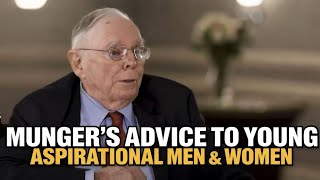
A business empire needs decisive leadership, but also a steady hand. For over 40 years, Charlie Munger has been the latter for Berkshire Hathway. As Bergkshire's vice chairman, the 95year-old Munger is Warren Buffett's right-hand man. He's also an investing legend in his own right. Munger ran a firm in the 1960s and 70s that scored returns of over 24% per year.
He's here to talk about how to make investment decisions and life choices that help secure prosperity and longevity. I'm Andy Surer. Welcome to Influencers and welcome to our guest, vice chairman of Berkshire Hathaway, Charlie Munger. Charlie, nice to see you. Delighted to be here. So, you just had the annual meeting and I have to ask you what your favorite moments of that were.
What I like is that both the shareholders and the employees of Bergkshire are so extremely enthusiastic. And it's not just that they've made a lot of money and have nice careers. They think they're on the right side. And you know, they come there to hear you guys talk all day and Yes. Like a cult. It's like a cult.
Yeah. In a good way though. In a good cult. Yes. A good cult. Okay. I mean, and the the stuff that they hear, some of it's new, some of it's old, and a lot of it is common sense. And you were talking a lot. A lot of it is common sense, right? But of course, when people use the word common sense, what they mean is uncommon sense because the standard human condition is ignorance and stupidity.
And so, they say old Joe has common sense. What they mean is he has uncommon sense. I guess it's a bit bit of a misnomer then. But it really is. So yeah, why is it that people can't think clearly about investing or decisions in their lives? Well, they don't think very well about sex or gambling either.
No, I the standard human condition is a lot of miscognition. And there are ways to make hay of that or yes, you take advantage of other people. You can improve your own life by eliminating your miscognitions. Let me shift gears a little bit, Charlie, and ask you about uh the US economy and um what is your take on where things are right now?
Well, obviously they're booming, but you know, the economy sometimes booms and sometimes it doesn't. And you have to live your life through both episodes. And our attitude is we just keep swimming and sometimes the tide is with us and sometimes against and but we keep swimming either way. Are you surprised by how long this expansion has lasted?
Of course, it's lasted a long time. But what was really remarkable is we never printed money so much and spent it so fast and bought back so much debt public and private. So this is total terra incognita in economics and and nobody knew for sure how it was going to work. So is it risky then? Of course it was risky but it worked and I don't think they had much else they that would work.
They weren't set up to do stimulus too much controversy democratic inertia and various kind. So they had to do something and all they had left was just to print money and start buying things and that's what they did. And it turned out to be a very wise response. And what's even more remarkable is that both Congress and the presidency and or both parties made the same decision.
They all cooperated. It was the last time. But where is that going to leave us ultimately? Well, it left us licking the Great Recession. So maybe we ought to try cooperation again since it worked so well once. How much is President Trump responsible for this current economic situation? Well, I think he deserves some credit, but a lot of it just happened.
Economic cycle. Yeah. And the decisions of his predators, predecessors. It's my understanding, Charlie, that you were instrumental in helping Warren get away from focusing on the cigar butt form of investing and looked more towards companies that I guess you could call them branded companies. Better businesses.
Better businesses, right? Yes. Um, how did you help him make that uh decision? Well, it was perfectly obvious. and he'd made so much money in the other technique that it was hard for him to leave something that had worked so well, but it was not going to scale. So he when he started looking for investment values in great businesses that were temporarily under pressure, it changed everything for the better.
Now we could scale up to the big time. Are Apple and Amazon technology companies or are they brand companies? Both. Um, someone told me they asked Warren if he could buy one brand, this was about 40 years ago, what that company, what that brand would be, and he said Gillette, which makes sense. What would that company be today?
Coca-Cola. Still, if you take the amount of Coca-Cola drunk in the world and the main flavor, it's one hell of a brand. Now, it's such a different product from this stuff on the internet. I don't have the same. My judgment would not be as good on the internet as it is on Coca-Cola. You also mentioned uh at the meeting yesterday doing um billion-dollar deals overnight with very short contracts.
Yeah, we've always done that. Has that ever blown up on you? I can't think of a single example in my whole life where keeping it simple has worked against us. We've made mistakes, but they weren't because we kept it simple. And that's simple. it. I would say that the chief advantage that Bergkshire has had in accumulating a good record is that we have avoided the pompous bureaucratic systems.
We've tried to give power to very talented people and let them [clears throat] make very quick decisions. Where do you think, Charlie, the biggest opportunities are globally right now? Well, I don't think we have a master plan of knowing where the opportunities are. We're trying to find intelligent things to do with a torrent of surplus cash.
And we've always had a torrent of surplus cash. And we're always looking for intelligent things to do with it. And if we find things that are intelligent to do, we do it. And if we don't find anything, we let the cash build up. What the hell is wrong with that? Um, and as far as what's going on in Silicon Valley right now with IPOs, unicorns going public and not having any profitability or any prospect of profitability um, in the near term.
What do you think of that situation? Well, there are a whole lot of things I don't think about and one of them is companies that are losing two or three billion dollars a year and going public. It's it's not my scene. Have you looked so you're not interested in Uber or companies like that necessarily?
Well, I'm have to be interested when they're that important and sweep the world and change practice, but I don't have to invest in everything I'm interested in. I'm looking for things where I think I can predict what's going to happen with a high degree of accuracy and I have no feeling that I have the ability to do that with Uber.
Right. Shift gears and ask you a little bit about um repurchasing shares. you said in the shareholder meeting, I predict we'll get a little more liberal in repurchasing shares. How much more aggressive will you get? And do you think that's going to be a problem potentially with the Democrats? Well, a politician that's in the business of howling about something, trying to create a sense of outrage, uh, it it they're always complaining about something.
But, and it is true that a lot of people it got so popular to purchase shares that some people purch them p repurchased them even when they were too high priced. We will never do that. We're only going to buy them back if they're too cheap. And but of course that ought to be done. If you had a partnership of three of your crippled relatives and one of them needed some money, wouldn't you buy out the crippled relative with the company's money?
It's just simple morality. So, but I do think it's being overdone by some people and it undoubtedly is being done to prop up values which I regard as an improper use of the share repurchasing technique. Should there be laws about that? No, there are laws and and but we shouldn't be telling people what the right price is,
right? I was with some people um just a few minutes ago actually and they were kind of recounting some of your zingers. Um do you spend time before the meeting say I've got like these six zingers I'm going to get out during the annual meeting? Never. Think of all the people you know that have tried to take one extra step and have fallen off a cliff.
Well, on that happy note, we will conclude the meeting. That's just come to you. Yes, it I think the meetings work better if they're spontaneous. If we were scripting things, I don't think people would like it. So, you and Warren don't say anything at all before you sit down there. Zero. You have no idea what's going to happen.
That is correct. That's fantastic. Um, so I want to ask you just a question or two about growing up and you were at the UN University of Michigan and you dropped out and joined the army, right? I certainly did. And we all did in those days. Yeah. So how did that did the army influence you? Well, everything influences you in your past life.
And yes, of course it influenced me. I never wanted to be in a big bureaucracy. I was well toward the bottom. I finally got to be a second lieutenant in the army. I was way down in the ranks and nobody gave a damn what I thought about any subject. They just gave me a little job to do when I was supposed to do it.
And of course, I didn't like that as well as having a free reign to control my own destiny and so on. So, I am much better adapted to being a capitalist operator than I am to being a cog in a bureaucracy. Did you ever get in trouble in the army? Of course. Tell us about that. Well, my senior officers could tell I thought they were wrong and I tried to hide it and they could still tell.
And so, of course, I I never got any serious trouble, but they they Who in the hell likes a junior officer? You look over there and he's plainly indicating he thinks you're an idiot. So, that didn't work out too well. Well, it worked out all right. I did my work well enough, so they didn't bother me, but it I it was it was not a video where I was going to succeed.
Right. So, how did you figure out? A lot of people look at your life and, you know, would want to emulate what you've done. Is that something that people can do? Look at someone like yourself and see your path. I mean, you're in real estate law, then investing. What do you even consider yourself? A businessman.
How would you describe what you do? Well, I don't consider myself a I think my way of thinking will work for anybody of trying to be very rational and disciplined. So, I think that much. But to flit around to various careers and go into the other fell's professional territory and try and outdo him and do all kinds of things like that, I think will not work for most people.
And so I always tell I'm always being visited by young men who say I I'm practicing law and I don't like it and I'd rather be a billionaire. How can I do it? And I tell him, well, I'll tell you a story. A young man goes to see Mozart and he says, "Mosart, I want to start composing symphonies." And Mosart said, "How old are you?" And the guy says, "22." And he says, "You're too young to do symphonies." And the guy says, "Yes, but you were 10 years old when you were composing semin." And Mosert says, "Yes, but I wasn't running around asking other people how to do it."
Right. So, I think this splitting around business is something not everybody should try. Yeah. I think I think if I tried it again, it might not have worked as well. You said just figure out. Why were you were lucky? Yeah. Yeah. I think I had some luck. Yes. Well, but I I think there's more to it than that.
I mean, where were you looking? Yes. The combination of luck and skill. That's what all good records are, right? Um um and and finally, Charlie, I want to ask you a little bit about um philanthropy. And you know, it seems like Warren's been sort of a little bit more upfront about that about that with Bill Gates and the giving pledge.
And I know you're philanthropic as well. Um what is your thinking on that? How up? Well, I wouldn't sign the given pledge because I've already transferred so much to my children that I've already violated it. So, I think I'm asking I'm seeking false credit if I join them and say I'm a big philanthropist that's going to give more than half of my wealth to charity.
I've already given more than half of it to my children. So, I can't join them. It's like coming back from the dead. I can't do it. But doesn't that make Warren mad? coming mad. When is Warren mad about somebody else's? Warren thinks that each bircher otherwise entitled to do with his own money what he damn believes.
So, so let me just follow up on that what you did then. What was your thinking in terms of giving a giving away money like that though? Well, it's simplicity itself. I had a wonderful wife. Most wives worry that the husband, if he survives, will get involved with some nurse or something in his doage and that the money will go away from the children.
And I knew that my dead wife would have preferred to have the money go to the children. So I arranged that she got her wish. Right. So any thoughts on how uh the meeting is going to be different next year? I mean when do you start talking about that or do you even talk about the annual meeting? We never talk about it.
We just do what works. As long as it works and when it stops working or it indicates it's going to stop working, we'll stop. Did Apple say they want to have some exhibit in the convention center this year? I had no discussion with them. I don't any have have any idea what they're doing. And do you see a time when Ajet and Greg and Ted and Todd will come up there with you at some point?
I don't know how it will morph. I don't think that what worked in one era has to be duplicated in another. I don't think what we're doing would work for many people. I think it was an historical accident. We didn't do it on purpose. We just sort of drifted into it. When it worked, we fanned the flames.
But we didn't create it with any forethought. And I think some later generation will have some different system. I think there's more wise assery in our meeting than would be appropriate forever. And I'm the principal. Wise ass. Yeah. You are Charlie Munger, vice chairman of Berkshire. Wise ass. Wise ass. Right. Thanks very much.
Comments 0