저자: 미상 · 외국인
요약 보기
블랙록의 운용자산 15.3조 달러 규모와 글로벌 영향력을 설명하고, 1988년 창립부터 1994년 분사, 2006년 메릴린치 자산운용 합병 등 성장 과정을 다룸. 리스크 분석 시스템 '알라딘'의 구조와 2008년 금융위기·2020년 코로나 때 미 정부·연준이 활용한 사례를 소개. 마지막으로 ESG 논쟁, 주 정부 보이콧, 집중 리스크(groupthink) 우려를 짚으며 단일 기업의 과도한 영향력에 대한 문제 제기로 마무리.
다듬은 글
Hey everyone, and welcome to this explainer. Today, we're going to completely peel back the layers on what is arguably the most powerful and yet kind of the most misunderstood financial institution in the world. I'm talking about BlackRock. I am absolutely thrilled to guide you through this because honestly, the sheer scale of what we're looking at here is just mind-bending.
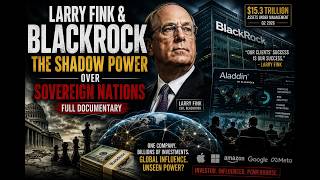
So, let's jump right in and build a clear step-by-step understanding of how exactly one single company came to hold so much sway over our global economy. Let's get into it. $15.3 trillion. Just let that number sink in for a second. As of 2026, this staggering figure is BlackRock's assets under management, or AUM.
To really put that into perspective for you, that is equivalent to a massive chunk of the entire gross domestic product of the United States. We are not just talking about a big company here. We're talking about an entity whose managed wealth literally rivals the economic output of global superpowers.
It's almost hard to wrap your head around scale at this level. Now, what's really interesting is this second number, $21.6 trillion. While BlackRock directly manages over 15 trillion, their proprietary tech system, a little something known as Aladdin, monitored an additional $21.6 trillion in assets as of 2020.
So, what does this mean? It means the total financial footprint they have visibility into is vastly larger than what they even manage directly. This right here establishes the immense global stakes of our topic today. So, here is our road map for today. First, we'll look at the 15 trillion behemoth.
Second, the origins of the giant. Third, Aladdin, the risk engine. Fourth, managing the world's crises. And finally, power, politics, and pushback. We'll break down this complex monolith piece by piece. All right, section one, the $15 trillion behemoth, scale and influence. To understand BlackRock, we really have to understand its footprint.
They operate over 70 offices across 30 countries serving clients in 100 different nations. But you know, it's not just about geography. Along with Vanguard and State Street, they make up the big three of global index fund managers. And through their management of iShares exchange-traded funds, they've completely woven themselves into the retirement portfolios of everyday investors and massive pension funds alike.
So, if you've got a retirement account, there is a very high probability they're managing a piece of your future. The big takeaway here is that they aren't just playing in the market, they are literally integrated into the foundational architecture of global investing. Moving on to section two. Origins of the giant, from one room to Wall Street.
Let's rewind the clock to 1988. The firm was actually founded as Blackstone Financial Management by Larry Fink and a small team, initially operating right under the umbrella of Stephen Schwarzman's Blackstone Group. Now, from day one, Fink brought this unique, almost obsessive focus on risk management.
But then in 1994, a huge pivotal moment happened. They split from Blackstone over compensation and equity disputes, and they rebranded as BlackRock. By 1999, they were going public on the New York Stock Exchange, and a massive, massive growth accelerant hit in 2006 when they merged with Merrill Lynch's investment managers division, expanding their reach even further.
That 1994 split actually generated one of the most famous quotes in modern finance. Stephen Schwarzman, the head of Blackstone, later reflected on selling off Larry Fink's team and called it a heroic mistake. Because of an internal dispute over how to share equity with new hires, Schwarzman let go of a team that would eventually build a $15 trillion empire.
It is a staggering what if moment in Wall Street history for sure, and it perfectly highlights the relentless ambition of Fink's team. Okay, section three. Aladdin, the risk engine. Okay, let's dive into this. What exactly is Aladdin? It actually stands for asset, liability, and debt, and derivative investment network.
It's a mouthful, I know, but despite the long name, its purpose is incredibly specific. It's an electronic system built by BlackRock Solutions to evaluate risk, not to execute trades. Think of it as a massive analytical lens through which global markets are viewed, constantly calculating what could go wrong before it actually does.
And the origin of the system is straight out of a tech startup legend. Back in 1988, the initial architect, Charles Hadlock, built Aladdin on a single Sun Microsystems workstation. And where was this world monitoring supercomputer located? Literally right between a refrigerator and a coffee machine in their tiny one-room office.
It's just a brilliant man versus machine motif, right? How a single computer next to the office coffee maker somehow evolved into a cloud-based network tracking tens of trillions of dollars today. So, how does this giant risk engine actually function? Well, the flow is incredibly logical. First, it pulls massive massive amounts of historical market data.
Second, it runs thousands of Monte Carlo simulations, which are basically randomly generated future scenarios just to see how different assets behave under pressure. And third, it subjects entire portfolios to global stress tests. It asks complex questions like, what happens to the specific portfolio if there's a global pandemic or, say, a sudden Lehman Brothers-style credit collapse?
It's so wildly effective that massive outside institutions like Deutsche Bank and the Bank of Israel actually pay to use Aladdin to analyze their own risk. Section four, managing the world's crises. Now, this is wild. During the two biggest economic shocks of the century, the US government essentially outsourced its crisis management straight to BlackRock's technology.
In the 2008 financial crisis, the government relied on BlackRock to evaluate $130 billion in complex toxic assets from Bear Stearns and AIG. And to manage 1.25 trillion dollars in repurchases. Fast forward to the 2020 COVID-19 pandemic and the Federal Reserve hired BlackRock again, this time to manage corporate bond buying programs.
It's pretty clear when the global economy is teetering on the brink, governments turn to Aladdin. And that brings us to section five, power, politics, and pushback. Now, to understand the controversies around BlackRock, we have to talk about ESG. ESG stands for environmental, social, and governance.
It's simply a framework for considering non-financial factors in investment decisions. Basically, it's about looking at a company's carbon footprint, its social impact, and its corporate leadership structure alongside its traditional balance sheet to assess long-term risk. And this ESG framework, it has sparked a massive clash.
On one hand, you have a climate action focus, where BlackRock CEO Larry Fink has famously written annual letters pushing for climate awareness. And the firm even developed tools like Aladdin Climate to track transition risks to a low-carbon economy. But on the other hand, you have intense political backlash.
Several US states, including West Virginia, Florida, and Louisiana, have actively divested state funds and flat-out refused to do business with BlackRock due to these exact ESG policies. Their argument? That BlackRock is prioritizing political agendas over financial returns. It is absolutely crucial to see how BlackRock's attempt to lead on climate risk has resulted in this intense, polarized pushback, and high-profile state-level boycotts.
So, the really crucial point here is that the criticism goes way beyond just ESG. Take this quote from author Michelle Kosinski, who argues that BlackRock is the epitome of corporatism. He writes that they essentially control the Federal Reserve, mega banks, and have massive influence in global forums like the World Economic Forum.
The core concern from these critics is all about unelected influence. It's the idea that a single corporate entity wields unprecedented power over global financial structures totally without democratic oversight. And you know what? This concern isn't just political. It's heavily regulatory, too. The Financial Conduct Authority in the UK has actually warned that Aladdin's failure could severely damage market integrity.
Over in the US, the Financial Stability Oversight Council scrutinized the reliance of so many firms on the exact same outside risk models. And this creates a very real systemic fear of groupthink risk. Think about it. If hundreds of massive clients are all relying on the exact same risk signals generated by Aladdin, it could amplify correlated trading during a stress event, making a crash so much worse.
In fact, Los Angeles County explicitly declined to adopt Aladdin specifically to avoid contributing to this dangerous groupthink. Which brings us to a final, pretty provocative thought. If a single software system and one firm manage so much of the world's wealth, does it prevent the next crisis or risk creating it?
It's a massive structural question for the future of global finance, and definitely one that regulators, politicians, and everyday investors will be grappling with for decades to come. Thank you so much for joining me on this explainer. I really hope it helped illuminate the invisible architecture of our markets. And as always, keep questioning the structures that shape our world.
Comments 0