
저자: JensenHuang · 외국인
요약 보기
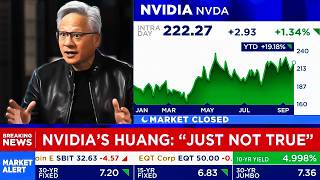
젠슨 황은 OpenAI·XAI 등 AI 기업 투자와 직접 판매 계약을 설명하며 AI 인프라 수요가 구조적으로 확대 중이라고 주장. 추론형 AI로 토큰이 흑자화되었고, 연간 칩 세대교체로 토큰 비용을 크게 낮추고 있다고 강조. 향후 대규모 AI 팩토리 투자(2030년까지 3~4조 달러)를 전망. 전력 확보를 위해 데이터센터 자가발전 투자를 제안. 진행자 요약은 AI 버블 우려를 과장으로 보고 엔비디아 장기 성장 여력을 긍정 평가.
다듬은 글
Jensen Wah. He is the CEO of Nvidia. It's got a market cap of four and a half trillion dollars. Makes it the world's most valuable company. And Jensen, it is a pleasure to have you here on set. So happy to be here. Nice to see you. Not as happy as we are. Thank you for coming in today. It's great to see you.
Thank you. Um, there are so many things that I'd like to talk to you about because it seems like every day there is this huge fire hydrant of news that's all about AI and your company's at the center of most of that news. So, if you don't mind, maybe we can just run through some of these headlines and you can explain what's happening from your perspective.
I'd love to. Okay. Let's start with the deal that you cut first with Open AI that you've talked a lot about that was then followed up by this deal earlier this week with AMD and Open AI. It's got a lot of people trying to figure out what the dynamics are of this industry. Um, what do you think about it?
Did you know about that deal before it was announced? Not not really, but uh our deal is very different than theirs. Um we've been working with open AI uh through uh uh Azure Microsoft and OCI and Coreweave and so through third parties for quite a long time. In fact in 2016 I delivered the world's very first AI supercomputer called DGX1 to a startup a nonprofit startup in San Francisco and that company turned out to have been open AAI and so we've been working with them uh for quite a long time.
The OpenAI partnership is an addition to what we're already doing with them on the cloud. All of the cloud contracts, we're going to continue to execute on all that, but our partnership with them is quite unique in the sense that this is the first time we're going to sell directly to them. Until then, until now, we've been largely selling, we've been only selling through the clouds.
And so, we're going to keep doing that. But uh the thing that's really exciting is that now uh by selling directly to them, we could help prepare them for a day when they're self-hosted hyperscaler. And um uh our agreement uh basically uh uh entails us selling uh entire systems and infrastructure to them.
uh you know we're the only company in the world today that really focuses on building the entire AI infrastructure from CPUs to GPUs to networking chips and switches of all kinds and all the software stacks that go along with that and so as a we're quite a unique partner for them to be able to do this.
I I guess the question becomes it's great for you to sell it directly to them but they don't have the money to buy it at this point. Is that's why the deal was structured the way it is where you'll get a stake in OpenAI over time? not they don't have the money yet. Yeah. And the way that that um it's gonna it's going to happen for every gigawatt of AI factories you're probably going to need about 50 to60 billion for the land powered shell and all the computing and networking and all that you know everything that goes along with that.
And uh they're going to have to they're going to have to raise that money through first of all their revenues which is growing exponentially um uh equity or debt and uh and they gave us the opportunity to uh invest along uh us alongside other investors uh when the time comes. And so it it's not something we have to do but it's something that that they're giving us the the opportunity to do and I would love to do.
You know, one of the things that that uh uh we did, we invested in OpenAI early on. My only regret is that we didn't invest more. I mean, this is this is the most profitable well the most valuable uh startup company ever. And so, this is a a great opportunity. You you mentioned that your deal is very different from AMD's.
AMD is in a situation where they're basically giving away a big chunk of their company to be able to be a partner with OpenAI and sell them some of their goods. Is that how you read it? Yeah, I I saw the deal. Um, it's it's uh imaginative. It's it's uh unique and surprising uh considering considering they were so excited about their next generation product.
I'm I'm surprised that they would give away 10% of the company before they even built it. And so, um, anyhow, it's it's uh clever, I guess. Yeah, I I wondered the same thing. and and Lisa Sue, who by the way is a distant cousin of your term. She's terrific. The the way they've set this up though um of giving it away, they're also making some big assumptions that their chips are going to be able to compete with your chips that are coming out down the road.
Do you think that's the case? Well, you know, our chips are uh quite special and uh we're running really fast. We're the only company in the world today that that builds all of the chips inside an AI infrastructure. And today, back when we first started, 5 years ago, even an Ampure chip or a Hopper chip is just one chip.
Today, if you want to build one of these AI supercomputers, it takes a whole bunch of different types of chips to get the performance out of it because, you know, Moore's law, the transistor itself is really slowing down. And we want to create those X factors of performance increase every single year.
And we're delivering these new systems every single year. And every year it's multiple times faster than the last generation. In order for us to do that, we have to optimize the entire AI infrastructure. That supercomputer is the most complex computer the world's ever made. And we optimize across all of that.
Design new chips every year. So one chip alone is not probably going to be able to deliver the type of results we do. And uh but anyways, uh they're a really good company and we take them very seriously and we're just going to have to keep running fast. Le let's talk about vendor financing because that has been something that has raised a lot of questions on Wall Street since you cut this deal with open AAI.
Uh yesterday it Bloomberg is reporting that you have a $2 billion in financing that you're going to be involved with with XAI to help them with these same stories. But this idea of circular financing your your customers can't afford to buy these chips yet. So you're going to help them out with money along the way.
that leads some people to think back to what happened um with a with companies during uh the big buildup like a Lucent or Nortell in the early days. Is this different? And if so, how? Well, first of all, XAI uh I'm super excited about the financing opportunity that they're doing. You know, if the only the only regret I have about XAI, we're an investor already.
The the only regret I have is I didn't give him more money. You know, almost everything that Elon's part of, you really want to be part of as well. and and uh he gave us the opportunity to invest in XAI. I'm just delighted by that. And so that's not that's an investment into a really great future company and I'm really excited about that.
That's not venture venture uh that's not uh vendor financing per se, but what's going on what's going on in the world versus what happened in 2000 is just dramatically different. You know back then as you recall there were pets.com hospitals.com and the the all of the internet companies combined was what 3040 billion dollars in size.
If you look at the hyperscalers now that's where the first trunch of AI infrastructure is building. If you look at the AI the the hyperscalers have about $2.5 trillion of business that's already operating today. that business, that two and a half trillion dollar business and the capex that goes underneath that is about call it 500 billion dollars.
That transition from a classical CPUbased computing to now generative AI computing powered by GPUs, that transition is just starting. So we're we've got to build into half a trillion dollars worth of capacity infrastructure that's already naturally growing by itself and we're in the beginning phases of that.
We're if you just look at Nvidia's AI infrastructure business, you know, call it a couple of hundred billion dollars so far. You know, we're a couple hundred billion dollars into a multi-t trillion dollar buildout. So that's number one. The second part of it that's really unique is that we have a new generation of AI companies.
the new AI companies like OpenAI and Anthropic and XAI and and companies that are that are well you know thinking machine labs from Mera and Ilia Suscover SSI and Misha's company reflection and I mean there's a whole bunch of amazing AI AI model builders now this generation of AI model builders what's happened in the last several months a transition happened that is really really important for the last several years they've been generating tokens tokens, you know, these AI tokens basically at a loss.
And the reason for that is because the early AI models weren't they were super interesting uh really captivated a lot of attention, but they weren't useful enough to pay for. The last several months, it's been very clear that the new technology is now reasoning. It's doing research. Before it answers a question, it goes on the web and studies other PDFs and websites.
It can now use tools, generate information for you, and it creates creates responses that are really useful. I use it every day to the point where now the tokens are profitable. The the question though is who is going to continue to pay for that buildout? Is it the big companies like uh Proctor and Gamble?
Is it a big is it consumers who are going to do this? I mean, my doctor showed me the AI that he's using and it's incredibly helpful, but there's still a question about whether he's going to pay for it or the company he works for is going to pay for it. Well, hopefully both. I think the uh there's the consumer part of it.
You know, a lot of OpenAI customers are consumers and they're paying for it. Um, but the thing that's really cool is that the enterprise AI buildout that's happening now, my my favorite enterprise AI c uh uh service is cursor. Cursor is an AI coder. And every one of our engineers 100% is now assisted by AI coders.
And our productivity has gone up incredibly. And so you're now seeing enterprise AI companies like cursor, open evidence, I love lovable. Um all of these companies are some of the fastest growing companies in the world and they address enterprise and so enterprise AI is here. I wonder how you think about Jensen the ultimate destination uh where all this is actually building toward.
Um I don't know there was a a post from David Conniey's a Sequoia partner this week saying look AGI is the only thing that can justify the volumes of capital spending right now artificial general intelligence at the same time many of the model builders and experts are pushing out the date where that maybe is going to be achievable.
Uh meantime you're talking about annual generations of chips. How fast do they depreciate? We're putting all this capital in these data centers that it's just not clear like when we get to the end or is it just a treadmill? We are going to have incredibly profitable and incredibly useful AIs long before AGI and for example right now cursor AI you know cursor cursor is a AI software coder is incredibly useful all of our engineers use it we have some 40,000 engineers uh almost every one of them are going to use it and they're they're loving it and so we're
they're using it instead of something else presumably right so these are replacing things yeah um they're not they're this is a brand new thing. Yeah. Uh remember AI unlike unlike previous technologies, previous technologies are tools that humans use. Excel is a tool that humans use. Um a web browser, it's a tool that humans use.
For the very first time, we have technology that can actually use tools by itself. And so cursor uses, you know, visual C++ and it it uh uh and now we have uh uh Gemini agents that are able to use the browser and browse browse for for uh uh groceries or you know destinations or book travel for you and and it can use it can use tools by itself.
So so this is really quite an extraordinary thing. This tool users the tool industry is a few trillion dollars. Yeah. Tool user industry is a hundred trillion dollars. which is the reason why everybody's so excited about the future of technology because it could augment labor. It can increase the productivity of labor and here at NVIDIA, you know, it's increased our product productivity tremendously.
You've already said you wish you could have bought more open AI and maybe invested more in XAI at this point. that implies that you don't think that this is all redundant because a lot of the players, I mean, if I read what Sam Alman says and the message he tries to convey, it's as if they're sprinting to try to stay ahead of everybody else because they think it's not going to be room for everybody necessarily who's trying to do something similar.
I think there's general intelligence and I think there's specialized intelligence. We love general when I hire engineers, I like them to be generally intelligent and that's that's a great thing. But once they come to Nvidia, we make them highly specialized intelligent so that they could build things that you know Nvidia needs.
And so I I think the idea of specialized intelligence versus generalized intelligence will continue to happen. And where the real value for enterprises and companies are is specialized intelligence and where the value for consumers general intelligence. Hey Jensen, let's talk a little bit about capital allocation and how you see that just back to those same points that you wish you had more invested in open AI.
you wish you had more invested um in in in these other companies that you're kind of taking stakes in like an XAI. You can do things with your money. You can choose to put it back into R&D. You probably don't need a ton with that right now. You can choose to build the company. You can choose choose to make acquisitions.
You can choose to give shareholders back dividends. Or you can invest it yourself in other companies. And lately, what we've seen is a lot of investing in other companies. Do you have other deals like that planned in the works? We're always looking for great startups to invest in. Uh, one of my favorite ones was Coreweave,
right? My only regret is I didn't invest add enough. Yeah. And so in all of these all of these investments that we've made recently, um, we've made some really terrific investments and and largely my only regret is that we didn't invest more because these are really special companies and they're building they're part of our ecosystem building out the AI um, infrastructure for the world.
And AI is several things. AI is energy. AI's chips, the models, and the applications. And so you could see Nvidia and you could look at me working across that entire stack of ecosystems around the world. And um I we need more energy. We need more chips. We need better models and and more models. And we need a lot more applications.
So what of your cash flow that you kick off and Matt Mike, I know you run the ran the numbers. What does it I was just looking at the consensus like 240 billion in free cash flow this fiscal year and next is what is happening. So that's a lot of cash that you can choose to to set to work. Do you look for other investments within the AI infrastructure?
Do you look for ways to build out extra energy? Do you look for somebody in quantum computing to get to the next thing that you could buy? What what's in your brain at this point? All of that. Um, I'm excited about enterprise AI applications and uh if if I would have realized that the cursor team was raising money before, I would have given them all my my money.
And so this is really terrific stuff. Um, I'm excited about the work that that Open Evidence is doing in uh helping digital nurses and digitalos uh um uh with diagnosis. Um I'm excited about um uh the work that uh uh Figer is doing in robotics. uh Wave is doing in self-driving cars, WAB is doing in self-driving cars.
And so there's just a a a an incredibly large set of new companies that are enabled by this revolutionary technology called AI. And so these new companies are are going to be future giants. And I and it would be great to be part of them, support their growth, um and uh uh be part of that part of that journey.
There there was an analyst who was on our our program earlier this week, maybe it was late last week, who said after the open AI deal, they wondered how long it would take for the antirust authorities to come looking at Nvidia. I didn't quite understand that. Dug into it a little bit. Reuters has put out something just saying that as all these big big giants in the AI development world kind of team up and partner, it does raise questions about whether it shuts out new entrance.
What's what's your response to that? What do you say? All of these deals have to be done in a way that that is fair to others, doesn't doesn't uh uh foreclose markets and uh is not exclusive. And so the investment that we make in open AI, we don't make it a a requirement that they use that investment to buy Nvidia's technology.
They could use it to do anything they like. And and maybe the AMD deal that was ca that came just on the heels of that kind of proves that out that it is not a a single partnership that will some of these things. There are no exclusivities. Um the the goal is to to advance uh the AI infrastructure, support their success, and in many of these cases, you know, to be part of that incredible journey for us and and uh it's great returns on our money, of course, but our primary goal is just really to support them and help them grow and grow the AI ecosystem.
What um what what again you were surprised by the AMD deal, but you look at it very differently. Does do you think as a competitive structure here this puts like any pressure on anything that comes through? What do you I don't think has really anything to do with with um it won't affect anything that we do.
I think our primary focus our strategy number one is to create a platform that increases performance or another way of thinking about it reduces token generation cost by very significant margins every single year. Now, of course, that pace of innovation puts pressure on the entire industry, you know, all of our competitors and and so on, but everybody benefits when we drive the cost of tokens down every single year.
Between Hopper and between Blackwell and Hopper, we're going to drive down the cost of tokens 10 to 20 times. And so, that's another Moore's law transistors alone would have driven it down by 20%. Yeah. So, instead of 20%, it's 20 times. And we're going to do that again and again and again every single year.
We could do it because we change every single chip in the data center. We change every single technology all at once. And so my my focus and the company's focus is just to keep that pace going. And when we keep that pace going, the ecosystem around us when the token generation continues to decrease, the AIs get smarter.
And when the AIS gets smarter, we can use it for more applications and we can, you know, drive more productivity into the economy. The economy grows, you know, everything everything gets better. When the AIs do get smarter, is that going to mark a transition away from just the hyperintensive um physical capital building part of this where hardware is is the entire, you know, the entire game in a sense, right?
I mean, um, it's an interesting thing when I look at how the the Metas and the Microsofts and the Alphabets were looked at a few years ago. Oh, they're asset light. They don't have to reinvest in their businesses. They have massive free cash flow. And now it's about actually creating physical assets that are going to be productive down the road.
Do we get to a point where it's like now we reap? No. And the reason for that is because forever AI is going to be about thinking and in order to think in real time to understand the question, understand the context, maybe go do some reading and research on the internet, that thinking process requires a computer.
That's the reason why I say there's a new industry. We've created a brand new industry called AI infrastructure. And these infrastructures will be like the electricity infrastructure, the internet infrastructure. And this will be permanent infrastructure for society, every society and so this is this is a transform transformative time and uh the way we deliver computers in the future the way we deliver intelligence and produce intelligence is fundamentally different.
The thing that you mentioned which is really interesting is when you look across the stack when I said earlier AI is energy it's chips it's infrastructure it's AI models and it's AI application and in just one conversation we've already identified that energy industry is growing the chips industry for example us we're growing uh infrastructure Azure OCI AWS Coreweave NBS these incredible companies they're growing AI models Open AI, Anthropic X, they're growing.
And on top of that, AI applications, cursor, open evidence. Isn't that right? We're literally seeing au complete revolution across that entire stack and opportunities across it. And to the extent that we we have the the uh financial capacity to do so and to be part of this EOS, this entire stack, we're going to participate across that entire stack.
Jensen, you're not only looking at technological advances and thinking about how to do that, how to build this infrastructure. You have to be thinking about risks all the time, too. Yeah. What's at the top of your list in terms of risk assessments when you're looking at these things that pose a risk, pose a threat to the growth that you're talking about?
Well, there's a lot of technology risk and there's a lot of, you know, product design risk. There's a lot of those kind of things, but those kind of things are are things we're good at. Yeah. You know, fundamentally, our company is good at building technology and building products and so we're good at those things and we're continue to be careful and thoughtful about doing those things.
The things that are hard for us that are new for us are geopolitical risk. Yeah. and it's out of our control and um and uh uh the best thing that we could do is just inform inform uh uh policy makers and governments about the nature of AI, why it's different than previous technologies uh to be accessible to them uh to be to be informative to them and then help them help them shape policies that are in the best interest of the world, the best interest of the countries.
So, how far ahead of China do you think we are in terms of AI development at this point? How close, depending on which layer of the stack? But overall, I would say we're not far ahead. Um, if you look at the entire stack, they're way ahead on energy. I am so happy that President Trump leaned into prog growth, pro- energy growth so that an an entire industry above it could grow.
If you could just imagine without President Trump's pro-en energy uh policy, that entire layer above the energy would been constrained. China's well ahead of us on energy. We are way ahead on chips. Uh they're right there on infrastructure. They're right there on AI models. Um we're we our models are better overall.
Open AI is better. Anthropics is better. Gemini's, you know, better. However, their open-source models are well ahead of us. And then on the application layer, we have to be quite mindful because they're their applications are very fastm moving. Their society is very quick and adopting new technology.
Um they're underregulated at the they don't regulate heavily at the industrial level. And so the applications in in China are advancing incredibly fast. This is an area that I'm quite concerned about. I hope that American uh uh companies and American society are going to be fast in adopting AI applications because ultimately this industrial revolution wins at the AI application layer at the diffusion layer.
There was an analyst just this week who said that he's anticipating China will get Nvidia's Blackwell chips by as early as next year. Do you think that's the case? If we are way ahead of them in chips, what should our strategy be to give them better chips or uh risk having them build their own chips that are better?
But if we are if we hold the advantage here, how do we as Americans think about this? That's right. This is this is where a nuance strategy is necessary and we have to take a step back. Um, President Trump had a uh AI action plan day and that AI action plan day uh he was very clear and it's a very thoughtful and very very uh a America win around the world strategy.
Ultimately he wants America to win the AI race. So the question when you take a step back and ask yourself what does that mean at the chip level um you want to have the most advanced chips. We want to make sure that United States and American uh allies have the most advanced uh access to the most advanced AI chips.
On the other hand, in order for AI to in order to win the AI race, you need to have all of the world's AI developers to be building on your platform. Just as we would if you're an app store, you would like all of the apps to run on your app store. If you're an operating system, you would like all of your all the world's applications to run on your operating system.
If you were a chip, an American tech stack, you want all of the world's AI developers to developing on your on your American tech stack. That's true whether we're here in United States or whether it's developers in China. But this from a defense perspective, we don't want them having the the chips that are as great as we are because we don't want them having access to that particularly when it comes to the military.
No, no government um surely Chinese government is going to be building their defense on western technology. Nor does the Pentagon use Chinese chips to build our national security. And so they have plenty of chips themselves. Don't forget that this is a country not not without any chips. They have Huawei.
They have really really sophisticated and really entrepreneurial startups uh building AI chips. They're manufacturing lots of chips. And so the fact of the matter is their military has plenty of access to their own chips. What we need to do is find a nuance strategy that allows the United States to stay ahead.
But for American text acts to be uh used all over the world so that the world builds on the American standard. Are we on the way to being that global standard? I mean you keep hearing about sovereign AI and it seems as if there are these these interests in creating parallel uh kind of AI ecosystems.
If we don't win around the world, someone else if we preclude other people from building on the American tech stack, they'll have to use some other stack. I think uh David Saxs had a really simple KPI. He said in 5 years time, if America, the American tech stack is 80% of the world, then we are doing a good job winning the AI race.
If the United States is 20% of the world, then we've lost the AI race. Now, one of the things that's really important is that developers are all over the world. 50% of the world's AI researchers are in China. China is 30% of the America of of the technology industry, technology market. The Chinese market is large.
They've got a billion users. And so, it's not a market that you could easily decide to walk away from. If your ultimate goal is for America to win the AI race, giving up 30% of the world's market right from the get-go and then not allowing American technologies to diffuse and be proliferated around the world, we are essentially isolating American technology into America and forfeiting and conceding the rest of the world to everybody else.
And I I think I think President Trump would say that that would be not a condition for America to win the AI race. And so we have to find a nuance strategy that allows and allows America to have the best technology, earliest technology, but also to win AI developers around the world and win AI markets around the world.
I think you also want to be bringing in and working with the best talent. And to that point, you put out a note, a memo to your employees yesterday about the H-1B visas and the new government uh requirement that it's going to cost $100,000 on top of it to bring someone in from China or from India or from elsewhere.
Um what what is your policy with that? What what do you think of this new step in it? I know you've said that you're going to step up and go ahead and pay those to bring people in immigration. I'm an im immigrant. Um immigration and uh and we're very glad to have you here. Thank you. Thank you. Um, immigration is the foundation of the American dream.
Uh, this ideal that that uh, anyone can come to America and through hard work and some talent be able to build a better future for yourself. U, my parents came here because of the American dream and wanting us to be able to enjoy the the the opportunities and and uh, uh, uh, this incredible country that that is America.
And and I think this ideal um and this this dream is a is um common around the world. Only America has a word a phrase that says the American dream. There's no other country that has something other you know some other country dream. And so so we would like to to create this opportunity for all of our employees and and um and I hope that that uh this opportunity persists for everybody else.
I do I do think that that um President Trump's H1B policy um enables us to continue to attract the world's best talent and enable them to come to uh come to American companies and for all of all of these uh uh foreign students who come to United States gets an American gets an incredible American degree and one of the best best educations in the world to create the conditions by which we can have them stay.
Um, I think it's a first step. There are things that I would love to see that that um, uh, enhances the policy so that there there's some still some opportunities for serendipity to happen. For example, I don't think that my family would have been able to afford the $100,000 and and so the opportunity for my my family and for me to be here uh, would have been would not have been possible with with this with this current policy.
And so I'm I'm hoping that there will be enhancements to it. And I think this is just a first step and President Trump is always pragmatic and you know I think that it'll be enhanced over time but this is a nice improvement. We mentioned uh just quickly $4.5 trillion market cap. Your employees created that value and are also beneficiaries beneficiaries of that value.
How do you run a business and maintain a culture when so many of your employees have done so well financially and keep them motivated and such? Yeah. Half of your employees have a net worth of more than a million dollars and I think 75% or 75% are over a million and half of them are over 25 million in network.
Yeah. And I'm so happy about that. I get so many emails with them, you know, people saying, "I just bought a house or I just bought my family or my parents a house or um put my kids through school or and I just love that." Um the way you do that is to stay focused on on on the purpose of the company uh the work the important work that we're doing.
Uh you know ultimately my job is to create the conditions by which amazing people could do their life's work. And as it turns out for most people who are doing their life's work, the money is is a is a you know is a symptom of doing that work well. It's not the purpose of the work. And so so long as the purpose of the work remains the same.
Uh for me for example I' I've been working hard for a long time and and it's been a long time since I've had to work and but I I love the opportunity to be able to do work and uh the company's in a place now where the work that we do could be really quite consequential for the world. Uh we building impactful technology that could revolutionize and transform just about every industry and every society.
And so this is a a time that that none none of us um wants want to give up on. And so this is such a great great opportunity for us. Can I ask you quickly about electricity? We've mentioned that several times. There was a Bloomberg report just in the last week or so that just said wholesale electricity prices are up by as much as 267% in areas that are new near new data centers that have been built.
That those costs are getting passed on to average consumers. First of all, do you think that's true? And second of all, what do we do about it? I'm not sure that's true. I'm not sure if it's true or not. Um, but what we should do about it is uh to invest in power generation behind the meter. And President Trump has has really created the conditions by which we could go and do that and all become power generation companies ourselves.
And so these data centers uh uh should be outfitted with with uh power generation capabilities whether it's natural gas or uh in the future several years from now uh nuclear. we should invest in just about every possible way of generating generating energy and then uh even you know put it back onto the grid and so that's the future uh and data center self-generated power could move a lot faster than putting it on the grid and we have to do that we have to do we have to apply every possible form
uh Jensen anything you wanted to talk about that you feel like you haven't gotten the chance to talk about you get people asking you questions all the time what do you not get to talk about well Let's see what do we what do investors most want to know from you I guess question uhhuh investors I I would say uh the thing that is uh even quite surprising this year particularly last 6 months demand of computing has gone up substantially and this is what's happened because AI went from uh simple oneshot oneshot answers to these reasoning and thinking AI the results are so good.
It but un but but it uses exponential amounts of computing but the the interesting thing is because they're so good because they're so smart and they use exponential amounts of computing. We're seeing exponential demand which makes sense because the AIs are smart enough that everybody wants to use it and so we now have two exponentials happening at the same time.
demand for Blackwell is really really high and uh we're trying we're working hard to get everybody online and uh you know get get AI to the next level but but I I think we're at the beginning of a new buildout beginning of a new industrial revolution and um uh it's going to be exciting times. All right, I hope you're all doing great today.
Jensen is reiterating something very important. We currently have two exponential curves of growth. The exponential growth of AI's usage and the exponential growth of AI's improvement. Both of these growth curves are compounding the need for more compute. I think all of the recent talk about an AI bubble is largely overblown.
As Jensen has said previously, we should not hit a glut in demand for at least a few years. Now, will there be misallocations of capital in certain parts of the AI ecosystem? Sure, there probably will be. But to say that AI as a whole is a bubble or that Nvidia is a bubble is missing the point entirely.
We will continue to see strong demand for NVIDIA's products as AI usage increases, AI's quality increases, and the number of end use cases increases. And so now the question is whether expansion will continue in those three areas. Let's go over them one by one. As for AI usage, AI demand is extremely strong right now and showing no signs of slowing down.
Just look at OpenAI as an example. Chad GPT now has 800 million weekly active users. And there's a very real possibility they may reach 1 billion users by the end of the year. And that's not even counting all of the other apps and ecosystems like Gemini, Clog Rock, and all of the many others. And so demand is very strong and showing no signs of stopping.
The next question is whether AI will continue to improve. This is almost a certainty. It is possible that the rate of improvement may decrease as time goes on. But improvement of the technology over time is almost a certainty as better hardware from Nvidia is shipped and larger clusters come online.
This will open the door to massive improvements in AI and the development of better applications. Also, keep in mind that many of the models available today were not trained on Nvidia's latest architecture. Many of them were trained on Hopper and some of them were even trained on Ampear. There's still a lot of room for improvement in the quality and accuracy of AI models.
And the third question, will new use cases continue to be developed over the coming years? The answer is almost certainly yes. And this is what we need to remember. As new use cases are developed, the need for compute from Nvidia will grow even stronger. Right now, we are on the cusp of agentic AI going mainstream.
And as I've said in many videos over the past few months or so, I'm expecting a surge in compute demand fueled by agentic AI that extends well into 2026. But beyond that, we are just at the very early stages of physical AI. With physical AI, we're no longer talking about AI agents that complete digital tasks.
We're now talking about physical AI agents that will complete physical tasks in the real world. I think we will see many new use cases developed as a result of physical AI and again that should increase demand for Nvidia's products even more. I am completely serious when I say that I think Nvidia's physical AI business may eventually be larger than their current data center business.
Nvidia sells the hardware for the data centers where the models are trained. NVIDIA offers omniverse where the models are taught and tested. And with Nvidia AGX, Nvidia also sells the hardware that allows real-time ondevice inference, enabling robots to have intelligent interactions with the real world even when they're not connected to a data center.
I continue to be bullish on NVIDIA long term, and I think this company still has a lot of runway ahead of it. And we haven't even mentioned the demand from sovereigns, enterprise, AI native startups, and Nvidia's massive opportunity in quantum computing. All of these are additional massive growth opportunities that I think most analysts are not adequately factoring into their long-term estimates.
As for production ramps, Blackwell Ultra is ramping very quickly right now, leading to revenue growth acceleration. Reuben is on track to launch in 2026. Then we're expecting Reuben CPX at the end of 2026. Later on, we're expecting the launch of Reuben Ultra in 2027 and Fineman after that in 2028. We have a clear data center product roadmap stretching into 2028 and Jensen believes there will be three to 4 trillion of global AI factory buildout between now and 2030.
That means Jensen is expecting growing AI demand and an expanding total addressable market underpinning all of this. I don't think we are anywhere near any type of bubble bursting type of event. With all of this in mind, I seriously think that Nvidia still has plenty of runway ahead of it. And I think this company will be worth substantially more in future years than it is today.
At least that's my view of the situation. Remember to stay calm in this market. Remember to maintain a long-term perspective and do not make any hasty or irrational decisions. With all of that being said, I hope you all have a great rest of the day and I'm curious to hear your thoughts about Nvidia in the comments below.
Please leave a like on this video so more people will see it. And while you're down there, please consider subscribing. It's free and you can always change your mind. Thanks for watching and hopefully I'll see you in the next



Comments 0