저자: JimCramer · 외국인
요약 보기
결론: 경기민감주와 경기방어(성장)주의 구분을 이해하고, 시장 순환(로테이션)에 맞춰 분산투자하라는 교육 방송이며 특정 종목의 가격 방향 예측은 없음 [핵심 개념] 경기민감주(cyclical)는 경기 호황 때 이익이 늘고 침체 때 줄어드는 기업으로, 기계·소재·화학 기업이 예시로 언급됨 경기방어(secular growth)는 경기와 무관하게 이익이 꾸준한 기업으로, 필수소비재·제약 기업이 예시로 언급됨 [투자 전략] 침체가 예상되면 경기민감주 비중을 줄이고, 호황기에는 경기방어주 비중을 줄이는 방식의 로테이션 전략을 설명함 단순 보유(buy and hold)는 경기 국면에 따라 손실을 감수해야 할 수 있어 한계가 있다고 주장함 [리스크 관리] 한 섹터에 자산의 20%를 넘지 않도록 분산투자할 것을 강조함 [기타 질의응답] 배당 재투자와 평균단가 관리에 대해 복리 효과를 중시하는 입장을 밝힘 단기 추격매수보다 조금씩 나눠 사고 하락 시 추가 매수하는 방식을 설명함 S&P 오실레이터를 과매수·과매도 지표로 활용한다고 언급함 은퇴 자산 배분은 개인별 상황과 투자 기간에 맞춰 조정해야 한다고 말함 [언급 종목] 대상 자산 목록에 해당하는 개별 종목 가격 방향 예측은 없음
다듬은 글
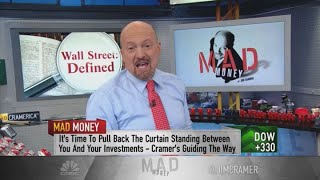
et money welcome to America I'll be one rated but that you can teach you so call me at one eight hundred seven or three CBC or tweet me at Jim Cramer investing isn't easy but it can be a lot easier if you find someone who's willing to walk you through all the arcane terminology and authentic Wall Street gibberish that makes the whole process seem really impenetrable earn a living by doing the opposite of that they want you convinced that investing is too hard the regular people just can't do it that the safest thing is to give your money to a professional or stick it an in next one the truth is that's the right call for many of you and everyone should have some index fund exposure but if you put in the effort if you do the homework then I believe you can manage some of that money as well as the pros you do this many of those professionals really let's just say the focus don't get your fees they're more interested in taking your money than making your money and that's a lot easier if they can keep you ignorant about the market they're kind of like the Wizard of Oz they don't want you peeking at the man behind the curtain they don't want you to understand because if you did then maybe you take control of your own finances pick your own stocks and not pay someone else potentially exorbitant fees to do the things you're perfectly capable of doing yourself and that's where I come in I'm pulling back the curtain and explaining everything because while authentic Wall Street gibberish can sound complex it's not rocket science or brain surgery you don't need to go to business school or work an investment bank to understand it you can comprehend all the abstruse vocabularies we throw around as long as you have a translator a coach like me who can explain what it all means think of me as a defector someone who played for the other team nanjing about five hundred million dollars of already rich people's money at that old hedge fund of mine but who's now playing for you teaching you how to navigate your way through the minefield of the stock market every weeknight hero may have money all right forget the Da Vinci Code forget enigma the bugle investor you need to break the Wall Street code and I'm here to help you crack it that's why tonight I'm giving you my Wall Street gibberish the plain English Dictionary considered a glossary of the most important terms that you ABB's we must understand if you're going to actively manage some of your own portfolio words and concepts that many people in the financial industry really don't want you to get your head around because then you might actually feel more empowered empowered enough to pull your money out of their mutual funds or ETS or stop handing over your fees let's start with a couple of extremely important ideas that goal we talk about all the time they go hand-in-hand cyclical and secular now you hear these old-time right yet no one ever seems to explain what they mean even though they're crucial to the process of picking good stocks cyclical has nothing to do with the spin cycle or your washing machine or Bodnar's ring cycle not my kind of classical music and secular isn't about the separation of church state oh and yes a Kudo too late Louis Rukeyser who first cracked that cyclical joke we say a company is cyclical if it needs a strong economy in order to grow its sect it's cyclical because it depends on the business cycle so machinery companies like a caterpillar and Eaton fall into this category along with more materials placed like a bhp or Rio Tinto and commodity chemical companies like the new Dow Chemical PPG these cyclical players are indeed hostages hostage to the vicissitudes of the economy when the economy heats up they earn more money and we're willing to pay more for those earnings but when it slows down there and less money investors pay less for their shares and that's why they want to sell them solve them ahead of time a second growth company other hand is one where the earnings keep coming regardless of the economy's overall health think anything you eat drink smoke brush your teeth lip use this medication so you've got consumer staples like a Procter & Gamble or a Colgate food General Mills Kellogg come to mind drug stocks I think your Pfizer I'm working for Myers these are the classic recession-proof names they tend to outperform whenever the economy it's a rough patch and Wall Street suddenly develops a craving for safety consistent earnings you don't stop eating or brushing your teeth just because of a recession or at least I hope you don't what makes the secular versus cyclical distinction so important to you why is it the first piece of Wall Street jargon that arm translating tonight because it helps you figure out how much money companies will earn and because it matters to the big institutional money matters the guys who have so much money well around it buying and selling actually controls the day-to-day action in the market maybe some of the stocks go up or down though that's fun playbook is about when to buy and sell sickle stocks or secular ones based on how the global economy's holding up and this is what drives their decision-making processes remember historically about 50% of the performance of an individual stock comes from its sector which is just a fancy word for the segments of the economy to stop Falls into like a tap energy machinery health care of Finance and when it comes to sector as much of those moves are driven by whether they fall into the secular growth or SiC to their growth camps in the cyclical growth camps by the way are the ones again up and down secular is this you've got to know these things you don't want to own much in the way of cyclical z' when the economy seems to be slowing those stocks are likely to get crushed because the numbers come down in the recession you can try to make yourself less so the whole missing years for instance the railroads have become much better operators so their earnings don't get hit as hard even with big revenue shortfalls but in a real recession well you don't want to own their own still their stops by the same token when business heats up in the cyclical czar doing well nobody wants to an important because it's a consistent recession proof secular grower and you won't make much money in them during those periods either that's the logic behind another needlessly opaque piece of investment terminology it's called the rotation which is when money flows out of one of these groups into the other now this idea is totally antithetical to the brain-dead philosophy of buying home that I spent so much time trying to debunk a zombie ideology that refuses to die even though it's been utterly discredited by the markets performance you don't want to hold sickle stocks going into a genuine recession that's a recipe for disaster it's a horse pin a rescue freezer there's nothing new there once you recognize how powerful the secular versus cyclical distinction is well then you can see why buy and hold can be can be just outright silly if you're planning to own stocks through thick and thin no matter what then you need to be prepared to lose money in the cyclical z-- when they're out of favor or tread water in this tech euler stocks or even have them go down a shade when the sickles are roaring why take that payment when you can avoid it of course that doesn't mean you should try to game every single rotation that's too hard it shouldn't mean you should concentrate all of your capital in the sick or the secular growth names depending on what's in stop no not at all you always always always need to stay diversified another important piece of investing vocabulary it simply means well making sure you don't put all of your eggs into one sector basket you're diversified when you have no more than 20% of your portfolio in any single sector that way you won't get annihilate it if for example a rotation takes down all the simple stocks because you still have some sec to the growth names that are all they got much better or even making you money at the same time bottom line investing isn't easy but it doesn't have to be mystifying or intimidating you just need to learn the lingo know the difference between cyclical and secular growth stocks recognize a sector rotation when you see one and always always always stay diversify Frank ours our Frank gem I bought a large block of stock in a blue chip company that pays they say 5% dividend and historically traits in a very narrow range I bought that stock in four equal block increments and each purchase I was able to buy at a lower price always bringing down my average cost being somewhat Kramer eyes I know that it's wise to reinvest the dividends the stock has risen three dollars above my average cost if I reinvest the dividends now it will bump up my average cost and I don't want to do that should I take the dividends in cash no in this in this one particular case I am NOT I am going to look the other way about raising your basis because I just think that the power of compounding is so fabulous it transcends even the idea of raising your basis with the buy let's go to Sally and Michigan Sally hi Barry hi Jim so I'm hoping that you can help me understand the difference between chasing a stock or just buying a few shares at a time when it's going up well going down okay so chase you stock we see a stock say about 3% 5% 7% 5 whether you're clearly chasing it I like to be able to buy a little bit and then wait till comes down then the worst thing it happens is it runs away and then you can ring the register it's really that simple I try to keep it simple we in Virginia Lee we are Jim I've really talked about the S&P oscillators as a reliable indicator of overbought or oversold market communities since this tool is specifically an S&P 500 indicator I'm wondering if there's a similar tool for the Nasdaq 100 more importantly how reliable is it for predicting if the individual stock is overbought or oversold and what indicators are there that an individual stock might buck the trend and not need to go higher when the market is overbought well keep going lower okay ever since ever since the mid eighties I've been paying the S P company a fee in order to be able to get both their oscillator which shows you whether there's too much buying pressure too much time pressure and individual stock charts which are now sent electronically they are SP because it's the SMB company and that's all I use it for I want to be very careful here I get it I pay for it I can't give it out that wouldn't be right to the S&P company but I find it invaluable because when the S P oscillator goes above five it makes me feel like the things have gotten to let's say bullish and when it goes below five things we've gotten to bearish and it may be time to take some action obviously counter to those trends guy tomorrow and John hi Jim great to talk to you and always a big fan oh thank you very much I wanted to ask a question about my 401k allocation may certainly we hear so much about dialing down risk success rates of portfolio mix and retirement and the smoke-and-mirrors about historical returns should be used as a proxy for future returns right so I'm thoroughly confused yet I'm about three to five years out from retirement and historically have invested in equities at the seventy to ninety percent level for over twenty five years but this year I dialed it down to 55 percent equities and 45 percent Treasuries how would you structure a portfolio now and in retirement okay also should I consider rolling these monies over to have more choices in retirement as I have limited opportunities in my employ once you have as many choices I think that retirement is almost a false dichotomy I think the issue here is a long long life and life expectancy and you may retire but you need to have your money continued to work for you I like your breakdown that's one I would share but we all ought to have our own views optimistic or pessimistic or bad so let's say constructive or a little less more cautious and then I tailor your suitability in other words don't be roll the dice if you think you're gonna need the money within the next couple of years all right I know Wall Street gibberish can be very hard to maneuver I'm here to make it possible for you to do so oh man tonight feel like the ticker is speaking tongues about being translated terminology starting with the p/e ratio then the vocabulary I'm telling you what defines the short term stock picking you see in this market and a deceptively simple term that you may not understand I'll reveal it just ahead ug cnbc.com you


Comments 0