
원문 보기
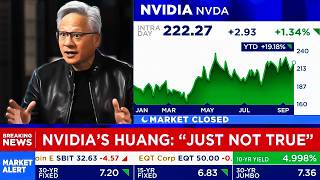
What exactly does Nvidia need to do to hit this market? We received this answer tonight. Because when the world's largest company reported, it was a great profit and loss figure. Both sales and profits more than doubled from last year, and management said it expects revenue to grow 70% in fiscal 2028 .
This is the next one. This is incredible. Simply incredible. I wouldn't have seen the stock sell off, but then it started to skyrocket . Will they be able to continue growing? Let's check it out with Jensen Huang. He is the founder, president, and CEO of Nvidia, to find out. Mr. Juan, welcome back to Mad Money.
Hi, Jim, nice to see you. I have to tell you, Jensen, tonight was a really exciting conference call, and one of the reasons for that is because you did something you never do. You gave a revenue forecast that was, frankly, overwhelming. You expect growth of about 70% in fiscal year 2028. The Street expected about 45%.
What gives you such confidence and how the hell could you do it? Well, it's not easy, but we'll see. First, demand is extremely strong, and it is accelerating incredibly. You know, obviously we're already a very large company, but the ability to continually grow, and now to accelerate our growth, is pretty extraordinary.
Now, first of all , under the hood of everything that's happening is that AI is now useful. It is doing productive work, and the tokens generated by these AI labs are now profitable. People pay good money to use it because it's really productive. It helps them, you know, do things and be more productive, and so the number of tokens they want to generate increases through usage.
The number of tokens they generate is growing because AI models are getting more complex, and now that it's profitable, they have a lot more customers wanting to use it. What holds them back is calculation. And that's literally one of the pillars of what's going on in our business. And then, uh, we see AI being implemented all over the world.
Every country wants to join, every country should, every company wants to join. And so half of our business is hyperscale systems, and the other half is everything else . These are neoclouds, sovereign clouds, and enterprise companies. And all of this is growing at the same time, and all of this is happening, of course, at the same time that we're launching Vera Rubin, our next-generation product .
This will be the fastest growing product in our history. This is truly fascinating. I want to go back to what you said about the asset we call computing. When I worked at Goldman Sachs in the 80s, someone said, " You know what? We should consolidate car loans, turn them into an asset." Everyone laughed, thinking it was really stupid.
It is now the second largest market. I think computing, what you're talking about with the 500 billion that people are raising on Wall Street, computing is going to be much bigger than cars someday, right? Oh, definitely. Well, first of all , this is not computing like in your mobile phone or PC, which, as soon as you buy them, immediately becomes obsolete.
It's part of your infrastructure, and it's productive infrastructure. She brings you money. One of the things that really sets Nvidia apart is that we are interchangeable, meaning you can use Nvidia throughout the entire AI lifecycle, from data processing, pre- training, back- training, all the way to deploying AI agents.
This is number one. Number two, we literally launch every model. We are the only company I know that launches every model on the front end, every closed model, every open model. It's built on Nvidia, it runs on Nvidia, and because of that, we're interchangeable. You can use this in all these different use cases.
And because we have so many developers, our ecosystem is so large, and we're used all over the world, the asset is durable, long-lasting, interchangeable, and so, you know, it can be rented out . People rent it out for a lot of money these days. And that is why it is an investment asset. Did you ever know that your version could be worth more than when it came out, like some fine wine?
This is true. In fact, some communications service providers have already talked about how the infrastructure they paid for, paying, uh, NVIDIA prices, that they built, is now worth more than when they first paid for it. And the reason for this, of course, is that NVIDIA's architecture is software- defined.
Thanks to CUDA, our software is constantly improving. First we supplied equipment . We sell you the hardware, but we are constantly improving the underlying algorithms so that the hardware gets better and better over time. So, in terms of history, I think, um, uh , Corey Weif Michael from Corey Weif recently said that the A100 will be sold for 9 years of its lifespan.
And what's really incredible is that over those nine years, even though the hardware hasn't changed, we've improved and implemented all kinds of new algorithms and software that we're constantly improving, and we're improving this infrastructure absolutely free of charge for its entire lifespan. And that's why hardware with infrastructure seems to get better and better over time.
Just like good wine. OK. Now this corrects one misconception, which is that yours should have been written off after three or four years. Let's take this out of consideration. Another thing that bothers me, a little annoying, is something I read in a magazine, and they've become advocates for the AI boom, placing it on dangerous ground.
If dangerous ground is investing in the early steps of some incredible companies , well, I want to be dangerous. But is it possible that we should distinguish between investments and guarantees? And help me try to understand where in this story, frankly, it's just wrong. Yes, I think they don't understand a very important point.
First, this is the first generation of startups that needed tens of billions of dollars in funding. When was the last time anyone heard of a startup that needed billions of dollars to get started and tens of billions of dollars to become profitable? This just never happened. But that's really the nature of AI.
The cost of creating AI, the cost of deploying AI, is very capital-intensive. And there are a few companies, these cutting-edge AI labs, that are unique companies. And we want to be their investors, we want to support them, we want to be their partners. We would like them to, of course, build their ecosystem based on us and then expand their business with us.
So being able to invest in them early on was a great opportunity. Honestly, I just wish I had invested more. And now that they are scaling, the tokens they generate are profitable, their services are profitable, the number of customers is growing incredibly. The only thing holding them back now is the calculations.
But even at this time they are not investment grade . They simply do not have the experience, level of capital, or financial expertise to be able to raise or secure capital at a low cost. And this is where Nvidia can be useful. We could support them to help them grow at a time when everything they do, their tokens generated, are so profitable .
This is really the time when we can help them with their flywheel. And that's why, in my opinion, it's one of the best investments . This is a once-in-a- generation opportunity, once-in-a- generation of technology . And finally, this risk to us, because of the nature of Nvidia's architecture, because it's interchangeable and durable, the risk to us is still there in the worst case, we'll just use it for another customer in a different use case.
So, um, I think the safety mechanism is that we're thoughtful about it , we're disciplined about it. And we support extraordinary companies as they become profitable. And as we know, hopefully they'll become public companies soon, and all the people will have the opportunity to see, you know, what we see and why we're so excited about them.
Uh, and anyway , it's a really great investment, and I think the risk is low. Okay, let me ask you something. This is kind of a personal question. If you gave me, let's say, 30 billion dollars invested in me . And then I would call you and say: you know what? All this time I've been working on something, a chip, that I think could do you a lot of harm.
It's called jalapeño. I don't know, let's call it, I don't know, tomatillo. And you told me, "Well, that's okay." Are you really going to say that this is normal? Because I personally would be hurt if open AI did what they're doing to Nvidia, if they did to me. You know, I don't mind, Jim. There are so many XPUs being announced, and as we know, doing what we do is not easy.
We have been doing this for 33 years. And that's why many projects are started, many projects are canceled. We are here, we are here, we are here to support our partners, and we are going to create the best technology in the world . I am completely sure of this. We will be the most productive infrastructure they have.
I am completely sure of this. We have the supply chain and technology scale to be their largest supplier. I am completely sure of this. And so, you know, I don't have to take anything personally, because I'm very confident in what we're capable of doing. And look at all the XPU announcements and all the startups that have been announced, and yet today Nvidia is increasing its share of the AI market .
Our growth is accelerating, our technological leadership is expanding, so I am very comfortable with all the competition. Okay, and I also thought it was interesting, you know, Andy Jassy loves you, okay, but he also makes his own chips, and that's good for him. But when they wanted to scale Amazon Web Services, they installed 2 million more Nvidia GPUs.
That's a pretty serious commitment from someone who is considered a competitor in some places . They are going to buy 2 million GPUs . They are going to buy millions of processors. And they are going to build their robotics fleet on Nvidia's physical AI systems. They are going to host open source Nvidia NeMo Triton models on Bedrock and Sagemaker.
Yes, it will be a great partnership. Um, you know, I think it's really important for people to realize that Nvidia is the only computing platform that's a full-fledged artificial intelligence factory. We are the only computing platform that is in every cloud, on- premises, at the edge, in sovereign AI clouds, and neoclouds.
We are the only platform that is everywhere in this way. And thanks to this, we attract all the artificial intelligence startups in the world. In the last 6 months, $400 billion in venture capital has gone into startups thanks to artificial intelligence. This is a once-in-a- generation technological platform change.
Everyone wants to be a part of this. $400 billion in investment in artificial intelligence startups. And they all probably use Nvidia. So if any of the cloud platforms want to bring in any of these AI startups, having Nvidia in their cloud will make their clouds much more attractive. Oh. And so, I...
And however you think about it, whether we have the best technology, the most productive technology, the most cost-effective technology, you know, in every single case, Nvidia is your great partner. Hey, let me ask you something, because I think you're the leader of all those different companies that you mentioned, whether it's the 50% that aren't hyperscale or the 50% that are.
You are a leader. Could you suggest a code of conduct for your clients so they don't do crazy things? They're more concerned about water, they're more concerned about air, they're more concerned about electricity, so that we can say, " Listen, we're good citizens." You must want us." We...We... Because I think you're the only person who has the seriousness to do this.
We have to do a better job, the tech industry, the builders, and we have to work much better with communities to prepare for this building of AI infrastructure. Taking a step back, this is a great opportunity for America. This is an extraordinary opportunity. AI data centers, AI factories are creating so many jobs across America .
Hundreds of thousands of jobs. They improve communities because they bring in a lot of tax revenue, they bring significant economics to communities. It's also a case where, perhaps for the first time in a century, we can invest in sustainable energy, invest in improving our energy grid, the security of our energy supply, reducing the cost of energy across the country.
This is the first time in history that we can do this thanks to the enormous market dynamics, the market forces that are able to invest in the energy ecosystem. This is the reason why the stock prices of all energy companies and the stock prices of all electricity producers are rising. I mean, everyone is thriving because we are helping the United States, helping America improve its energy position.
And so I hope people will take a step back and realize that this creates jobs. This will lead to the reindustrialization of the United States. The manufacturing sector that we have lost over the last 50 years has the opportunity to come back. And finally, it's a great opportunity for us to invest in America's energy sector, our energy grid, something we've never been able to do before.
This has become too politicized, hasn't it? I mean, it's too politicized. We just have to take the moral high ground. Another big country that is our competitor is not like that , I think, when it comes to the environment. This is our chance, is n't it? This is our chance to do it. This is also our chance, if we make open source software, to go up against another in a competitive battle, again , against someone who I think is an environmental destroyer, which is China.
This is our opportunity for global leadership, right? There is no doubt that this is a great opportunity. Listen. This is a technology that was invented here. This is the technology that has been advanced here. We need to make sure that our communities, our society, all of our companies, all of our people in the United States embrace this technology so that we can take advantage of what this technology can do for all of our ecosystems, all of our economies, and all of our societies.
And so, this is an extraordinary opportunity. We can't ...We can't allow AI to not spread across all industries. Right. We have to... We have to make sure that we embrace this technology, implement it, and leverage it. Good. Otherwise we will be left behind. I know. Now, Apple, a company that I know you have a lot of respect for...Uh , they felt, as you did , that their stock was very undervalued...I mean, yours is selling for maybe 16 times 28 earnings.
I find this funny. Is n't it time to make this buyout much larger than the roughly $98.5 billion left for purchase? Why not double that amount? Why not do what Luca Maestri did? You are such a great CFO. You have such a great CFO, Colette Kress. Meet her. You know, just meet with her and come up with a number that would be more in line with how cheap your stock is.
The best investment out of all these things you're talking about. We...we're going to...I appreciate it. Uh, we're going to...uh... return the money to our shareholders. We are going to buy back shares. Um, and buy back shares. Um, all excess cash minus what we need for strategy and operations. And we're going to generate a lot more free cash flow next year than we did this year.
Oh, okay. Also , in addition to that, um, we have some very large investments this year. And this large investment in Air Labs will not be repeated. You know, the opportunity for me to invest in these Frontier I Labs will never come again. And the reason for that is that I expect them to become public.
And so the money we invested will bring a huge return. Hmm, but I doubt I'll have the opportunity to invest more. And so we'll have a huge amount of free cash flow next year. Um, last quarter we bought back 60%, and we're going to increase that, um, in the future. So, so I think, um, I think we feel the same way .
Um, Nvidia's share buyback is a huge opportunity. The cheapest asset. Well , listen, Jensen wanted to thank you. Just a great quarter, and thanks for explaining all that being a financier. I mean, to me, you've been an incredible investor in all the years I've known you. You have the best track record of anyone I have ever spoken to.
So why don't you get into investing? Thank you very much for coming to the show. I really appreciate it. Nice to see you, sir. . Let's look at Nvidia's earnings. Nvidia reported revenue of $96.2 billion, compared to the expected $92.3 billion. Data center revenue was $89 billion compared to the expected $86.3 billion.
Adjusted earnings per share were $2.22 compared to the expected $2.09. In the second quarter, gross margin was in line with expectations at 75%. I think what initially spooked market participants was that Nvidia's free cash flow declined noticeably during the quarter to $21.3 billion, down from $48.5 billion last quarter.
This appears to be due to a decrease in cash flow from operating activities, which Nvidia's CFO mentioned in her commentary. Cash flow from operating activities was $24.1 billion compared to $50.3 billion a quarter ago. And the consistent decline was driven by higher working capital adjustments and cash taxes.
It's worth noting that Nvidia previously indicated a significant increase in cash taxes in the second quarter. Additionally, Nvidia experienced a significant increase in accounts receivable during the quarter, resulting in a negative adjustment to operating cash flow of approximately $22.35 billion.
This was the largest outflow of free cash flow from working capital during the quarter. In other words, the increase in accounts receivable reflects revenue that has been recognized but the corresponding funds have not yet been received by the end of the quarter, creating a significant temporary drag on operating cash flow.
This is related to the terms . There is no reason to worry. As for the next quarter, Nvidia forecast revenue of $108 billion compared to the expected $104.2 billion. And gross margin for the third quarter is expected to be 74 %, compared to the expected 75%. Later in the earnings conference call, we learned that the slight decline in gross margin next quarter was due to higher memory prices.
It is this slight decline that is likely why the stock initially traded lower when the earnings report was released . Also in the commentary from Nvidia's CFO, we got this table showing Nvidia's future liabilities. This is very useful, and I'm really glad Nvidia provided this table, given all the talk about circular finance we've been hearing in recent weeks.
I've probably heard the phrase "circular finance" hundreds of times over the last month. As you can see from this table, the vast majority of Nvidia's commitments are related to supply and capacity so they can produce more products and increase revenue. Nvidia's investment in cloud service deals is relatively small compared to Nvidia's commitments to suppliers.
In other words, the claim that Nvidia {quote}{unquote} is funding its own growth belies the actual numbers. In other words, Nvidia's obligations to suppliers far exceed their investment in cloud contracts. That is, the vast majority of Nvidia's demand is not funded by their own investments, not even close.
Fears about circular finance are greatly exaggerated, and the discussion points are becoming irrelevant . Now let's look at Nvidia's earnings report. Let me start by saying that this was one of Nvidia's best earnings reports in a while. The analysts asked some great questions, and both Jensen and Colette were very direct and concise in their answers.
In my opinion, it was a very good report. Now let 's move on to quick highlights from the earnings report. Nvidia's CFO started the earnings call by saying: { quote} we expect revenue growth of about 70% in fiscal 2028. That's much better than the analyst consensus of about 44% revenue growth in fiscal 2028.
And this is a forecast of limited supply . In other words, the growth would have been even greater if Nvidia had not been supply-constrained. Later in the conversation, Jensen said that Nvidia's demand is well above 70% , but 70% is something Nvidia can confidently deliver given supply constraints, but they will continue to work towards it.
Later in the conversation, Jensen said, “We have more offers than 70%. Our demand is much higher." So, in other words, revenue growth should exceed 70% in fiscal year 2028. But of course Nvidia is conservative in their forecasts, so they just say 70%, even though they expect growth that will exceed 70%.
I can't emphasize this enough . Looking at this report, the consensus was for around 44% revenue growth in fiscal 2028, and Nvidia just told us it expects revenue growth of 70% in fiscal 2028 . And Jensen's comments during the call indicate that the growth will actually be greater than 70%. The news sent shares soaring during the earnings conference call.
Nvidia also announced an expansion of its partnership with AWS. AWS is deploying an additional 2 million GPUs starting this quarter through the second quarter of fiscal 2029. Nvidia's non-hyperscale data center revenue grew 138% year-over-year to $40.3 billion , and Nvidia's CFO said that non-hyperscale customers will account for about half of Nvidia's data center business.
Jensen later reiterated that the segment of Nvidia customers who don't use hyperscale is likely to be larger than the segment of Nvidia customers with hyperscale. This is a positive indicator of customer concentration as Nvidia works to reduce its reliance on hyperscale companies. However, Nvidia is still growing significantly among hyperscale companies, with order backlogs worth about $2 trillion.
Nvidia still expects about $20 billion in revenue from server processors this year, and expects processor revenue to more than double in fiscal 2028. Nvidia plans to ship Grock 3 LPX in large volumes later this quarter. On the topic of advanced labs, management said that Nvidia has invested nearly $50 billion in advanced labs.
And thanks to Nvidia’s recently announced $500 billion partnership with financiers, cutting-edge labs will be able to build and evaluate AI infrastructure funded by long-term institutional capital at relatively attractive rates. Demand is not a problem. Frontier Labs has incredible demand, and they need more computing to meet that demand.
Nvidia's CFO said that the number of customers and their use of Frontier Labs is growing rapidly, and Nvidia believes that Frontier Labs will become the largest technology company in history. Yes, the largest technology company in history. Nvidia's CFO reminded us that Nvidia plans to return 50% or more of its free cash flow to shareholders.
And she said Nvidia has returned 60% of its free cash flow to shareholders since the beginning of the year. Regarding gross margins and rising memory prices, Nvidia's CFO said, and I quote: "We are facing extreme memory pricing conditions. The scale of price increases has exceeded our previous expectations and will be even higher next year.
As a result, today we are revising our expectations for the third quarter. We expect GAAP and non-GAAP gross margin to be 74%. We expect profitability to bottom out in the fourth quarter in the 71% to 72 % range before stabilizing at 72% to 73% in FY28. In execution, the price increase takes effect in the first quarter.
So, this update on declining gross margins is not good for Nvidia, but is a good sign for memory manufacturers. Nvidia directly attributes the expected decline in gross margins to higher memory prices. It's also worth noting that Colette essentially confirmed that the price increases would take effect in the first quarter, as recently reported by Bloomberg.
Bloomberg reported that server manufacturers are raising prices for servers with Nvidia GPUs by more than 15%, mainly due to rising memory prices. Colette did not give us a specific amount of price increases in the first quarter, she essentially confirmed that the price increases are due to rising memory prices.
Jensen was asked about OpenAI's new jalapeno chip, and Jensen said Nvidia is doing something completely different. He said that custom XPUs are being developed, which are specific chips for logical output for a single cloud or a single service. Whereas Nvidia is building an entire AI factory platform that can be used in any cloud and covers the entire AI lifecycle.
Nvidia's CFO emphasized that a significant portion of Nvidia's liabilities relate to supply commitments necessary to manufacture the product . In this table from Nvidia's CFO commentary, you can see that the vast majority of Nvidia's commitments are for supply and capacity, not investments in other companies or cloud deals.
These obligations are relatively small compared to Nvidia's obligations to secure supply so they can produce the product and grow revenue. In other words, the argument that Nvidia is funding its own growth is completely off the mark. Nvidia's investments and cloud services deals are much smaller than their supply and capacity commitments.
The phrase that Nvidia is funding its own growth is not true . The vast majority of Nvidia's demand is unfunded. Nvidia investments or cloud contracts . Those who constantly use the argument that Nvidia is funding its own growth deny the actual numbers. Regarding the question of Nvidia's risk associated with its guarantees, they essentially provided $105 billion in credit support to a data center campus in Ohio in partnership with SB Energy.
And their guarantees for ground power and cladding for AI clouds are only $3.5 billion. That's a total of $108.5 billion . Regarding the $ 105 billion guarantee , Nvidia's guarantee obligations are limited to a total of $105 billion and come into effect in phases when certain conditions are met. Nvidia's warranty risk is reduced as open AI makes the lease payments.
Fears about cyclical financing are largely exaggerated. When asked about things like AI and recursive self-improvement, Jensen said the demand will grow even more . It's worth noting that Nvidia's growth is already accelerating, and Jensen expects demand to grow even more. Overall, it was a solid earnings report with a very positive earnings outlook.
One of the best profit indicators. In my opinion, calls from Nvidia are due in a while. The biggest news for the stock is that Nvidia expects revenue growth of 70% in fiscal 2028, well above consensus expectations of 44% before the release of this earnings report. And again, Jensen's comments on this call seem to indicate that Nvidia will likely grow revenue by more than 70% in fiscal 2028, but Nvidia is conservative in its forecasts, so they were simply targeting 70%.
Nvidia doesn't typically guide more than one quarter ahead, so this is also a notable change. Nvidia's expectation of lower gross margins due to higher memory prices is not positive. But, according to market participants, this seems to be more than offset by Nvidia's much better-than-expected revenue forecast for fiscal year 2028.
So, overall, these were solid results and a very positive earnings outlook. Looking ahead, Jensen plans to speak at the Goldman Sachs Communacopia in Technology conference on September 10th. And then Jensen plans to perform again at GTC Berlin in October. On the 21st. If you a recently on Lex Friedman's podcast, he very seriously raised is point is what kind of stake equity fundamental growth...
through viable computation they can get their hands on. There are no GPUs today that are able was on the network. on the network. Each of... Hyperscalers talked about supply constraints in built on conditions of reduced demand. They don't blindly build , hoping that demand will eventually appear. No, they are builustomer.
And 2026 will be a pivotal year for is, accordingly, driving the growing this will get attention. attention of market participants and makes them realize that there will b really is for implementing gene systems on a large scale. , quote, inference on devices Nvidia's robotic deployed among , and Feynman after that at stretches to 2028, and Jensen believes that . Given all of work e any eave a like. in this video so that .



Comments 0