
원문 보기
Many investors and economic insiders are deeply concerned due to high stock market valuations and expansive monetary policy. They wonder if we're all just talking nonsense, if stocks are completely overvalued, and if a bubble is about to burst. We've looked at what the experts have to say, and if you like what you see, please share it.
It's easier to understand that the algorithm works, and more people can be helped, especially with historically weakened stocks and despite the still-weakened economy. This is driven by historically low interest rates and the vast amounts of money available, which is looking for somewhere to put it that wo n't be eaten up by the looming threat of inflation.
It's even going so far that questionable products like Spax are experiencing a resurgence, and many investors want to park their money there. In short, it's an IPO on steroids without a real business model. We're already seeing exaggerated excesses here. Everyone is trying to profit from the markets, even though we're still in the middle of it in the real world.
The pandemic and the lure of life – how does it all fit together? As a result, more and more professional and private investors are starting to feel uneasy. Feel free to write your gut feeling about the situation and how you're dealing with the whole issue in the comments. The value investor and Fauna from GM says the following: Many are understandably unsettled and are asking themselves how they can protect their money or perhaps secure their retirement savings.
It's a valid question to ask whether what we've just seen is even healthy anymore. I can certainly understand this uncertainty very well, and unfortunately, no one can tell us whether this is all coming and to what extent. What we can do, however, is to create a best-case and a worst-case scenario in order to proactively position ourselves in the market if necessary.
But first, let's look at how we got into this situation where we currently are. With the outbreak of the pandemic, we were, of course, facing a very big problem, and so was the government, with the economic consequences of the The whole crisis meant having to consider how to contain the pandemic while also keeping the economy alive.
This was n't achieved solely through massive government aid, but unfortunately, this aid couldn't simply be taken from the public coffers because we were already strapped for cash. So, the solution was to start taking on debt, which, of course, wasn't ideal in the long run. It's like in the private sector: we might take on debt, maybe even send out a loan, but eventually, someone will come knocking and demand their money back.
And if that doesn't work, it becomes problematic, and this debt cycle has to end eventually. The government does this by issuing bonds to finance itself. Now, someone just has to buy these bonds, and currently, many of these bonds are being purchased, either by the ECB in Europe or by the Fed in the USA.
To do this, these central banks naturally have to print new money, which, of course, greatly increases the pressure on the currency, or rather, more and more money is available. This leads to a steady devaluation of money, especially as money enters the real economic cycle. The impact of the pandemic has both reinforced and accelerated this cycle.
The problem is that we are already at the end of the debt cycle, meaning central bank mechanisms have less and less influence on it. To understand how this debt cycle works in detail, I'll link you to a video from Radio that explains it very well and simply. One way to break this vicious cycle would definitely be to raise interest rates to organically stimulate demand for bonds.
This would, of course, very quickly and massively affect other asset classes because money would then slowly flow more into safer investments due to the better risk-reward ratio. A sharp rise in interest rates on bonds would lead to a significant drop in stock prices. What can be explained by this? For example, there are uncertain five to six percent...
The stock market, and if, for example, one could now obtain three to four risk-free bonds, then, as mentioned, the risk-reward ratio would improve for bonds, and the money of large investors would increasingly flow into bonds. This is because the Fed even assumes a scenario where the market could easily drop by ten to fifteen percent.
Currently, however, the situation is such that interest rates are kept low to explicitly avoid such scenarios. So, the money flows into the stock markets with the hope of more. Many see the return, but the risk is somewhat ignored. Every euro or dollar before all this... And what if the last stone has been thrown into the fire?
What happens when hope dries up? Because this expansive monetary policy cannot be sustained indefinitely, as it would eventually spill over into the real economy, and we would see very high inflation. The consequence could even be hyperinflation, i.e., a very extreme devaluation of our money. For example, the past...
This was already the case in the 1930s. Radio has the following theory on this, which is just one of many theories out there, but regardless, he is one of those investors who has very strong insights into the economy and also into individual companies. Therefore, you should definitely listen to this opinion and then reflect on what you might want to do for yourself.
Depending on the region, this problem with bonds can manifest itself again because many large institutions hold a lot of money in bonds and always have to take a real loss on current purchases. It could be that they want to get rid of their old holdings, and then the problem is compounded because someone has to buy new bonds, and currently only the ECB or the Fed could step in.
This naturally results in inflation rising further and our money becoming more devalued. What effect does all this have on the stock market or for us shareholders? Well, sooner or later, interest rates have to rise again. It does n't have to be today or tomorrow, but it has to happen in order to prevent this hyperinflation in the long term.
Avoiding these rising interest rates is a very important benchmark for large investors because they then have to park their money there, which would of course lead to a collapse of the stock market. We've already had a small taste of how severe this could be in the past, when the yield on ten-year bonds was recently increased again to 16 percent, and this immediately caused a sell-off in the stock market, especially in the tech sector.
So we've only recently seen how minimal changes can trigger a very large movement in the market. On the other hand, even experienced investors say that the current situation with bonds is quite critical. According to Drake Dalí and Bridgewater, the uncontrolled accumulation of debt plus the use of stabilization instruments inevitably lead us into a depression.
This will only end with a restructuring of the debt. For this to happen, a) company bankruptcies must occur, b) a restructuring of debt contracts, and/or inflation must occur. In this depression, the focus would be less on... The goal now is not to generate high returns, but simply to hedge one's portfolio to some extent and maintain purchasing power, naturally until the market recovers somewhat or investors act rationally.
Therefore, many large investors are currently trying to make their portfolios somewhat market-neutral or to hedge against significant losses. To this end, market participants are attempting to reduce market risk, minimize credit risk, and also reduce leverage to be neutral against inflation and deflation.
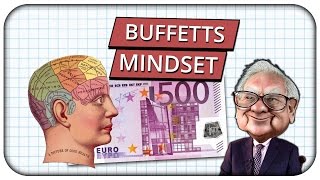
The question then arises: why should one do this at all? A very good statement from our favorite, Warren Buffett, explains why this is so important. It can be explained relatively simply mathematically: if we have a 10 percent loss in our portfolio, we need to gain 11 percent to break even. If we have already lost 50 percent, then we need to gain 100 percent.
With a 50 percent loss, we would only end up at 75 percent of our starting position; if we even lost 90 percent... If we were to lose a percentage of the portfolio, we would have to achieve a staggering 9,100 percent return just to break even. The deeper the price falls, or the more disproportionately our CDO portfolio depreciates, the more we need to generate profit growth again.
This usually doesn't happen in a few days, but can take years, which of course then has to be weathered. Clearly, in the recent past, like March 20th, we saw a very rapid crash followed by a very rapid recovery, but history has also shown that this isn't always the case. For example, in Japan, the index crashed very sharply in the 1990s and only recently, for almost 30 years, has it moved more or less sideways without really recovering.
Therefore, one has to ask oneself: do I even have the time and energy to persevere in the long term, or am I already at the end of my investment horizon? Or do I perhaps have wishes, dreams, and goals that I can fulfill in more time? Therefore, it 's important to pay attention to what could happen in order to be able to react if necessary.
Because once things get going, or are already underway, it's usually very difficult to act rationally. We can only say for sure that it's never good to put all your eggs in one basket. There's the risk of a stock market crash or other issues, for example, if you're only invested in one stock. In such periods of upheaval, you definitely need thick skin, and it's pointless to only find out at the last minute whether you can handle it or not, because then it's usually too late for the boss.
So you should explicitly put yourself in this situation. How does it feel to fight such a battle without losses? Can you really mentally endure it? If you can put yourself in that situation, you probably wo n't be able to cope with such large losses. Then it can make sense to use a mix of different asset classes to position yourself in the most market-neutral way possible.
This video is by no means about causing panic or somehow bringing about a crash, but rather about creating awareness that a well-diversified portfolio is not... This doesn't necessarily mean investing solely in stocks, but also potentially in a mix of polished asset classes to mitigate significant losses and thus maximize capital preservation and shorten the recovery phase.
Of course, such assessments from Raider and other experts should always be treated with caution, and for your own portfolio, you need to consider the whole thing in a diversified way. But now I'd like to know what you think about the current market situation. Will we see another boom, or a crash? What scenarios do you foresee?
Feel free to write them in the comments. I 'm curious. In the second part next week, we'll look at possible solutions offered by Ray Dalí and other experts to navigate such market situations calmly and maintain portfolio value. So don't forget to subscribe if you haven't already. Otherwise, all that remains to be said is, until next time in Smart Start.
Comments 0