원문 보기
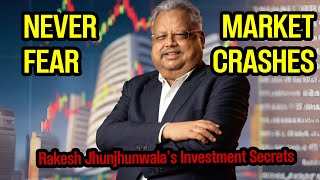
In the bustling financial district of Mumbai where the heartbeats of India's stock market thumped inside the Bombay Stock Exchange BSE, one name echoed through the years. Rakesh Junjinwala known as India's big bull. He was not just a billionaire investor but a symbol of unwavering confidence in the face of market turbulence.
But what made him so fearless when markets crashed? What lessons can American investors learned from his journey? To understand this, we must go back to the beginning. Born in 1960, Rakesh was the son of an income tax officer. Unlike most middle-class families in India at the time, where job security was the primary aspiration, Rakesh's father had an unusual habit.
He discussed stock market trends at home. It was during these conversations that young Rakesh first became fascinated with the world of investing. The thought that wealth could be created not just by working a job, but by owning pieces of businesses excited him. He enrolled at the Institute of Chartered Accountants of India.
But the stock market's call was too strong to ignore. With just 5,000 Indian rupees, about $60 in his pocket, he dived into trading in 1985. At that time, the Indian stock market was nowhere near as developed as Wall Street. It was a playground of uncertainties where insider trading was rampant and regulations were weak.
But Rakkesh had something that set him apart. an unshakable belief in the power of India's economy and an eye for undervalued stocks. His first major win came in Tat where he multiplied his investment several times over in just a few months. This was followed by another big bet on Cisagoa now Vdanta and iron or exporter.
Both investments proved that he had an instinct for spotting multibaggers stocks that could give returns many times over the original investment. But his real test would come not in bull runs but during market crashes. The stock market is cyclical and every investor whether in New York, London or Mumbai faces the brutal reality of bare markets.
Many lose their fortunes and some never return. But Rakkesh Junjinwall was different. He saw market crashes not as a disaster but as an opportunity. Why? Because he understood one fundamental truth. Every crash is temporary but great businesses endure. No investors journey is without its storms. And for Rakkesh Junjinwala, one of the earliest tempests came in 1992, the Harshad Meta scam.
For American investors, this was India's version of a financial crisis. Much like the 2008 Leman Brothers collapse, Harshad Meta, a flamboyant stock broker, manipulated the banking system to pump billions into stocks, driving the market to euphoric heights. When the scam unraveled, the market came crashing down, wiping out the savings of thousands of investors.
Many traders who had ridden the bull market of the late 1980s were devastated. Panic ripped the Lal Street, India's Wall Street. Stocks nose dived. Fear spread like wildfire. But Rakesh, he didn't panic. Why? Because he never invested based on hype. Unlike Harshad Meta, who created artificial demand, Rakesh had always chosen companies with strong fundamentals.
While others were blindly following manipulated stocks, he stuck to businesses that had real value. While people sold in fear, he bought in confidence. One of his biggest bets during this time was Titan, a watch and jewelry company from the Tata Group. In the early 90s, few believed that the Indian middle class would embrace branded jewelry and watches.
But Rakkesh saw the future. He loaded up on Titan shares at rock bottom prices. Years later, the single bet made him a billionaire. This approach, buying when others are selling in fear, would define his investment philosophy. It's a lesson that Warren Buffett, one of the world's most celebrated investors, also advocates.
Be fearful when others are greedy and be greedy when others are fearful. The 1992 crisis was only the beginning. Bigger crashes would follow. The do-com bubble of 2000, the 2008 financial crisis, the coid9 market crash of 2020. But every time, Rakkesh Junjala stayed true to his belief. Crashes are temporary.
Businesses that create real value always bounce back stronger. As the late 1990s approached, a new revolution was taking over global markets, the internet boom. Much like Wall Street, Deal Street was also caught in the frenzy. Tech stocks were the new gold rush, and everyone wanted a piece of it. Companies with no profits and sometimes not even real businesses saw their stock prices skyrocket.
American investors remember how NASDAQ soared in the late 90s only to come crashing down in early 2000. The same happened in India. Many investors, including some of the most seasoned ones, got lured into the promise of easy money. But Rakkesh Junjinwalla never followed market hysteria. Unlike most investors who blindly bought tech stocks, hoping they'd continue rising, Rakkesh followed a value investing approach.
He looked at balance sheets, earnings, and long-term growth potential. If a company had no real revenue or path to profitability, he wasn't interested, no matter how high its stock price soared. While thousands of investors burned their fingers when the.com bubble burst in 2000, Rockesh survived and even thrived.
He focused on businesses that had real assets and solid cash flows rather than just an idea on paper. One of his key investments during this period was in Crisle, a ratings agency that benefited from India's growing financial sector. When the dot frenzy ended, many so-called promising companies disappeared, but Crisle remained strong.
This phase reinforced one of his core beliefs. Not all crashes are the same. Some stocks deserve to crash while others become hidden gems during the chaos. For American investors, this lesson is crucial even today. Many people get caught up in hype cycles, whether it was Bitcoin in 2017, spaxs in 2021, or AI stocks in 2024.
But the key is to distinguish between genuine long-term winners and short-term bubbles. By the time the dot dust settled, Rakesh had emerged stronger. His ability to stay disciplined, ignore short-term euphoria, and bet only on companies with true potential made him a force to be reckoned with. But the biggest test of his investing philosophy was yet to come.
The global financial crisis of 2008. If there was ever a moment that tested the nerves of investors worldwide, it was the 2008 financial crisis. What started with the collapse of Lehman Brothers in the US soon triggered a global meltdown. Stocks plummeted, banks crumbled, and fear took over markets.
For American investors, the 2008 crash was one of the darkest periods in history. The Dow Jones lost over 50% of its value and trillions of dollars in wealth vanished. In India, the Sansex crashed by more than 60% from its peak, wiping out fortunes overnight. Many retail investors fled the market convinced that this was the end of capitalism as they knew it.
But once again, Rakesh Jingwala remained unfased. Why? Because he had studied history. He knew that every major crash from the Great Depression of 1929 to Black Monday in 1987 was followed by a recovery. Panic was temporary, but businesses that created real value would always rebound. Instead of selling in fear, he doubled down on his strongest bets.
During this period, one of his biggest holdings, Titan, saw a massive decline. But Rakesh didn't sell. In fact, he bought more. This was an example of conviction investing, something that legendary American investors like Charlie Mer and Peter Lynch also advocated. If you truly believe in a company's long-term potential, short-term volatility should never shake you.
By 2010, the stock markets had not only recovered but had reached new highs. Titan, which was once written off as a risky stock during the 2008 crisis, became one of the biggest success stories in the Indian market. His resilience during the 2008 crash taught a crucial lesson. Volatility is not risk.
Risk is investing in something you don't understand. Many American investors who panicked in 2008 missed the historic bull run that followed. Those who stayed invested or even better bought during the lows like Rakesh did ended up making massive returns. But the lessons from 2008 weren't just about patience.
They were also about adaptability. And the next big test, the CO 19 crash of 2020 proved exactly that. By the time the coid9 pandemic hit in early 2020, Rakkesh Jingwala had already witnessed multiple market crashes. But this one was different. Unlike previous financial crises which were driven by economic bubbles or banking failures, this was a black swan event and unpredictable disaster that froze global economies overnight.
In March 2020, stock markets worldwide collapsed within weeks. The Dow Jones plunged by 37% and India since sex crashed by nearly 40%. Businesses shut down, travel stopped and uncertainty ruled the world. For most investors, this was a nightmare. But Rakesh, he saw it as an opportunity, one of the biggest of his lifetime.
While many investors sold their holdings and panic, Rakesh did what he always did. Held on to his strongest companies. Just like in 2008, he didn't sell his key investments like Titan, Crile, and Lupin. He knew that businesses with strong fundamentals would survive the storm. Bought aggressively at the bottom while the world was gripped by fear, Rakkesh poured money into select stocks at dirt cheap prices.
He believed that once the pandemic eased, the markets would rebound sharply. Focused on India's long-term potential while others worried about short-term losses, Rakesh focused on the big picture. India's economy, like the US, was bound to recover and the companies that adapted to the new normal would thrive.
By the end of 2020, markets had completely reversed their losses and were hitting new all-time highs. His bets once again paid off. Throughout his career, Rakkesh Junjinala's greatest strength was his ability to stay optimistic in times of crisis. Whether it was the 1992 scam, the dotcom bubble, the 2008 financial crisis, or the coid9 crash, he never let fear dictate his decisions.
Instead, he followed a simple principle. Markets are unpredictable in the short term, but in the long run, they always grow. This is a lesson that applies to investors everywhere, whether in India or the United States. Crashes are not to be feared, they are to be used as opportunities. Rakesh Junjinwala passed away in 2022 but his legacy as India's most fearless investor lives on.
His story serves as a reminder for all investors. Don't follow the herd. Buy when others are scared. Believe in the long-term growth of strong businesses. And most importantly, never fear a market crash.





Comments 0