원문 보기
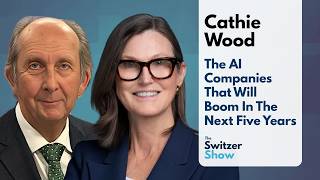
- Welcome to the program, I'm Peter Switzer. We have a special episode for you this week featuring one of the world's most influential investors, Cathie Wood. Cathie is the founder and chief investment officer of ARK Invest. The US-based investment firm focused on disruptive innovation and investing in companies that will change the way the world works.
Now, Cathie and ARK are bringing the ARK Venture Fund to Australia, giving Australian investors access to innovative private companies, including OpenAI, Kaushi, and Anthropic. Cathie joined me from Florida late last week, and here she is. (upbeat music) Cathie Wood is arguably one of the best known fund managers in the USA.
She is a fearless believer and investor in tech stocks and is always looking for the companies that will define our business future. She's flown the flag for Elon Musk, Bitcoin, and many other groundbreaking businesses, and she's now bringing her ARK Venture Fund to Australia. I want to understand what kind of companies will be in this fund and why Cathie will be selecting certain companies but rejecting others.
In her very well-known ARK innovation ETF, her major holdings are companies like Tesla, SpaceX, Coinbase, Shopify, Robinhood, Palantir, Amazon, and even Block, which actually bought out the Aussie business after pay with a founder Anthony Eisen was taught by, yes, you're truly me. Welcome, Cathie, to the switch of show.
- I didn't know that, Peter, thank you very much. I'm very happy to be here with you. - Yeah, great, great. I'm really happy to be talking to you as well. Cathie, I want people to understand, and I usually would feel us because you have flown the flag for companies that people didn't understand or they may well have been out of favor with the market and you effectively said you thought the market was wrong and on many occasions you've been proven right and me being a person in the markets, I'm sometimes right and sometimes wrong, we all understand that.
- We all are, yes. - Yep, that's right. But let's go to another area that you've been very keen on is namely Tesla, and we know Teslas have few challenges of late, but I was fascinated when you said this is the ultimate AI company that will realize it's true use value when driverless taxis soon will become commonplace.
- Yes. - So talk this to people will be stagger that you said that. So explain what you see in your crystal ball with Tesla. - Well, actually it's not a crystal ball. I have a Tesla with FSD. It's a very new one. I wanted to test out the latest software. And here in St. Petersburg, Florida, where we are, I don't have to use the steering wheel or accelerator or brake and I don't have to park or parallel park.
The car does it for me. Now it's not perfect yet, but it's getting to the point where anyone here in the United States who has been in a robo-taxi or an autonomous vehicle is beginning to understand, first of all, how delightful the experience is going to be. It already is in many ways. But when we can sit in the backseat and have no driver, I believe you have Uber in Australia, yes.
And so a lot of people don't really like getting into a car with another person or don't like getting into a car that might smell a certain way or something. So and they definitely don't like talking to that person when they're trying to do work. I don't know if you've ever had that experience. So yes, so we believe that the uptake of robo-taxis will be slowly, slowly, then all at once.
And I believe in the United States in certain cities, San Francisco being one of them, people and especially women are willing to pay more than they would pay an Uber and they're willing to wait longer just to get an autonomous vehicle. And I think that attitude will prevail throughout the country, certainly throughout the United States within the next couple of years.
- Okay, you made me laugh when you were very serious, but you still might be laugh when you said that you would take your car to work and then tell them to go off and work for the day and earn money and come back and pick you up. Talk us through that one, that means that yeah. - Yes, well, for people who want to do this, you could send your car out.
It's part of Tesla's platform and you could say, why don't you take the next few hours and give people rides? If you did that for just I think an hour a day, you would pay off your car. We did this arithmetic a while ago, but you would pay off your car in two to three years. So, and we do think that's going to happen.
Now, will I put my car out there really, my new one? Maybe my old one, but not my new one, but Tesla will be arranging and supporting fleets. - So, let's just talk about the future of Tesla and you're a great supporter of Elon Musk. You clearly have to look past some of his unusual activities, particularly in Europe and things like that, and that probably hasn't helped Tesla's sales, but my feeling was you're not just saying, Tesla's not going to just rely on selling EVs.
There's more to this business. And so, why don't you talk to that? - Sure. And in fact, the market is already beginning to value the RoboTaxi opportunity because a year ago in June, Tesla launched its RoboTaxis in Austin, and we're beginning to see an acceleration in the rollout across cities. And in fact, I think for the first time, Tesla in Tampa, which is right across the bridge from us here in Florida, is going to launch its RoboTaxi service before Waymo.
That's a first, and I think they're sending a strong message that we're going to see a lot more cities sooner than many analysts expect. According to our research, the RoboTaxi opportunity alone, it will account for 90% of Tesla's value in five years. Now, we are in print with a price target at 2,600, but we've gotten a lot more data since that model was done, and we're preparing a new model, which should come out, meaning a financial model, of course, which should come out in September.
And in that model, you will be able to manipulate the variables that we think are important to the long-term valuation of Tesla. If you think we're too aggressive on the RoboTaxi rollout, you can dial it down and see what kind of number will come out. We think that even if you cut our expectations for RoboTaxi in half, that Tesla would still deliver a very nice, compound annual rate of return over the next five years.
- Okay, let's also talk about something which I've never heard of before, but I was fascinated to hear about this. Vibe coding, Vibe coding, is that right? And it seems to me that there's going to be so many entrepreneurs will love the idea of this. So why don't you explain what Vibe coding is and what companies you think will benefit from it?
- Sure, this is exciting because it's capitalizing on a big breakthrough in AI, meaning the programming language now can be natural language, our language. The language is we all speak. And so we are all going to become coders if we want to be. And you can go to a site like, what you can go to OpenAI and Anthropic cloud with cloud code and codecs, I mean, codecs, codecs.
You can also go to Replit and find out what Vibe coding is. If you give a prompt to any of those and say, I would like to program, I would like to create my own company. I want to solve this problem. And I would like you to help me. Here is the idea. Here's the problem we're trying to solve. Here is where I would like to start.
Let's work on this together. That would be Vibe coding. You'd be astonished how much non-professional developers can do for Replit, which is in our venture fund is, it started as a Vibe coding company. Others are beginning to compete with it, including OpenAI and cloud, but it alone has somewhere between 25 and 30 million users.
Now, in the entire world today, I think there are roughly 20 to 25 million professional developers and they're not using. They're not using Replit. This is much more for people like you and me who want to get the job done and we don't want to wait for our technology department to put us in a queue and finish our project.
We want to start now and it's very powerful, it's very powerful. In fact, we had a hackathon at our own offsite about a year ago with Replit and some people within our organization, both research, the research part of the organization and the business part have become passionate about using Replit to make our lives simpler here.
So it's really empowering. - Yeah, okay, so I've sort of set the scene for people who don't know much about Kefi Wood and they realize that you are analyzing the businesses out there that you think are going to be game-changers. And so I think it's appropriate to say, well, tell us about the ARK Venture Fund.
When it comes to Australia, well, it's literally Australia already, what kind of companies will be in the Venture Fund? - Sure, I'd like to set it up, though, by talking about how we have organized our research. So typically, if you go into an asset management firm, you'll find that research is organized by sector or industry or sub-industry.
And many firms have five healthcare analysts and that's wonderful. They can do all kinds of research with five healthcare analysts. We think the world is changing, though, and in order to understand how this technology revolution and we are in a technology revolution is going to transform the world.
The right way to organize research will be not by sector or industry, but by technology. So there are five major innovation platforms evolving today, robotics, energy storage, AI, very importantly AI, blockchain technology, and multi-omics sequencing in the life science space. Those five platforms involve 15 technologies.
So we have 15 analysts focused on each of those technologies because we believe that tech specialists are going to be necessary to help us understand how these technologies are going to scale across sectors or across industries. So I am standing on their shoulders, so and we do a tremendous amount of original research really focused on Wright's Law, which is a relative of Moore's Law.
We don't have to get into it, but it's a wonderful way to measure the learning curves associated with each new technology, and those learning curves are expressed through cost declines. And when costs fall, the access to new technologies increases. So I wanted to set it up that way because our analysts started in the public markets, but with time, we understood, given the proliferation of new technologies and given that they start in the private world, that our analysts needed to focus as much, and maybe even more on the private world as the public world when it comes to new technologies in this technology revolution.
- So your question was, what are the kinds of companies in the portfolios? - Yes, well, we until recently, well, even now, SpaceX is the largest position because we're locked up. It just went public, the first unlock, the first unlock is August 12th now. So at that time, we can't say what we're going to do, but now that SpaceX is public and access is possible for a much lower cost than a venture fund.
It makes sense for us over time to sell that and feed it into our public funds, which we have done already, and move other private companies into the venture fund. We were very early in OpenAI and Anthropic, and xAI which is now a part of SpaceX. And we've been very focused on new markets, whole new markets like prediction markets.
So anytime we see a new technology or a new service enabled by the technologies that are evolving today, or enabled by the deregulation that is taking place certainly in the United States today, finally, we are all over it. And it becomes a prime candidate for our portfolios. Calchi in the prediction markets is one of our larger holdings.
Once we adjust for, if the rumors are right, the new funding round at the new price. And I mentioned Replid is in there, gaming company, Epic is in there. We have companies like Crusoe, Neo-Cloud companies. We're in terms of the AI ecosystem. We want to be everywhere in every industry and so in the defense space, we have Shield AI and in the space space.
Now that SpaceX is leaving, we have two companies whose founders came from SpaceX or Tesla. So they have the right kind of DNA. - So are you going to be putting new companies into this fund that Australians potentially can invest in? Or will they be adding to the existing group of companies that are listed, that are private?
And you'll either take a bigger share in those companies or add new companies to the fund? - Yes, well, what's happening today is that more and more companies are going public. This is a big change from the last four years. And that's a very good thing. It's a virtuous cycle. So they go public and they're typically certainly in the case of SpaceX going public because they know they're going to need so much more capital than they would like to raise in the private markets, which is a very tedious way to do it.
Founders just want to build. So now going into the public markets, they won't have to worry about fundraising every six to 12 months. The public markets will take care of that much more readily. So we are going to see, and I think already we've had six graduations. Some of them are still locked up. Kodiak in the autonomous trucking industry is one of them.
But they are, as they are unlocked, and we move them into our public portfolios, that will leave room for new names to enter. We don't want many more than 50 private names. And that is fairly concentrated. But we want to have enough names so that the venture fund touches all of the technologies that I mentioned, the 15 technologies that I mentioned earlier.
- So, Cathie, how does the fund actually realize, ultimately profits that then are distributed to the investors? Is it when they go public or are you picking up distributions along the way as the companies become? They're clearly a company like Anthropic, which is not public yet, but is making a lot of money.
Are you able to get a distribution out of the profits of Anthropic or are they continually investing and you're not seeing any distributions, but the value of the companies clearly going up? - Well, Anthropic and OpenAI and most of the companies in the venture portfolio are investing aggressively now, because especially in the AI world, we are in more and more winner take most opportunities.
Certainly in the large language model world, it is becoming very clear that there are only a few very big leaders. Now, of course, open source might challenge that, but so far the closed models have remained at the frontier and the open models are mostly from China and most businesses do not want to share their data with China so far, so good.
But they are investing aggressively. And in fact, most of the companies in our portfolios are not in a profit mode right now. The venture world is used to that. The public markets, not so much. And so, we're very comfortable in the venture world. We have a five-year investment time horizon. Many investors in the public world have a one-quarter investment time horizon.
They cannot take this kind of company, but we also think that's what sets us apart in the public markets where our funds are the closest you'll find in the public markets to venture capital funds. - Yeah. And so therefore, anyone who goes along for the ride with your fund is in a sense becoming many private equity investors and they should be a patient investor.
But given some of the stories that you've been associated with, they potentially can be fantastic performers over time. - Absolutely. And the difference between the public and the private markets with our companies is in the private markets, they're not marked to market every day. It's not like in the public markets.
And so the venture fund seems so much more stable than the ETFs, but that doesn't mean they are less risky. I think a lot of people get risk and volatility mixed up. They are not the same thing. Volatility is a function of uncertainty. And the kind of research that we do increases our certainty. And we don't find many people doing research the way we do it.
I starting with those learning curves, right? Trying to understand how the costs associated with each of these new technologies are going to fall and how quickly the technologies will therefore proliferate. But we give our research away because one of our missions and values as a company is to educate, not just investors, but to educate students and teachers and parents who are trying to lean their children in the right direction, because so much is changing now so quickly.
- I'd love to explain to my viewers this company, Kalshi, 'cause it is a part of your venture fund. Tell us about that and what the future looks like for a company like Kalshi. - Yes, this is partly a deregulation story and really a technology story in that what I actually think is gonna bring back active equity management because anyone can offer Kalshi a prediction to create a market.
We ourselves are suggesting markets to Kalshi that it should create. And sometimes it does, sometimes it doesn't. But it's been associated with sports historically and especially after the World Cup, as has Polymarket, which is I know much more international than Kalshi is. But Kalshi has also been very careful in the United States to work with the regulators and only move forward when it had regulatory clearance or enough regulatory clearance to move.
So it has been dominated by sports and these prediction markets are regulated by the CFTC. And so the Commodity Futures Trading Corporation, something like that or commission, not the SEC. And so they have gotten the regulatory clearance. In fact, Michael Selick, who heads up the CFTC, agrees with the Trump administration that we would like the US to be the, to have the major company hosting prediction markets.
And this is also a winner take most market. Polymarket's having trouble cracking into the US because it did not do so in, in as regulatory a thoughtful way as Kalshi has. So yes, you know, it was so interesting that Kalshi was partnered with Robinhood. Robinhood dominated Kalshi's volume. Robinhood is starting its own competition.
Kalshi did a funding round. And I think at the time Robinhood accounted for 60% of Kalshi's volume, Robinhood announced that it was going to start its own prediction market service. And many people thought Kalshi would be dead. We did not, we participated in that round. And now I think, I'm not gonna get this right.
Now I think that it's, this was just, I'm gonna say six months ago, I think this rumored round is at double what we paid because the World Cup exploded Kalshi in the United States relative, I mean, soccer or what you would call football, United of the World. And honestly, I was surprised at how captivated everyone here in the United States was by the World Cup and how much they were willing to pay for the ticket.
So it was a real home run for Kalshi. But we think the bigger market by far is the financial markets. Sorry? - Cathie, I think a lot of people would need you to explain what prediction markets are. I know I've seen some battles on CNBC of very well-known people on both sides of the arguments. And some say, oh no, it's just punting.
Why don't you explain what prediction markets are all about? - Yes, we believe that they're going to introduce an unbundling into the investment world by company. So one of the prediction markets, I don't know if it's out there, but just let's say when will Tesla's robo-taxis be in half of the United States and then it will give you choices.
Or how many states will Tesla's robo-taxis be in by December, by the end of the year. And so they'll set up a market where anyone can bet on this. And what's very interesting about it is we all have tidbits, and we don't even know it, of insider information, just tidbits that they're in material, they're in material, but when you get the wisdom of crowds betting in this way and you start to see patterns, the traditional financial world starts to take notice and do more digging into that.
So what has happened to our markets in the United States, maybe in Australia as well, is they've been overtaken by algorithms and high-frequency trading, and they've moved much more passive. Passive meaning indexes are at the center of all or most investment strategies. Not ours, we are agnostic to benchmark.
And so what's happened is you get game playing around benchmarks, not real investing. This is an opportunity for real investing. Like I started in the business, in the late '70s, early '80s, when there were no computers. And investors and analysts really had to think through what the future might hold.
We're going to go back to that world, I think, with this unbundling of company statistics in the prediction markets. And if you hold positions in Tesla, but you wanna hedge a little bit, it's gonna be an incredible hedging market. And so we believe it could scale to the size of the derivatives markets are, which is trillions and trillions of trading, a dollars of trading per day.
- Yeah, it's gonna be a really interesting, but possibly crazy future with this one. Now, let's take you away from the technical side of what you do on a daily basis. And go into the macro world, because you can be technically right about what's going on in individual companies. But you know, if the macro world wants to, for example, argue that software as a service companies are gonna be killed by Claude and all the other AI agents, the market can just go and smash these companies.
What's your feeling about, this take a number of issues that, I know my view is a worried about, is that the future of the US economy and US stocks, my reading is that US stocks are gonna do well despite a lot of the challenges. And Iran's looking better than it did, but two weeks ago it looked better than it looked worse.
What's the Cathie Woodview? The Cathie Woodview on stocks and all the headwinds and potential tailwinds out there. - Yes, this time period reminds me of the early period of my career in the 80s and 90s, the stock market, the equity market, climbed what's known as a wall of worry. Everyone's worried about so many things.
And in fact, they're worried about the same things they were worried about in the 80s and 90s, which became the golden era for equities, right? They're worried about inflation. We actually think inflation's gonna surprise considerably on the low side of expectations, maybe even bordering on deflation, but good deflation as these technologies become so important that they move the needle.
Technology is highly deflationary, but that's good deflation when you have in technology, when prices fall, units can explode. So that's one worry out there. And because of it, interest rates have started edging up. Now, in terms of the way we are looking at the world, we believe that the US economy is entering a boom.
And the boom is being caused by AI and all of the other technologies and the five major platforms I mentioned at the top. And so I think that's going to be one surprise. And if we're right that the boom happens and with it inflation falls, that will be a real head spinner for the world right now because that's not what they think.
Now, when it comes to interest rates, what will that mean? Well, short-term interest rates tend to track nominal GDP. And if we're right that we have very strong real GDP growth but inflation decelerating, we may not have from a nominal GDP growth point of view, which combines both of them, that much of a change.
Maybe it'll be up and maybe short rates will come up a bit. But if we're right on inflation, meaning these technologies are deflationary and they're going to move the needle, we will probably see what we saw during the 50 years of the industrial revolution, at the 50 years through the 1920s before the Great Depression.
And that was an inverted yield curve, meaning long rates below short rates, the majority of the time, back then the average inversion was 100 basis points. It got to 500 to 600 basis points at times. So that would be another surprise. And I think one of the reasons for the boom, as I mentioned was AI, but is the associated productivity growth, which is also anti-inflationary.
Many people are worried about technology taking jobs and sure, there is going to be displacement at the margin, but we think we're going to see an entrepreneurial explosion now that it is becoming so easy to start a company by oneself and an AI companion and no other employees. In fact, the overall unemployment rate in the United States has slipped here recently.
I think it's 4.2%. Entry level jobs, the unemployment rate there is going up, but I think that's a blessing in disguise for young people who I always encourage, keep looking for a job. It does take the average duration of unemployment in the US is six months, the median duration is three months. So I say, keep looking for that job, but also go out, start a company.
I know there's a problem that frustrates you, try and figure out a way to solve it and let AI help you. And you will go to the top of the list of companies recruiting you because you're an entrepreneur, you've taken initiative and you've done it with AI. - Cathie, unemployment, as an economist, my view is, I see the market going up just like you do.
I see the role of AI being fantastic for productivity and therefore, infection ultimately just rates. What's your view on job creation or unemployment as a consequence of AI? - So in the, I'm going to give you US statistics, which are the easiest for us to get. So if you look at the age cohort between 16 years and 24 years old, that unemployment rate in the United States is moving up.
We'll get another reading this Friday. And it's at about nine and a half percent. It's in the nine to nine and a half percent range. It has been moving up, whereas the overall unemployment rate has not. So that's why I go out all the time and talk to young people and say, or to older people who have lost a job because they are being displaced, go out and start your own business.
By the way, I did that myself and there's nothing like it. And I believe you did Peter as well and there's nothing like it, right? It's unbelievably exciting, exhilarating and terrifying, especially if you're funding it by yourself as I did for four years. But with AI today, it's so much less expensive to innovate.
So I think that that's what will happen. We're going to see many more entrepreneurs. And I think it's very exciting. I think it's exciting for young people. And in fact, we're seeing statistics here in the United States, which might turn that unemployment rate for the young people down. Because according to, this was a study done by Ramp, which is a FinTech company, according to Ramp, companies that are deploying AI faster than other companies and deploying it effectively and efficiently, they are hiring more aggressively than companies who are not.
And they're doing better. So that's a very early read on what's going on. And I believe it, we are hiring young people straight out of school. They are much more AI native. And by the way, a year ago, and maybe even on the diary of a CEO, I might have said, we're not going to be hiring anyone. Well, I've learned differently.
First of all, because a lot of new opportunities are opening up for us. So that's great. But we're also seeking native AI talent, which is coming out of schools. Even, and we have a pretty young research employee base, but some of them have been with us for 10 years. So they're not AI native, they're picking it up quickly, as AI native, as those we are hiring straight out of school.
- Cathie, it's been a great pleasure talking to you. I look forward to catching up with you. I'm sure you'll come to Australia one day to talk to people. - Yes, in October. Yes, and I think I'll be there in October. So I will look forward to being on Australia. I haven't been there since 2019. I used to go regularly.
So very excited to be getting back to Australia now that we have our new partner there. - Great stuff. And I think you will find a few changes since you're last here. But one thing will be constant is that you'll be very much welcome when you come. - Oh, thank you, Peter. I'm looking forward to it. And thank you for all the research you've done on ARK to help your viewers and listeners understand us a little better.
- Great stuff. Thanks for joining us. - Thank you. (upbeat music) - And that was Cathie Wood, a very interesting lady, a very intelligent fund manager. She's been controversial, but she's been very successful over her lifetime of investing. So that's a show for this week. Thanks for joining us. Don't forget, if you want more insights into investing, you're gonna have to become a subscriber to the Switch Report.
Go to switchreport.com.au And of course, if you want to know the sort of stocks that we've talked about tonight, by going to the Switch Report, you'll get a list of those particular stocks. Once again, thanks for joining us. I'll see you next week. (upbeat music) - From around the corner to across the world, these are the insights, experts and ideas that matter for your money.
On ausbiz, this is Strixer. Watch the show on demand at switzer.com.au. (upbeat music)
Comments 0