저자: 제이미다이먼 · 외국인
요약 보기
한 줄 결론: 다이먼은 은행위기가 2008년과 달리 소수 중소은행에 국한된 신뢰 위기라고 보지만, QT·고금리 장기화·재정적자·우크라이나 전쟁 리스크로 경기침체 위험은 남아 있다고 경고한다. [은행위기 진단] 실버밸리뱅크(SVB) 사태는 소수 중소은행의 위험관리 실패가 원인이며, 대형은행 전체 시스템 문제가 아니라고 설명. SVB는 장기 국채를 대량 보유해 금리 상승으로 평가손실이 났고, 스타트업·테크 기업 등 소수 고객 예금에 집중돼 있어 동시 인출 시 붕괴했다. [2008년과의 비교] 2008년은 수백 개 금융기관의 과도한 레버리지와 1조달러 규모 모기지 부실이 원인이었으나, 현재는 그런 수준의 레버리지나 모기지 문제가 없다고 봄. 은행 위기는 신뢰 위기 성격이며, 몇 주 내 진정될 것으로 기대. [경기 상황] 2022년 인플레이션은 9%대(6월)까지 치솟았고, 연준 기준금리는 0.1%에서 연말 4%로 인상됨. 증시는 약 20% 급락했으나 실업률은 50년 만의 최저 수준으로 떨어짐. 수익률 곡선 역전은 경기침체 신호로 해석되나, 현재 소비·임금·기업 재무는 양호하다고 평가. [향후 리스크] 양적긴축(QT)의 장기 영향은 불확실하며, 고인플레이션 장기화 가능성 존재. 향후 3년 재정적자는 연 1.4~1.8조달러로 추정되며, 경기침체·전쟁 비용은 반영되지 않음. 우크라이나 전쟁으로 에너지·식량 공급망 불안과 경제동맹 재편 리스크 존재. [출연자 전망] 다이먼은 단기 리스크를 인정하면서도 미국의 인적자본·자본시장·자유기업 체제 덕분에 장기적으로는 잘 해낼 것이라고 낙관. [결론] 은행 시스템 자체는 견조하나, 긴축 기조와 재정·지정학 리스크로 경기 연착륙이 보장되지는 않는다는 입장.
다듬은 글
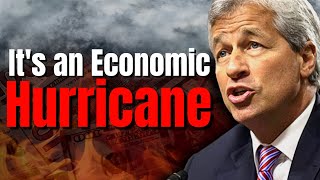
it's a hurricane it's we right now it's kind of sunny things are doing fine you know everyone thinks they're the FED can handle this that hurricane is right out there down the road coming our way you better brace yourself Jamie Diamond is one of the biggest names in the world of Finance being the chairman and CEO of JP Morgan the fifth largest bank in the world diamond is not someone to hold back on what he thinks about the economy and recently he released this letter to shareholders where he details his thoughts on the economy the recent banking crisis and what it all means for the future of the economy he also did a quick interview with CNN to discuss these topics if you look at history since World War II we've not kind of faced it like that it's still early in that that we're going for longer we don't really know the outcome of QT I think we'll be writing about QE and QT for 50.
quantitative tightening quantities okay in 2022 Diamond warned us about an economic hurricane looming over us especially as he explains in his letter 2022 was an unusual year economically and we witnessed several dramatic events we saw the start of the Ukraine war that continued throughout the year which added pressure to the already growing inflation that happened as a result of the covet stimulus spending both of these influences LED inflation to a 40-year high reaching over 9 percent in June of 2022.
this led to an accelerated increase of interest rates from the Federal Reserve that began in March and increased the federal funds rate from 0.1 percent to 4 percent by the end of the year in an attempt to control inflation inflation remains too high and the labor market continues to be very tight and we remain strongly committed to Bringing inflation back down to our two percent goal this stall economic expansion and led to a decrease in Market values collapsing the entire stock market by around 20 percent but at the same time unemployment fell to a 50-year low as supply chain issues eased and the economy was being stimulated long and short-term interest rates presented a sharply inverted yield curve which is 848 in terms of predicting a recession but despite all of this diamond says that the economy seems to be running quite well unemployment stayed low wages are starting to go up and spending increased significantly up 23 percent from pre-covered years finally Supply chains are recovering businesses are pretty healthy and credit losses are extremely low although the economy has performed much better than expected Diamond warns that there are still storm cloud ahead has this banking crisis increased chances of a recession here yes it's just like another weight on the scale okay and think of it as you know people say it's like raising rates another 50 basis points or something like that I we are seeing people reduce lending a little bit cut back a little bit pull back a little bit it won't necessarily force a recession but it is recessionary until the collapse of Silicon Valley Bank the current economy was performing adequately the market was generally forecasting either a soft Landing or a mild recession but the failures of svb and Credit Suisse have significantly changed the Market's expectations bond prices have recovered dramatically the stock market is down and the Market's odds for a recession have increased but Diamond makes a point that this banking crisis is more of a crisis of trust than it is logistically the main fear is having another financial crisis like we did in 2008 but as Diamond said this is nothing like the 2008 financial crisis this is not 2008.
okay this is a much more limited there are only a handful of banks that have this particular problem uh they'll eventually be resolved one way or another and I think then people should take a deep breath in a week or two a lot of these Banks can be reporting earnings I think they're probably pretty good the Federal Reserve made some you know bold dramatic move to help it easier for some of the issues they had and I'm hoping it will resolve you know rather shortly Jimmy's point is that there are a few banks that seem to be the exception to the rule and dramatically mismanage their risk allocation which got them in trouble what happened with svb was a mismanagement of their risk allocation they held a large amount of government bonds that went down in value as interest rates Rose making them lose some of their depositor's money the second Factor was that they had a very concentrated and specific client base who held a large amount of money there were clients like startups and tech companies and as the economy slowed down and these small number of clients starting withdrawing their money at the same time they got in trouble but as Diamond says most of the risks were hiding in plain sight yeah so I said there's hide in plain sight everyone knew about uninsured deposits everyone knew about infrared exposure everyone knew about health maturity portfolios the only difference the only real difference was we called concentrated clients so Silicon Valley Bank had you know a handful of people controlled 35 000 corporate accounts and they just left you know 140 billion dollars or something or of course a course of two days that's not happening to other Regional Banks they don't have that issue nor do they have all these other issues so it was only a handful though without much offsides interest rate exposure the fair value of health and maturity portfolios and the amount of svds uninsured deposits were always known both to regulators and the marketplace the only unknown risk was that sbv's over 35 000 corporate clients were controlled by a small number of venture capital companies that moved their deposits almost simultaneously and when all of those lines try to withdraw their deposits and the bank didn't have their money the bank collapsed but Diamond makes the point that the rest of the banking system does not operate this way the most critical banks have a large and diverse client base they have hedged their portfolios better and they're well capitalized and they have the backing of the Federal Reserve in other words the mismanaging of a small number of regional Banks does not represent the entire banking system but what does this mean for the future of banking Diamond emphasizes that this banking crisis is nothing like what occurred during the 2008 Global financial crisis which barely affected Regional Banks remember in 08 it was hundreds of Institutions around the world far too much leverage we don't have that huge problems in mortgage markets we don't have that this is nothing like that and the American public shouldn't think that this will resolve and then we should go look at you know what went wrong and fix it you know in the clean uh in the light of day in 2008 the trigger was a growing mission that one trillion dollars of consumer mortgages were about to go bad and they were owned by various types of entities around the world at the same time there was enormous leverage virtually everywhere in the financial system major investment Banks Fannie Mae Freddie Mac and nearly all savings alone institutions collapsed but this banking crisis is mostly contained to small poorly managed institutions which is good news for the banking system but what about the future of the economy Diamond still has a few concerns for our economic future storm clouds ahead you say maybe some for the economy yeah I might mention the QT higher inflation for longer the war those are pretty strong things if you look at history since World War II we've not kind of faced it like that it's still early in that that we're going for longer we don't really know the outcome of QT I think we'll be writing about QE and QT for 50.
quantitative tightening quantities okay these storm clouds that diamond sees in the future are the tightening of monetary policy High government spending and the unpredictable consequences of the Ukraine war qt or quantitative tightening is the implementation of stricter monetary policies that reduce the Federal Reserves balance sheet in other words they sell treasury bonds or let them mature to take money out of the economy in an attempt to cool down demand and control inflation this action reduces the amount of cash in the financial markets which puts negative pressure on the stock market limiting its growth the problem is that high government spending can be inflationary so to counteract this inflation the government might choose to have tighter monetary policies that will put even more downward pressure on the economy the deficit for the next three years is now estimated to be anywhere from 1.4 trillion to 1.8 trillion dollars per year which means the government will be spending around 1.5 trillion dollars more than they bring in every year and this is not taking into account the cost of a recession or a war the Ukraine war is also affecting Global energy and Food Supplies there is a risk that energy and food supply lines which are not secured will lead to higher prices and a large migration of people triggering another level of geopolitical dislocation the tensions of this war are also leading to the rethinking of many economic alliances as well as trade in National Security all of these factors create more risk and potentially higher inflation which again leads to tighter monetary policy which puts negative pressure on the economy although we have some storm clouds ahead Diamond still believes that the U.S is a strong economic force and will do just fine in the long term we're going to have whatever we go through the next couple years America and almost every 10-year period going back all through our history is much better 10 years later than it was before that includes 1940-1950 that includes 1930 to 1940 and so the health of America is the strength of its peoples human capital his brain Powers capability it's Capital markets with the widest deepest most transparent Capital world's ever seen and that includes Venture Capital private Equity media we've got open media freedom speech freedom of religion freedom of Enterprise but the most important that is freedom of people to do what they want like if you're starting to be so there's two wonderful ladies join business here yes it's that it's the that is that's at the heart of America and that's still there that has not gone away and we should applaud it I mean we should sing you know I wrote in my letter and we're talking about all the stuff we do to help society and communities and philanthropy and Dei I said but less my shoulder forget I'm a red-blooded full-throated free market free enterprise capitalist okay we should applaud free enterprise we should sink from the hills the benefits while we fix the negatives as opposed to denigrate the whole thing and there you have it these are Jamie Diamond's thoughts on the current state of the economy and what is to come do you agree with diamond or do you have different thoughts let me know in the comments below and if you want to see Ray dalio's thoughts on the current U.S economy and where we are in the economic cycle click on this video right here
Comments 0