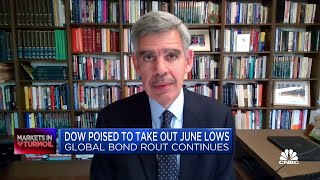
저자: MohamedEl-Erian/진행:인터뷰어 · 외국인
요약 보기
미국 국채시장의 기능 저하와 정책 신뢰 훼손이 현 시장의 핵심 위험이라는 결론. 주요 주장: 시장은 유동성·성장·세계화 패러다임 변화를 겪는 중이며, 최근 24~48시간 동안 정책 신뢰 상실이 가속화됐다고 진단. 정책 신뢰: 중앙은행과 정책당국이 변동성을 누르는 역할에서 오히려 변동성을 증폭시키는 존재가 되고 있다고 평가. 자금 흐름: BofA 기준 약 500억 달러가 모든 자산군에서 현금성 자산으로 이동했으며, 이는 기술적 괴리를 키우는 요인이라고 설명. 국채시장: 금리 수준보다 시장 기능(functioning) 악화를 주시해야 한다고 강조. 2013년, 2020년 3월과 유사한 신호라고 언급. 수익률곡선 스티프닝: 낙관 해석(경기침체 이후 개선 기대)에 동의하기 어렵고, 기술적 요인이 장기금리를 끌어올린 결과일 가능성이 크다고 봄. 경제 전망에 함부로 해석 확장하지 말라는 입장. 전이 위험: 국채시장 문제는 격리가 불가능하며 신용시장, 레버리지론 시장으로 전염될 수 있다고 경고. 구조적 취약성과 QE 규모·기간이 원인이라고 설명. 주식 밸류에이션: 일부 개별 종목에 가치가 있으나 거시 요인을 피할 수 없다고 판단. 현금 비중을 높게 유지해 왔으며 S&P500은 4400 도달 전 3600 수준까지 하락 가능성을 언급. 리스크 조건: 정책 신뢰 상실과 국채시장 기능 장애를 가장 주시해야 할 두 가지 요인으로 제시.
다듬은 글
제목: Investors should avoid individual names for now, says Mohamed El-Erian 채널: CNBC Television 화자: (미상)
원문: Let's get into the markets this morning. Muhammad Al-Erian, Allianz chief economic advisor, joins us now. Muhammad, what's your take on the big moves that we've seen in the Treasury market and the big moves we've seen in the currency markets?
Thank you, Melissa. Look, we are adjusting to the three paradigm changes we've talked about on Squawk: the change in the liquidity paradigm, the change in the growth paradigm, and the changing globalization paradigm. That was going to be bumpy, but it offered the prospect of a better destination, a less distorted destination.
What we've seen in the last 24 to 48 hours is two other things. First, an accelerated loss of confidence in policymaking. You've heard the Fed discussion. If you are here in the UK, there are a lot of concerns about policymakers here. So policymaking is going from being a repressor of volatility to an amplifier of volatility. And let's not forget what's happening to flows. Bank of America reported $50 billion went into cash funds, out of every single other asset class. So we're starting to see technical dislocations, and even the Treasury market is not functioning well. I'm less worried about the first three things, but I'm spending a lot of time on the final two because they can create very unsettling volatility, not just volatility.
You said something about the Treasury market and your focus on it right now. The volatility we've seen, I haven't seen it before, though you may have. In terms of the huge moves we're seeing in yields, even intraday, I'm wondering if you think something is signaling. So many people say there's nothing wrong with the credit markets overall, and that's where they would start being concerned about what the Fed is doing and its impacts.
Yes. Normally you worry about the peripheral markets, the high-yield market, the leveraged loan market, and you spend very little time worrying about the Treasury market. But there are episodes, and you will remember them: May 2013, and again in March 2020, when the problem was the safest market, the mother of all markets around the world, which is the Treasury market. I can tell you yesterday's price action and what I've heard from people trading that market makes you uncomfortable. So keep a really close eye on the functioning of the market, not the yield level, but the functioning of the market.
What does the curve steepening under these circumstances tell you? We were talking to Sri Kumar before, and he said he believes that the Treasury yield steepening, the curve steepening, signals that investors are looking forward beyond the recession to better times. That seems like a very optimistic take, but it could very well be true. I'm wondering what you think it signals, because it seems there may be certain technical issues causing the 10-year yield to go higher and therefore the curve to steepen.
Look, I hope he's right, but I think it's all about technical issues. A lot of people can't get done what they want to get done, so they're getting done what they can get done. Don't underestimate the amount of suboptimal decisions being made right now, because liquidity has become so patchy. So I would be careful extrapolating too much in terms of what it means for the economy, because right now technicals are really in control of quite a few curves.
When we see issues in the Treasury market, Muhammad, do we eventually see the next shoe drop, or the next domino to fall, whatever metaphor you want to use? Trouble in the credit markets, troubled leveraged loan markets, things like that. Or can it be isolated?
The Treasury market is the one you cannot isolate. You can isolate other markets, but that's the one you cannot isolate. It's a reflection of structural weaknesses and fragilities that a lot of people have written about. The G30 has written about it, and the Treasury itself has been looking into it. So this was long in the making, and it was amplified in a major way by the duration and the size of QE. These are structural. It matters, because remember, if you can't get what you want done, you will start spreading contagion around markets, and that's why it matters for the credit market. So let's keep an eye on it. I'm hoping it will pass, that this is just short-term, various things coming together. But of the five factors, this is the one, along with the loss of confidence in policymaking, that I would keep a very close eye on. The other stuff we can navigate, and we understand how to navigate it.
How do you think about equity valuations here, with Treasury yields where they are and where they're going?
Look, I think there's value. There are some very attractive single names, but you just can't avoid the macro factor right now. I was asked, if you've had a lot of cash on the sidelines like I have because I've been worried, in fact I have a bet with Joe, and I'm sorry he's not on today, because I was going to offer him the possibility to buy back his bet. It would go about where we're going to get to on the S&P. I had said 3600 before we get to 4400, and I think unfortunately that is likely. So I wouldn't go into single names right now, because they are being impacted in a major way by what's happening market-wide. But significant value is being created.



Comments 0