저자: TomLee · 외국인
요약 보기
결론: 톰 리는 2023년 2월 시점에서 S&P500이 연말까지 약 18% 추가 상승해 4,800 수준에 도달할 수 있다고 주장하며 '연준과 싸우지 말고 시장 흐름을 따르라'는 입장이다. [시장 내부지표·근거] - 연초 이후 26일차에 16/17회 두 자릿수 수익률이 나왔고 평균 상승률은 26%라고 언급, 이는 약세장에서는 전례 없는 폭의 상승이라고 함. [금리·인플레이션] - 인플레이션 위험이 줄고 연준의 정책이 예측 가능해지면 변동성이 낮아지고 멀티플이 확장될 것이라고 봄. - 연준은 점진적·예측 가능한 금리인상을 하는 중이며, 1990년대처럼 금리 인상기에도 주식은 두 자릿수 상승을 했다고 주장. - 2월 CPI도 하락(둔화) 예상, 4~5개월 연속 둔화 기대. [연준 전망·조건/리스크] - 채권시장은 향후 금리인상 1~2회 후 pause를 가격에 반영 중이며, 이 정도 인상으로는 S&P가 20% 하락하지 않는다고 봄. - 반대 리스크: 고용·CPI가 예상보다 뜨거우면 연준이 반응적으로 움직일 수 있어 불확실성 존재(사회자 제기, 톰 리는 '데이터 의존'과 '데이터 반응'은 다르다고 반박). - 서비스업 인플레이션은 여전히 높음. [역사·드로다운] - 금리인상 첫 시점부터 피벗까지 역사적 최대 낙폭은 평균 약 20%, 이번 사이클은 약 27%로 이미 더 깊게 하락. 따라서 피벗 시점에는 오히려 랠리 중일 수 있다고 주장. [밸류에이션] - 10년물 금리 3.7%인데 PE가 약 30배인 것은 과도해 보일 수 있으나, 톰 리는 연준이 이번 해 내 중단하면 리스크프리미엄이 붕괴해 PE가 20배 이상으로 정상화될 수 있다고 봄. - 연준이 금융여건을 50bp 추가 긴축해도 주식이 20% 하락할 근거는 약하며, 올해 주식이 '게임을 포기하지 않을 것'이라고 함.
다듬은 글
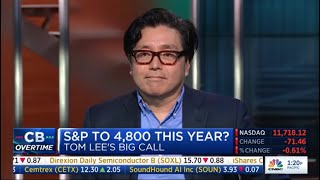
from one of wall Street's biggest Bulls who says stocks can still rally some 18 percent by year end joining me now CNBC contributor Tom Lee of funstrot global advisors right here on set with me it's good to see you welcome back great to see you that's the headline we're going to start with 4 800 by year and I want you to tell me how um I think if I had to say Market internals it looks like it's baked in the cake in the sense that markets that make this much progress by day 26.
of 16 out of 17 have been over double digit returns and with an average gain of 26 percent so I think that the markets revealed its hand from a fundamental perspective I think the narrative is inflation is becoming less of a risk to the upside and from a fed's perspective that's a more predictable fed I think that allows volatility to come down I think multiples expand and earnings hold up nicely and we get a you know investors buying stocks buying the tip again okay so I love what the the show before us did right off the top the way they put the debate don't fight the FED versus don't fight the tape the FED is still highly engaged okay you obviously are saying don't fight the tape the signs in the markets at this point at the beginning part of this year tell you that none of the other stuff matters anymore inflation's coming down enough there are too many good signs in the market to go back now uh it would be unprecedented Scott and just in terms of internals because we've had such a breath expansion and the Market's producing this much upsides in such a short time it's never happened in a bear Market but when investors say don't fight the FED I think that they're forgetting that there's there's not just fed is not a binary mode you know fed's not just cutting or they're hiking there's also the fed that's trying to gradually and be predictable on monetary policy that's the FED of the 90s the Fed was raising rates really for almost 10 years and the stock market had double-digit gains so I think predictable rate increases is not the same as the FED wanting Financial conditions to tighten to lead to a recession what if they're still unpredictable right that job support was pretty hot what happens if the CPI is as well what happens if subsequent inflation reads are not as good as we think they're going to be I feel like things are still a little uncertain to be as Jamie Diamond would say the other day it's too early to declare victory uh you're right it's too early to declare Victory but there's a difference between the Fed reacting to every data point versus a Fed that wants to be predictable it took three good inflation reports before the FED even start to use the word disinflation but from December to February they went from zero citations of disinflation to 13.
so if the February CPI report is a little bit hot which we don't expect we actually think it's gonna be another downside read so that'll be four to five consecutive months that's a predictable fed if we had one somewhat hot jobs report If the Fed starts raising rates there that's not a that's a fed that's reactive to data points but they're they're telling they're telling us to this point aren't they that they're going to be data dependent now they're not on some predetermined path like some in the market had feared they were at one point they actually suggest they're going to be data dependent uh yeah but there's a difference between data dependent and data reactive I think the one thing that's going to be important for the is for the fed's reaction function to make sense I think most of us would agree a lot of the economic data that they cite CPI and jobs reports is backwards looking I mean for instance high frequency data showed inflation was weakening since June but the first good inflation report wasn't until October and then it tanked since then the FED hadn't even talked about progress on inflation until February of this year another four months later I think if they're going to start to talk about jobs reports as the reason to move monetary policy it is a little backwards looking because jobs is the last thing that reacts to you and it may be backwards but they're clearly focused on cracking the labor market right that the chair himself says it over and over and over again I mean service industry inflation is still much too high for for the fed you also use the word unprecedented sort of making the case that the markets come too far and the signs at this point within it are too good to turn back now and you're a student of History because you always cite various points in history that have either you know backed up your argument or shot down others but it is true that we haven't bottomed throughout history when the FED is still hiking rates is that not a fact uh that's actually that's a misrepresentation of facts actually when people cite this um the best way to look at it I think is from the date of the first hike till the time they pivot what is the maximum drawdown you had during that period historically it's 20 because markets usually rally first and then they fall but the total drawdown is 20.
this cycle weighed 27 it's it's only happened I think one other time but they haven't pivoted well my point is that by the time we get to the pivot we could actually be rallying into the pivot because we've already drawn down further than what you expect from the first hike to the pivot how many more hikes do you expect it's unknown but in the break evens are saying one to two more hikes and then a pause I would say the bond markets had been made these calls pretty right two more hikes isn't something that's going to cause the s p to lose 20 percent but see that's the debate right the bond market has moved closer to the FED after having that be the Principal debate for the last couple of months it's now the stock market that some would suggest is still delusional as to what lies ahead from an earnings perspective economics perspective how do you counter that uh again I just think people are force-fitting uh their perspectives if the stock market believed the bond market then the PE should be multiples of where the tenure is the tenure is at 3.7 percent you're still paying close to 30 times for a 10-year bond and yet you have all these guests saying PE should be 12.
um If the Fed stops sometime this year because inflation progress is sufficient I think that risk premium will collapse I think the PE could actually get to where it should be which would be above 20 times so I I think again I think everyone who thinks the fed's trying to tighten Financial conditions it's 50 basis points of further tightening justifying a 20 decline in stocks I mean I don't I mean maybe stocks are flat but I don't think they give up the games this year all right well you think we're going to 4 800.
we will see I appreciate you coming out here yeah all right that's fun stress Tom Lee joining us right here at our HQ let's get to our Twitter question of the day we want to know




댓글 0