저자: AL STOCK TRADES · 외국인
다듬은 글
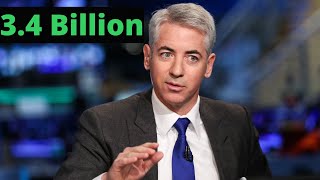
Welcome to our stock trades in this video we're going to go ahead and talk about Bill ackman's strategies in regarding to investing we're going to pull up a podcast and we're going to react to a video of an interview of Bill Ackman that essentially talks about what he's planning on doing with his portfolio and essentially a general theme a general theme of value investors that fall in line from Benjamin Graham's era from the intelligent investor that have taught a lot of uh billionaires well before they became billionaires investors when they were in their 20s and 30s to become billionaires um we're going to start seeing vocabulary terms such as discount rate the president uh you know a value of a business is its um future Cal future cash flows discounted back to its present value and the goal of this channel is to not only give analysis that's high quality and unparalleled but at the same time bring in different forms of ideals and ideologies and different perspectives within the investment world to show you how others are looking at it uh the worst thing a retail investor could do is essentially just go with one investment thesis and stay with that investment thesis because the issue is is as you go to different terrains different economic Cycles different times where certain companies outperform others it's like essentially going into a mountain you know going from a street riding a bicycle to a mountain you need to change bicycles and my vision is to essentially present this to you and to give you some more uh just another slice of information that you can use so without further Ado let's go ahead and get started with this and um uh play the video here let me know if you guys hear it and if you're on Spotify Apple podcast you can also go to YouTube lstock trades Youtube and search for all stock trades you'll be able to find the actual video it is highly respected investor Bill Ackman from Pershing Square Holdings and his portfolio is heavily exposed to U.S consumer through names such as Burger King owner restaurant Brands Chipotle and Lowe's so Bill are you worried about potential recession hurting us consumer um consumers starting to spend less of course this would feed through to lower earnings of some of these companies in your portfolio I would say the following um you know the where we are in the restaurant space is is kind of the highest value per dollar right Chipotle is an incredible meal at a very low cost for a family and in a recessionary environment you know historically people don't stop eating out but they might adjust from the sit-down restaurant you know with menus and a waitress uh to a you know a fast food environment or a place where they go pick up their own food at the counter and you know actually the fast food if you will the Quick Service restaurants have generally done well in recessionary environments and I think the overarching point that is you know the the value of a business unless it's a highly levered uh very economically sensitive company is not particularly affected by the ons you know uh by the event of a recession right if you own it the value of a stock right I have an interest in a company is the present value the cash that business generates over its life and if it's eight so he said something right now the value of a business is its pressure it's its present cash flows generated over life now you may be asking yourself what does that mean present cash flows well if you've been following us for the years that's exactly how we evaluate companies we evaluate companies by essentially sending off the free cash flows into Infinity and discounting them back to its present value now this may you know when I first started investing 10 years ago when I first heard about these terminologies I was a little confused I didn't know what this meant and but I did realize something the retail community did not practice this type of investing but billionaires and really successful billionaires do and I've studied so many billionaires in my lifetime that I found a common link a Common Thread that unfortunately is not taught within our educational system and that isn't that that essentially is its own discussion um but as you can see we yet have another person which is why he's part of our legendary investors in our mastering stock market course and uh and also the brain machine models we model our investment strategies and look at the sec13f filings of these brilliant investors to study them and what better way uh to learn uh I would say far from a university than to actually study billionaires doing exactly what you know we're all trying to do which is essentially create generational wealth and learn how to master the art and value investing let's continue let's say business that should exist forever I'll pick Hilton for example um we can expect that over you know over in past history there's been a recession every seven or eight years let's assume the future is the same and there's recession every seven or eight years going forward it doesn't that's kind of factored into the value of the of the Enterprise the only reason why recession creates it destroys value is you have a company that is highly levered and and he mentioned something really important here so when we do our intrinsic value calculations we always assume there's going to be a recession which is why we have such a high structure discount rate I remember doing an intrinsic value calculation on PayPal and a fellow value investor said no this is incorrect you're not your discount rate's too high and my response was I'm discounting at a high rate in order to essentially offset a future recession nearing environment slash bear Market which is what we're experiencing now see um when we always analyze companies we always price that in in our analytical form and what ends up happening is if you have a stretched out future cash flow and you graph out cash flows what you do is if we have a blip and negativity when a company's negative free cash flow because of a recessionary environment the overall average will pick it back up AKA we've already anticipated it with a future higher enough discount rate to offset the destruction of uh temporary future you know of free cash flow the only time we have a problem is when a company is highly leveraged as what Bill Ackman is saying here and the way we calculate leverage really a great way um there's obviously a deeper ways but just a way for people that are introducing themselves within the market is to look at the current ratio where you essentially stack assets over liabilities and what you want is you want to obviously have more assets over liabilities and analyze whether the asset the liabilities are due in the short term or long term and each of them have their own current ratio calculations so the goal of investing is essentially to find a company that has a business model that is able to generate cash flow that is not highly leveraged just so it we go into a Black Swan moment or a recessionary environment they will be able to survive rather than essentially go bankrupt which is exactly what happens when companies are over leveraged AKA what is happening with FTX Voyager digital and a lot of these companies and soon to be if they don't change their business model tattoo chef which a lot of retail investors unfortunately don't know how to analyze until it's too late in the game and then if revenues decline you know their cash flow goes negative and they can't they can't support their data and they go bankrupt right but if you own a very well capitalized business I don't think a recession has a meaningful impact matter of fact that Year's revenues and cash flow but that's just one line item and a long spreadsheet of cash flows that you discount if you're willing to the president but the businesses we own Universal Music being the largest one uh and a good example you know people are not going to think cancel their apple music subscription because we're in recession it's the cheapest form of entertainment it's you know 10 cent an hour or something like this uh compare that to a movie or a video game and you pay a lot more I mean you sold a steak at Netflix this year after only owning it for three months you sold your steak in dominoes you only bought that last year aren't you a believer in long-term investment particularly Netflix obviously share prices up quite a bit since you sold it so yes so we are we look for businesses we can own so to speak forever our favorite polling bird is something we never need to sell Universal Music I hope is something we'll never need to sell in this type of philosophy he learned from Warren Buffett when we purchased companies we like to purchase companies that we can essentially turn the stock into a bond and actually discount its future free cash flows to its terminal value and present value of where it actually is so assuming that this business is going to last so odd number of years what is the value of this business in today's present value and how much am I going to be able to make from that value that I'm calculating to its intrinsic value and is there a Gap AKA is Mr Market miscalculating the value of the company which is what we're seeing a lot right now with inside of the stock market because a lot of analysts and a lot of um uh businessmen uh we what we've seen on our private group um they're we're starting to realize that a lot of these folks don't actually do intrinsic value calculations they basically reflect what Mr Market is saying and that has its uh pros and cons pros you sound right during the time the con is you're not accurately valuing the business and the people that actually know how to do that are going to end up winning in the long run hence why Warren Buffett continues to accumulate wealth but we always reserve the right that if new information comes to light that causes us to reassess our original thinking uh you know we're prepared to exit and and Netflix is really the traditional example of that I mean a business uh What attracted US Stock was down from the you know middle 700s to you know High 300s on a subscriber miss that the company attributed to you know difficulty predicting kind of the covid uh you know Netflix is a huge beneficiary uncovered than the thought was you know they got a little bit off Trend um three months later they came back and said well we're not sure it's actually covet we think that the we have a much larger number of unpaying I.E people who share passwords than we thought or then we at least disclosed previously uh this is causing us and we talked about this in our past videos regarding Netflix once we saw the numbers and once we saw the trajectory of the company we realized that Netflix needed to change their business model AKA introduced an ad version um for subscribers that don't want to pay a higher monthly fee and unfortunately when you're valuing a company um the future free cash flows within that uh unfortunately get offset now if we were in the beginning stages of streaming where Blockbusters were still online then I would say I would be a little bit more confident in Netflix ability to scale but it's starting to become not so much a growth story more than a value story which means that they need to start acting like a value-based company which they're not they're still negative free cash flow another good example is let's say for ex you know a company in the healthcare Arena what we're betting on right now is that we're getting approximately 10 000 Americans turning 65 years of age and what we're betting is small insurance companies that are very scalable that use technology to scale which hasn't been done in the insurance realm we're able to bet on that because the the starting point to where we're going to go is such an essay it's like an s-shaped curve that we can take that bet and are confident that we are going to have some form of return on investment he has to reassess our business model we're going to go to you know an advertising model um and what we have enormous confidence in a management team that's done a fantastic job over many many years uh it's a completely new approach to the business and I think it for us it made the future difficult to predict in terms of the future you know what's going to happen and we own we're very concentrated investor we put a large amount capital in each commitment we want these to be things that we can predict with height of your confidence over a long period of time and Netflix became if people are unpredictable for us so we sold it and we sold it around 225 a share 275 a sure um and uh I actually remember a precise exit price uh it's trading above the price we exited but that doesn't mean it wasn't the right decision to exit for us investor owned 100 stocks there's a place for Netflix investor owns nine or ten in light of the uncertainty created by the changes and how they're going to approach their Market we felt it was not something that could fit into our portfolio and generally we like to own things for the long term on Domino's we actually made profitable investment over the course of the Year our original holding period intention was not a year but the world changed in a pretty dramatic way uh one got a lot more difficult to get labor a lot more difficult to find drivers uh much higher interest rate uh environment and the combination of those factors and the valuation and we sold made in our view just a less attractive opportunity rather deploy the cash elsewhere I mean obviously the market has thrown up some big opportunities this year if you've been buying anything new recently so actually the biggest so we put our capital in two places one we launched uh one of the more aggressive buyback programs out there we're buying in about a million half shares uh you know approaching about three quarters of a percent of our shares outstanding every month that's a pretty aggressive program it's about 28 of the amateurs outstanding we think that's the easiest investment that we can make right now one we're well capitalized uh you know plenty of cash on hand uh two we're trading at as you know a thirty percent discount to NEP uh three our companies are trading at our view discounts they're intrinsic values you get the benefit of that double discount so essentially what he's talking about is the discount rate now to all of our mastering stock market students that have the ability to go on our intrinsic value calculation and change the discount rate for any company that you analyze what you've seen is if you change the discount rate and continuously increase it to where you bring down the stock price to where Mr Market is trading at you start realizing that the discount rates for companies like I believe Clover is trading anywhere between 50 to 55 percent and some even higher and what that basically tells you is that we expect a 58 return year over year until the company gets to its intrinsic value wherever that may be and it's very difficult to predict in a negative free cash flow company but there's ways and strategies that you could use to essentially try to accurately predict it with a good margin of error so we think that's been a good place a good employee Capital The Other Place we've been playing capital is some of these sort of more opportunistic Hedges we're investing a relatively small you know maybe one two to a half percent of our capital and each of these various commitments together comprising that cost you know five or six percent of our Capital but Investments we can make 6X 8x10x and sometimes more that seems a better use of capital for our marginal dollar than the next big Equity commitment and we've looked at a couple of things have come closer to prices where we would own them um but stocks haven't really gotten cheap enough for us to take our last dollar and buy the next big commitment so now that you like to take large taxing companies but not controlling Stakes but of your existing Holdings and is it in terms of which ones you'd buy more of um is there any sort of that they're approaching levels which actually don't want to increase no I mean I think we'd buy more of anything we own the current price but the only caveat being it how larger percentage of the portfolio in the individual position might be so the only position we're trying to increase as we speak I have to be cautious on how I speak about it because we have an ongoing tender offer but Howard stock um it was one of our smaller positions down at 1.40 plus percent for a year and we've made an offer to the other shareholders to buy an incremental 13 of the company and we'll find out in the next couple weeks what percentage we get but that's the only thing that we're buying right now and although in fact when we buy back shares we're buying a proportional interest obviously great so essentially I hope this video was helpful for you in essentially bringing another investor who's been very successful for the many years and to give you an Insight on how to become a critical value investor because I feel like sometimes retail investors they they spend too much time on the technicals and they lose sight of what a business is supposed to do which is generate free you know future free cash flows so what we're going to do is we're going to try to find other videos out there and try to bring in insight and you know if you watch this video by the time you know two three four years down the line um you're gonna gain a wealth of knowledge just from our Channel and uh um and for our mastering students that are also watching a YouTube channel this will give you an opportunity to take this knowledge and apply it with the tools that we've given retail investors and democratized that that would normally cost tens of thousands of dollars every month so if you like this video consider liking subscribing and commenting and let me know if this is the type of content that you want to see that will add in my opinion value to your investment Journey uh love each and every one of you guys I will see you on the next one

Comments 0