저자: Libre&Riche채널진행자 · 외국인
요약 보기
마이클 버리의 최근 경고를 해설하며, 인플레이션 상승과 채권 버블, 주식 버블, 비트코인 과열을 지적한다. 거시 인플레이션: 중앙은행의 유동성 공급(M1 증가)이 실물경제로 아직 흘러들지 않았지만, 봉쇄 해제 후 소비가 살아나면 인플레이션이 크게 오를 수 있다고 주장한다. 금이 이 흐름의 수혜처로 언급된다. 채권 버블: 10년간 국채·채권 매수가 몰려 수익률이 최저 수준이며, 인플레이션이 오면 채권과 은행 대출 등 보수적 자산이 가장 큰 타격을 받는다고 본다. 금리 인상 시 고평가된 주식에도 부담이 된다. 주식 시장: 테슬라·스포티파이 등 고평가 성장주는 최근 30~40% 하락했고 섹터 로테이션이 진행 중이다. 레버리지 투자 확산과 패시브 투자 과열을 경고하며, S&P500 기대수익률이 현 밸류에이션에서 낮다고 분석한다. 은행주 선호: 씨티그룹(약 72달러, 포트폴리오 15%)과 웰스파고를 매수했다. 금융주는 저평가 상태이고 인플레이션·금리 상승기에 실적이 개선된다는 논리다. 씨티 목표가는 약 100달러(연 6% 수익). 화이자: 약 36달러에 매수(포트폴리오 약 14%), 목표가 약 45달러(상승여력 약 25%). 비트코인: 현 수준은 지속 불가능한 투기 버블로 2007년 붕괴와 비슷하다고 경고했다. 테슬라: 버리는 머스크가 주가가 높을 때 주식을 최대 50% 추가 발행하라고 제안했다고 언급한다.
다듬은 글
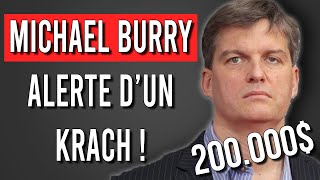
Michael Berry, undoubtedly one of the world's best investors, who predicted the 2008 crash during the subprime mortgage crisis, recently published a particularly important warning message about the future of the stock market. Let's decipher Monique's analysis of stocks like Bitcoin and Tesla. In this video, we'll examine the reasons for this pessimism expressed by Michael Berry and, at the same time, see how to protect yourself in the event of such a setback, which is fast approaching.
We'll also take this opportunity to present two stock investment opportunities that Michael Berry includes in his portfolio and which sectors he favors. Michael Berry became famous in 2008 after predicting the financial crisis of the time. At that time, no one took him seriously, and his warnings about the fragility of the financial system and the housing market were completely ignored.
He therefore decided to go against the grain of other investors. Ultimately, he was right, which allowed him to win. Nearly two billion dollars for him and his shareholders, his feat was so great that he was immortalized in the famous film * The Big Short*, which we recommend watching if you haven't already, as it's an excellent film.
What's even more paradoxical is that Michael Berry wasn't originally a professional investor, but a neurologist who invested for himself in his spare time. It was after a series of good results and having acquired a reputation as a private investor that he finally attracted the attention of investment firms such as Van Ward.
In November 2000, Berry launched a fund financed by a small inheritance and awards from his family. Between 2000 and 2008, the year the fund closed, it recorded a return of 489 points, or 34%, compared to only 3% for the S&P 500 Total Return, that is to say, an annual price performance of 25%, compared to 0.37% per year for the S&P 500.
s p500 total return here are some seduced who were able to recover before he had a child with me when people say I hadn't planned it last time I do them but nobody listened so this time I'm warning and yet nobody listens but at least I'll have proof of this warning as we go through this video we 'll see what the important warnings are that Michael Berry made concerning the future of the stock market economy and the most popular investments today such as Bitcoin Tesla or certain particularly popular Nasdaq stocks Michael Berry's first warning concerns inflation which is approaching rapidly and which could have serious consequences for both our investment portfolios and our savings during the crisis we are experiencing all the banks have entered unprinted huge amounts of money in order to save the economy from its current situation however this has the disadvantage that the amount of money in circulation has considerably increased and we already know that if there are more dollars or in Euros in circulation, the value of the currency, is likely to decrease when individuals begin to consume, leading to inflation.
However, according to Michael Berry, despite the slight increase in inflation over the past few months, it will be much higher in the future for the simple reason that all the liquidity that central banks have printed has not yet been injected into the real economy. Money is tight, and many people simply need it.
This money is used, on the one hand, to cope with the uncertainty of lockdowns and petitions, and the risk of job losses, and on the other hand, our consumption habits have changed somewhat since we can no longer carry out certain activities. According to Michael Barry, it is only a matter of months before the economy reopens and all this liquidity will be injected into the real economy.
Regarding inflation, on the graph you see on the screen, taken from the Federal Reserve website, we can see how the M1 aggregate, which represents banknotes and therefore current accounts, has increased significantly. That is to say, the quantity of money that is likely to be poured into the economy when individuals start consuming again.
This is why Michael Bri believes that when this torrent of money is spent in the real economy on gold, it will increase inflation, which would obviously have significant consequences for the economy and the markets. As you say, imagine if inflation rises again. All the investments that have traditionally proven to be the most conservative, such as bank loans, simple liquid assets, or bonds, will be the ones that will suffer the most.
An additional problem is that there is currently a bubble in the bond market. For ten years, investors, including central banks, have not stopped buying fixed-income securities, such as treasury bills or bonds. And as you can see on this graph, the massive inflows of money into these instruments have not stopped in recent years.
However, their profitability is at a minimum, and that's when inflation appears. Everyone who owns loincloths would be forced to invest if they don't want to lose power in Gaza, and in such a scenario, the best investments remain real estate and stocks, even heavy ones, while investments in treasury bills or bonds will have the lowest returns.
At the end of this video, we will therefore discuss some of the stocks that Michael Berry recently bought to protect himself from this inflationary environment that awaits us, and we will also see his opinion regarding cryptocurrencies. The additional problem is that if inflation returns, central banks will be forced to raise interest rates in an attempt to control it, which would not be without negative effects on stocks, which are currently at record levels with very high valuations.
Moreover, these various risks have materialized in recent weeks. There is a phenomenon of sector rotation, which is why companies like Tesla, Doctrine, Spotify, and others have lost between 30 and 40% of their value. If you want to understand how interest rates affect stock prices, we invite you to consult one of our previous videos, which you can find by clicking on the icon.
which appears in the top right corner of the screen, Michael Berry also warned that more and more people are starting to invest in certain stocks by taking on debt to use leverage. Moreover, in his tweets, he wrote that speculative stocks are currently too high and, with too much debt, the popularity of debt for investing has reached new historical highs.
At this stage, the market is on a knife's edge. The mentality of passive investing, or an excess of it, and the fact that stocks are only increasing on the stock market, only increase this risk. In this tweet, but that the noise wants to warn us about the risk of a bar, his negative view towards certain stocks that are generally overvalued and should therefore be absolutely avoided, and others not.
His criticisms of passive investing, an excess of investment, in general, obviously on this point we do not share his opinion, and if you want to understand why, he invites you to watch an old video that you can also find by clicking on the icon that appears. In the upper right corner of the screen, from which we also respond, a fairly wide angle and all the people criticizing the bubble that supposedly affected the TF, the fact remains that on the graph you can see on the screen representing the existing relationship between the expected return of the S&P 500 and the P/E over the next five years, we see that historically and with current valuations, the performance obtained by two heroes will fall below zero.
This is due to our blindness, as Michael Berry points out, to demonstrate that we are facing a huge stock market bubble. It is the popularity of certain investment funds, such as Soudards Cave, which is managed by four companies we discussed in our video last week, that focuses on a few popular stocks.
Moreover, its history in a few years, from $100 million to over $50 billion, is one of its preferred ways to identify bubbles, as we can see in the famous film The Big Short, where they dedicate themselves to and have studied the state of the real estate market. Compared to what happened during previous crises in this market, and considering their characteristics and commonalities, it is for this reason that he concludes there is a huge bubble in certain stocks.
In another of his publications, Michael Berry explained that everyone is trying to find the trigger for new crashes; however, history indicates that this is impossible. There are simply prerequisites, and bubbles eventually burst. Before indicating which stocks and investments Michael Berry recommends, here are the sectors he favors and in which he has recently invested.
His main investment in Citigroup bank cost $72 on the New York Stock Exchange, and Citigroup shares represent the same price, 15% of his portfolio, for over $30 million invested. He also recently bought shares of Wells Fargo, another American bank. One can therefore legitimately wonder what his reasons are for favoring the banking sector so much when we know, for example, that Warren Buffett had raised funds and sold Wells Fargo shares.
One of his main reasons was that, firstly, the financial sector remains one of the few sectors that is undervalued in this way. If the bubble bursts, in theory, undervalued companies are less impacted than overvalued ones. Secondly, banks and financial companies tend to perform well during periods of inflation.
Indeed, insofar as nominal wages potentially increase during periods of inflation, loan repayments become easier. And if interest rates rise, the new prices will allow for greater profits, and therefore EPS (earnings per share) will be higher, which will allow the company's share price to grow. Currently, the shares of this "hot commodity" are trading at a price of 15 times earnings and an EPS of $4.73.
The bank is also buying back its own shares on the market, which indicates that it believes its shares are trading at an attractive price and below their true value. We assume that over the last ten years, Citigroup's baby has increased by an average of 8 for itself, being somewhat conservative and speculative, and this would give us a revaluation of EPS to $5, so a target price for the next five years is around $100, allowing for an annual return of 6%.
Despite everything, obviously, in cases where inflation explodes, all investments will suffer. The other purchases of Michael Berry shares are those of the famous pharmaceutical company Pfizer, which is close to the heart of the matter. PF wants a price of $36 per share and represents nearly 14% of our portfolio for an agreement of more than $30 million.
Also, the behavior of this company's share price is particular lately. After developing a vaccine, the share price had risen and then stabilized for a few months. The company generates an average historical revenue of $50 billion per year, and in 2020 it was around $40 billion. 2020 and $1.71 for a P/E of twenty-one times earnings.
If in 2021 its revenue increases again, particularly thanks to vaccine sales, and its EPS exceeds $2, we could have a target price approaching $45, giving us a potential upside of nearly 25%. Regarding our warning from Michael Lowry about Bitcoin, he had announced that current levels are not sustainable and current investors could suffer significant losses.
He had said in a statement that Bitcoin is a speculative bubble that presents more risks than opportunities, adding that the recent surge seemed reminiscent of the 2007 crash. Obviously, these are the warnings of Michael Morris in the neutrals, even though he announced that he preferred to stay away from Bitcoin.
Ultimately, he concluded, but the break recently confirmed that he is the same against it because, according to him, the company's current valuation is more than excessive. He is even He even went so far as to publicly recommend that Musk issue up to 50% more Tesla shares to take advantage of the high stock price and thus protect the company's financial future, although this would mean putting an end to the stock market bubble we are currently experiencing.
All that when you follow Michael Berry's recommendations, you are experiencing the prelude to new stock market crashes. They are having a field day with you in the comments to discuss with all the communities. If this video is from [unclear], see you very soon. We are subscribed to the scene, but he shared it with as many people as possible to grow the community.
We'll see you very soon for a new video. Stay in touch on Facebook, Twitter, Instagram, and [unclear]. And remember, the difference between what you are and what you want to be is what you do. You become free and rich.
Comments 0