저자: 미상 · 외국인
요약 보기
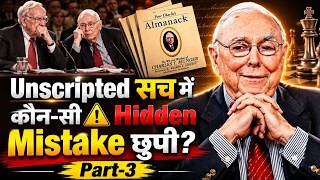
찰리 멍거의 비공식 발언과 실수 인식 방식을 다룬 3부작 콘텐츠. 버핏과의 파트너십에서 멍거가 아이디어의 위험을 걸러내는 역할을 했다고 설명. 인센티브 문제(펀드 수수료 구조), 기회비용 실수, 성격·판단력의 중요성을 강조. 특정 종목이나 자산에 대한 가격 전망은 언급되지 않음.
다듬은 글
Charlie Munger Part Three Unscripted Truths and Hidden Mistakes. In part two, we saw that Charlie Munger didn't just look at stocks. He used to look at the mind of man. For him, the first battleground of investing was not thinking about the market. Mental models, inversion, discipline, and Ted Williams' patients taught us one thing.
Swinging at every pitch keeps the investor busy. Not Rich. But at the end of Part Two, there was a nagging question left. If even smart people get caught in biases, then how did Manger recognize those mistakes? Now the scene changes. Thousands of people are sitting in Uma's annual meeting. Warren Buffett is answering, and Charlie Munch is sitting next to him with a calm face.
Many times Buffett would give a long explanation and the audience would take notes. Then Charlie would say just one sentence and the whole hall would suddenly become serious while laughing. Because Manger's unscripted answers weren't jokes. They were like X-rays that revealed the weaknesses hidden beneath the glitter of the investment world.
This is where the mystery of part three begins. Charlie spoke little, yet why did his short answers seem so powerful ? Warren Buffett was a public personality. Buffett's warm style was visible in letters, interviews, annual meetings, business stories. But Charlie was different. He was a man who stayed away from the spotlight, preferred a private life and spoke directly.
Very few books were published on him. He did not make himself a media product. Nevertheless, his ideas gradually spread among investors. The reason was simple, but also uncomfortable. Charlie would say things that others would hide in polite language. Buffett and Munger's partnership wasn't just a friendship.
It was a decision filter where Buffett would bring in ideas and Charlie would look for risks in them. Imagine Buffett is excited about a company. The numbers are good. The brand is strong. The price looks attractive. Then Charlie would sit down and ask, where is the down side? What is the management incentive?
Is the business truly durable or just looking good right now? Buffett would often stop, think, and say, yes, this point is correct. That was the power of the partnership. Correction was important, not ego. But it wasn't always the case that Buffett would agree immediately. Many times he would stick to his decision and Charlie would still stand by him.
Hidden trust is visible here. The partnership continued even after the disagreement because both men respected truth more than results, and this is what ordinary investors miss. They like to listen to people who confirm their existing beliefs. Charlie was a [ __ ]. He did not give comfort, he gave clarity and clarity sometimes hurts but prevents harm.
His answers at the Bergsh Shire and Vasco meetings became famous for this reason. No polished speeches, no dramatic performances. Simply put, his Mangalisms seemed small. But they compressed decades of readings, failures, observations and business judgments. He used to say that we have made two big mistakes.
First, when something should have been done, nothing was done. Secondly, the thing which should have been bought more, was bought less. This confession is simple but hides a billion dollar pen. Investors often consider wrong purchases as mistakes. Mangal said that missing the right thing can also be a big mistake.
This shocks the audience because we fear loss, but we often don't see the silent cost of lost opportunity. Both Charlie and Buffett believed that it was important to avoid mistakes. But paralysis is also dangerous. Too much caution can also prevent compounding. That means the game of investment is not just about avoiding.
It is also a game of showing debt at the right time. In part two, we saw that Manger doesn't swing at every pitch. Part three explains that leaving the bat on the shoulder when a perfect pitch is coming is also a mistake. This balance is not easy. Loss if you swing early. If you wait long enough, you may miss the opportunity.
This temperament comes in handy. Smartness shows you opportunities. But your temperament determines when you will take action. The next target of Mangal's unscripted wisdom was the incentives of the financial industry. He had deep doubts about many mutual fund structures. His criticism was not that every manager is bad.
His point was that when fees and commissions are misdirected, customer interest can be lost. Many fund managers earn from activity, not outcome. The investor thinks the money is being managed but many times the system is collecting fees. Charlie considered such incentives a moral problem. If a person takes money from his client and creates a system against the client, then intelligence also becomes corruption.
That's why he did not blindly trust financial advice. He would ask what would benefit the person giving advice ? This question is equally dangerous today. When a stock, fund, crypto or product is being aggressively pushed, look at the incentives first. Because not every smiling expert in the market is your friend.
Some people make money from your confusion and you consider it as guidance. Charlie's sharp language was harsh to many people. But his intention was not to insult but to break the illusion. In his view, bad incentives can gradually push even good people towards bad behavior. This is the practical version of psychology.
Then comes his thinking on lawyers. Charlie himself was a lawyer. Therefore, his criticism did not come from outside but from understanding the inner world. He respected the law but did not consider legal cleverness as wisdom. Not everything that is technically possible is morally correct. The case of Martha Sturt illustrates this contrast.
After selling Emcron shares, the problem in the investigation was not just the trade but lying to the investigator became a bigger issue. Despite having big lawyers, she could not escape conviction. The lesson for Mars was clear. Even expensive advice can't always rescue bad judgment. Here the story reaches the common man.
Many people think that money, lawyers, influence or status will erase mistakes. But Charlie asks why did you make the mistake in the first place ? If character and judgment are weak then protection also comes late. This theme comes up again and again in his unscripted talks. Avoiding disaster in life is as important as chasing success.
Manger did not just talk about becoming rich. He also talked about a happy life and here his tone became surprisingly simple. According to him, to achieve happiness it is important to avoid some basic disasters. Bad marriages, addictions, dishonesty, envy, and self-pity can eat away at life from within.
This does not constitute investment advice. But in reality, this is the deepest compounding advice because even money cannot buy peace in a broken life. Mars never considered wealth as a guarantee certificate of happiness. He seemed to say that being rich is useful but it doesn't cure bad life choices.
In his thinking, character, discipline and relationships were also assets. The only difference is that these assets do not appear on the balance sheet. Charlie seems very human here. He was not just a cold billionaire, he was a person who had seen loss, endured family pain and understood the fragility of life.
Perhaps that is why his jokes also had warmth along with sharpness. He would make us laugh but after the laughter he would leave the question. His famous answer at the cocktail party is an example of this style. Someone asked, do you play the piano? Charlie said I don't know, I have n't tried it yet.
A short line but it contains both possibility and humility. This humor was n't just entertainment. This showed that Mangal did not take himself too seriously, whereas he took ideas very seriously. And this is a rare combination. Ego is light, standards are heavy. Humans relaxed, judgment harsh. This is why the coordination between Buffett and Munger was different in the annual meetings.
Buffett brings the audience from the story, Charlie turns it into the principal. Buffett says this business is good. Charlie would add that avoiding stupidity is more reliable than brilliant. This partnership tells us that great decisions are not made by geniuses alone. They need honest feedback, complementary thinking and trust.
But here an uncomfortable question arises. If Charlie was so blunt, why weren't people angry with him? Because his bluntness didn't come from self-interest. He used to say this not to impress anyone but to clarify the reality. People felt that this man was not selling approval. This man understands the value of truth and hence even his harsh words seem valuable.
This is the major turning point of Part Three. Mangerism wasn't just funny courts. They were warning signals against thinking errors. Investment, law, fund industry, happiness, partnership and character were all linked together in them. This was his mental model style. He did not keep every topic in a separate box.
For him, wrong initiative, wrong habit, wrong person and wrong investment were problems of the same family. And this is Deeper Understanding. Disasters in the market often do n't start with price. It starts with behavior. First a man trusts the wrong people. Then he ignores the wrong incentives. Then Small Lie accepts.
Then he calls Big Loser a surprise. Charlie wanted to prevent such a surprise in advance. That's why he used to ask uncomfortable questions. Even when the room wanted comfort. This is the payoff for his unscripted wisdom. If you learn to ask the right questions, there's no need for many expensive answers.
But the story is not over yet. So far we have seen Manger's principles, heard his sharp comments and understood his decision filters. The real test will come in Part Four. When these principles collide with real business, real money, and real mistakes, which model really works? Because Charlie wasn't just a talkative thinker.
His philosophy shaping capital allocation, business ownership, and Buckshire's future from the inside. In the next part, we'll look at how Munger's words pushed Buffett from cigar butt investing to wonderful businesses, and then we'll answer that final question. Was Charlie Munger just Buffett's partner, or was he really the silent architect of modern value investing?
If this video has taught you something new or you feel that this information should reach more people, then do not forget to like and share the video. Your small sharing can become big and useful information for someone else. If you have any question related to this topic or you want to share your opinion with us, then definitely write in the comment box.
We read all your questions and suggestions because your opinion inspires us to create better content. And if you want to continue getting such interesting and reliable information related to business, economy and the world first, then do not forget to subscribe to our channel GRT Business and also press the bell icon so that the notification of our every new video reaches you directly.
At GRT Business we always strive to provide you with accurate, balanced and reliable information. Our news and analysis are prepared based on information received from various news agencies, public sources and public opinion. We try to check and verify every fact as much as possible. However, in case of any possible error or dispute, the responsibility lies with the respective sources.
Our only aim is to provide you with correct and reliable information so that you can understand any topic better.

Comments 0