원문 보기
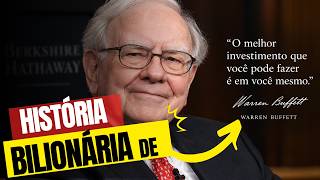
How can patience transform small decisions into an extraordinary journey? Warren Buffett started with very little money, a lot of curiosity, and a question [a song] that would stay with him throughout his life: how does a business truly create value? Born in Omaha, in the United States, in 1930, Buffett demonstrated an early interest in money and business.
Even as a child, he sold chewing gum and soft drinks. He also delivered newspapers, observing how effort, price, and demand connected in everyday life. For him, money wasn't just something to spend, it was a way of understanding how things worked [in music]. At age 11, he took a step that would become symbolic [in music].
In 1942, he invested $114.75 in three preferred shares of City Service . That money came from savings accumulated since the age of six. Experience didn't turn him into a savvy investor overnight. But it marked the beginning of a journey guided by curiosity, study, and time. At Columbia University, Buffett met a professor who would profoundly influence his way of thinking: Benjamin Graham.
With him, he learned how to analyze companies and compare the price of a stock with the value that the business could represent. Graham also taught to seek a margin of safety, to avoid paying more than the analysis justified. The idea was easy to say, difficult to put into practice. Prices change, the future is uncertain, and even careful research can lead to incorrect conclusions.
Buffett began building his career not by eliminating this uncertainty, but by trying to understand it better. In 1956, he began managing investor funds through investment companies. Then, in 1965, took control of Berkshire Hathaway. The company was a struggling textile manufacturer, not a giant that he had created from scratch.
The decision would prove to be a business mistake, as Buffett would later acknowledge. And that detail matters. His story is not a perfect sequence of successes. It's also a [musical] story about learning from bad choices and changing direction. The transformation gained momentum when Berkshire began investing [in music] in other businesses.
In 1967, Buffett bought the insurance company National Indemnity and an associated company. Insurance would make an important part of the group's growth. Since insurance companies receive premiums before paying out certain claims, they have resources that they can invest in the meantime . This money, known as float, helped fund opportunities, but it comes with future responsibilities and real risks.
Another decisive influence was Charlie Munger, Buffett's partner for decades. Together, they perfected an approach that valued not just cheap companies, but excellent businesses bought at reasonable prices. Buffett also advocated that [musicians] should remain within their own circle of expertise, understand how a company makes money, what advantages it has, and what risks it faces.
Liking a product isn't enough to understand the business. For Buffett, a stock represented a stake in a company, not just a number going up or down on a screen. This perspective favored decisions planned for years to come, not for each daily fluctuation. Between 1965 and 2024, Berkshire's shares had a compound annual appreciation of 19.9% compared to 10.4% for the S&P 500 including dividends, according to the company's report.
These are historical [musical] results from an exceptional period, not a guaranteed rate for the future. There were significant losses. In 2008, Berkshire's market value per share fell by 31.8%. Patience doesn't prevent setbacks, and copying Buffett's decisions doesn't guarantee similar results. Investing involves risk.
What your journey can offer is not a foolproof formula, but an invitation to discipline, study, recognizing limits, and making decisions with perspective. Warren Buffett's legacy was built over decades, through successes, mistakes, and continuous learning. Perhaps the most enduring lesson is that great results [in music] don't arise from a single hunch, but from many considered decisions, sustained over time.
Knowing this history doesn't promise [musical] wealth. It does, however, help in asking better questions about money and business. Did you enjoy this journey? Subscribe to the channel and leave a like to follow more stories about business and financial education.
Comments 0