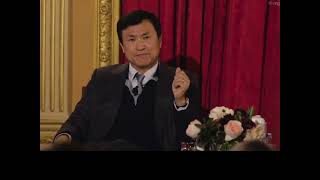
저자: LiLu · 외국인
요약 보기
이록(Li Lu)의 컬럼비아 비즈니스스쿨 강연·인터뷰. 가치투자 6원칙(주식=사업 지분, 시장은 서비스 대상, 안전마진, 역량범위, 물고기 많은 곳에서 낚시, 글로벌 구매력 지분) 강조. AI는 튜링테스트 이후 도구에서 행위자로 진화했으나 인간 통제 없는 RSI는 위험하다고 주장. 중국은 10년 단위 목표가 비용으로 바뀌는 발전 모델이며, 주식시장은 10년간 정체됐지만 우량 기업이 저평가되어 있어 현재 기회가 과거보다 낫다는 취지. 구체적 종목·지수의 1~3개월 방향 예측은 없음.
다듬은 글
It's a seminar also. Thank you so much. Thank you so much. I know that you guys are incredibly excited to be here and I know it's not because of me but rather because of our guest today uh who I will introduce shortly. Um so before we start with the interview let me take a couple of minutes to tell you a little bit that as always at this time of the year the help year is up and running in full swing.
Uh the students some of whom are here took already my modern value class. They're taking their uh applied value investing class, their credit superighway, all the electives. So we're having a blast. They're all absolutely wonderful. In addition, we have a new initiative this year in the Hellbrun Center.
We launch our first global value investor program and the first cohort of that program that is joint effort with Colombia business school executive education is here. So these are all these wonderful friends from China who are visiting us uh this year. So thank you so much for uh being here. Uh Michael and I I I get asked this question a little bit too often.
Uh we're already working on a new season of the Valve Investing with Legends podcast. Um so um you know episodes will be coming uh soon. So that is something to look forward to. We made our new stock selections for the student portfolio. Uh the Tom Russo student portfolio. Um I don't know we bought this year Equifax Humanana.
Uh we bought what else? We bought the great Japanese bicycle company Shimano a classic value play. there. There was one COPA, the online corruption company, Perimeter Solutions, Fire Solutions. So, a lot of fun things. And as I always do, you can actually download all the reports the students did over the years on the different companies.
A wonderful resource and I very much encourage you uh to look at that. And I'm always amazed, by the way, I want to uh single out uh you know, a wonderful member of our community. I'm always amazed about Tom Russo's generosity with the Hellburn Center, not only because of the student portfolio, because everything he does uh for the uh for the program and in particular this year of making sure that uh a friendly L could be could be here for which we're always we're always thankful.
We just had a wonderful week uh as I told you just a moment ago with this new program, the Global Valves investor program. Andrew Gunluck and Christine Gilbertson put on a show uh for them which you know I also want to acknowledge publicly. And finally uh we're getting ready for a terrific uh SEMA conference um you know and it's just uh it's just amazing the uh the uh names that are coming this year.
Hello boss. Um you know so we're going to have um Howard Marxman will be there. Josh Wolf of Luke's Capital will be there. Uh Samantha McLemore from Patient Capital. So I very much hope to see many of you there. Okay, now to the main event of the year. So Leelu of course needs no introduction as he's truly one of the great modern value investing uh legends.
He's of course the founder and chairman of Himalaya Capital which he founded in 1997. It's built an enumerous record of performance in the last 30 years. Leelu, as many of you know, is one of our most distinguished alums. He graduated with a law degree, an MBA degree, and a BA from Colombia uh college because why get just one degree when you can get three.
Uh apparently this was uh you know how he thought about this. His personal story is well known. I won't repeat it here. uh you know Leelu uh is of course famous as an early investor in BYD and many of the great Chinese names and we'll have the opportunity to discuss um issues related to the Chinese stock market today uh with all of you.
So first of all Lilo welcome and thank you so much for being here. [clears throat] Thank you Tano. It is fabulous. So yeah, so I'm going to talk for about 50 minutes and then I will open it up for questions and I'm going to ask you to keep them short and to the point and I will be ruthless. If you take more time than what I consider necessary to get your point across, I will cut you off and I'll give you uh a nasty look.
Okay? So uh you know just keep them because I'm sure there will be many many questions. Okay? So, Lilu, I want to start a little bit. You know, you are, as I said, one of the great names in modern value investing. Um, you're deeply intertwined as well with the story of value investing at Columbia Business School.
We were talking about that uh over lunch. You were there at the very beginning when Bruce was launching this uh this program. We know of your friendship and partnership with both Charlie and Warren and uh you know, how many things you guys did together. We will be celebrating 30 years of the founding of Himalaya capital uh next year which is a remarkable a remarkable achievement.
So I want to start here. I want you to tell us a little bit what is that you learn about value investing and where do you think we are today? What is the thing that you wish you had known at the beginning? What is that lesson that you think we have now that we didn't have when we were when you were studying at Columbia Business School?
These ideas. Yeah. Uh [clears throat] thank you Tano. Uh first of all thank you um uh all to be here. It is such a wonderful wonderful occasion. Back when I was a student as well as a young professional. I have also attended a few of those uh lunches. It was the highlight. I hope I do some justice now that 30 years later.
Uh now of course the discipline of a value investing started with a Colombian now almost think about when uh Ben Graham first start this classes is almost 90 years ago and of course he practiced you know 10 20 years before that so we call it 100 years old really u discipline and it's really do have invol evolved but some of the core principles uh really have not and become timeless.
So if I have to distill the main principles for the discipline of value investing, I would say there are six in my mind. Three of them come from directly Ben Graham, the namesake of today's lunch. one each of from uh uh Warren and Charlie in my mind and we add a small twist you call together the six.
So here is the basic six principles in my mind that guided our discipline at least our practice over the last 33 years. Um now Ben Graham laid it out pretty quickly [clears throat] as he started this u this discipline uh with the three basic ideas that the stock is is piece of ownership now piece of a paper to trade around.
So buying stock is really is the same as buying company. And secondly, market is there to really serve you, not to instruct you, which is a really profound uh insight if you were really in the midst of the market activities. And thirdly, that [clears throat] investing is about predicting the future, which is inherently unpredictable.
And therefore you always want to require margin of safety that help you to protect the downside as well as really uh make a better upside. And then I think when Warren practices I think he added this further discipline which I call that a circle of competence. That meaning you really over time all of us pre probably dis predisposed to have a certain interest and over time you develop particular uh expertise and try to really uh study more and make it better.
And the most important concept of a circle of competence is really knowing the edge of it because most of us really are wired to be a little bit thinking that a little bit more than we actually are. And so understanding the edge is is as important as understanding what is inside the edge. And then uh Charlie uh had this idea that you know you got to really fish where the fishes are and he's a lifelong fisherman and and that is also a wonderful analogy in terms of actual market.
There are certain market, there are certain industry, there are certain business it just draws a lot of a lot of attention and with that a competition with a competition is averaging out of your returns and uh really and then there is the other industries or businesses or countries or market that just don't really attract enough of attention.
You have much of fewer fishermen. You do way better to fish where the fishes are. uh a simple idea but in practice is really amazingly effective. And lastly that over my own 30 some three years of u practice as a global investor applying the principle value investing on a global basis in a time that the global commerce is coming becoming a one single market.
One insight that we have is that you know wealth in the end is really the percentage ownership of global purchasing power. It isn't really expressed especially modern economy and the amount of the gold and diamond or currencies of any kind and it with inflation all of those will dissipate over time.
What really is important is what you can really buy with it, what you can use that for. A better measurement of wealth is your percentage ownership of global purchasing power. And the way we express that is by buying great business in the most dynamic economies at advantageous prices and wait and uh long enough for the value to be created over time and share proportionally on the upside.
So here it goes is really the basic six ideas that I think can withstand the test of time that will serve everyone well. So I like very much this last point. I'm already deviating from the script you and I agreed on because I think going forward keeping an eye on that purchasing power is going to be key
if we're not going to be able to control inflation in the presence of these fiscal fiscal challenges. So we if we have time we'll come back to this. So I I want to get a question in before we run out of time for the benefit of my students in the room. Okay? Because you know this is my prerogative as being the person asking you the question.
So we'll get this out of the way. I don't want to run out of time which is so value investing as a practice has seen ups and downs obviously it's been improving conceptually over time and uh you know Bruce and your leadership many other people in this room as well what is the future of the equity analyst in the age of AI uh do you think this we still can teach what we do at Columbia Business School
going forward? Yeah. Okay. So uh [sighs] let me answer that uh into two different part. First really what investor do and then let's also talk about AI also in [clears throat] a separate investor basically look at the market participant. They're basically really only four kind of a different people.
They're the investors that are really take it with a company over time for value creation. And there are also people who would arbitrage write the wrongs of a market pricing um in in Ben Graham's term that as a real estate you buy from the pessimist and sell to the optimist and those are [clears throat] the arbitrage and then you have the people who are really in it mostly for speculation mostly guessing what other people would buy or sell to a certain security um doesn't care about either the value pricing of the security or the value creation and then there is also the broker and market makers that facilitate all of those.
Now you look at all of the people that most people are not necessarily purist. They basically would incompass somewhat of all four of them. Um and if you have indexing it is exactly that average uh in a sense [clears throat] but a value investors are really are into the getting the right pricing discovery and also wait for the value creation over a period of time and that's part uh I would say Ben Graham is more of the arbitrage and Warren is really using the arbitrage price but also mostly for value creation and then the social benefit of all different ones is also quite interesting.
The speculations really [clears throat] are by definition they don't uh stay there long enough for any of the value changes or creation. So they added up to roughly uh zero. uh whatever is the making and the losing probably added up exactly to that. [clears throat] So net to a society is is is a cost to the functioning of the market and the brokerage and the uh brokerage and the market making is also a cost to really the function of the market and the market exists as a primarily for the goals of u of uh uh uh of of channeling excessive of savings for productive use in deserved company and creating this modern economy that really have compound economic growth.
And so that um is really where the reason why [clears throat] stock market uh exists in the first place. So the question you know why do you really have this speculative side of it? Uh well this is just part of the human condition. uh and Warren always described stock market as a a church with a casino attached to it.
And so the church is where the values are created and the casino is almost part of you know building permit. So part of a necessary cost because of human condition 400 years ago when it created this is really how you get really inspired the animal spirit and and 400 years later it is still doing that.
So um this is really where you're going to make a choice as a students. You know you want to be the zero sum game, you want to be the value creation game. And that's really a personal choice as a society. You also have a choice. You don't really want the casino side to be so out of a proportion as to overwhelm the primary objective of why the market exists in the first place.
So that's really both a choice on the individual level as well as a society and the fact that over 400 years despite all this a huge boom and bust giant waste somehow this mechanism survived continued and continue to propel society as a core function is relative is a pretty miraculous to say the least.
Um so for your student that is important to make that distinction early on which what do you want to do personally as a society we should also uh calibrate the proportion of each and but they do coexist as a part of human condition. Now onto AI and a market that's really a more complex question. Now first of all what is AI?
Uh or this wave of generative AI? Um now it is obviously a technology is a huge technological wave [clears throat] and as a technology of course we've been dealing with that you know for the last few hundred years ever since the industrial revolution. We have a wave after wave of a technological waves and the disruption and the creation associated with it through that process of a creative destruction.
We kind of understand some aspect of it but somehow we feel that this wave is different. Of course every wave is different but this wave is unusually different than anything we have exper experienced so far. Now what is make it so different at this time? Well, on the surface you can see that the pace of a change, the scale that is involved, um, and also the concentrated financial impact at the top, the nature of the concentrated impact at the top, they're all incredibly unprecedented.
That is on the surface. Then you ask the question why that is the case. Well, the narrative is slightly different. Most of the time until this moment, we're dealing with the technological changes as a fundamental tool to human productivity. And this technology, we introduce different element. And now we have a spectrum of a two versus creature.
And now we begin to really change on the scale of that spectrum of a two versus creature. The moment it was first introduced nearly four years ago was the moment of a touring test. At that point we can no longer tell from a language whether it is a machine or it is a human. And then from that point on we were introduced with reasoning and then it begins to really gain more and more human feature and from reasoning comes coding.
With a coding capability, it become autonomously executing agent that functions much as a human does. And then comes the collaboration of all the agents in complex and longlasting task called a long reasoning. And so in which much like a human society agents would organize and self-organize prioritize executing task in ever more sophisticated fashion with their own language communication tools and that's where we are and if you look at the Silicon Valley narrative that the generative AI will go to the stage of RSI which we're partially in the idea A that all the improvement would eventually be self-made without human in the loop and from RSI we came to AGI to ASI the intelligence level exceeding all human individual as well as some both individually and together and from there you would really say we're creating somewhat of a semi-od or demigod but man-made of a creation And because of that is so powerful how compassing and therefore the economic impact by definition has to be huge and therefore justify all the different investment cost and so that's you're all invited you know when you have the trillion dollars IPOs you're almost invited to participate in the IPO of a god or something.
Yeah, that is that is that uh narrative and that's what really make it different. But if you step back a little bit and basically saying look if this were indeed the case [clears throat] what will become humans in that case or living in a society that u uh you know that's there that's lured over by a man-made god that accessed uh by very few and understood by none uh [clears throat] not even controlled.
We can't say that because nobody understood it at that point. So is there anyone humanity really like to live in that society? And the answer probably is a resounding no. I don't think anyone would want to live in that society. So there's only one of the two outcome in a sense. A this technology is not progressing in that direction and we can discuss what it is and why it is not or B if it indeed really progressing in that direction that we would all at some point unite together to stop it [clears throat] from becoming that one.
So in neither cases we're going to have a man-made god living and lord over with the human society. And so that's really as I said what really distinguish this uh generation of of of technology and that why it's different and then all the different impact and particularly financial mark market impact that it has on this technology but leaving that aside and when you come back and say is that really a useful technology and of course the answer also is a resounding is what it is at essence and um if I were to give it a provisional definition.
Uh this what I would say from observing what it does and what it came from. It is a machine by really applying brute compute [clears throat] with clever algorithm and using all human generated data and is a first derivative to come up and establish a systematic contextual correlation among near infinite variables of human generated data.
and is a first derivative and in doing so we establish capabilities including much of human reasoning and human intelligence. Now at a present time we know how it work and how to make it better but we don't quite understand why it work not as much or to the same extent of we don't quite understand how human as a machinery really work and that with that really provisional definition of observing what is happening now that it does really [clears throat] equalize a layer of of the economy that is is really very helpful.
Now if you look at the economy we basically at the bottom we have energy and transportation on top of what we said manufacturing and on top of that we have the communication digital media and then we have this uh uh enormous amount of knowledgebased technology based surfaces that is synthesize all the knowledge we have accumulate that serve all different layers of economy where generative AI today at his current stage is a great tool to thinkize and equalize all the knowledge and expertise that has acrewed to that layer that help all different ones but it can't really change you know for example the energy and the transportation it doesn't change the manufacturing which is essentially the combination of different item uh molecules and atoms and transform into different combination and then the communication and the digitization they're already a great synthesizer.
So that's really the real where it is going. It has not gone beyond human. So it's a basically you can also understand so by this extension it may not rise to whatever is the narrative what a dictator will lead you to believe we're still firmly within the human generated data realm to go to the biological sense uh that it requires a whole different level you know for example our this may be going too far
go for it not the as American is Alamos. This is different. is the tourist. Are you kidding? as a for example our this may be going too far. Go for it. Knock the back. So you each cell you contains called a 50 by five of files and then you need to times a trillions in order to really get us really on the biological level.
So we're not you know anywhere close or ever really get to that level. uh but what has established already began to tip this balance between the tools versus a creature. And so for you know one of the two argument would persuade you to stop uh any further development without a human in the loop. RSI without a human in the loop.
This RSA recursive self-improvement improvement without a human definition would be very very dangerous because basically they would develop with goals and sub goals with his own purposes and that would really get it further from human control. So in summary we come back you know this technology is enormously helpful transformative and it is extraordinarily dangerous and so we have to have as a society and together as a human beings have a red line to really firmly establish whatever the self the uh learning or utilization of the tool so that it cannot be without a human in the loop.
other words firmly established on the two side rather than the creature side. Um and of course it's also enormously disruptive you know from employment to emotional dependency to risk from cyber to bio to nuclear all of that is so all of that in the end what you want society to develop is a balanced paced development that balance [clears throat] the benefit and risk.
the cost. Uh by the way this this technology will always always have incremental uh cost. This is fundamentally different than the internet or bunch of a previous technology which you have a one-time investment and you can really advertise for a long time. This is not the case. So you always really have a incremental cost associated with it.
So the the cost and and and and and the revenue profit is also very important. You know the capital need and financial discipline would also whistle will be [clears throat] in operation uh always and also the [clears throat] the pace of a development and the level of a society tolerance. So you got a four or five different layers of consideration for pacing and the development into it.
Now how human society adapt to this kind of a changes know always by planning. So we were going to go through big boost and uh boom and bust cycles or even multiple of it. So that's basically the nature how is it going to really develop but those lines are always the ones we have to think about it as we approach this both transformative dangerous disruptive and costly technological wave.
I mean so I think that that that thing that you said Leelu about this combination of being extraordinary of course being dangerous Oh no. about this combination of being extraordinary, of course, being dangerous and that we don't completely understand why is it generating some of the answers that is generating would require a human in the loop
to check over it. So once again, it's going to be the scar supply of the skill of the person monitoring the artificial intelligence output that is going to be determining where the rents are going to be located. That's right. So effectively means that if you're smart and you can communicate effectively with that AI inside any domain, you're going to be the scar resource and probably the rents are going to acrue to you.
Do I understand this correctly? Yeah, I think that's uh somewhere along the line. It's uh uh it obviously have a different aspect and nuances but I think yeah in [clears throat] so yeah so then let's start projecting these ideas. I mean one of the things that is most striking when we all walk into the classroom there are many of my colleagues here uh teaching capital markets or financial markets about investing investing in general I mean this is one peculiar market so let's start talking about and you know I I have a very vague question for you here which is you know the market seems to be driven by a very low number of companies that are really pushing the technical ical frontier.
The the world seems dependent on these companies to push this technological fact uh frontier and as a result valuations are completely distorted by that. There's a plot that I show to my students which is the market capitalization of the company with the highest market capitalization normalized by GDP.
That number traditionally has been a number between 2 and 4% is now about 15% with Nvidia. So how do how do you think about this market a market that is becoming overly dependent on those few companies with a very high beta to those companies. How do we design portfolios to protect ourselves against
the shocks of this technology but market always do peculiar things. Yes. Is from the very beginning we go through this and we'll probably continue to do this. um you don't have to really be dictated by what the market decided to do at any given time. This is really the one of the most important insight and contribution from Ben Graham himself.
Um so at this point you know if you look at you know the proposition of you know one recent perspectives that I read you know here is one company uh that called himself a U research lab and yet is you know burned through tens of billions and promise continue to burn through hundreds of billions of dollars and um uh a and a promise a transformative technology but at the same time have 10% of a chances really killing everyone and he wrote it in perspectives and invited everybody to put in at least 100 billion at two trillion valuation.
Now if there's any consistency irony because it is and uh this this is a really kind of one extreme illustration of how irrational the market really gets you to you and it cannot be both true. So but but that's really where they are and but it also tells you that things are not really rational and not sustainable is eventually you know won't really [clears throat] continue.
So uh that is also the rules of the market if you look at throughout the centuries and they do really do strange things over a long period of time you know take the S&P since 2010 for example in the last 16 years has average out of 14 15%. And in the preceding 10 years from 2000 to 2010, it average exactly zero.
In fact, slightly negative for 10 years. And so if you average it out the last 26 years, they basically get you high single digit. And that's roughly about right over the long term. If you think that um the GDP growth in that period of time maybe 2%, you got a 2 3% of uh inflation. you average out about kind of four or five% nominal growth and then public listed company do slightly better especially those that chosen by elimination of the 500 best companies they do slightly better than that.
So you come up you know call that high single digit and that is exactly where the long-term average has been and so [clears throat] that that really should serve as a a basic grounding pillar of of getting what deserve and how the market rationalized over a longer period of time but then it punctuated from period of time and sometimes a long period of time it goes to the extreme and the an example we just cited it it it does strike people at the minimum at odd.
Uh that happens that happens throughout the history. And so I think if we really grounded the society in the sense that uh a a really super creature is simply not allowed or tolerated by society, it won't really go to there. And if it really stayed in the realm of the tools, this will be like any other tools have a cost and benefit associated with it.
And therefore, financial discipline and capital market discipline would apply eventually. And the way you get there is through multiples up and downs and boom and bust cycles. And that's also fine. And from [clears throat] that perspective, the bifocation as a result of it at any given time, you you don't really create an enormous amount of new capital.
Uh so if you're overwhelmingly driven to the top, that basically means you also really bifocate it with a whole bunch of otherwise wonderful businesses are trading at a very low prices. And this is the same with here or China any other places. Um and in China is probably more extreme as some of the Chinese participant would be wear aware.
Um but but over time you know the weight of the market was still really dictated the long-term returns of the investors. You still kind of get what you deserve in the end. uh there is not much of a free lunch even if it appears to be for a period of time and even long period of time that over the longer term will be waited out by the natural weight of the market rationalization in itself that's why it existed for a few hundred years already um so I would say this this bifocation offers those with a rational mind [clears throat] better opportunity set than the than the other times In a sense, if you're really uh stay rational, which is again is very difficult.
It's not that easy. You got it swept out easily. And then in the uh especially when you have a big technology wave, your margin of imagination get expanded dramatically. So the speculative side of the market really get get a lot more active and the imagination become wilder and so the forces is also the exaggeration would also tend to be more extreme.
So but those really for a rational mind create I would say long-term better opportunity set than less than otherwise. So you mentioned China briefly there. Yes. So let's talk a little bit about that. I just came back uh from China briefly there. Yes. So let's talk a little bit about that. I just came back uh from China.
I was teaching the participants there in Hong Kong and uh you know I took um advantage of that occasion to do a couple of cases on Chinese companies study a little bit the Chinese market. I mean you know it's been quite a right let's put it this way over the last few years and I wanted to ask you about this uh you know how do you think about the Chinese market these days with the problems in the Chinese economy associated with the real estate bust and the banking crisis.
It looks very reminiscent of some of the things we've seen in other places, but I wanted to get from you a little bit how you see investing in China these days. Yeah. Okay. So, you mentioned also the Chinese market and you look at the last 10 years, they also have stagnant [snorts] for basically 10 years period of time basically.
And what happens in that 10 years is fascinating. you know 10 years ago that the Chinese uh uh government has a decision to make you know now they have achieved somewhat of a middle income level. The question is that how do we break away from it and so many countries have reached that level and then stagnant there so much so that there is a term to describe it as middle income trap.
many many dozens of countries achieve that one and stay there 40 50 years later. The Chinese obviously is a large economy. So the question naturally is that what really keep a middle income country really stagnant in there and never really break away the ceilings. Um you know you you manufacture you industrialize you go as mid to low end manufacturing but never really break away from it.
[clears throat] Um and so they have a decision to make. So do we want to really break it out and can we do something to accelerate that process or make sure that actually happens? Um because on this natural course a lot of a country have failed to achieve that and stagnant and stayed there for 40 50 years in some countries even longer.
Um and so they embarked on this process of migrating deliberately of the economy from low to mid-end manufacturing into mid to high-end manufacturing. And they have instead of a five-year plan now they got a 10-year plan called made in China 2025 in which they list a 10ish major objective that will really aim to transform Chinese basic manufacturing from low to midend to mid to high-end and as soon as that was embarked few years later Trump first Trump administration came on board and start the trade war which reinforced their idea Then not only on its own natural course, it may not achieve that ceiling or break through that ceiling.
All the country other countries might deliberately to constrain them underneath of that ceiling. And then of course the Trump one followed by Biden administration that also not only keep the treat uh tariff but also added more of the technology restrictions. So by 5 years into the 10-year plan by 2021 [clears throat] the Chinese government doubled down on that direction essentially also decided in addition to migrating the manufacturing into the mid to high-end also added technology self-sufficiency particularly in the areas where they have a real bottleneck whether it is the [clears throat] semiconductors or the big aircraft engines or a operating software code etc etc they have a long list that China was facing so [clears throat] and thus really start another five years of a doubling down acceleration in that process now when you really try to achieve those impossible goals that so many country have failed to do that it doesn't really come without a deep and heavy cost and in Fact that has been the model the Chinese development as the economy that a different period of time they always have the big objective and target and then they have big associate costs associated with it and you mentioned real estate in the last five years is is basically one of the principal cost of achieving that goal is really the middle class Chinese family balance sheet.
their family wealth by 2021 [clears throat] that real estate price reach to the peak. A typical middleclass Chinese family have 70% of their net worth tied into the home that they own. But that home carries with roughly about 50% of a leverage mortgage. And then in the next five years until now, the real [clears throat] estate price on average nationwide lost about 40% of the value.
And so they saw their entire family fortune going down 60 70% on average. And when that happens, what do you do? You do three things. You consume less, you save more. and to the extent possible you pay down the debt and that's exactly what typical middleome Chinese family have done over the last five years and so the domestic demand has been growing slower slower slower to today roughly zero and the saving rate has gone up today's to call it 120% of GDP which is probably the largest saving deposit anywhere in the world basically 165 trillion R&B and people also been through two three years of roughly somewhat of either zero uh price increase or slightly negative in that more or less in that range and therefore have a little bit confidence issue when they look at uh in the future.
So that's one tier of the economy. But you look at in the other tier of the economy on the objective of the Chinese government over the last 10 years, five years, you see remarkably a different picture and now the Chinese manufacturing have finally break through the lower to mid end into firmly into the mid to high end.
Every single one of the objective the made in China 2025 has been ahead in the last five years the the solving of the u of the bottleneck issue have also made a tremendous progress you know taking the example of the semiconductor it turns out that the sanctions [clears throat] uh of US-led technology sanctions has been a godend for the Chinese semiconductor industry because it has one of the most precious things in market economy which is demand which is you ask any entrepreneur what's the most important thing they say is the order book if you have the revenue you would really have this whole bone rolling with more revenue comes profit comes R&D and comes better improvement comes more revenue and So that actually happened to the point on the mature note of the the Chinese uh both the equipment side as well as the fabrication side have really achieved almost complete self-sufficiency and on the more cutting edge advanced note you're really getting close to be [clears throat] self-sufficient with a few key missing ingredients but if you keep this way that on is a natural course will And that's just one aspect of it.
And of course the one of the key capabilities of the generative AI is really producing intelligence at a scale on demand. And one of the biggest application is code generating and that solve the biggest problem of some of those uh uh basically uh bottleneck primarily the missing of layer of the operating code system.
So from the PCs to the servers to the semiconductor koda system of Nvidia one by one all of those are now being replaced with help of AI. So this becomes a great equalizer. So on field after field that you have seen that over the last 10 years you got this remarkable progress in terms of migrating the basic contours of manufacturing from low to midend to mid to high-end in some areas new energies EVs storage the batteries you name it and it goes on and on having machinery they they just dominant
[clears throat] They becoming global leaders and in the ones they have bottleneck it is also began to migrate and closing the gap and at the same time it come with a very high heavy cost to other industries. Uh real estate you know for example you know we now probably on the annual new sales basis we're down about 70%.
And that actual 10 trillion also is exactly how much has been spent on manufacturing upgrading and technology efficiency. So to the tone of about a 10 trillion R&B a year and if you look at the divergent is exactly around 2021. And so but that's has been the development model. If you look at back over the last 50 years when China how it is developed at any given time roughly in my mind maybe every 10 years or so you got a new set of objectives target and it comes with a heavy cost and sometime in the next 10 years the objective could really become cost.
In early days of a industrial takeoff, the environment, air pollution, rivers, all of them become cause and in the preceding next two they become the objective and so the new [clears throat] environmentally friendly technologies were developed. So the polluters were the cost and then in the cost of urbanization that the real estate developers were the objective and building out of China into what it is and the home ownership and the firm middle class wealth and then in the last five 10 years they become cost and then so you began to suffer quite a bit but overall you see the progress of the country through those period of time that's why you really compress a development over you know few hundred years into say 40 years but at any given time as investor as an entrepreneur I'm sure all of those people uh from China would really strongly identify you always want to know whether you're the objective or you're the cost yeah being the cost of a state objective is no fun I'm sure all of You really intimately know that or have a friends really be intimately involved in the process.
But that's how it is really developed. this how it is really developed. And so overall if you give the score you would say well of all of those changes you basically have now had a country now emerge with such a size and population to really finally embarked on a complete course of modernization. And but because of that you know this two-tiered economy and the general loss of a confidence and you also have the financial market for 10 years are really exactly stagnant going nowhere
and meanwhile you have some of the greatest companies that are wartly competitive trading at a very low prices and again you have the bifurcation as you see here. So but is if you're rational investors and look at the whole as a picture you [clears throat] you might take a different perspective. So I would say that in today's market you probably find better opportunities than you would otherwise find in the different times.
So that's really yeah what you want to so I'm going to take questions in a moment and while you get your questions ready so raise your hand I want to ask you one last question okay very quickly which is you founded Himalaya capital in 1997 I arrived at the University of Chicago about the same time as a young assistant professor and the world at least to me I don't know how it looked to you at that time we didn't know each other then was a very different world or it looked to us very different than it looks to me now.
It was a world that was open transnational uh where we you know could travel you could do so many things. It was it had some I don't know how to say the generosity of a spirit to it uh that seems to be a little bit lacking today. It looks very different to me now. So I want to ask you a little bit how you see it going forward and whether you you know incorporate any of those ideas in the way you think about investing.
Yeah. Uh it's a great question Tunnel. Um the word really over the last 30 years have changed it. Uh there's no question about that one. And the word order or the big questions of how the world really govern itself operate by itself really do change in a slow scale. Um it it you know it takes a decade sometimes a hundred years for the order to really formed and really transform.
And the current world order really is founded through two great world wars which bring the the whole world into brink of a collapse and then coming out of this emerging uh as the American order and then through the cold war and the end of the cold war become one order and now it's transforming once again into something that yet [clears throat] to be seen to emerge would emerge out of it and But underneath there is another order that is has been steadily forming for the last few hundred years which is the economic order.
The economic order really forms when more and more countries and populations join in a common treat and transact business with each other. They form a common market. That common market was finally formed roughly about 30 years ago with [clears throat] the collapse of the Soviet Union and the end of the cold war.
Virtually all countries and all populations began to join in one market economy. What is interesting about this economic order is that once a common market is formed, it is a very difficult for any single country to withdraw voluntarily because what out of the market comes efficiency comes the flywheel of continuous improvement along the lines of a technology efficiency division.
ation of labor, [snorts] trading of resources essentially. So any country who withdraw for any extended period of time would come with a great deal of a cost and so in the end once it is formed it is a very difficult disintegrate. It last much much longer. You look at the trade wars and the trade frictions over the preceding 100 years.
No matter what really frictions and the barriers you erected, people will find a way to trade through basically a third country along the same principles of really comparative advantage in a sense. You [clears throat] know, take an example of a US China trade. Of course, that has declined. But you look at the overall US trade with say Mexico plus AC as young they say exact off offset basically the US China trade is still remain the same.
You just go through a third party country essentially and that is roughly true in most of the other market as well. So the political order is that US really having led the globe for 80 years and shouldered most of the cost in ensuring that economic common market will function as it say fit began to realize that cost and the benefit derived from it probably is a bit of out of proportion.
began to voluntarily withdraw some of those responsibilities not very successfully so far. [clears throat] uh and so left the vacuum and then of course the single biggest change in the political order is the rise of China over the last 30 40 years and it become enormous economic entity uh and with uh a complete set of uh both manufacturing and the technology uh uh self-sufficiency and a single Large.
Comments 0