원문 보기
Imagine finding a stock trading for half of what you believe it's worth. The company is struggling. Its competitors are stronger. Its future looks uncertain. But the price is so low that buying it feels almost impossible to resist. Now imagine another company. Its stock looks expensive. Its business is exceptional.
Customers keep returning, profits continue growing, and competitors struggle to replicate what it does. Which would you buy? For decades, Warren Buffett built his investment philosophy around finding bargains. But one of the most important transformations in his career came when he began embracing a radically different idea.
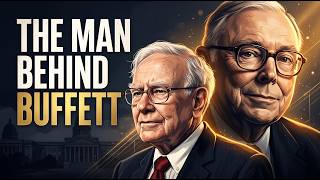
A wonderful business at a fair price could be far more valuable than an average business at a wonderful price. And the man who helped push him toward that realization was Charlie Mer. Mer wasn't simply Buffett's business partner. He became one of the most influential intellectual forces behind Bergkshire.
Hathaway's evolution from a bargain hunting investment operation into a powerhouse built around exceptional businesses and long-term compounding. But here's the fascinating part. The lesson wasn't just about choosing better stocks. It challenged the way Buffett thought about money, patience, opportunity, and the hidden cost of making seemingly rational decisions.
And if you're trying to build wealth in your 20s, understanding this shift could change how you evaluate almost every investment you make. isn't paying too much, it's buying something cheap that never becomes valuable. Point one, why Buffett loved a bargain. Before Munger's influence reshaped his thinking, Buffett followed the investment philosophy of Benjamin Graham, the legendary investor who emphasized buying securities for substantially less than their underlying value.
The approach was logical if a company's assets were worth more than its market price. An investor could potentially purchase it at a discount and profit when the market eventually recognized its value. Buffett sometimes described this approach through the idea of a discarded cigar butt, an unattractive business that still had one profitable opportunity left.
It wasn't glamorous. It didn't require predicting the next revolutionary company. It required patience calculation and the discipline to buy when prices were sufficiently attractive. But there was a problem. A cheap company wasn't necessarily a good company. Businesses with weak competitive positions could lose customers, require constant capital investment, or see their profits deteriorate.
Even if an investor purchased them cheaply, their underlying economics could continue getting worse. Imagine buying a broken vending machine because it costs almost nothing. Congratulations, you got a bargain. Unfortunately, it still doesn't sell anything. That is the danger of confusing a low price with genuine value.
Buffett's early approach had real strengths. But Munger recognized that the most powerful wealth-b buildinging opportunities might come from businesses that didn't look cheap by conventional measures and that realization opened the door to a completely different way of thinking. Point two, Munger's revolution, quality over cheapness.
Charlie Mer encouraged Buffett to look beyond the immediate discount and focus on the long-term economics of a business. Instead of asking only on how cheaply can I buy this company, the more important question became how much value can this company create over the next 10, 20 or 30 years. That distinction changes everything.
An exceptional business may possess a strong brand, loyal customers, pricing power, efficient operations, or a competitive advantage that makes it difficult for rivals to take market share. These characteristics can allow a company to generate attractive returns on capital and reinvest its earnings into future growth.
Of course, not every expensive company is exceptional and even a wonderful business can become a terrible investment if you pay an unjustifiable price. But Munger helped Buffett appreciate that quality itself had economic value. Berkshire's investment in seas candies became an important example of this philosophy.
Buffett and Munger recognized that the company could generate strong earnings without requiring enormous amounts of additional capital to support its growth. Seas also possess something difficult to manufacture. Customer loyalty and the ability to raise prices over time that mattered because the economics of a business determine how much wealth it can generate for its owners.
The breakthrough was realizing that the right business could keep creating value long after the initial purchase. But understanding quality is only half the equation. The real magic begins when you give that quality enough time to work. Point three, the mathematics of compounding. Most people think wealth comes from earning more, saving more, or finding the perfect investment.
Those things matter. But compounding introduces a different advantage. returns can generate additional returns allowing growth to accelerate over time. Consider two hypothetical investments. The first grows $10,000 at an annualized rate of 5%. The second grows the same $10,000 at 10%. Assuming those rates remain constant and returns are reinvested after 30 years.
The first investment grows to approximately $4,3200. The second grows to approximately $174,500. That's more than four times as much money from the same starting amount. And the difference becomes even more significant as the time horizon expands. Real investments don't deliver smooth guaranteed annual returns.
Markets fluctuate, taxes and fees matter, and losses can interrupt compounding. But the underlying principle remains powerful. But the underlying principle remains powerful. Higher sustainable returns combined with sufficient time can produce dramatically different outcomes. This is where Munger's emphasis on exceptional businesses become so important.
A company that can consistently reinvest capital at attractive rates may continue expanding its intrinsic value for years. Instead of repeatedly searching for new bargains, an investor can benefit from owning a business that keeps growing. And that leads to a question most impatient investors never seriously consider.
What if the greatest advantage isn't trading more often, but finding fewer opportunities worth holding for decades? Point four, the hidden cost of constantly starting over. Imagine owning a business that steadily increases its earning power. Every year, it generates profits, reinvests some of those profits, and strengthens its competitive position.
Now, imagine selling it simply because another stock looks slightly cheaper. You might make the right decision, but you might also sacrifice years of future compounding in exchange for a short-term opportunity that never delivers. This is one reason Buffett has emphasized patience and long holding periods.
When you own a genuinely exceptional business purchased at a sensible price, unnecessary trading can introduce taxes, transaction costs, and the risk of replacing a strong investment with a weaker one. However, patience should never become an excuse to ignore deteriorating fundamentals. A competitive advantage can weaken.
Management can make poor decisions. A company's valuation can become excessive. The goal isn't to hold forever regardless of the evidence. It's to avoid abandoning a sound investment thesis merely because the market offers a new distraction every week. And Mer's influence extended beyond business quality.
His thinking also challenged investors to recognize their own psychological weaknesses. Fear can make you sell during a downturn. Greed can convince you to chase a fashionable stock. Overconfidence can make you believe that a rising share price proves you're right. The market doesn't care about your confidence.
It rewards neither activity nor conviction by themselves. What matters is the quality of your decisions. Which brings us to the principle that ties Munger's entire philosophy together. Point five, the real advantage, avoiding stupid mistakes. Charlie Mer often emphasized avoiding obvious errors rather than attempting to be brilliant in every situation.
That mindset is especially valuable for young investors. You don't need to discover the next Berkshire Hathaway to improve your financial future. You need to avoid decisions that permanently damage your ability to compound. That means resisting excessive leverage, questioning investment stories that sound too good to be true, understanding what you own, and refusing to confuse popularity with business quality.
It also means recognizing the limits of your knowledge. If you cannot explain how a company makes money, why customers choose it, or what could threaten its competitive advantage, you may not understand the investment well enough to justify owning it. And if the only reason you want to buy a stock is that it's price has recently increased, you're not necessarily investing in a business.
You may simply be chasing momentum without understanding the risks. Mer's approach encourages a different kind of ambition. Instead of asking how quickly you can get rich, ask how consistently you can make intelligent decisions without exposing yourself to catastrophic losses. Build your savings. Invest according to a plan.
Diversify appropriately. Study businesses. Be patient when patience is justified. And remember that even exceptional investors make mistakes. The objective isn't perfection. It's improving your decision-making enough that you're good. Choices have time to outweigh your inevitable errors. The transformation of Warren Buffett wasn't simply a change in which stocks he purchased.
It was a change in how he understood wealth itself. Benjamin Graham taught Buffett the importance of value and the protection offered by buying below intrinsic worth. Charlie Mer helped him appreciate the extraordinary power of owning exceptional businesses that could compound their value over long periods.
Together, these ideas helped shape Berkshire Hathaway's distinctive investment philosophy. And the lesson for your own financial journey is surprisingly straightforward. Don't focus exclusively on finding the cheapest opportunity. Look for genuine value. Understand the economics. Pay attention to competitive advantages.
Respect valuation and give sound decisions enough time to produce meaningful results. Because wealth isn't always built through dramatic breakthroughs. Sometimes it's built by making a series of intelligent decisions. avoiding catastrophic mistakes and allowing compounding to work quietly in the background.
The goal isn't to look like the smartest investor in the room. It's to make decisions your future self will thank you for. And if you want to understand how experienced investors think when the economic environment itself becomes unpredictable, watch the next video on your screen and how macro legends like Paul Tudtor Jones position for historic commodity and currency devaluations.
You'll discover how macro investors analyze currencies, commodities, economic shifts, and market risk to navigate an uncertain financial world. Because building wealth requires more than finding great businesses, it also requires understanding the economic forces that can change the value of your money. I'll see you in the next



Comments 0