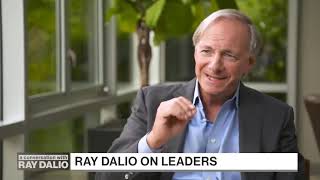
저자: RayDalio—인터뷰진행자미상 · 외국인
요약 보기
이 영상은 투자 판단 예측이 아니라 경영 철학 인터뷰다. 결론: 레이 달리오는 독립적 사고와 아이디어 메리토크라시, 급진적 투명성을 핵심 원칙으로 강조한다. 독립적 사고와 합의의 한계: 시장에서 합의는 이미 가격에 반영되므로 돈을 벌려면 합의에 반대해야 하며, 따라서 독립적 사고가 필요하다고 주장한다. 아이디어 메리토크라시: 좋은 아이디어가 이기는 규칙을 만들어야 하며, 사람들이 서로 솔직하게 의견을 내고 검증하는 과정이 중요하다고 본다. 전통적 조직 비판: 대부분의 기업은 정치적이고 속마음을 숨겨 기능장애적이라고 비판한다. 편도체 반응과 교육 환경 때문에 의견 차이를 싸움으로 여기고 실수를 배움보다 벌로 본다. 실수와 학습: 성공한 사람들은 정답을 아는 사람이 아니라 실수에서 배우고 성장한 사람이라고 강조한다. 존경하는 리더: 빌 게이츠, 일론 머스크, 잭 도시, 리드 헤이스팅스, 무함마드 유누스, 마리오 드라기, 버냉키 등을 언급한다. 의사결정 자동화: 의사결정 기준을 알고리즘으로 만들 수 있으며, 인간 판단과 컴퓨터를 병행하는 방식이 더 나은 결정을 낳는다고 본다. 급진적 투명성과 알고리즘 결합의 결과는 좋을 수도 위험할 수도 있다고 언급한다. 조직 적용 가능성: 1,500명 규모 회사의 방식이 다른 조직, 정부에 어느 정도 적용될지에 대해 아이디어 메리토크라시라는 이상 자체는 보편적으로 추구할 수 있다고 답한다.
다듬은 글
Eve that it's going to be a better decision than I would individually make that's believability weighted decision-making and it's fantastic when you have independent fingers you know in order to be successful in the markets or as an entrepreneur one has to be an independent thinker that makes decisions better than the consensus decisions it's fair in the markets the consensus is built into the price it's paid it yeah so now you have to bet against the consensus to make money therefore you have to be an independent thinker the best dynamic is to have a bunch of independent thinkers now you've got a bunch of independent thinkers how have thoughtful disagreement and get past those disagreement how we have done that is the key to our success and it's outlined in the book even management gurus who would applaud many of the principles and many of the practices that you advocating that you explain articulately would also say that the whole construct is kind of utopian if you will has it felt to you in the process of building bridge water and all of these things that make it what it is is it felt anything like a social experiment or is it has it felt it's eminently practical right if it's that the results show it right it's the reason for this success that I've had or the Bridgewater's had right I mean the we got 40 years of looking at this thing so this is not utopian this is realistic right but I would like that's why I wrote the book people can read the bits and pieces you could you read them one by one and you could say does that piece make sense isn't it sensible to have an idea merit to meritocracy where the best ideas went out okay now what are the rules of the game to achieve that that's what it isn't that better well if you want to get to the idea of meritocracy you've got to have a way of getting there right if you want to get to the best answer it's not going to be in your head I think one of the greatest tragedies of mankind is that people stubbornly have wrong opinions in their head that they could easily stress-test and get through better opinions collectively if they could be forthright with each other and go through the processes my outline in the book and the reason and they they have to have humility I learned the fear of being wrong I'm fearful of being wrong and it's because of that that I need that those independent decision-makers so I think it's a very practical it's not utopian it's practical much of the book and much of what you described now is an implicit and occasionally explicit critique of traditional management and traditional leadership tell me what's wrong with the way most companies are run it's dishonest its dysfunctional I mean dishonest meaning you don't know what that guy is really thinking it all goes on behind the doors and everybody's doing their politics okay so that's that's not an environment that include encourages the ownership the straightforwardness dysfunctional when people don't know what other people are really thinking what it what it seems to me like what is crazy and what's normal right is it crazy to be radically truthful and radically transparent with each other to say what you mean to work it through and to know that there's no none of that games playing isn't it more efficient and isn't it more straightforward why it's a psychological barrier most people have a psychological barrier psychologists and neuroscientists tell me that it's because of how the brain is wired that there's a part of our brain called the amygdala and when we have a disagreement there an inclination to think that that's a fight rather than a curiosity okay and so that tends to cause it and it's also how we're raised you know from a very early age the whole idea of being right it's so rewarded whereas learning from mistakes doesn't have its place right you so a kid studies they're all you're smart smart smart you take the examination and okay you do badly and look life's not like that life is mostly a matter of making your mistakes and knowing how to evolve past those mistakes and learn so when I look at a traditional company it doesn't value the that learning process that mistake basic talking about what people are really like nobody talks about what people are really like why not a good question why not don't use it because human nature explains the why not this the amygdala I think it's a combination of psychologists tell me that it's a combination of some amount of programming the amygdala and some amount of the avaya environmental education system how we're growing society we live right we know subliminally that the greatest people are the people who make mistakes learn from them and grow and evolved right and I've had the opportunity to get to know the most remarkable successful people in the world and they have all gone through the mistake making and the learning from that it's the learning that comes from mistakes that makes people more successful than knowing the right answers and yet we have those kinds of barriers so the key to our success has been I don't mean to lecture but I do mean to pass along what has been the keys of our success you Ray Dalio says all great leaders make mistakes what sets them apart is how they learn from those mistakes Dalia wishes they'd alright those lessons down principles is his way of sharing the ones he learned while building Bridgewater so who's on your list of good leaders then Bill Gates is a great Elon Musk you know that there are there shapers Jack Dorsey Reed Hastings in those that in some of the business community in philanthropic somebody I admire enormous is Muhammad Yunus find microfinance and has found that really the inventor of social enterprise and he knows how to make essentially businesses out of philanthropy in other words to make them self sustaining fantastic Geoffrey Canada Harlem Children's Zone in other words of vision these are visionaries who are shapers you know they're just and those in whatever those are those are it's very difficult in government will you spend a lot of time with Mario Draghi would you put him on that list oh I'd put Mario Draghi on that list I would say Behrendt Ben Bernanke is a hero okay in other words the person who stood up and at a very difficult time with a sacrifice personal sacrifice to do the right things the political system has it's it's its challenges it sounds to me like the unifying threads among all of these people whom you do admire are on the one hand independence independent thinking and creativity and on the other hand the courage to pursue either one or both of those things I mean everybody has their role that's the thing I've also learned that everybody has their own nature and the role and it takes a team and so yes I like the fact that those people for the good of whatever can go from visualizing something visualization to actualization build it out however I could tell you that all of those people at all need people who have different natures and different abilities the purse big conceptual big-picture thinker needs a person who's paying attention to all the detail you know the creative person who's not reliable needs the reliable person who's not creative have any companies earned your admiration other psychologists who've come in and examined at our company say that there are comparisons I would say that pet flicks with Reed Hastings hazard my admiration I Jack Dorsey and Twitter in terms of that radical transparency and want the idea of meritocracy has earned my admiration some so there are some but I'm not an expert on it you were way among the first people to computerize if you will systematize computerized the investment process right to turn your ideas or principles into algorithms and put them to work in financial markets I don't know of anybody who has tried to computerize the management process the way that you have why do you think it is that Ray Dalio in that respect is out there on his own I think it's going to happen I think I learned at a very you know many years ago that almost anything that I think I can computerize the criteria for making decisions by the way that'd be one of the greatest gifts I can give people is the understanding of when you're thinking what cry I'm making a decision now slow up and think what are the criteria right those criteria down you can put those criteria into equations because the brain is 89 billion neurons which are little computers and then it gets input from the outside well though that what your brain is doing can in many ways be done better by computer if you go through that exercise so I learned that almost any decision making could be computerized so now whenever I'm dealing with people I realized that that could be put into algorithms okay now imagine the power of that just like that in the investment because all it knows all of that information it knows what all those people are like it knows what's happening and when it has all that power of all of that information and it has those types of criteria it can bring to you all of that and it makes that decision in the same way our investment the Kennedys making decision so right now it's working like a GPS works in parallel and I think that's by the way the best when you have an the computer making the decision like a GPS makes a decision and you're making a decision in parallel those two things line up and you make better decisions and all all companies eventually will will will do this kind of thing yeah and people too yeah I think that you're going to you're not far from being able to go to your smartphone and just like you call in Google and you say what am i you know what's the facts and you get your facts like this that you'll be able to call in and get your advice on ID and meritocratic decision-making by experts you see two things are coming together at the same time and that is radical transparency an algorithmic decision making ok radical transparency means that almost anybody can know almost everything about you maybe more than your wife knows about you because you're leaving these this data these fingerprints all over the place so the data on you gives you a profile so that the computer knows you okay you take that data and you put it together with algorithms and those algorithms are going to say how do I deal with them in a way that's better more tailored to you than the human could that's where we are right is the outcome inevitably good because if you think about it the outcome of a system like that particularly put the bad use could be frightening it's like most things it has Goods and good of bad sides to it but I think that like we found it miraculous because you certainly can make better decisions you can make those decisions idea meritocratic lee if everybody's involved in making those algorithms in other words like I wrote the principles in the book you could write an algorithm and since everybody agrees on the algorithm they agree on the decision-making criteria so you think it has applicability right now the machine you've built works for a 1500 person privately owned company how applicable is it to other organizations is it applicable to other companies maybe not in any in its exact form but something similar to it larger companies is it applicable to government's let's first make clear what the it is I think it's the broad category of do you have an idea meritocracy if that's the that you're talking about well there's no other to its idea meritocracy on the one hand and a systematic way of supporting it on the other yeah first of all you have to want the first I mean as an ideal everyone can it should be able to embrace right and I got a meritocracy but
Comments 0