저자: MarkMobius · 외국인
요약 보기
결론: 연준 긴축과 은행 불안이 겹쳐 시장은 깊은 불확실성 국면이며, 당분간 안정까지 수개월이 더 필요하다. 거시·금리: 금리 인상과 주가는 역상관이 뚜렷하지 않다는 게 역사적 관찰이며, 시장은 심리적으로 고금리를 두려워한다. 연준은 인플레이션을 잡기 위해 금리를 더 올려야 하며 현재 물가상승률(약 5~6%)을 목표 2%까지 낮추려면 현재보다 더 높은 금리가 필요하다. 금리는 경기 충격이 없다면 계속 오를 것으로 본다. 인플레이션 요인: 미국은 인프라, 국방, 반도체 분야에 막대한 재정이 투입되어 고용과 임금, 지출이 늘고 있어 인플레이션 억제가 어렵다. 은행·금융안정: 은행이 장기채를 보유해 금리 상승 시 평가손실이 생기며 실리콘밸리 사례가 이를 보여준다. 스위스 대형은행 문제로 예금자 불안이 확산되고 예금 인출이 나타난다. 연준의 긴급 유동성 지원은 옳은 결정이나 자유시장 원칙과는 어긋난다. 전반적으로 금융안정, 인플레이션, 경기 세 가지 문제가 동시에 존재한다. 채권: 장기채는 금리가 오르면 가격이 하락해 위험하다. 미국 AAA 국채도 금리가 5~7%대로 오르기 전까지는 매수 기회가 아니며, 단기물(3~6개월)은 괜찮다. 1년 전 은행이 권한 2% 금리 채권 펀드는 금리 상승으로 문제가 됐다. 자산: 금과 비트코인이 오른 것은 투자자들이 은행·채권·주식 모두를 피하고 갈 곳을 찾는 신호다. 지수 투자는 중국 비중 때문에 부진하며, 부채가 적고 성장하는 좋은 개별 주식이 답이다. 인도, 미국, 기타 국가에 이런 기업이 많다. 지역: 인도와 대만에 선호. 대만→인도 수출이 크게 늘어 인도 반도체 산업 성장의 좋은 신호로 보며 인도가 향후 매우 큰 산업이 될 것으로 본다. 중국은 미국 수출 의존, 첨단 반도체 기술 접근 제한(TSMC 등), 성장 둔화, 새 체제 하 창의성·혁신 문제로 어렵다. IT: 인도 IT 섹터는 금융 노출 때문에 심리적 타격을 받았으나 기업 실적 훼손은 일시적일 것. 동남아(태국, 베트남)의 소프트웨어·기술 서비스 수요가 빠르게 성장 중. 대형주(TCS, Infosys, Wipro 등)보다 소형주를 선호하며 정보 우위 가능성이 있다고 봄. 구체 종목은 공개하지 않음. 원자재: 우크라이나 전쟁으로 인도는 러시아산 저가 원유 혜택. 장기적으로 재생에너지 확대에도 불구하고 전력·냉방 수요 증가로 석유·가스 수요는 줄지 않고 늘어나며 가격도 견조할 것. 인도·중국에서 석탄은 여전히 핵심 에너지원. 결론: 연준 결정은 적절하고 안정 신호가 보이지만, 아직 불안한 투자자가 많아 안정까지 몇 달이 더 필요하다.
다듬은 글
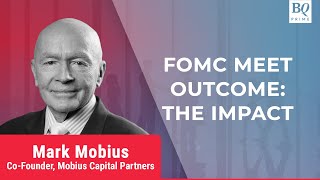
thank you good morning and welcome to BQ Prime I'm muruda swaminathan I have with me Mr Mark Mobius we don't need any special introduction for uh Mark he's a veteran she's in global markets expert now he's running his own firm called Mobius capital and we all know him as the key leader who helped Franklin Templeton grow and we would always connect with him and his views are always very important more so today Mark welcome to PQ Prime thank you it's a pleasure being with you mark my first question uh what did you make of Powell's statement he seemed to be quite balanced in his uh commentary but then the markets are not too happy well the markets are always afraid of higher interest rates and it's amazing when you look back at history in fact uh there is very little correlation between interest rates and the stock market you'll see S P 500 go up when the markets go the interest rates go up or opposite the way it's just very difficult to predict but the reality is that psychologically people feel that things will be up in problems because of higher interest rates uh but you must remember that Pat is now dealing with two things one uh the bank problems because the banks are sitting on uh long-term bonds which lose value when interest rates go up therefore their balance sheets suffer and we've seen that already in Silicon Valley and then on the other side uh they're worried about the impact of inflation on the economy the reality is that it's really a huge huge problem for them because uh the economy in America is doing very well for a number of reasons one this incredible amount of spending on infrastructure you know the abide the Administration has passed a number of bills to spend a lot of money on infrastructure secondly they're spending on defense in a massive amount and thirdly they're spending on semiconductors so these are billions and billions of dollars being spent which means people are going to be hired they're going to be paid good salaries and employment will go up and spending will go up so it'll be very difficult to control inflation under those circumstances right so that path is very clear in fact uh except that he changed the language a bit the tone uh moved from more interest rates coming to maybe we will hike depending on data now how much should we read into the change of tone and the change of language and power statement well you have to look at the Playbook by the fed the FED believes whether they're correct or not but they believe that in order to cure inflation you must raise interest rates now their target uh inflation rate is two percent why they use two percent is another big mystery but we can leave that for another discussion uh we're now at what five or six percent in order to get down to two they've got to raise interest rates higher than what they have now and that's what we're facing that's what the FED is facing basically it's really a big dilemma for them but look they created this mess because they are the ones that printed so much money uh during the problems with the coven so I think um you know it's it's really a big dilemma but I do believe that interest rates will continue to go up provided there's no big impact on the economy right so um like you said they created this mess do you think that they will uh be successful and let me put it that way they'll be successful in destabilizing the financial system and uh you know uh the banks would get stuck in this situation where the cost of money has gone up dramatically and they don't know where to invest uh VCS are pulling out money we have a financial stability problem and on the other hand inflation doesn't seem to be coming up because the government spending so we have a a three-prong problem so where are we now when it comes to financial stability specifically well first of all you must remember that people around the world are really now concerned about the money that they have in the banks um uh you know as you when you see uh uh the biggest bank one of the biggest banks in Switzerland of all places in trouble then people begin to wonder hey how about my own bank is my own bank going to be in trouble so they begin to withdraw money from the bank now I think the FED made a correct decision to immediately support uh the banks with uh with funding uh that makes sense of course it's not a very good uh thing for private Enterprise and for the pre-market economy because you're going against all the principles of free market economy but that's another question we can have so that was a good decision and I believe other countries around the world will make the same decision to ensure that the banking system is solid and is reliable otherwise you can have a run on banks that we could have an incredible prices so that's the one the problem they hopefully have solved up to now but it's still a concern of depositors around the world there's no question about that the other situation is of course what's happening to SARS what's happening to bonds uh bond prices the long-term bonds are definitely going to be in trouble because as interest rates go up those bonds lose value so that's one area the stock market uh of course those companies that are in high debt are going to be in trouble as well so you're going to have a very mixed picture but generally speaking I would say we're now in a in a period of deep uncertainty that's probably the best way to put it okay so the Deep uncertainty uh will take some time to go away I suppose because the market sense that which is why we are seeing that kind of sharp volatility uh the bigger question is in spite of the coordinated action by the Banks you know there is still the political pressure that is coming in in fact yesterday uh U.S treasury secretary uh uh Miss Ellen said that she's not going to consider increasing the insurance for deposits now that again rattles the markets yeah that's that's a very interesting and she she was the one that really uh initiated the rescue plan which was to her credit but now she's going in an opposite direction in some ways which is kind of puzzling actually but I believe that she had to say that in order to make sure that people don't get too easy they don't get too uh uh whiskey in their landing and in their behavior so she's putting out a warning to the banks be careful I'm not going to rescue if you make too many mistakes right so um another interesting aspect of yesterday's fed policy statement you know Fed chair kept on repeating to questions that look the uh Current financial stability instability rather or the uh crisis of confidence has led to tighter conditions which in some ways like fed itself tightening that sounded a little uh off the book how do you read that yeah that was also that was quite puzzling but I think he had to say that because he had to warn people basically look uh if you're going to go to your bank for a loan be careful because it may not be there and for those who have outstanding loans and need more Capital they're not going to get it because banks are going to be ultra ultra careful now but the irony of all this is that those Banks who had prime lenders and who are lending money to good companies compared to Banks who looked like they were very conservative by putting their assets into fixed income instruments of double triple a U.S government bonds for example ironically those will come the banks that got into trouble not the banks that had good lending portfolios so uh it's kind of uh strange that this kind of statement was made by power yeah uh okay no that's a very important uh thought that where you need to bring into this conversation now going forward maybe it will take uh six months or nine months or even one year for the FED to say that look rate hikes are enough it's done and we need to move down so when is the time that people will start looking and buying government bonds because they will become far more attractive if there is any indication of the change in cycle right uh yeah they actually there will come a time when there'll be an incredible opportunity to buy uh government bonds uh Triple A government bonds when the interest rates go up to five six seven percent uh then there will be a really great opportunity but we're not at that point yet uh it would be I would say quite risky to uh think about doing that so it was interesting about uh a year ago one of my Banks approached me and said we have an incredible bond fund that's paying two percent and I said don't you think interest rates are going up these this spot is going to be in trouble and sure enough that happens so we have to be very careful I would wait before starting uh to put money into these bonds unless it's short term I mean if you're talking about three months six months that's fine you know because even if it's rates go up uh you'll be able to liquidate at the face value but otherwise you better not go out further so what will you do with your money that's a good question you notice that gold prices gone up yeah and that Bitcoin has gone up so what does that tell you it tells you people are really puzzled where to go you know don't put your money in the bank it's too dangerous don't put your money in bonds it's too dangerous stock market doesn't look too good where do you go so um I still believe that uh good stocks of companies that have no or little debt and are growing uh that's the place to put your money and there are plenty of companies in India in the US in other countries around the world that meet those criteria so there's still lots of opportunity of course don't buy the index you know the index yes it's not doing very well you know China's not doing well and that's a big part of the index the Emerging Markets index so but I would say you know stick to good equities and you'll do fine over the long term even over the short term right so uh basically you can't put money anywhere else come to India but be stock specific you have to go to India number one but we have we are big fans of Taiwan and India um I was happy to see just the other day uh exports from Taiwan to India have increased uh quite remarkably uh and that's a very good sign it means that the semiconductor industry in India is growing and I believe this is going to be a very big industry in India in the future right so uh given a choice between India and China China is kind of coming back you know they are getting their act together the poet fears are subsiding uh how would you look at India and China or China's uh uh once again strengthening relationship with Russia there are too many moving parts yeah the biggest challenge with China is first of all the relationship with America you must remember that China depends on an incredible amount of their uh exports to America so this is very very important Point secondly they have depended up to now on technology from America now the Americans are saying no we're not going to give you this technology that's a big problem for the Chinese now they're going to try to ramp up but it'll be very difficult uh and interestingly enough if you know tsmc Taiwan semiconductor manufacturing is the largest producer of the highest end semiconductors and of course the Chinese don't have access to that now so that's number one number two the problem with China going forward is growth because okay 10 years ago they were growing at 10 but now the economy has grown into such a extent so large it's very difficult for them to grow at that rate India is on the other side of the spectrum where India is now just on the takeoff to high growth so uh in my way of thinking if you want growth you have to be in India younger population or early stages of growth in a big way and I think that's where the action is going to be going forward now it doesn't mean to say there may not be opportunities in China but under the new regime I'm afraid that a lot of the creativity and Innovation may be a problem in China we have to watch that carefully right so coming back to uh the key point about the financial instability and the confidence and the uncertainty in the banking global banking system one of the sectors that have been badly hit or at least sentimentally not actually is the I.T sector in India because of their exposure to Banking and Financial Services uh do you think that it's only a Sentimental problem and their businesses may not be hit uh it's if any uh downturn in the software or technology area will be temporary simply because the growth in that sector not only in India but globally is very intense we're seeing an incredible growth I was recently in Thailand and uh Vietnam and I see there uh the demand for software services and other technology Services is growing at a rapid pace so I I still believe that you've got to be in technology particularly in India where you're going to see growth not only in the software area but also the hardware area right so if it comes to technology uh would you specifically look at the big five or six the TCS the Infosys the web Pro type yes we look at those but we particularly like the smaller companies uh because there's a growth potential very often which is better you know the Sonic the low base and these are the companies that are not very well known by the investing public so very often you can have a information Advantage let's put it that way so we like those companies rather than the big boys uh would you like to name any of those companies yeah but if you look at our portfolio see where we are but I can't tell you whether we're buying or selling okay cool understood now there is one more uh moving part which is uh quite important you know uh every government everywhere is moving towards green energy so the demand for crude at some point should come down crude prices have also come down for the immediate reasons of growth not picking up the Ukraine war the uncertainties ETC so how do you see crude playing out and its impact on macroeconomic conditions especially for a large importer like India uh well India of course you know has advantages result for the Ukraine war they're getting cheaper crude from Russia which is very very good for India and by the way another bluish Point uh for India but if you look at the long term the demand for energy globally is not going down it's going up and it's going up dramatically in many countries around the world many places don't have electricity yet many places don't have refrigeration or air conditioning et cetera et cetera these are Big consumers of energy now you may say a Renewables can replace oil coal yes maybe over the long term but we're looking at 10 15 20 years I don't think the demand for oil or for that matter for coal is going to go down it's probably going to go out if anything because of this incredible Global demand that you see and of course you could see in India and China coal is still King when it comes to energy now some of this can be replaced uh maybe with oil maybe with gas but I think oil and gas prices will continue to be pretty healthy going forward okay so to conclude this conversation can we uh say that the contagion fears are contained for now for now yes the the Central Bank in America the fair has been made the right decision and there seems to be stability but there's still a lot of people out there who uh are afraid and are afraid to make a decision at this stage of the game I think we need another few months before things can settle down right so we will wait and hope those few months bring us some good tidings thank you Mark for joining us as always thank you bye


Comments 0