저자: CNBC Television · 외국인
다듬은 글
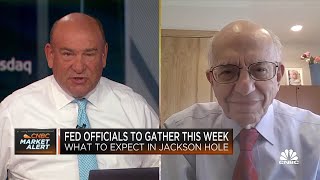
joining us now is Jeremy Siegel professor at the University of Pennsylvania's Wharton School good morning professor good morning Steve okay so let's start off with where the economy is now and and Jeremy you have an idea here about what's going on with productivity that's I don't know I don't think people are thinking enough about this we've had a couple of lousy quarters and then we had a couple really good quarters do you think we're really having a productivity surge in this economy well yeah I mean you know the last quarter was outside of the few months around the pandemic the best quarter for productivity in uh in over six years and if if this quarter I mean we've been you know I mean I know the St Louis fed is way up there others are not that high but uh you know given modest growth in hours and in payroll it looks like another third quarter boom in productivity uh this is really saving Jay Powell I mean this is this is the best the best news I mean that's how you can have strong GDP growth without pressure on the labor market and really without pressure on on inflation um I mean you know that that's the uh uh the golden magic over here so I think I think that that you know that's really playing into um uh what we see in the economy and by the way why yields are going up also real GDP growth and real yields you know I'd like to comment you had you guys had a great discussion right at six o'clock when when you opened about about real returns and you know the tips going to two percent is that a way that you should now invest in for wealth let me mention two percent a year it's good it's the biggest in decades um however two percent after inflation a year takes 36 years to double your money at a 20pe which you also mentioned which is right that's a five percent earnings yield in stocks the general S P 500 that takes 14 years to double your money so okay all right let's double your money in bonds you've multiplied your money by five times in stock so people who tell me oh my goodness you know bonds are as good as stocks no way for long run uh wealth of creation let's unpack that Professor because I think that's important and it's it's it's kind of against my thinking on this right you'd like to like bonds but you can't I really want to watch that case I'm going to try nobody has ever built wealth Professor you tell me I can see this five juicy percent two-year note and I put my money in there at the end of that period I'm gonna get five percent and that's going to be three percentage points or two percentage points higher than the inflation rate and I'm gonna be really happy you're telling me I'm gonna be unhappy because I was better off putting my money in stocks I should ignore those big fantastic yields on the two year first of all in two years anything can happen we know we know that I mean uh you know the stock market could go down 10 or 20 I'm talking about building longer terms wealth and I'm I'm saying if you you know if particularly if you're young you're building your retirement account you're thinking about you know your retirement that's what really counts and you know even you know two percent is certainly attractive compared to earlier by the way when when tips came out in 1997 they were three and a half and they went above four so I mean even though two is certainly better than it was 10 years ago five years ago you know it isn't all that great compared to history and well below stock uh you know the average over 200 years of six and a half and I'm giving a conservative five percent after inflation rate of return in stocks you are absolutely right in two years you might be very happy with bonds you might not be happy with bonds but over 10 years the rates go down you have nowhere to go you stop with your stupid five percent and then you know if rates go up I guess you can reinvest a little and then you can get six percent but you know if you don't want to buy Nvidia and make you know whatever or or the Magnificent Seven or something really sexy you can buy really good companies that have a yield of like two or three percent and they raise their dividend every year for 15 so suddenly the dividend is up to your five percent in a couple of years and you got the capital pre it's just no re unless you need a stable part of your portfolio that you know you're going to get a return on but and if it's not corporate if it's not treasuries then you even got to worry about getting your money back anyway if you go out to eat and then you get the reinvested from Professor can you handicap this weekend well you believe that you don't you yeah I know you're just trying I am putting a portion into the do you I am I am buying you are but with the cash that I have I I you know if you put 10 grand in and I told Kelly this last week you get four of this is on a longer term but before it went from four to four and a quarter that means you know what that means on ten Grand if you take your wife out you can get an appetizer after after a year right if you're if everybody likes an appetite yeah because instead of 400 that you get on 10 grand you get 425 dollars it's just like come on this is a stock market channel that doesn't mean people should only invest in stocks no but it's kind of Professor can you can you just handicap this week uh and what you think Powell should say what he will say where's policy going and what does that mean for the stock market stock market very very honestly Steve and of course you filed the Fed so closely you know since the three and a half weeks I guess it is since the last press conference I don't think a lot has happened that changes the Outlook I I think he's going to say you know we're not you know quite done we're close to the job uh I think he's going to stay very data dependent don't forget we still have a full month with a full month a load of of data announcements coming out before the September 20th meeting so he's going to stress that uh data dependency uh you know I think there will be a kind of a slightly hawkish uh tilt because you know we're not down to that Target but uh you know honestly I I don't you know if you want to do the higher real yields and the higher interest rates are working in his direction towards tightening policies but here's the thing if he follows what you talked about the very beginning of this conversation that productivity is higher that we can have stronger growth lower inflation and a low unemployment rate would you tell him that he should not be hiking anymore and that maybe he's think about cutting I I I I mean I would be on the alert but uh I would say yeah you don't you don't need you don't need to hike anymore uh you know you got tightening on them on that long end uh since the last meeting um that uh and when we take a look at all the other indicate you know the the break even between the tips and the tenure which is one of their favorite indicators of what in 10-year inflation is going to be it's 2.3 percent okay that's not 2-0 but right my goodness that's you know take a look at what the market is looking at longer term and seeing those Trends I don't I don't think that's threatening and and you want to start listen the term structure is uninverting do you want to invert it more yes you will if you raise another 25 basis points on the on the 10-year Professor is always a pleasure to talk to you on the FED fund yeah Professor always a pleasure to talk to you thanks for joining us this morning thank you very much Steve




Comments 0