원문 보기
Welcome to today's explainer. We're diving straight into the incredibly polarizing mechanics behind Nabors Group, ticker NBIS. We are going to navigate the really fierce Wall Street debate surrounding the stock today, and we're going to do it without taking a side. Instead, we'll look purely at the data and the structural arguments that are driving both massive excitement and, honestly, some pretty deep skepticism.
To really wrap our heads around why everyone is talking about Navitas right now, we have to start with the sheer scale of the situation. This stock has seen a massive 200% run-up this year alone. I mean, that meteoric rise has pushed Navitas' market cap to around $60 billion. Now, even with today's 3.6% drop bringing the price down to $213.93, this company has completely captured the attention of both institutional heavyweights looking for the next big thing and massive short-sellers who are betting it's all just going to come crashing down.
So, here's our road map for today. First, we'll meet Navitas Group, weigh the bull case against the bear case, unpack their massive debt catalyst, compare growth versus valuation, and then we'll wrap it all up with some final takeaways. Section one, meet Navitas Group, the foundation. Okay, let's dive right into this foundation.
Navitas isn't just operating in a vacuum, you know? They have three massive pillars supporting their strategic positioning. First off, they have a powerful alliance with Nvidia for their AI cloud expansion. That ensures they have direct access to the highly coveted hardware that literally powers modern AI.
Second, they're expanding aggressively. We're talking a massive UK deployment at Vantage Data Centers with 1.7 billion pounds of committed capacity. And finally, they're powered by a world-class engineering talent pool drawn from the former tech giant Yandex. So, these pillars give Navitas a really unique structural advantage that very few peers in the AI infrastructure space can even match right now.
Section two, the bull case, defying gravity. And honestly, the financials brilliantly illustrate exactly why the bulls are roaring. Just look at this growth. It practically defies gravity. In the second quarter, Nevias posted $582.3 million in revenue. That is a jaw-dropping 454% jump year-over-year.
So, what's driving this? Well, it's almost entirely AI cloud revenue, which jumped 514% to $575 million. This pushes their annualized run rate up to a staggering $3.0 billion, up from $1.9 billion just one quarter prior. In fact, management is actually projecting up to $3.4 billion for the full year.
They are essentially quadrupling their revenue, which is just wild. But, you know, it's not just about the current revenue. It's the pipeline. Nevias is sitting on a $40 billion contracted backlog. And the quality of these contracts? Exceptional. They recently signed four large AI cloud deals, with each contract averaging over $1 billion in total value.
Customers are quite literally locking in long-term commitments for compute power. Now, what's incredibly interesting here is how those massive contracts actually translate to the balance sheet. AI infrastructure is notoriously expensive to build, right? But, Nevias' customers are actually pre-paying for capacity.
These pre-payments are covering 50% to 60% of Nevias' capital expenditures up front. This incredible dynamic is driving massive margin expansion. AI cloud margins hit 49.7% in Q2, and the group's adjusted EBITDA margin expanded to 41%. Add in $2.2 billion in Q2 operating cash flow, and Nevias ended June with a fortress-like $8 billion in cash and a 4.0x current ratio.
That means they have four times more liquid assets than short-term liabilities. So, unsurprisingly, the bulls on Wall Street are incredibly aggressive right now. Goldman Sachs recently upgraded the stock to $328, citing strong demand and pricing tailwinds. Bank of America is sitting at $310, and Northland Securities has a massive $410 price target.
Even the consensus average sits at $286.69, which implies some pretty significant upside from current levels. Section three, the bear case, the cracking foundation. All right, so while Wall Street analysts are shouting buy, a massive portion of the market is actually betting on a complete collapse. Nearly 24% of the stock's float, that is over 60 million shares, is currently sold short.
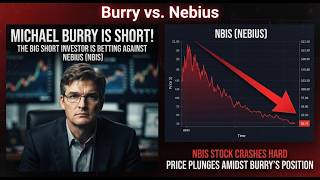
To put that into perspective for you, it would take 2.4 days of average trading volume just for those shorts to cover their positions. The smart money is definitely circling here. And among those short sellers is a very familiar name, Michael Burry. Yes, the same investor who famously predicted the 2008 housing crash.
And okay, to be fair, a few crashes that didn't happen, too. But he is publicly shorting Enphase, reportedly adding to his positions around the 212 and 259 levels. His thesis is incredibly surgical. It focuses on what we can basically call a depreciation time bomb. So, the absolutely crucial point here is how these companies account for their incredibly expensive hardware.
Burry argues that AI infrastructure companies are depreciating their chips, their GPUs, over a 5 to 7-year accounting life. But in reality, the rapid pace of the AI tech cycle means that hardware is functionally obsolete and demands replacement every two to three years. If Burry is right, Nvidia's current profitability isn't some brilliant business model.
It's an accounting illusion that's just masking rapid equipment obsolescence. And beyond the accounting, the bears point to some terrifying structural concerns. Just look at the cash burn. In Q2 alone, capital expenditures hit $5.7 billion. dollars. That's a full billion over estimates. By 2026, Nebius anticipates spending 20 to 25 billion dollars to procure GPUs and build data centers.
And while they're spending an absolute fortune to build capacity, the market is crowding fast. Meta Platforms is reportedly considering leasing out its extra compute power. You've got SpaceX, Google, Anthropic, and even former Bitcoin miners pivoting into AI infrastructure. If supply suddenly outstrips demand, well, GPU pricing power will plummet taking Nebius's margins right down with it.
Section four, the debt catalyst, doubling down on risk. So, Nebius just doubled down. They've closed a massive 5.75 billion-dollar private offering in convertible senior notes. Management's view here is that AI demand is totally insatiable and they need this aggressive growth financing immediately to fund data center construction and secure even more GPUs.
Let's look at how this actually builds into their long-term debt structure because the offering is split into two massive tranches. First up, the 2030 notes. They're raising 3.45 billion dollars at a tiny 0.50% coupon with a conversion price of $344.81. That's a 54% premium. Then, we have the 2034 notes raising 2.3 billion dollars at a 4.50% coupon with an aggressive conversion price of $405.82, an 81.3% premium.
So, they are locking in huge premiums, but make no mistake, it's an incredible amount of leverage to take on in a rapidly shifting technological landscape. And here is exactly why current shareholders care and why the stock actually took a hit today. Concurrently with this new debt, the company swapped 800 million dollars of existing notes for about 15.8 million new class A shares.
That introduces an immediate 5.5% dilution to existing shareholders. Furthermore, those participating holders can just turn around and sell these new shares on the open market, creating immediate downward selling pressure. Section five, growth versus valuation, the tug-of-war. So, it really all boils down to this direct conflict.
On the bull side, you have an incredible $3 billion plus annual run rate. You have analysts like Piper Sandler projecting the company will scale to over 25 billion in revenue by 2028, completely supported by 10 strong buy ratings. But, on the bear side, you have the reality of the present. The stock trades at roughly 57 sales.
It has a negative forward price to earnings ratio, meaning analysts literally expect it to lose money on a forward basis. And models like Morgan Stanley's project a price target of just $144, implying massive downside. This depolarization is actually breaking the technical charts, too. The daily stochastic hit 100.
That is maximum overbought territory. The commodity channel index, or CCI, sits at 223, which is deeply overbought. The stock is trading miles above its 52-week average. And yet, despite flashing these massive overbought warnings everywhere, the trend momentum is so incredibly strong that standard indicators remain a strong buy across daily, weekly, and monthly time frames.
The technicals are literally just as conflicted as the fundamentals right now. Section six, final takeaways, navigating the volatility. Whether you personally lean bull or bear on this, here is your objective roadmap moving forward. Keep your eyes glued to these four core metrics. Number one, GPU pricing power.
If capacity becomes less scarce as competitors enter the space, Nvidia's margins will absolutely compress. Number two, CapEx efficiency. Can they actually build out this 20 to 25 billion dollar capacity without overshooting actual market demand? Number three, client concentration. Is a giant like Meta truly going to become a competitor by leasing out its own compute?
And number four, the bury trade. Watch the accounting closely, guys. If technology cycles force Nvidia to write down equipment faster than their 5-7 year schedule, those reported earnings will just evaporate. We're going to leave you with this final pivotal question to consider. With a breathtaking $25 and evaluation sitting at 57 times sales, the execution risk here is truly historical.
So, what do you think? As the next few highly volatile quarters unfold, will Nvidia's group prove itself as the world's next dominant hyperscaler, or are we watching the formation of the market's next great cautionary tale? Keep watching the data and we'll see you in the next explainer.




Comments 0