저자: JeromePowell · 외국인
요약 보기
파월은 트럼프 행정부의 연준 상대 법적 공격이 제도적 독립성을 훼손한다며 이사직 잔류 이유로 제시. 관세 인플레이션은 일회성 가격 상승으로 향후 2개분기 내 해소 기대. 에너지 충격은 아직 정점 전이라 주시 필요, 관세 해소 전 금리인하 검토는 시기상조. 완화 편향 문구 유지 여부는 위원 간 논쟁이 있었고 다수는 아직 변경 불필요 입장. 핵심 근거: 근원 인플레 3.2%, 브렌트유 약 120달러 근접.
다듬은 글
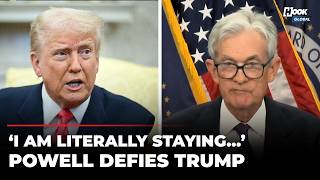
What would you say to the criticism that by remaining on the board you're actually taking a political act in denying President Trump the majority of the board which as president he would have if you left? I I don't see that at all. As I mentioned you know, I'm literally staying because of the actions that have been taken.
Thank you, Mr. Chair. Appreciate the kind words about the press. Often doesn't come from the podium in different places, but appreciate that. Um can you talk about what is gone into your decision to remain on the board? What kind of criteria are you weighing and how long might you stay? Thank you. Sure.
So, you know, my [clears throat] my concern is really about the series of legal attacks on the Fed which threaten our ability to conduct monetary policy without considering political factors. And I I want to note here this has nothing whatever to do with verbal criticism by elected officials. Uh I I've never suggested that such verbal criticism is a problem and neither has anyone else here.
But these legal actions by the administration are unprecedented in our 113-year history and there are ongoing threats uh of additional such actions. I I worry that these attacks are battering the institution and putting at risk the thing that really matters to the public which is the ability to conduct monetary policy without taking into consideration political factors.
It is so important for our economy, for the people that we serve that they can depend over time on a central bank that operates that way free of political influence. It's part of the absolute foundation of this amazing economy that we have. It's just one of the many reasons why the US economy is the envy of the world.
That piece of institutional architecture separates successful countries from unsuccessful countries. It is extremely important not for the people who work at the Fed in any given time, but for the people that we serve that the Fed remain able to conduct monetary policy in a way that doesn't get pulled into politics trying to help or hurt any particular politician or political party.
It's critical for the people that we serve. In terms of when I would leave, I I will leave when I when I think it's appropriate to do so. Was that all your questions or was there Well, I just have a follow-up which is what would you [clears throat] say to the criticism that by remaining on the board you're actually taking a political act in denying President Trump the majority of the board which as president he would have if you left?
I I don't see that at all. As I mentioned uh you know, I'm literally staying because of the actions that have been taken. I had long planned to be retiring and you know, the things that have happened in the really in the last 3 months have I think left me no choice but to stay until until I see them through at least that long.
Um you know, in addition uh I don't see how this will interfere. I'm my intention is not to interfere. You know, I was a governor for almost 6 years. And the tradition is at the Fed that governors uh who understand how difficult the role of chair is and as a as a soon-to-be former chair I do understand how hard it is to get consensus with 19 strong-minded people.
You work with the chair. You you try to you try to uh be heard, but also collaborate with the chair and try to support the chair when you can. When you can't, you can't. And I think that's the attitude that people generally take and that's the attitude that I'll take. Uh Nick Uh Chair Powell, if I could ask about the inflation outlook.
In March you described the standard practice of looking through energy shocks as conditional on inflation expectations staying anchored. Since that meeting there has been very little progress reopening key energy trade corridors. Can you help us understand how the inflation outlook has changed in the intermeeting period beginning with the prospects for tariff pass-through resolving on the timeline that you had outlined in March before getting to the energy shock that is now on top?
So, you know I would look at it this way. Um for a long time we've been working on on the hypothesis really that tariff tariffs would would lead to a one-time price increase and that that would go away over time. In other words, that there would be no further change. So, measured inflation wouldn't reflect that higher level going up more and more.
And it's time for that to happen. You know, we really do expect that to be happening in the next two quarters. So, we'll be watching very carefully to see that what we've thought all along would happen. That's the kind of critical part of the forecast. We we need to really see that. With with energy it's it's so hard to say um I I mentioned you know, in you know, sort of the textbook you you would look through it an oil shock because they tend to be short-lived and they tend to revert.
And monetary policy works with long and variable lags. So, you you know, you wouldn't necessarily react right away. I think that is all the more true given that we're several years above 2% inflation and that we're already looking through the tariff shock. So, I think we're going to be very cautious about that.
But the the question about about looking through energy really is not not in front of us right now. We it hasn't even peaked yet. And I think we'd want to see the backside of that and progress on tariffs before we even thought about uh about reducing rates. So, if I could [clears throat] follow up, the the statement today preserves language that has taken on some meaning as it was socialized when the committee was actively lowering rates.
Why is that easing bias still uh ripe given how different the inflation outlook is now versus a meeting or two ago? And what more would have [clears throat] to happen for it to get evicted? So, um that was uh as you will recall we we had a discussion about that at the last meeting and we talked about it in in the press conference after the March meeting.
We had the same today. We had quite a vigorous discussion about that that very issue and the guidance and is it still appropriate and that kind of thing. And I would say that the you know, number of people on the committee who either could support that language change changing to a more neutral stance so that a hike is as as likely as as a cut.
Uh that number has increased over the intermeeting period and it's easy to see why. I mean, it's it's a it's it's it's a good question, right? You see inflation has moved up over the interim a bit. Core inflation's 3.2 now moving albeit just a little bit in the wrong direction. And we we know that there will be you know, that there's uh headline inflation coming out of the Gulf and we don't know how much that will be.
We just we're going to need to see. So, it makes all the sense in the world that people would look at that and and we'd have a vigorous discussion about that. You saw that three people dissented over the language. I think all of those people agreed with the with the rate decision. Um so, the majority of the committee did not want to do that and and and I I was I didn't think we needed to do it this meeting.
It really was just a question of what's why do we need to do that now? You know, we have so much to learn. There's so much uncertainty about the path ahead. There doesn't need to be any rush to make that decision now because you know, what what happens in the next 30, 60 days even by the next meeting could really change the picture around that around that language.
So, you know, it was a it was a it's a close it's it's a much closer thing on the committee than it was in March. And that makes all the sense in the world, it seems to me. Claire So, Claire Jones, Financial Times. Um just just going back to this issue of the the easing bias. Um we've now got oil approaching $120 a barrel when it comes to the benchmark.
Um Brent crude. Um if it stays around those levels 6 weeks from now, what would be your guess best guess as to whether the easing bias will still be in the statement? Thank you. I I wouldn't want to guess. You know, well, first of all, we're going to have new leadership in all likelihood by then and and new leadership's going to have a very important role to play in that.
So, uh I won't be standing here at this podium to answer your question. So, um I don't know. As I mentioned, that's all I can really say is that we had we had a great discussion about that today. It's a you know, it's got it's gotten to be a better question in the interim period. We had the discussion.
A majority are still on the page of of not feeling the need to move to that level. And I I that's where I am. Uh I I get it though. You know, at a certain point you would move and that that conceivably could come as soon as the next meeting. Thank you. Just a follow-up. Um the new leadership also seem rather lukewarm on press conferences and on the dot plots.
What would your advice to him be on these communication tools? So, I'm I'm not going to give him any advice through you today here, but I've you know, I I think communications generally is I think every incoming chair takes a look at communications and it's a very healthy thing. I mean, communications is it's very complex and uh you know, you can always be be looking at new things.
And and I if that happens, feels like it's going to happen, that's a completely appropriate thing.


Comments 0