
저자: ChamathPalihapitiya/AdamBain · 외국인
요약 보기
WeWork IPO 지연 사태를 두고 두 출연자는 상장 전 거버넌스 문제가 핵심이라고 진단했다. 차마스(Chamath)는 WeWork를 제품-시장 적합성(수요)은 있으나 비즈니스 모델의 수익성은 불투명하고, 지배구조 실패가 사기에 가까운 수준이라고 평가했다. 이 때문에 공개시장 투자자로서 참여하지 않겠다는 입장이다. 애덤 베인(Adam Bain)은 WeWork를 기술기업이 아닌 부동산 기업으로 봐야 한다고 주장했다. 시가총액 약 35억 달러 수준이 성장 대비 과도하다는 취지이며, 현 시장 여건이 우호적이지 않다고 언급했다. 두 사람 모두 성장 기업의 거버넌스 감시가 공개시장 진입 전 이뤄져야 한다고 봤고, 벤처 투자 시장은 창업자 인기 경쟁으로 변질되어 거버넌스가 악화됐다고 지적했다. 과도한 자금 유입이 원인이며, 공개시장이 엄격한 판단을 내려야 한다는 결론이다. 출연자 전망: 두 사람 모두 WeWork 주식에 대해 긍정적 가격 전망은 제시하지 않았으며, 개별 종목의 구체적 목표가나 매매 추천은 없었다. 버진 갤럭틱 관련 발언은 투자 매력 설명 위주였다.
다듬은 글
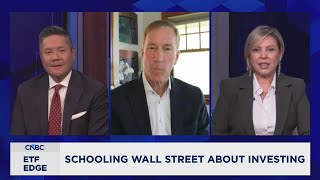
Okay, we're now back with Chamath Palihapatia for Virgin Galactic Investor Day from Mojave, California . Now Adam Bain has also joined us. He is the former Twitter COO and a Virgin Galactic board member and investor . Adam, it's nice to see you. Why is this? Scott, it's so nice to see you. You can invest in many things .
Why? Why is this? Great, back to CNBC and this is probably one of the best backgrounds you've ever seen on the Halftime Report. You're not going to argue with me. Look, as an investor , I think one of the things I always look for are iconic technology- based businesses . And there's nothing more iconic than Virgin and Richard Branson .
And there is no greater technology than taking people into space and bringing them back safely . So from my perspective , it was a smart decision because it was a very interesting company. And when we started looking at the company , the revenue potential here was very interesting . More than 600 people have already paid for their tickets.
Chamat and I are two of them. So this is truly a compelling company and an amazing offer. Let 's expand the conversation to some of the things we're seeing with values in Wally. And the obvious story to ask you today is the delay in the WeWork IPO. Chamath, when you first saw We Work and what has happened in the last few weeks , what was your opinion ?
Well, if you look back at the story of We Work , I think it's a story of three different things . The first is product market fit. I think there is an incredible product market fit for those who want a flexible workspace , that's undeniable. But then the problem becomes a little more ambiguous . The second part of the story is about the business model that tries to make money from that product market fit .
And it's largely vague and suspicious . Now people say that this is achievable at scale. That has not yet been determined, and profitability is still unclear when looking at its competitors . But you can probably overcome all of that . What you can't overcome is the third part of the story, which is a story of utter failed governance and high-level failures that border on fraud.
And that's really unfortunate, and I think we need to address this as an industry if we are to gain credibility in the public markets . Chamath, can you be sure that you are not investing in WeWork ? Well, if I were investing in such a business , I would want to see levels of control that would include fiduciary responsibility on behalf of the executive team, the board, and the investors .
In its absence , as a public market investor , I feel like I'm participating in a high- risk bet with insufficient returns . So from my perspective, I'm looking from the outside . Yes. I mean, Adam, I wonder if you agree . When you were at Twitter , you knew you didn't have the same level of governance scrutiny, but you worked at a young public company that had to face investor scrutiny.
So, can you give your opinion on this and tell us how you see the WeWork situation ? What did you learn from that? Okay, my main takeaway is that today's news suggests that market conditions are not ideal . Look, I think this is ultimately not a technology company . Yes, they have technology customers who come and use the services , but if you look at it that way, so is Lakroy Sparkling Water.
Neither of them are technology companies. So I think it's a real estate company . There's an interesting comparison to this, it's a profitable company that's been around for a while. It has a market cap of around $3.5 billion. That's IWC. When investors look back , I think they're paying for massive growth in WeWork , which is delivering growth, but they're spending money but not yet getting the returns.
Chamat, to some extent , says yes. I'm sorry. One thing I would say is yes. Another thing Chamath mentioned is very interesting . This is probably the company that both investors and customers have mixed opinions about . When you talk to WeWork customers , they really love the product . So as Jim said , they have product market fit .
From a customer perspective, public market investors have so far started to make their voices heard on issues like governance . This is an interesting idea. Jamath, I'm wondering if what we saw with WeWork is a sign that the market in the Valley is overvalued ; Is this how the market should actually work?
It is good that such scrutiny takes place before the company enters the public market; Since the market has already corrected this, I think public market investors probably won't be in a position to lose money this time . In fact, I think what happened was a very good thing . This has given us the opportunity to understand that technology investments in private companies are actually a popularity contest , because that's what happens at the end of the day when there are so many types of capital available .
Ultimately, founders can choose the people who give them what they want. It's true that what they usually don't want is sometimes harsh advice and sometimes harsh sanctions. In such an environment, only those who can remain popular in the eyes of founders will succeed as venture capitalists . With the amount of money flowing into the venture capital sector increasing four or fivefold over the past five or six years , it is only natural that governance has deteriorated.
So what we really have to ask ourselves is , what did we expect? Okay, this is what's going to happen no matter what. Now the question is, how can you fix it ? If you can't fix it , as you said, the public markets will have to make tough decisions and say, "Enough is enough."



Comments 0