저자: Financial Chaos 4M · 외국인
다듬은 글
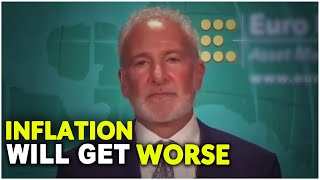
why are all prices going up why are wages going up and why are other prices going up and that's because of inflation who creates the inflation the government right the government runs budget deficits the Federal Reserve monetizes those deficits prints money so the government can spend it and now you have more money so the money loses value and prices go up that's what's causing wages to rise that's what's causing other prizes to rise it's inflation Chief Economist and CEO at Euro Pacific Capital Peter Schiff discusses the real reasons why inflation will get worse and what that means for the economy the dollar and gold he said we are going to be in a very severe recession than anything we've experienced in our lifetimes inflation is worse than the government data suggests this CPI uses a formula that understates the actual rise in prices here's more of what Peter had to say but the reason they came up with this concept of a wage price spiral is to blame workers for inflation or to claim that inflation is somehow the price we pay for Prosperity yes we have this great economy and you're getting a raise and so therefore you have to put up with inflation that's BS same thing with the cost price push push saying well inflation is caused by Rising costs no it's not and again costs are prices one person's cost is somebody else's price right there's there's no difference and you can't say prices are going up because costs are going up costs are prices and so prices don't go up because prices go up they go up because the money supply is expanded and who's doing that it's the government and even though the FED has raised rates you still have negative real rates and we're not encouraging people to save people are still borrowing as much as they can the savings rate is near the lows the credit card debt is near record highs so the fed's rate hikes have not really altered the spending and savings decisions which I think are key to bringing the inflation rate down so as long as people keep on spending I don't see any way we're going to get down to two percent the real inflation is the expansion of the money supply that's that's what inflation is a consequence of that is that prices go up now does the CPI fully capture the extent to which aggregate prices are going up I don't think so and I think that's deliberate I think the CPI was designed to give you a low reading because the politics of the number the government made it up it's like a scorecard on government policy and obviously the government wants to get a good grade and so the CPI was designed to make inflation lower just like the unemployment rate was designed to be low the GDP number was designed to be high that's just how they created the methodology but I think if you kind of double the official number that's probably close to Accurate you know I mean it's obviously not precise but I think you're a lot closer if you double whatever the CPI is so if the CPI is two it's probably four if the CPI is six which is what it is now it's probably 12.
they implemented a lot of changes over the years particularly I think in the early 1990s and they actually did that because they didn't want to cut Social Security but as you know Social Security benefits are tied to the CPI through these Cola adjustments and the idea was that if we can just make the CPI lower then we won't have to raise Social Security payments as much and so that's a way to cut Social Security is to pretend that we have lower inflation than we actually do now they didn't come out and say that they said that they thought the CPI was overstating inflation and so they fixed it so it would and overstate inflation but now it understates it I don't think it ever overstated it I think that was just a pretense so that they could you know rig it so that it would have a lower number which is what they wanted that was the goal of redoing the CPI but you know if you took the CPI that we used in the 1970s because people have done these numbers just take the 1970 CPI and and input the data that the government is using to calculate the current CPI and if you do the inflation that we had last year was worse than any year of the 1970s or 1980s so this is the worst it's ever been last year and you know it's not getting any better I think you know I think this Improvement is transitory we're going to see higher numbers you know probably by mid-year we've been creating inflation for over a decade all the years of quantitative easing put a lot of inflation into the pipeline and the FED is barely withdrawn that liquidity I think we're still seeing the impact of that and especially the inflation that it Unleashed during the covet pandemic so I still think we have a ways to go to catch up meanwhile government policy is still inflationary we have very expansionary fiscal policy the government is running enormous budget deficits that's highly inflationary I think when you have an inflationary environment which is the one we're in and if you look at inflation as a tax which if you really get down to it that's what it is it's a way the government pays for the deficits it doesn't want to raise our taxes so it prints money and it raises our prices so the higher prices are basically the substitute for another form of Taxation so if you want to avoid the inflation tax you avoid what's being taxed which is U.S dollars So you want to get out of dollars get out of dollar denominated bonds and you know my advice is a portfolio of foreign Equity stocks real businesses companies that own plant equipment resources that are hedge against inflation you want to own businesses that can pass on their increased costs to the customer without losing a lot of sales that's the problem a lot of businesses don't have price and power and so when they have to raise their prices because of inflation their customers stop buying their stuff you know but I want to own companies that sell goods and services that people have to buy and they'll give up the things they don't need to buy the stuff they do need so I want to own what they need sell it to them and make some money you also want to own Commodities resources whether it's Metals oil and gas Agriculture and the companies involved in those sectors are going to do well you want to be an Emerging Markets because there's going to be an exodus I think from the U.S and some of the developed markets into the Emerging Market currencies emerging market economies they should benefit from weakness in the U.S dollar of course you know you want to own precious metals you want to own gold gold is a great asset gold and silver they're monetary Metals when you have a lot of inflation you have negative real interest rates which is what we do people are looking for an alternative store of value a hedge against inflation and you'll find that in gold and silver and of course you can also invest in companies that mine gold and silver they own a lot of deposits that are in the ground they own those resources and they're able to extract those Resources by mining them and they sell the what they what they pull out of the ground and they make money the higher the price of gold and silver the more money they make but the best thing to do to fight inflation would be not to raise the debt ceiling just leave it in place and pay our bills cut spending but nobody in Washington actually has a stomach for paying the bills that's why they want to avoid that by raising the debt ceiling but raising the debt ceiling will permit more debt more spending and more inflation and that's where we're headed there is no real wage price spiral there never was it was just kind of a concept invented by keynesians I don't know if it started in the 1970s or it was earlier than that but they're saying that the reason that prices go up is because wages go up and then wages go up and that makes prices go up and it's kind of like a spiral but you know if you if you think about it wages are a price wages are the price of Labor right it's how much I have to pay somebody to get them to work for me right that's the price I'm paying to hire somebody so wages are prices right I'm wondering how the markets are going to react and so far they've kind of been up and down and maybe people don't really know how to react but from my perspective it's bad news for anybody who was really hoping that the you know the FED has won the inflation fight you know Powell has been talking about disinflation and from that you know perspective we have had numbers that have improved sequentially and on a year-over-year basis but that was bound to happen you know when you had a rate as high as 9.1 or wherever we peaked out so far but if you look at the rate of improvement this month you know the year over year number I think was 6.4 that was down from 6.5 the prior month so that's not much of an improvement in fact maybe this is the trough for improvements maybe in February we're going to see an uptick in the year over year inflation numbers and the monthly number was still a pretty big number I think it was up what 0.5 for January that was a little bit higher than they thought they upwardly revised the prior month which was I think reported as down point one now it's up 0.1 so inflation is starting to turn back up and I think we're going to start to see foreign



Comments 0