
저자: MohamedEl-Erian · 외국인
요약 보기
결론: 인플레이션은 예상보다 높게 이어질 가능성이 크며, 연준이 이를 즉각 잡을 것이라 기대하기 어렵다. 주제 1: IPO·사모시장 과열과 유동성 - IPO, 사모펀드, 로빈후드 열기는 대차대조표 전반 자산 팽창이라는 더 큰 흐름의 일부라고 봄 - 자산·부채, 1·2차 시장, 신차·중고차 등 모든 것의 가격이 오르는 중이라고 진단 - 시중에 현금이 과잉되어 돈의 회전 속도(velocity)가 증가하고 있다고 설명 - 원인은 연준의 정책과 저금리·과잉 유동성이라고 지목 주제 2: 연준 정책 전망 - 이번 주 연준 발표를 주시하지만 큰 충격(fireworks)은 기대하지 않음 - 연준이 발표를 조심스럽게 해 급격한 변화가 없을 것으로 예상 - 연준은 예측 기반이 아닌 결과 기반으로 바뀌어, 인플레가 한동안 지속돼야 행동할 가능성이 큼 - 따라서 인플레이션을 잡아줄 주체로 연준은 기대하기 어렵다고 봄 주제 3: 인플레이션의 성격 - 현재 인플레는 과거 경험이 없는 세대가 오해하기 쉬운 현상이라고 진단 - 초기엔 여행, 이후 신차, 중고차, 렌터카로 파급되는 연쇄 효과가 있어 일시적이라 보기 어렵다고 설명 - 여러 부문이 상호 연결되어 있어 '일시적·고립된 현상'이라는 시각은 틀렸다고 주장 주제 4: 임금과 실질임금 논쟁 - 셰로드 브라운 상원의원의 '물가 상승=임금 상승이라 좋다'는 주장에 대해 논의 - 실질임금 저항(real wage resistance) 개념을 설명하며, 노동자가 물가 상승을 방어할 힘이 있어야 실질임금이 오른다고 봄 - 현재 노동자는 그 힘이 약하며, 회복되더라도 매우 낮은 기저에서 출발한다고 평가 주제 5: 기업과 물가 전망 - 기업 경영진과의 대화에서 강한 수요가 지속되어 가격이 높게 유지될 것이라는 확신이 많다고 전함 - 핵심 질문은 인플레가 연준 예상보다 높을지가 아니라, 시스템이 이에 적응할 만큼 유연한지 여부라고 정리 리스크: 연준의 지연 대응, 임금-물가 악순환, 수요 지속 시 가격 고착화 ※ 이 영상(2021년 7월, CNBC)은 자산 가격 방향에 대한 구체적 예측·목표가보다 거시 인플레 진단이 중심이며, 개별 종목·지수 방향 발언은 확인되지 않음.
다듬은 글
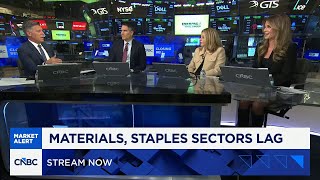
Dr. Mohamed, we are joined by Mohamed El-Erian, advisor to Allianz and Gramercy, and president of Queen's College, Cambridge. What do you think, Mohamed, determines the interest in IPOs? Cheap money helps. How will this end? What do you think about Robinhood's success? And if the Fed starts tapering, or something that you think they should do, will that at least slow down all of this interest?
Good morning, Joe. Thank you for inviting me. Listen, Joe, what we're seeing in the IPO and private equity market, what we're seeing with Robinhood, is part of a bigger story: everything on balance sheets is growing. Whether it's assets or liabilities, secondary or primary markets, new cars or used ones—everything is getting more expensive.
The velocity of money is increasing because there is too much cash in the system . This is a consequence of the Fed's actions, if we link it to your second question. So people will be watching very closely what the Fed says this week. I'm not expecting fireworks. I think they will try to announce their actions so well that nothing will happen suddenly.
This is all a consequence not only of cheap money, but also of its excess. Yes. We have n't had a problem with inflation for so long, Mohamed, that I don't know if people understand that. And I want to talk to you about this because you're worried that it won't be temporary, and politicians seem to have skipped that chapter in college, the chapter on inflation or the economy.
Sherrod Brown, a senator from Ohio, says the only reason Republicans talk about inflation is because they don't want workers to earn more. And he's actually saying that all these rising costs are good because they mean rising wages. Have you ever seen wages keep up with the cost of living? Can this be a positive, Mohamed?
Of course, this can be a positive thing. This is called real wage resistance. Unless you lived in the 70s and 80s, you've probably never heard this term. But if workers have the ability to protect themselves from rising prices, they can earn higher real wages. Today they do not have that opportunity.
They are bringing it back, but from a very low base. Look, Joe, I think there 's a fundamental misunderstanding of inflation today , because, as you say , most people have n't lived in those conditions for a long time . And, of course, most traders on Wall Street were out of work during its surges. So, this is a relatively new phenomenon and it is misunderstood.
You know, I always laugh when people say, “Oh, this is an isolated incident. " This is temporary." Remember, it was all about travel in the beginning . Then it was time for new cars. Then new cars became used. And then used cars became rental cars. These inflationary chains had their own logic. They take time, and most people, unfortunately, haven't seen them.
So they think everything is isolated. In fact, this is not true. It's all interconnected. So who will come and save us from what could be a period of renewed inflationary fears that we haven't seen in 30 or 40 years? Will it be politicians , or the Fed, or can we count on no one at all at this point?
So, it's unlikely to be the Fed. The Fed has adopted a new concept that is focused on the past. They are no longer based on predictions, they are result-oriented. So they want inflation to last a while before they do anything. So, it won't be the Fed. Companies may not be able to maintain their prices.
But the executives I talk to—and I encourage you to ask them this question—are all quite confident that with strong demand, prices will remain high. So, I think we are in for higher inflation. The main question for me is not whether inflation will be higher than the Fed expects. I think that will almost certainly be the case .
The question is whether the system is flexible enough to adapt to this . And this is what we have to find out. Shepard Smith was with you . Thank you for watching CNBC on YouTube.



Comments 0