원문 보기
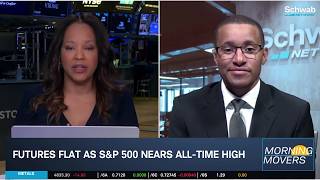
Let's bring in Kevin Green, senior markets correspondent, right away to help set up the action today. All right, KG, before we talk about the latest between the US and Iran, let's talk about where things sit now. It feels like things are off to the races. Yesterday, we talked about the ball being in the bull's court.
It certainly looked that way and ended that way. We're back near all-time highs. How would you characterize the state of things in the markets now? Well, obviously we have taken out pretty much all of the war risk premium in the equity market because of this optimism with the war in Iran and that we may see maybe a de-escalation here.
And you are also seeing maybe some rotation into some of the softer sectors like software. Yesterday, they performed relatively well. Microsoft had a strong bid as well as others catching a bid yesterday. And then the semiconductor space, they are trading at all-time highs. So, it's really hard to knock this market back down when one of the strongest sectors as far as from a fundamental standpoint continues to make higher highs as well as higher lows.
So, this is a definitely more than just a retracement bounce. We are obviously going to be testing this 7,000 level or getting close to the 7,000 level. That's where we pretty much consolidated and broke down back in late January, early February. Let's see if we're able to actually break above that level moving forward here.
And it's all going to really kind of depend on the geopolitical risk. We also have earnings too. And earnings is actually going to be a major driver for us, especially for the mega cap names. And so, I think right now the market's really trying to play the fact that we may see this resolution coming in the next couple of weeks.
And if that's going to be the case, it takes some risk off the table. We still have the economic data risk that we have to be mindful of as well, potentially some global economic slowing. And we do also have some fears within the you know, the AI space when you're looking at private credit and and some of these names.
But overall, it's actually a really good bounce. You probably would like to see a broaden out here a little bit. Yesterday was a little bit more concentrated. But you had the right sectors performing and that's all that really matters at this point. Okay, and we've got it looks like the truce will be extended between the US and Iran based on some of the reports.
What are you seeing on that front? Well, I'm going to I'm not going to say it looks like it's going to be. There's a There's one report that several members from both sides are trying to work on extending the ceasefire, but there's still work to be done here. Some of the key sticking points continues to be the Iranian nuclear program as well as the Strait of Hormuz freedom of passage and then the wartime damage compensation or reparations to Iran for the damages, which is once again going to be a very big hurdle for us to be able to climb here.
But there's optimism in this market and both sides are attempting or make it appear that they are trying to come to some form of a resolution here, which is once again why the market's probably getting ahead of this. Now, if you're looking at crude oil, it's slightly moving to the upside. Several factors, we are getting maybe Iran talking about escalating in the Strait of Hormuz if the blockade by the US naval forces continues.
That was a threat that was made overnight. And then you also have the situation where Russia is actually going to be pausing their helium exports here in the in basically starting right now. And that's also putting a little bit of pressure on some of these shipping you know, exposed commodities like crude oil and and others that might be impacted here if this escalation does continue.
So, a lot still going on. I think the market's pricing in a very rosy picture. And Diane, you know, for for me, I'm still a little bit more skeptical about this. Some of these sticking points are really big hurdles that have not been able to get resolved over the last 40 years. Let's see if we're able to resolve them over the next couple of weeks.
Now, you make a great point also about the blockade because I was talking to a maritime historian. And the point he made is that it is considered an act of war, but right now it is blockade versus blockade. So, we'll see how that gets resolved in the context of the potential for an extension of a truce.
But let's talk about the earnings. Obviously, Wall Street has a keen eye on the banking sector. We've got results from Bank of America. Their shares a little bit higher in the premarket. Walk us through some of your takeaways here. Yeah, we are seeing the shares a slightly higher. They did beat both in the top and the bottom line.
Revenue came in at $30.43 billion. She was looking for around $30 billion. And the adjusted earnings per share came in at $1.11. She was looking for $1.01. So, beating both in the top and bottom line, highest EPS in nearly 20 years for Bank of America. This kind of reflects where they have come from and where they are at actually right now.
And what really brought it over the top when you're looking at the trading when you're looking at the overall revenue was equity trading revenue. It came in at $2.83 billion, up 30% on a year-over-year basis. It's the best trading quarter in 15 years. And they did beat the guidance or the estimates, my apologies, by approximately $1 billion.
So, without that without that extreme beat, it probably actually would have came up a little bit short here. But obviously, they have a very diversified business. If you're looking at IB or investment banking, that is actually still relatively strong, 21% growth on a year-over-year basis. And they did actually see an improvement when it came to their provision for credit losses here.
Net charge-off rates actually improved by six basis points. They're looking at an overall net net of 0.48% for net charge-offs, which is actually relatively low compared to their peers. Now, Bank of America does actually have some private credit exposure around $20 billion in the credit portfolio that's being financed at this point in time.
And you are looking at around 55 billion loans total in the global markets that are secured by the corporate credit debt. So, at the end of the day, they do have a little bit more exposure compared to their overall portfolio. But it seems like they're really confident around the consumer and not really mentioning any of the potential credit risk that they have within their books.
Okay, let's talk ASML. Gives us a look across supply and demand, what that looks like for chips. Take us through some of your takeaways from its quarterly results. Yeah, so they beat both in the top and bottom line. And they actually increased their guidance moving forward here. They still see CapEx spend from a lot of the hyperscalers being a tailwind for their business.
And they also did improve their their delivery of certain goods that they provide within the industry. Obviously, this is an equipment maker for these fabrication companies. And so, that is once again being reflected within their earnings announcement. And they're very confident that even with the shortage in some of the supply chain that they are seeing right now, they're going to be able to offset that shortage or that price increase to their consumers.
And it seems like it has not been an issue for them. So, this is a direct read-through for some companies like Micron, Taiwan Semiconductor, even Nvidia for that matter. And we are still seeing the picks and shovels play still benefiting from artificial intelligence. And in fact, if we start seeing the CPU narrative start to take hold a little bit more, which it has over the last month and a half, 2 months, that could be another area where these fabs start to focus on a little bit more.
And that could be a tailwind for ASML here in the future. So, they do have a China exposure. It's actually been reduced down to around 20%. They They believe that 20% of their overall revenue is still going to come from China. So, it doesn't seem like they're re-rating that lower moving forward unless obviously regulations do change between US, China as well as some other countries that they have exposure to.
So, overall a really decent quarter. You're seeing the shares a little bit volatile in premarket trading here. But a really good report for ASML. And it should translate to some of these other proxies within the semiconductor space. Okay, so let's continue with the semiconductor space. Seeing reports of Broadcom and Meta with it looks like it's an extension of a deal they have to produce some more generations of custom chips.
Walk us through the details here. So, Meta Platforms committed initially 1 gigawatts of deployment of the custom AI chips that are provided by Broadcom. It looks like they're going to extend that deal in in partnership through 2029 at this point in time here to cover custom AI chip designs, advanced packaging as well as some other items as well looking at networking infrastructure, things of that nature.
So, Meta continues to really reflect and show that their Meta training and inference accelerator program or MTIA is really alive and well here. We have actually seen the company you know, cut staff in certain areas of their business to really redeploy a lot of that capital back into the artificial intelligence space.
And this is one of the results of that. So, we continue to see these deals being made over pretty much day by day. And Broadcom is a custom ASIC type of chip provider, more focused on the TPU business rather than GPUs. And it seems like Meta wants to have a very diversified portfolio when it comes to their AI stack, not only focusing on the GPUs, but the TPUs are custom, but they actually could utilize a lot less energy and are a little bit more efficient when it comes to processing and inferencing, which is why you are kind of seeing this uh resurgence in in TPU demand.
So, this is actually really good news for Broadcom, which kind of got hit late last week a little bit from some other news that we may be seeing companies going elsewhere like to Marvell in order to seek custom ASIC chips. Okay, and then let's talk about your the levels that you're looking for today on the S&P 500.
We're pretty range-bound in the premarket here. But walk us through what you're seeing to the upside and potentially for the downside and and the triggers for today. Yeah, so if you're looking at the the the options flow for this morning, obviously the upside is going to be 7,000 even. That's where we're seeing the majority of the calls at this point in time.
And I would actually expect that the gamma exposure there is going to probably rapidly increase as the market does open up here just because of that significance and the previous resistance level that we saw back in you know, January and even December of last year. To the downside, 6920. We're implying around a 1.13% move to the upside or downside.
We actually have a pretty decent streak going on right now for the bulls. I would not be surprised if we kind of hit an area of resistance, pull back, maybe retest some of the gaps that we've developed over last couple of trading sessions, and then try to move higher here. And I'm still a believer that geopolitical risk is still going to be something in the background that I don't think you would you know traders should ignore.
So just keep your eye out on that. We are still deploying a fair amount of troops to the Middle East, which is a little bit counter trend with the news headlines are telling us on a day-by-day basis. Yeah, no, you make a great point because there as I mentioned earlier, there was an interview I had today who or yesterday rather who he made that point that look, there is still an active war that is occurring by definition of the rules of war. All right, thank you KG. That is Kevin Green, our senior markets correspondent.




댓글 0