저자: 미상 · 외국인
요약 보기
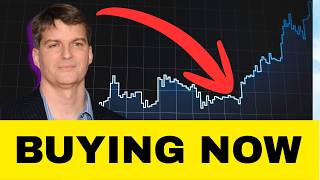
마이클 버리가 QXO 우선주를 매수했다는 소식 후 주가가 7% 이상 상승했다. QXO는 2월 52주 고점 약 27달러에서 현재 약 12달러로 반토막 났다. 발표자는 주택시장 침체가 QXO에게는 저가 인수 기회라고 본다. Beacon(지붕자재), Kodiak(목재), TopBuild(단열재) 인수로 매출 약 200억 달러, 2030년 목표 500억 달러를 제시한다. 장기 보유 또는 주택시장 회복 후 매수 두 가지 접근을 제시한다.
다듬은 글
Michael Beugry, the investor who became famous thanks to the movie The Downside Game, just told his Substack readers that he had purchased shares of QXO, after which the stock price immediately rose by more than 7%. He didn't just buy common stock, he bought preferred stock—a type of stock that pays dividends while you wait for profits.
His idea is actually quite simple. He believes that the share price has fallen significantly and sees an opportunity for a profitable investment. That's what I want to focus on today. Because QXO stock really fell. In fact, they fell very significantly. Back in February, QXO shares hit their 52-week high—around $27 a share.
Today they are trading closer to $12. So, in about 7 months, the share price has almost halved. Most people, looking at a graph like this, come to one of two conclusions. Either the company is clearly in trouble, or the sector in which it operates is so dead that everything related to it is also in crisis.
And look, the housing market that QXO operates in is really in bad shape. I'm not going to deny that here. But here's the thing. A bad housing market is not a problem for this company. In fact, this is a huge opportunity. But more on that later. In today's video, I'll talk about what QXO does, some major acquisitions over the last year or two, and then offer two options for approaching these stocks from an investor's perspective.
And one of them doesn't even involve buying the shares themselves. So, let's start with the basics. A little history, because I have been following QXO shares for a long time. In 2023, before the company was called QXO, it was a small software firm called Silver Sun, and I named it the best “ penny stock” of 2024 .
The only reason I did it was because Brad Jacobs came along, invested a billion dollars in the company, and started turning it into the business it is today. If you don't know who Brad Jacobs is, he's the man behind Waste Management, United Rentals, XPO Logistics, and other multi-billion dollar companies.
Throughout his career, Brad Jacobs finds these boring, fragmented industries that no one cares about, like tool rental, garbage collection, or transportation logistics . He comes in and buys up a bunch of companies in that sector and then merges them into a much larger company, essentially using a consolidation strategy.
And I find it amazing that most startups or growth firms stay private for a very long time, only going public when the shares have reached a huge scale and the insiders are already making good money. But Brad Jacobs actually does the opposite. QXO is just at the beginning of its growth journey, and retail investors like me, you, or anyone else can join.
I have had experience with compounding investments with Brad Jacobs before. The house I'm sitting in right now recording this video was more or less paid for with XPO Logistics stock. And it was the same project that Brad Jacobs had before he started QXO. So, to tell you the truth, I will follow Brad Jacobs for the rest of his career, no matter what he does.
So, let's start with what QXO actually does. They are engaged in the distribution of building materials. A distributor, as I'm sure most of you know, is essentially an intermediary. Companies that produce building materials , such as roof tiles or insulation, do not sell them directly to contractors who build homes.
Between them stands the distributor. He purchases goods in bulk, keeps them in warehouses, and delivers them to the contractor when he needs them. Think of QXO as a kind of Costco for contractors. It's certainly not a glamorous business, but it's a business where scale really matters, because the bigger you are, the better price you get from manufacturers.
And the more delivery trucks and points of sale you have, the more often contractors will simply call you when they have a large order. This industry is full of small, family-owned sawmills and roofing supply companies. In fact, there are thousands of them. This is exactly what Brad Jacobs likes. Now let's talk about the businesses that QXO has already acquired and added to the company, as there are three big companies worth mentioning .
The first is Beacon, the deal for which closed in April 2025 . This is a distributor of roofing materials. It's actually one of the largest distributors in the country, and it was a deal worth about $11 billion. And the roofing business is a profitable business, since, obviously, materials often need to be replaced.
So, a storm comes, the roof gets old, or someone sells the house, and the insurance company says, "We won't insure it until there's a new roof." Don't even ask how I know that. And not only that, it is obvious that every house needs a roof. The second business they bought is called Kodiak Building Partners, the deal closed, I think, in April of this year, for about $2.5 billion .
Kodiak operates in an industry called LBM, or lumber and building materials . So, to put it simply , it's a lumber warehouse. That's all. This is wood, rafters, windows, doors for developers, and everything else in that vein. Then there was a big deal. It's called TopBuild, and the deal closed in July for about $17 million.
One of the largest distributors of insulation materials in North America. It's interesting that they also do installation, because they don't just deliver insulation. They have their own crews that install insulation directly in the buildings. This is a pretty interesting business. Last year, TopBuild had sales of about $6.2 billion with EBITDA of just over a billion dollars, which is operating profit before interest and taxes, which is significant for such a business.
But it is profitable. Not only that, TopBuild also has a data center construction business. This helps businesses to some extent in the face of a weak residential real estate market. So, to sum up, QXO comes out with a revenue figure of about $20 billion in 12 months. The goal that Brad Jacobs set when creating QXO was $50 billion in revenue by 2030.
So, he is already almost halfway to his goal. This brings me to how you should approach stocks from an investment perspective. You can buy them like I did, hold them and just wait. You're not buying this for next quarter, you actually don't care about next quarter. You don't even buy it for next year.
I don't care. You buy them because Brad Jacobs has a 5-10 year plan to create the largest building materials distribution company in North America. Honestly, that's how I own stocks . Whenever the price drops a little, particularly last week, I buy more and forget about them. And look, that's exactly what I did with XPO stock over 15 years ago.
I bought stocks after one of the worst recessions in American history, the Great Recession, when transportation and logistics companies were in deep decline. Everyone told me not to buy these stocks. I bought XPO Logistics . I waited about 5 years and boom, the stock skyrocketed in price, I made about a quarter of a million dollars and invested it in the house I'm sitting in now.
So, that's one way to look at it. Now there is a second camp. I really think this is a completely reasonable approach to these stocks. Such an investor says: " Why should I hold these stocks for two or three years if I know that the housing situation will be catastrophic?" So the second way to approach this is to simply add QXO to your watchlist and maybe check it every 3-4 months.
You wait for mortgage rates to start coming down a bit. You're waiting for existing home sales here in North America to maybe start to pick up. You wait for Home Depot and Lowe's to stop talking about how difficult the housing market is at each of their conferences, which I review quarterly. And you just wait.
Look, the stock market isn't stupid. Investors are not stupid. They will see the housing market begin to change months, if not a year in advance. But you're effectively skipping the wait for maybe two or three years, or even longer, by holding onto something like that that's likely just going to be sideways for a while.
But here's the part I like the most. That's why I like this company so much now. In fact, I'm more excited about QXO today than I was in 2023. Think about the companies QXO wants to buy right now. You have a family-owned roofing supply company in Ohio or a lumberyard in Texas. They have been dealing with a housing market slowdown for 3 years now .
Volumes have fallen, margins have been absolutely crushed by inflation , gasoline costs, and tariffs. Their customers are also paying much slower, and the business owner is probably 65 years old and wonders how the hell he's still doing this. And guess who's going to buy his business? Probably QXO. So over the next few years, Brad Jacobs will be buying these businesses that are in complete decline, with low profits and sales, from sellers who don't really have many other buyers.
This is an ideal situation if you are implementing an acquisition strategy like QXO. You don't want to be a QXO doing this in a hot housing market where every sawmill owner thinks his business is worth 15 times the profit, and there are three other buyers for the property. You want to do it right now, and I think Michael Berry sees that too .
He even said, when buying preferred stock, that the dividends he receives provide some protection against a decline in value. This is a person who tells you that they are willing to wait out this period. So, summing up. The worst time to run a building materials business is the best time to buy one, and that's exactly what Brad Jacobs is doing right now .
So, to summarize: QXO is Brad Jacobs, who brings together building materials distributors like roofing from Beacon, lumber from Kodiak, and insulation from TopBuild. If you believe he will do to QXO what he did to Waste Management, United Rentals, XPO Logistics and others, then approach it the same way.
You buy, hold, wait, and simply expect to make a profit years down the line. This is what I do. If you don't want to wait during a sluggish housing market, approach number two— just wait until interest rates and home sales start to recover, perhaps in a year or two. Yes, you may have to pay a slightly higher price for QXO, but you will significantly reduce your risk.
And the reason I think this is an interesting opportunity is because a bad housing market is exactly the time when a company like this should be buying other troubled companies in that industry. This is because QXO will emerge from this situation with fewer competitors and significantly greater scale in the industry.
That was all in today's video . It was about QXO. See you later this week. Good luck with your investments.


Comments 0