
저자: TomLee · 외국인
요약 보기
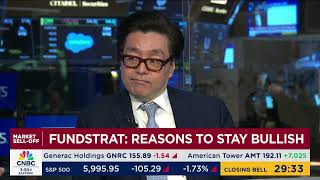
결론: 경기침체 우려에도 실적 개선과 연준의 금리 고점 제한 기대로 강세장 서사가 우세하며, 연말 S&P500 4750 도달을 전망한다. 시장 흐름: 주간으로 하락 하루가 있었지만 주간 상승 마감, 올해 S&P500 약 8% 상승, 2분기 연속 상승은 약세장에서 나타난 적 없는 패턴이라고 강조. 실적: 2년 누적 실적이 2년 전보다 여전히 높고, 은행 실적도 양호해 '실적 침체' 우려는 과도하다고 봄. 연준 스태프 전망: 연준 스태프의 경기침체 가능성 언급은 과도하게 반응된 것이며, 투표권자가 아니고 분석 오류 가능성도 있다고 지적. 오히려 침체 우려가 연준의 금리 상단을 낮춰 시장에 긍정적이라고 봄. 목표가: 연말 S&P500 4750 제시(현재 대비 약 15% 상승). 2022년 1월 고점 당시 에너지·방어주 등 다수 섹터가 20% 낮았으므로 과거 고점 회복에 모든 섹터가 필요하지 않다고 주장. 포워드 PER 14.8배로 부담 없다고 평가. 인플레이션: 주거비 제외 근원 물가가 둔화되고, 펜실베이니아 주립대의 실시간 주거·임대 지표 기반 Core CPI 조정치는 전월비 마이너스, 전년비 0%로 연준 목표 달성 수준이라고 주장. 연준이 물가 2% 미달 전에도 금리를 내릴 수 있다는 낙관적 시나리오 제시. 리스크: 미시간 대학 소비자 기대인플레이션 급등은 과거 대부분 이상치였고 후속 응답에서 하락 가능성이 있다고 봄. 월말 국채금리 상승과 월러·보스틱의 매파 발언은 언급되었으나 큰 우려로 보지 않음. 경기 둔화와 고용·물가 안정의 동시 달성은 연준이 과도한 긴축 위험을 피하면 가능하다는 입장. 출연자 전망: 강세 낙관론 유지, 약세 서사는 현 시점 지배적이지만 실제로는 맞지 않는다고 판단.
다듬은 글
great to have you on the show it was a down day for the major averages but we still managed to eke out gains here I want to get your thoughts on the levels especially given the fact that so many folks are bearish but you are not uh yes I mean it's uh I would say this is a week where the bullish narrative succeeded because we had some decent inflation prints uh you know we've had some Market sell-off in the middle of the week because of fed commentary and the fomc minutes about a recession potentially but the stock market actually ended up higher for the week and I think it just shows that as much as sort of a logic and intuition tell people that we're going to have a recession um number one earnings have actually delivered better I mean we had some good bank earnings today in fact uh if you look at two-year stacked earnings are still up over where they were two years ago so part of this what people call it earnings recessions just because earnings were so good last year and uh the Market's up eight percent year to date so you know now we've had two consecutive quarters of gains it's never happened in a bear Market since 1950 so I know it doesn't feel like it but I think it's really a bullish narrative that's driving markets right now you did have fed minutes this week too and it was forecasted uh in those that the FED is expecting this banking crisis to potentially leave to lead to a mild recession does that give you any pause in terms of how you're thinking about the rest of the year uh I mean it it doesn't it doesn't I think you know investors may have overreacted to the FED staffers saying there's a recession number one uh you know that's the staffers and that's not necessarily a revelation given how much the you know the consensus view has been that we're entering a recession and just keep in mind these are the FED staffers not the voting members and you know last year there there was a lot of talk to the FED staffers uh could have had some sort of potential clerical errors because of have our analytics hacks so I wouldn't say that these are the word of God coming and more importantly I think it's appropriate for the FED to be cautious uh and to keep in mind that there's a recession because at the end of the day that's going to affect the the way they actually uh affect monetary policy so I mean I hate to say it but it's not entirely bad news this would put a ceiling on where rates end up peaking and that's actually what's important to markets I love having you on a day and a week like this Tom I believe your s p Target for end of year is 47.50 which is up about 15 percent from here and if I understand your argument correctly you're saying that because so many people expect that stocks are going to drop and that we're going to have at least a mild recession that's armor against it happening uh yeah I mean at the end of the day you know a bear market ends when the market doesn't go down on bad news I mean we've had a string of bad news for the last six months and the stock market is is almost 20 percent higher and to get to something like 4 700 by year end which is sort of knocking on the doors of all-time highs keep in mind that in January 2022 when we're at all-time highs a lot of sectors including energy and some of the defensives were 20 lower so to get to the old old highs a lot of the cyclicals don't have to be at all-time highs in fact X Fang the Market's still at 14.8 times forward earnings I mean that's not demanding when the 10-year has a three handle on it so I I think that again A lot has to go right but I'd say that the bearish narrative that people are sort of using as I think is really the prevalent case yeah isn't playing out because the market again has posted two consecutive quarters of gains and it's up eight percent year-to-date so so riddle me this though Tom because here's what I I can't figure out about where you're leading Us in this argument um things the FED is going to pull back if uh credit availability tightens if we're getting this really slowing economy scenario that eventually would have to pull a play out through earnings how does that not happen and yet inflation remains under control employment stays High and the FED doesn't have to start hiking rates again how do you get all of those things happening at once it seems kind of impossible that's right John I hear what you're saying I think what it comes down to is is the Fed gonna tolerate Financial conditions easing and they're going to allow Financial conditions to ease if they think that the risks are shifting from as you know today a lot of fed Governors will say oh well the risks of over tightening are low relative to not doing enough I think that the shift in the conversation is now increasingly the risks of doing too much are equal are now greater than doing too little which means the FED could tolerate inflation not getting down to two percent if they think that there's enough progress being made that's actually a half full argument and if you look at the PPI and CPI that's the message that's coming out inflation excluding shelter okay and there's vect uh the Penn State researchers have this thing called the AC Acy index where they recalculate core CPI using real-time measures of Housing and rent it's actually negative month over month and it's zero percent year-over-year So based on like real time not statistically lag CPI the FED has achieved its Target so I think the key is in in that bullish view is that inflation's actually going to undershoot faster and we're seeing a lot of progress and that's why that funds are coming down and then the markets can rally yeah I mean we did see bond yields treasury yields pop today though and we did get that Michigan sentiment survey for April that yes show showed a rise in consumer sentiment but also a sharp increase in inflation expectations and we did get some hawkish commentary from the likes of uh Waller and Bostic too though yes uh that's right I mean the Michigan survey is important because it's so widely used and it's been around since 1978 but our data science team put together some analysis whenever you've seen a one month change of that one-year inflation by more than 100 basis points that's happened six times for the six times it was sort of an anomalous pop because it was either reversing something that declined or it's going to quickly reverse and the only two times it was sort of signal was 2021 and 2020.
so outside of this sort of inflation period I'd say that that survey surge might be anomalous and we might see because it's a mid-month you know there's a there's another 400 responses by in the next two weeks it may come down sharply after that okay Tom Lee thanks for kicking off the hour with us thank you right now let's get into bank




댓글 0