저자: EdYardeni · 외국인
요약 보기
S&P500 1분기 실적이 컨센서스(1~2%)를 크게 상회한 6~8% 성장으로 발표되어 강세장 정당화. 애널리스트 이익 추정치도 상향 중. 연말 S&P500 목표 5400, 2025년말 6000, 2026년말 6500 제시. 기술 생산성 향상으로 이익률이 향후 수년간 13~14%까지 상승 가능. 1920년대 대공황 유사 시나리오 위험은 관세·지정학 리스크(무역전쟁)에 달려 있다고 언급하며 기본 시나리오는 2020년대형 호황.
다듬은 글
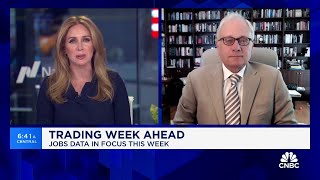
let's talk markets right now as we kick off a new trading month and get ready for the jobs report later this week Ed yardeni is the president of yardeni research and Ed good morning to you morning let's talk a little bit about what we see post earning season I think you point out that 98% of the S&P 500 have reported that leaves only 10 companies left pretty good time to take assessment of what happened and what we should expect for the rest of this year well all in all I'd say that the results were better than expected did coming into the earning season the analysts were looking at something like a 1 to 2% increase in uh earnings s&p500 earnings on a year-over-year basis and it came in more like six to s% there's still a few more companies to report but at clearly a much better result and we definitely are seeing that in analyst estimates of earnings for uh this year next year in the following year they've been raising their numbers so all in all uh this certainly justifies the bull market yeah you've got yearend targets of 5400 for the S&P 500 by the end of this year uh 6,000 by the end of next year and I think it's 6500 by the end of 2026 that um is part of your Roaring 20s analysis we're not talking 1920s we're talking the 2020s this time so you still see a long way to go with this bull market I do I think it's actually fairly early on it's some people are talking about it being midcycle at bull market or or or getting near the end of the story uh but I don't think that's the case I think we're going to continue to see uh surprisingly strong productivity we're not seeing that obviously in the first quarter numbers but last year we had very strong productivity and I think that's going to continue into this year and Beyond uh so yes I I think there are similarities between the 2020s and the 19 and the 1920s and that's a technology Le productivity that increased standards of living which I think we're seeing now and that profit margins as a result are going to continue to climb too correct for many years uh prior to the maybe past 10 Years everybody thought that the profit margin was just a very cyclical variable just went sideways but the trend's actually been to the upside and uh we're thinking that we could be seeing something like a 13 to 14% profit margin for the S&P 500 in the next couple years I mean that's pretty amazing for the short maybe even the medium term but we know how the 19 20s ended you see a a similar sort of uh crash coming and and if so what what would cause it no I I I I mean at this point it's it's hard to see that that far ahead um but uh if we use that analogy the problem that we had in uh in the 1920s the reason it ended so badly is because uh Congress and and the president at that time Hoover signed the smooth Holly tariff in June of 1930 if you look at a chart of the Dow Jones Industrials average you'll see that yeah the great crash started in October of 1929 but then in early 1930 we actually reversed that and regained about half of what we lost so it was no big deal until the June thir 1930 passed a smooth Holly and that caused the Great crash and I think it was a big contributor to the depression other factors were important too but that one was a big one well then it's a good thing nobody is talking about tariffs these days well that's that you're absolutely right that's the risk of course is the the risks are largely geopolitical in nature in addition to the wars and uh between Russia and Ukraine in the Middle East uh we're certainly seeing the potential for a trade war and so that is something to be aware of um look um my base case is the is the that there will be the 2020s but um I'm not going to tell you that it couldn't slip into something more like uh a 1930s environment as we saw at the beginning because of trade T because of tariffs



Comments 0