
원문 보기
Hello, Tom. I feel like yesterday we realized once again how dependent we are on the AI trade . You know, a headline appears, the market reacts, draws its own conclusions, and then we are forced to figure out what's what after the fact : was it empty noise around OpenAI's earnings, or something more serious.
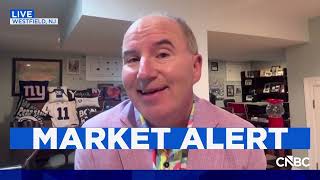
But the market is so tuned into this story that all it takes is one simple question, even for a second, and you see what the implications are. Yes, Scott. I think yesterday and today are examples of why this market is like a compressed spring. On the negative side, you know, the biggest pain is oil.
We received good news about this today. And, of course, interest rates. And there is widespread pessimism. I have been meeting with investors on my trips since September 28th, and they are very skeptical about this AI boom, which many view as a “ bubble.” But you're right , on the other hand, if we see failures, high funding costs, or canceled IPOs in AI, it will trigger further risk aversion.
I am among those who believe that third- quarter earnings will restore confidence in AI. And I also think that the midterm elections will be a kind of clearing event, because once they're behind us, I think AI stocks will feel a easing of political pressure, even if the Democrats take the Senate. But fundamentally speaking, I think such a concentration makes sense.
I would rather see several companies incentivize spending. First, it's logical because it shows you the " economic moats" that are being created. And, by the way, all of these companies are predominantly American businesses . It's actually not that different from financial giants. For example, I haven't heard people say that the financial industry is too concentrated just because JP Morgan and Goldman are so big.
And that's exactly what's happening with artificial intelligence right now. So, when you told our producers that stocks are a "compressed spring," could that be true at current rates? How does it work? Well, I think it works if you look at it two ways, Scott. First, are rates reaching a point where it becomes harder to raise them, because we know about record commercial short positions, we know that this rate move has already been exhausted, and ultimately , these high rates are actually causing a weakening in the demand for capital, right?
And not everyone can issue debt at such levels. So, I think we're, you know, reaching a kind of peak on this issue. But if rates do fall, and that could be closely related to energy, that would take a lot of pressure off stocks, and I think P/E ratios could rise. So, I think we're at a point where rates are no longer a negative factor for stocks.
Well, if they stay at their current levels, would n't they remain competitors for the stock? This is part of the story. That's why I asked you the question the way I did. Yes, it may be a compressed spring if yields fall significantly, but if it stays here or continues to rise further, it will only add fuel to the fire of the search for alternatives.
Yes. That's a great point, Scott, because you're right. Bonds and TIPS compete with stocks, but I think there's something for viewers to keep in mind. Higher rates also mean higher investment income for American households. You know, that's at least 10 trillion a year of investment income generated right now thanks to high rates.
These funds must be reinvested. Not all of this will go back to buying bonds. In fact, these funds are also directed into stocks. That is, Brent, if the rates stay the same, right? I'm sure you have similar conversations with your clients, right? About opportunities that may exist today, but didn't exist a year ago.
100%. We said, and I said on the air, that long-term bonds in particular were a great way to safely grow capital . Because before you didn't get any income, but now we see 7-year investment-grade corporate bonds that can yield over 6% for 7 years. And for municipal bonds, if you're in the highest tax bracket, those same 7-year investment-grade bonds yield over 7%.
So that's really attractive. And so I think, why would I buy a dividend stock when I can get ... if I'm a client, an investor, why would I buy a dividend stock with a yield of 4 or 5% when I can buy an investment-grade corporate bond with a yield of 6% or a municipal bond with a yield of 7%? So, I think we have this interesting juxtaposition.
There is about 8 trillion in money markets that continue to grow on the sidelines. I'm curious because this is where I think we can see some movement towards long-term fixed income instruments. I do n't think people will sell their Meta shares for bonds, but I'm absolutely certain we're having those conversations.
We allocate and plan to invest more in 7-8-year corporate bonds, as well as municipal bonds, because this is a great income that carries almost no risk , right? You just don't need to worry about it . So, as part of an investment portfolio, I think investors will definitely start moving into longer- dated bonds at such high yields.
Dell is a great recipient of all these funds. So, if the capital expenditure will eventually produce a return on capital, then yes, it was a good expenditure. We know that a lot has been wasted , but I think about Microsoft, about which I was very skeptical. I didn't sell it. I left her. People use Co-pilot because they suddenly became model-neutral: they could use Claude, OpenAI, or anyone else.
And now it has become much more attractive to users. So as long as these large companies can show a return on investment, the capital expenditure has been justified. If not—and we won't know for a few years—then yes, these companies have wasted money, and their stock prices will fall. But I do n't think that will happen anytime soon , it's still a long way off.
Tom Lee just made the most important statement about the market. This is a compressed spring, but in the negative, not the positive, direction. The market is gripped by fear, not euphoria. One headline about OpenAI or a canceled IPO triggers a massive sell-off. This is where we are . The investors he has been meeting with since late September are very skeptical about the AI boom .
Many consider this a bubble. The mood is pessimistic everywhere. But Lee believes the third-quarter results will change that. He is betting that the third- quarter reports will restore confidence in AI ideas. He also believes that the midterm elections will be a path-clearing event. Once this political uncertainty passes, AI stocks will lose this pressure.
Then the spring will straighten up, instead of collapsing down. A critical assumption Lee makes about interest rates. They are at their peak. There are record commercial short positions at rates. This movement has gone too far. High interest rates cause a significant drop in demand for capital. Not everyone can issue debt obligations under such conditions.
So we are either at peak rates now, or they will fall. We are unlikely to go higher . If rates stay the same or fall, it will help stocks. Why? High interest rates generate about $10 trillion in investment income for American households per year. This income is reinvested. Not everything goes back into bonds.
Part of it is directed to stocks. If rates remain high , it actually supports the market because that income continues to flow in. But if rates fall, it takes the pressure off stocks from bonds and provides even more room for growth. However, there is real competition. About $8 trillion is currently in money markets, earning 5% or more with zero risk.
Why put up with the volatility of dividend stocks with a yield of 4-5% when you can get 7- year investment-grade corporate bonds with a yield of over 6% or municipal bonds with a yield of over 7% if you are in a higher tax bracket? This is attractive. Investors are starting to invest more in bonds, not abandoning stocks completely, but rebalancing portfolios in favor of 6-7% returns without volatility.
It's a rational move when the stakes are so high. The history of capital spending on AI creates real tension. Dell, Microsoft, and others have spent huge sums on infrastructure for AI. Did these expenses yield a return on investment? Microsoft is showing some results. Copilot has become model-neutral.
You can use OpenAI, Anthropic, anyone. This makes the product more popular and shows the potential for profitability. But we won't know the full answer for a few more years. Was the capital expenditure a waste, or will it improve profits? This uncertainty creates anxiety, which tightens the "compressed spring." Lee says the fundamentals are in place.
Third quarter, earnings are strong. The companies directing this capital are operating businesses that will prove profitable over time. But the mood is so pessimistic that even good news is perceived with suspicion. Even successful earnings reports lead to sell-offs. This is a compressed spring. What will release the spring?
Lee identifies three catalysts. First: Q3 earnings prove that the AI thesis is real, not a bubble. Profits are strong. If the third quarter confirms this, sentiment will change. Second: midterm elections that will remove political uncertainty. Markets hate uncertainty. Once the voting is complete, one factor will be eliminated.
Third: stabilizing or lowering rates so that bonds no longer compete so strongly with stocks. If yields fall even slightly , that $8 trillion in money markets will have less reason to stay in bonds. If all of this happens—and Lee believes it will in the coming weeks—the spring will shoot upwards. The pessimism weighing on the market will evaporate.
You will get a significant rally from this point. But until then, the market remains sensitive. One headline about OpenAI, one disappointing earnings report, one jump in rates— anything provokes a sell-off. The market is not relaxed. He is compressed. The market is waiting for confirmation that the AI boom is real, that capital investments will bring profit, and that this is not another “ bubble.” This confirmation will likely come in the third quarter. But the compressed spring remains in tension until it arrives.



댓글 0