저자: TomLee · 외국인
요약 보기
Fundstrat 톰 리는 전쟁 공포로 위험 회피가 있었으나 하방 꼬리위험이 제거되어 헤지펀드가 리스크를 늘리고 있고, 이제 개인투자자가 대기 자금을 주식으로 옮기며 랠리를 주도할 것이라고 봄. 소비자 상황은 과거보다 양호하며(실질 휘발유가격 부담 감소), 전쟁이 경기를 자극하고 실적 추정치와 ISM, 고용지표에 반영되고 있다고 봄. 미국 성장주 비중 확대를 선호하며 미국 기업 밸류에이션 상향 가능성 제기. 새 연준 의장 관련 변동성은 있으나 이후 18~24개월이 역사상 최고 시기 중 하나가 될 수 있다고 전망.
다듬은 글
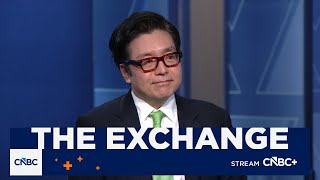
My next guest sees more records ahead as one big catalyst may be getting ready to mobilize, which is retail. I thought retail investors already were mobilized. Fundstrat's head of research, Tom Lee, is here. He's a CNBC contributor. It's great to have you here, Tom. Um, what do you see going on here?
Well, I I think that investors got very cautious uh into the build-up of the war. And they were getting cautious because many stocks held by retail were getting hit. You know, the software stocks. And as that fell, we know there were record inflows into software. And of course, the Mag 7 had been falling.
So, I think investors viewed the war and the start of the war as a time to take risk off the table, which was very different than what we saw a year ago when investors were buying into the terror flows. And now I think that the downside tail risks have been removed for the war. Uh hedge funds have been early and I they've been adding risk and that we can confirm that from talking to our clients.
And I think now it's retail investors that are now beginning to take money off the sidelines and buy stocks. Maybe this is a psychological or political question. I'm just curious if you have any insight as to why they would react differently to the Iran war versus not just tariffs, but anything else politically that's happened.
I mean, buy the dips has become a well-known catchphrase. So, it's surprising that they were you think kind of going the other way this time? It is surprising. I was quite surprised because I would have assumed if someone asked me in 2026, a war's going to start, what will retail do? I would assume that they'd buy the dip.
But in our surveys with our clients, we found that many maybe had policy uh puzzlement. You know, they didn't really know how big this war could become. You know, it their biggest fear was gasoline spiking and we could get a recession or a depression and a lot of economists warned of that. So, I think it was difficult for investors to say, we can trust what the administration's doing because there were too many people warning about the tail risks of that.
Is it possible they're right? And you know, I was in a store earlier today and the radio was on. I haven't heard the radio in a long time. And and the DJ was it was some kind of pop or kind of broad station and he was saying, you know, another check on gasoline prices and boy, aren't they high? And I thought, wow, that's the first time I've heard gasoline prices talked about in a non-business news context in a while.
Um, is it possible that actually there is going to be a bigger impact here and the retail investors actually know that and and maybe um the pros are missing it? Uh I mean, anything's definitely possible. Uh one thing that we should that we were at Fundstrat were emphasizing is that inflation-adjusted, even gasoline prices here aren't aren't nearly the burden they were 5 years ago, 10 year ago 10 years ago, even at the 08 peak.
And the war is stimulating the economy and we can see that in in the earnings estimates and the ISM and even the jobs report. So, I think the state of the consumer is one thing versus maybe how they might hear in a radio commercial or the surveys, but I do think the consumer's in better shape. So, I think the retail investor will end up chasing this.
And stocks rally. And you think as they do, that will power it higher? Yes. And and but for the right fundamental reasons cuz earnings estimates are higher. The US's relative position has really been strengthened by what's been exposed by supply chain through this war. And I think as the world investor looks for growth and they worry about growth in general, they're going to buy the US stock market, which is a growth index.
We're going to talk in uh in just a moment about international and whether, you know, you should not that you have to choose. You can do both, but if you had to pick US versus international, is it US? I'd still be over-weighting US because I think if you think about where innovation comes from, whether it's in tech, health care or financial services or fintech, that's really US companies.
And I think there was a an argument the US PE should de-rate, but but the war has exposed that the US multiple should be going up. Really? If so, that could be accounting we could get both earnings and multiple expansion this year? Yes, I think once we're through uh you know, this is still going to be a very tricky year because we we have a new Fed chair coming and the market's going to test that Fed chair.
But once we get through that subsequent turbulence, we are probably entering, you know, an 18 to 20 months 24-month period that might be the one of the best we've ever seen in our life.



Comments 0