
원문 보기
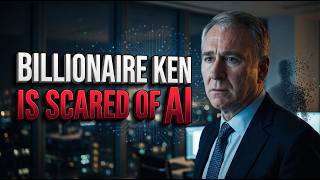
There's a number that keeps me up at night, and it could end modern life as we know it in under 6 months. Not a war, not a pandemic, a single supply chain tied to a tiny island most people couldn't point to on a map. I founded Citadel, one of the largest and most successful investment firms on the planet.
And here's something I've said publicly. If the United States lost access to one specific source of technology, our economy could shrink by 8% in just 6 months. To put that in perspective, that's a bigger hit than the 2008 financial crisis delivered in a year. Planes stop being built. Cars stop rolling off the line.
The phone in your pocket stops being replaceable. All of it frozen almost overnight. Over the next 25 minutes, this breaks down exactly why that threat is real, what's driving it, and what it means for your money, your job, and the next decade of your life. And near the end, there's one mindset shift that will define who wins and who gets left behind in this new era.
But to understand the danger, it helps to understand the seat this is being viewed from and why that view matters. Citadel was built from a small trading operation into one of the most dominant forces in global finance. With strategies that touch nearly every corner of the market from stocks to commodities to the infrastructure that keeps markets running smoothly every single day.
That seat gives a view most people never get. Capital flows become visible before headlines can catch up to them. Fear and confidence show up in the data long before they show up on the news. So, when someone in this position says they went home one evening feeling genuinely unsettled about where the world is heading, that's worth paying attention to.
Recently, in a conversation about leadership and the markets, the question came up, "What's actually shaking my thinking lately?" And the honest answer involved a shift from genuine excitement about where things heading to real concern about forces reshaping the economy faster than most institutions, governments, or individuals can adapt to.
Here's the first lesson of this video. When someone with access to the full picture expresses genuine concern, that's different from fear-driven headlines designed to get clicks. This isn't about trying to scare anyone. It's a warning, and it's worth taking seriously. What's unsettling isn't just one thing.
It's three massive forces colliding at the exact same time. Let's start with the first one. Most people glance at the stock market, see it near record highs, and assume everything is fine. The picture underneath that number looks very different. Right now, there isn't just one conflict simmering in the background.
There's an active war in the Middle East. There's an ongoing war in Europe that most people have mentally filed away as resolved when it isn't. And tension is rising in other parts of the world that could escalate with very little warning. So, here's a question worth sitting with. If a war is disrupting one of the most important energy regions on Earth, and another is dragging on in Europe, why is the stock market sitting at all-time highs?
Shouldn't markets be panicking? The answer reveals something important about how global markets actually work. The United States, for a number of structural reasons, is partly shielded from the worst of the energy shock these conflicts would normally cause. One major factor, a huge economy on the other side of the world, China, has been cutting oil demand far more aggressively than almost anyone predicted.
That single shift has helped keep energy prices from spiraling the way history would suggest they should during a conflict like this. In other words, the surface of the global economy looks calm because of a few lucky, somewhat fragile buffers, not because the underlying tension has gone away. Here's the second lesson.
Calm markets don't always mean a calm world. Sometimes they just mean the shock hasn't fully arrived yet. And that brings us to the second force reshaping everything. Something most business leaders are completely misreading. Here's where this gets genuinely surprising. At a dinner with leaders of major global companies, every single person at that table was excited, almost giddy, about how AI was transforming their business.
So, the obvious thing happened. Each person was asked to actually explain in detail how AI specifically was driving their results. . They were , useful technology, yes, but not the generative AI wave everyone talks about in headlines. A lot of the excitement in corporate boardrooms is built on a blurry, mislabeled understanding of what's actually happening.
But then came the story that genuinely changed things. A colleague at Citadel built an AI system that could take an academic finance paper, something that normally roughly 6 to 8 weeks to fully reproduce and verify, and complete that same process in 2 to 3 hours. Sit with that for a second. Work that used to require weeks of highly specialized human effort now happens in an afternoon, and this matters.
That's not a low-skilled task being automated. That'at's the moment the unease set in. Not because AI is evil, but because the pace of change is colliding head-on with how slowly humans, companies, and entire economies adapt. Here's the third lesson. The danger isn't AI itself. It's the speed at which it's compressing years of human work into hours, faster than education systems, job markets, and personal skills can keep up.
This creates two completely different futures at the same time, one exciting and one frightening, both happening in the same breath. Let's break down both. Here's the most important idea in this entire story. So, stay with this one. On one hand, this technology is about to unlock what could become of a large team, a single founder with a sharp idea can build a company that once would have required 30 or 40 employees.
Competitive barriers that used to protect big, established companies for decades are being erased in a matter of months. That means someone with almost no resources today could build something that genuinely challenges an industry giant tomorrow. On the other hand, there's a much darker side. Certain kinds of skilled, specialized work, the kind that used to guarantee a stable, well-paying career, are becoming automatable almost overnight.
Translation work is a clear example. Anyone whose job is translating language for a living is now facing direct, immediate pressure from AI systems that can do it instantly. So, here's the uncomfortable truth hiding underneath all this optimism about new businesses and new opportunities. For some people, this is the best moment in history to start something.
For others, this is the moment their career path quietly disappears. Which side someone ends up on isn't about luck. It's about paying attention right now. While there's still time to adapt. That tension between opportunity and disruption doesn't stop at AI. It connects directly to a much bigger, much scarier geopolitical story, one most people have no idea is this serious.
This is the part that should genuinely concern you because it connects directly back to the number this video opened with. Nearly every advanced piece of technology on Earth, your phone, your car, the servers running the AI tools, everyone's obsessed with, depends on advanced semiconductor chips. And an enormous share of the world's most advanced chips are manufactured in one place, Taiwan.
Here's a scenario that sounds almost unbelievable until it's actually thought through. If China were to take control of Taiwan and the United States lost access to those chips, the American economy could shrink by roughly 8% within 6 months. For comparison, that is a faster, sharper collapse than the Great Depression delivered in its early years.
Think about what that actually means in daily life. Airplane manufacturing stops because the chips needed to build new planes aren't available. Car production halts because modern vehicles are packed with semiconductor components. Consumer electronics, the phones and laptops and appliances that fill every home, stop being produced at normal volume.
The entire system seizes up almost overnight. And here's the part that makes this even more unsettling. In this scenario, there would be no clean winners. If China took aggressive action and triggered this kind of economic shockwave in America, the retaliation and chaos would also devastate China's own economy, since the United States is one of the largest markets for Chinese exports in the world.
So, two massive economies, each holding a weapon that would badly wound the other if used, are locked in a tense standoff where neither side can fully predict how the rest of the world would react. Here's the fourth lesson. In situations like this, the safest position isn't picking a side emotionally.
It's understanding how exposed a country, an industry, or an investment portfolio actually is to a shock most people aren't even thinking about. There's a quieter, slower threat sitting underneath all of this tension, one connected to something most countries take completely for granted, education. Here's a point that goes far beyond markets and touches something much more personal, human capital, the skills and knowledge people actually carry into the future.
Out of roughly 75 of the most important emerging technologies in the world today, from solar power to electric vehicle batteries to advanced quantum research, China is currently leading in a striking majority of them, not a small handful, the overwhelming majority. Why? Scale and focus. A massive population combined with an intense national emphasis on education is producing an enormous number of graduates in science, technology, engineering, and math every single year.
That creates a pipeline of raw talent that compounds over time into real technological dominance. This warning isn't about tariffs or trade wars, it's about something far more fundamental. The most important thing any country can do to stay competitive isn't a policy or a tax, it's making sure its young people are actually equipped to outthink and outbuild the rest of the world.
Here's the fifth lesson, and it's the one worth carrying long after this video ends. Nations don't lose their position in the world because of one bad year in the stock market, they lose it slowly, one generation of undertrained young people at a time. So, with wars simmering, AI accelerating faster than anyone can regulate it, and a potential flashpoint sitting over a tiny island that controls the modern world's supply chain, how does someone in this seat actually protect the money they're responsible for?
The answer is simpler than you'd expect. When the question comes up about protecting a portfolio against risks this large and unpredictable, the answer isn't about predicting the future perfectly. It's about something much more practical. No one can prepare for literally every possible disaster, no portfolio, and frankly, no person can plan for everything.
The real skill is running through worst-case scenarios deliberately. Ask directly, if the worst version of this event happened, how much would actually be lost and is that loss survivable? The goal isn't to avoid all risk. It's to make sure even the worst-case outcome is one that can be recovered from.
A serious loss is acceptable. A loss that completely wipes everything out is not. This idea applies far beyond investing. It applies to careers, to businesses, to personal decisions. Before committing to something big, ask honestly, what's the worst realistic outcome here? And is it survivable? If the answer is yes, move forward with confidence.
If the answer is no, adjust exposure before the storm arrives, not after. Let's bring this all together. This video started with a number that sounds almost like science fiction. An 8% collapse in the American economy within 6 months if a tiny island's chip supply were suddenly cut off. But that number doesn't stand alone.
It's connected to wars most people have stopped paying attention to, an AI revolution most companies don't actually understand, and a global education race that will quietly decide who holds power in the next 50 years. The people who come out ahead in the next decade won't be the ones who panic about these risks.
They'll be the ones who understand them clearly enough to prepare. So, here's the ask. Take one idea from this video, whether it's AI's impact on careers, the Taiwan risk, or the worst-case thinking used to manage risk, and actually dig into it further this week. Don't just watch and scroll away. If this helped bring the bigger picture into focus, hit like because it helps this reach more people who need to understand what's actually happening in the world right now.
drop a comment. Out of everything covered here, which risk concerns you the most? See you in the next one.



Comments 0