저자: JimCramer · 외국인
요약 보기
결론: 금융주 중 골드만삭스·모건스탠리는 저평가 매수 관점, 아멕스는 조정을 매수 기회로 봄. 전반 진단: 대형은행 실적은 예상보다 나은 'NABS(생각보다 나쁘지 않음)' 수준이며 소비자 강세가 비관론을 막아준다고 봄. 역전된 수익률곡선이 이자마진을 압박하는 환경임에도 4개 중 3곳이 예상 상회. 골드만삭스: 2년 넘게 주가 정체, 말레이시아 1MDB 부패 재판·리더십 교체 등 이미지 문제. 실적은 무난했으나 특별한 계기는 없었음. 자문수수료 22% 감소, 총인수 9% 감소, 트레이딩(FICC) 8% 증가, 자산운용 전년비 -2%/전분기비 +5%. 주가 220 부근 천장 반복. 순자산가치(장부가) 약 205~206 수준, PER 2026 예상 기준 8.5배(추정치 표현), 배당 2.4% 언급. 1월 전략 업데이트 등 촉매 기대하며 장기 보유 선호, 말레이시아 사건은 2020년 중 해결 기대. 모건스탠리: 실적 예상 상회, 수수료·거래수익 10% 증가, 채권 관련 수익 21% 증가, 자산운용 17% 성장. 금리 민감도가 낮아 경기침체에 상대적으로 강함. PER 8.5배, 배당 3.2%, 주당 약 43달러 대비 순자산가치 약 40달러. 'Sleep soundly' 종목으로 평가하나 장기 촉매는 골드만이 더 많다고 보아 골드만 선호. 아메리칸익스프레스: 매출·이익 호조였으나 시장 반응 미지근(주가 -2%). 기대치가 높았던 점, 상업 카드 사용액 -1%(전분기 +5%에서 둔화), 대출 성장률 11%→9% 둔화, 비용 증가가 매출과 비슷한 속도가 문제. 경기침체 우려가 있다면 불리하나 PER 13배로 저렴하고 연 한 자릿수 후반~고한 자릿수 매출 성장 가능, 금리 위험 낮음. 조정은 매수 기회로 봄. 핀테크/기타: 투자자들이 핀테크에 몰리는 흐름을 언급하며 아멕스의 실제 신용위험 보유 구조를 강조. 전체 금융섹터 내 선호 순위는 골드만삭스 > 모건스탠리, 어느 쪽도 공매도 대상으로 보지 않음. 당일 아멕스 조정은 '선물(gift)'이라 표현. 리스크: 역전된 수익률곡선, 경기침체 가능성, 골드만 말레이시아 사건 및 소비자 사업 투자 성과. 출연자 전망: 골드만·모건스탠리 장기 매수 선호, 아멕스 조정 시 매수 관점 유지.
다듬은 글
Let's talk about the best group on the market. Always helpful. This is the financial sector. This is probably the most important sector in any market. So when banking week comes around during earnings season, you better watch out. We've heard of JP Morgan before, right? We looked at Citigroup, Wells Fargo and Bank of America.
Even in an environment where their interest margin – the difference between what they pay on deposits and what they charge on loans – is biased by an inverted yield curve. Three of the four managed to deliver results that were significantly better than expected. Remember, they were all "NABS", meaning not as bad as feared.
Partly because these companies are well-run, but a lot of it is because of the power of the consumer, this big current that keeps me from being overly pessimistic, unlike most people I listen to. What about the other financial giants that reported this week? Large investment banks. Goldman Sachs, where I worked, Morgan Stanley, or the huge credit card company you might have in your wallet, American Express.
Let me walk you through them . I'm doing this again because when you look at what's working in the market, it's financial, so you need to know it. We spend some time on this. First, Goldman reported Tuesday morning, delivering a slight revenue exceedance with minimal earnings disappointment. The headline numbers were insignificant and the share price barely moved.
But, and this is a very big "but," Goldman's stock has been stagnant for more than two years. The legendary investment bank has been plagued by image problems, including a massive corruption trial in Malaysia and leadership changes. Lloyd Blankfein stepped down last year. David Solomon took over as CEO.
I enjoyed this interview with Will Frost recently. Does anyone even wear a tie anymore? Even David Faber, by the way, David Faber didn't wear a tie, he wore one on my morning show, but he wore... Let's get back to the point for a moment . Every time the stock gained momentum, Goldman Sachs shares hit a ceiling around 220.
They fell immediately afterward. It's like, "Boom, raise the ceiling beam high, carpenter ." The sad truth is that expectations for Goldman Sachs were quite low before this quarter. We have them in our investment portfolio. It was a bit pathetic. We are counting on solid results and optimistic comments about the company's new business lines, such as the Apple Card and Marcus, i.e.
their consumer business. We didn't quite get it. I have an Apple card and no, it's not the same as Marcus. Put it out of your heads. Goldman's financial advisory business declined 22% as we saw fewer mergers. They saw a 9 percent decline in total underwriting, partly due to a lack of demand for new IPOs.
The investment and credit department performed poorly. Trading was good though. The fixed income, currencies and commodities division grew 8% year-on-year. It was really solid support. Shares up 8%. Investment management performed well, down 2% year-on-year but up 5% compared to the previous quarter.
I am giving you all this information because I care about reliability. Someone stopped me on the street yesterday and said, "You know what? I really like that you're providing us with so much information." So, in summary, I think Goldman delivered solid results in a less than ideal environment, but there were no revelations.
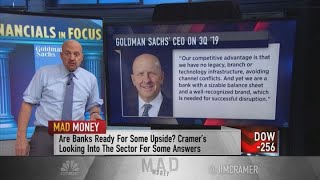
Maybe this is what we wanted. Still, during the conference call, David Solomon told us some great things about the Apple Credit Card. Eight great things about what it does for the consumer business. Exactly . As he put it, our competitive advantage is that we don't have outdated branch infrastructure or technology, which helps us avoid channel conflicts.
At the same time, we are a bank with a significant balance sheet and a well- recognized brand, which is essential for effective market revolution. You know, this is fantastic rhetoric. He also described the Apple Card as the most successful credit card debut in history. Regardless, I can confirm that people in the industry say exactly the same thing.
Remember, they didn't have a card where someone would come to them and say, "Look, I want to get a quote for a client, you have to charge 11%," when they were already charging someone 13%. They actually had the advantage of not having such ballast. These are real channel conflicts. It really made a difference.
They spend a fortune developing these new businesses; Many people are worried about this, but investments should start to decline next year, which will strengthen the profitability of the investment bank. Add to that the aggressive share buyback, which wasn't as aggressive last quarter due to the 1MDB problem in Malaysia, and we have shares that are incredibly cheap , valued at 8.5 times next year's projected earnings , the cheapest in the entire group except Citigroup.
Moreover, Goldman, like Citigroup, is a stock trading at a net book value of around 205-206. just like that. This is what, I repeat, they would get if they liquidated the entire business tomorrow. It's an attractive value investment, but then again, I've been saying this for ages. Still, you have strong support just below the current price, and Goldman is paying you 2.4% to wait for the next big catalyst, which could be a strategy update in January.
I like this company, but I plead guilty again. I've liked it for a long time and, honestly, I liked working there. All right. What about Morgan Stanley, which reported yesterday morning? They have been posting stable but unimpressive results over the past year, with their share price stuck in the low-40s .
Yesterday, however, Morgan Stanley delivered solid results above expectations, achieving unusually high sales and profit growth. The core investment banking business performed better than expected thanks to higher merger fees and higher deal value. Sales and trade revenues increased by 10% year-on-year.
That's great. They're making a fortune on bonds. Fixed income revenues increased by 21%. The real highlight that makes this stock so attractive is the 17% growth in the investment management business. These people have a fantastic wealth management franchise . Maybe they're number one in the entire industry now.
Morgan Stanley is therefore arguably the most recession-proof of the large banks. It is less dependent on interest rates, and their asset management franchise provides the company with a more stable and predictable revenue stream. What's more, shares are simply incredibly cheap. 8.5 times next year's profits, 3.2% dividend.
This is an even bigger opportunity when you look at book value. $43 a share and almost $40 net book value. I ca n't believe how cheap these shares are. And everyone keeps talking about how expensive the market is. At the end of the day, though, when it comes to investment banks, I prefer to own Goldman.
Why? Because of all the investment in credit cards and consumer banking, I think they're putting in more work to breathe new life into that business. In the long term, I'm betting that Goldman has more catalysts. And by the way , I have to believe that this Malaysian case will be resolved in 2020. Morgan Stanley, however, is a stock you can sleep soundly on.
Finally, what about American Express? Don't leave home without it. American Express, what an essential brand. So fabulous. When I saw the results, I thought they were fantastic. So many banks praised their credit card departments . You think the best in America have to be in great shape. It looked good to me, a solid breakout in revenue and profit.
But the market was not thrilled. All right. What did they see that I didn't when the stock fell 2%? What was the proverbial spoonful of tar here? Mainly I think expectations were too high. Unlike banks, where expectations were low, the stock was up $25 in the year to quarter, better than all the banks I mentioned.
They are widely perceived as a financial technology company, even though they are the only credit card company with actual credit risk, unlike Visa and Mastercard, which are payment networks. These guys actually make loans. While banks were out of fashion at the beginning of the year on Wall Street's fashion runway , investors flocked to all things fintech.
Oh my, that's a terrible graph. This is a classic head and shoulders formation. American Express therefore had less room for error and some negatives emerged. Sales were weighed down by weakness, with commercial spending volume falling 1%, a sharp slowdown from last quarter's 5% growth. Meanwhile, loan growth also slowed sequentially from 11% to 9%.
Not optimal, but overall a pretty good quarter. Simply put, if you were looking for an excuse to take profits, they gave it to you several times over with these figures on commercial spending and loan growth. I understand the sellers' thinking, because AMX is the last thing you want if you believe we're heading straight into a recession.
It also didn't help that their expenses seem to be growing as fast as sales. In my opinion, let's hold off for a moment. I would use this weakness as a buying opportunity given that American Express, one of the best brands in the world, is valued at just 13 times earnings. This is a bargain considering the steady, high-single-digit revenue growth and significantly lower interest rate risk than a typical bank.
To sum up the whole group, when it comes to the rest of the financial sector, I prefer GS Goldman Sachs, even though it sometimes seems to be in purgatory before the Malaysian settlement, to Morgan Stanley. Still, I wouldn't bet against any of them. As for today's Mercury Express correction, I call it a gift.
Man Bunny returns to break. Don't miss a second of MadMoney. Follow Jim Kramer on Twitter. Do you have a question ? Tweet Kramer using #.



Comments 0