
저자: JimCramer · 외국인
요약 보기
메모리 반도체 부족 현상이 GPU만이 아니라 DRAM·NAND·HBM·서버 부품 전반으로 확산되며 공급 병목이 생겼다. 마이크론의 뉴욕 신규 팹은 장기 공급 증설 효과는 있으나 건설에 수년이 걸려 단기(2026년)에는 부족이 지속될 것이라 설명. 엔비디아는 실적이 강하지만 기대치가 이미 반영돼 주가 반응은 제한적일 수 있다. 메모리 및 장비 업체(AMAT, KLA, Lam, 마이크론, WDC, 씨게이트)는 단기 가격 결정력 혜택을 보고 있다.
다듬은 글
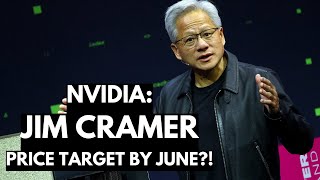
Jim Kramer yelling about memory shortages and Micron building a 100 billion dollar plant in upstate New York. What I have observed, the broader theme is simple. I demand didn't just want Nvidia GPUs. It wanted entire racks full of supporting parts, memory, interconnects, SSDs, power delivery. The consequence shortages and lower-end data center semiconductors that people thought were mundane suddenly became missionritical.
Jim Kramer, Micron and the memory shortage. A short explainer. Kramer pointed out that Micron CEO Sanjay Morotra just broke ground on an enormous foundry in Anandaga County, New York. Funded in part by the chips act subsidies. What I have observed, building fabs takes years. Subsidies help, but they're not a fast fix.
Meanwhile, demand for drum, nand flash, and other less glamorous chips exploded as data centers scaled out GPU fleets to train massive LLMs and run trillion token workloads. Nvidia made the GPU engines. But a data center is like an orchestra, and GPUs are the violins. They sound empty without a full section, memory, drum and HBM, flash storage, NIC's, power supplies, and passive components.
When everyone decides to add racks of GPUs at once, the orchestra needs more than violins. It needs more percussion and brass. That's where the shortage happens. Imagine a restaurant that decides to serve a new viral menu item. The chef Nvidia has a brilliant recipe, but suddenly the kitchen runs out of baking trays, cutting boards, and spices.
You can't serve more soulets without the basics. Why shortages help Nvidia and why they hurt the ecosystem. Shortages of memory and NAND benefit multiple parties. Some equipment suppliers and oldline memory vendors rally in price, but they can also slow shipments of fully configured AI systems. What I have observed, Nvidia's foresight, partnering with TSMC, working on system level integration and aligning supply chains helped it avoid the worst choke points for its own high-end accelerators.
That's why Jensen Huang gets the lion's share of credit. He didn't just sell chips. He orchestrated customers, software, and manufacturing. If memory is expensive or short, OEMs delay shipments, hyperscalers prioritize certain builds, and product rollouts become lumpy. Nvidia's business depends both on selling to hyperscalers, and supporting a robust ecosystem.
Shortages boost prices for memory makers and capital equipment suppliers. Applied Materials, KLA, Lamb Research, which are in the upstream supply chain and now seeing higher margins and strong order books. The shortage is like gasoline scarcity during a road trip season. Gas stations near big highways, memory suppliers can raise prices while the drivers data centers either pay up, reroute, or delay travel deployments.
. Did nobody see it coming? Not quite, but it's sticky and fast. Some market participants and even industry execs underestimated how quickly generative AI would pull forward demand for not just GPUs, but all complimentary chips. What I have observed, forecasting enormous sustained capeex from hyperscalers is hard.
Each hyperscaler's buildout decisions are confidential and can be accelerated overnight. A year ago, forecasts leaned conservative because mass deployment of massive models seemed speculative. When a few large projects proved business case, search, chat, ads, automation, hyperscalers poured money into data centers.
Supply chains rarely flexed that fast. The combination of sudden demand spike plus long fab lead times equals shortage. Forecasting the AI hardware cycle is a little like predicting viral dance trends. You can see the moves, but no one nails the timing until the song is already number one. Nvidia's quarter impressive numbers and why the stock might still be sleepy.
Nvidia's fiscal numbers were staggering. Huge revenue and profitability from the data center. massive free cash flow and guidance that implies continued demand. What I have observed, despite the earnings beat and gargantuan cash generation, the stock often trades on expectations and narratives more than on raw results.
If the street already expects near apocalyptic growth, a beat can feel priced in. Nvidia reported revenue in the tens of billions in a single quarter with the vast majority from data center GPU sales. Gross margins, operating income, net income, and free cash flow are enormous. But the market's muted reaction can stem from elevated expectations baked into the price.
B concerns about supply fulfillment. Can Nvidia actually ship enough? and C macro/geopolitical headlines, export rules, China tariffs that cause some investors to pause. Think of Nvidia as a rocket that already has a billion dollar runup in altitude. A successful burn, earnings beat, may not change the altitude chart if everyone already expected the burn.
Micron plant in New York, long-term bullish for supply, short-term irrelevant. Micron's new onandaga plant is a long-term strategic step to secure memory capacity in the US. What I have observed, it won't fix shortages overnight. Fab construction, equipment installation, yield ramp, these take years.
So 2026 shortages are likely to persist even as new capacity is being planned. Demand is roaring now. Supply will catch up in time, but not instantly. That means elevated pricing and equity rallies for memory suppliers and equipment makers may continue until capacity ramps and those ramp cycles are multi-year.
Ordering a cathedral after you realize you need more churches. You can lay a foundation this year but parishioners still need worship services tomorrow. The winners beyond Nvidia memory and equipment makers. Micron, Western Digital, Seagate, Applied Materials, KLA, and Lamb Research have seen their stocks run as the supply chain tightens.
What I have observed, these are classic trade beneficiaries. When a capital industry suddenly needs more capacity, memory and wafer fab equipment companies get direct benefit. They sell the tools that build the stuff we're short on. If GPUs are the cute top-end product, the machines that allow factories to produce drum, NAND, wafers, and packaging are the unsung heroes that suddenly command big budgets.
Short-term, they enjoy pricing power. Long-term, they have to deliver capacity expansion. If GPU demand is a wildfire, memory and equipment firms are the logging companies suddenly tasked to build more roads and bridges overnight. .



Comments 0