
원문 보기
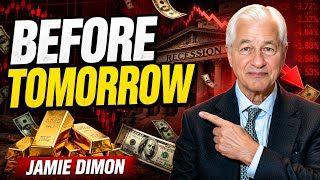
Ladies and gentlemen, what if the biggest financial story of the year isn't happening on Wall Street but behind the scenes in Moscow and Beijing? While most investors are focused on stocks and interest rates, Russia and China are quietly making moves that could reshape the global monetary system. At the same time, JP Morgan CEO Jamie Dimon is warning about risks that many people are ignoring.
Could gold and silver be preparing for a major revaluation? In this video, we'll separate fact from speculation, examine what's really happening, and discuss why precious metals are once again at the center of the global financial conversation. For decades, the global financial system has revolved around one dominant currency, shaping international trade, energy markets, and central bank reserves.
But beneath the surface, a gradual transformation has been unfolding. Instead of making dramatic announcements or attempting to overturn the existing system overnight, several major economies have been steadily building alternatives designed to reduce their dependence on a single monetary framework.
This isn't a sudden revolution. It's a long-term strategic shift that has been developing for years. One of the most significant developments has been the increasing use of local currencies in bilateral trade. Rather than settling every major transaction in US dollars, countries are exploring agreements that allow exports and imports to be paid for using their own national currencies.
While these arrangements still represent a fraction of total global trade, the direction is worth paying attention to because every new agreement slightly expands the financial infrastructure outside the traditional dollar-based system. At the same time, central banks have been sending another powerful signal through their actions rather than their words.
Around the world, official institutions have continued increasing their gold reserves at a pace rarely seen in recent history. Central bankers are among the most conservative financial managers in existence. They don't chase headlines, and they certainly don't buy assets based on speculation. Their decisions often reflect long-term planning, risk management, and confidence in preserving purchasing power across decades rather than quarters.
This growing interest in physical gold raises an important question. If policymakers believe the current monetary system faced no meaningful challenges, why continue allocating billions toward an asset that produces no yield? The answer isn't necessarily that they expect an immediate crisis. Instead, it suggests they recognize that uncertainty has become a permanent feature of the global economy.
Gold has always served as a form of monetary insurance, providing stability during periods when confidence in paper assets weakens. Another factor driving this transition is the changing geopolitical landscape. Economic sanctions, trade restrictions, and shifting political alliances have encouraged many governments to diversify both their trading relationships and their financial reserves.
Dependence on any single payment system or reserve currency creates vulnerabilities that become increasingly apparent during periods of international tension. Diversification, therefore, becomes less about ideology and more about resilience. It's important to understand that history offers numerous examples of reserve currencies evolving over time.
Monetary leadership has shifted from one nation to another as economic power changed. These transitions were rarely abrupt. Instead, they unfolded over decades with old systems gradually giving way as new institutions, payment networks, and financial relationships matured. Markets often recognize these changes long before the general public does.
That perspective helps explain why precious metals continue attracting attention despite advances in digital finance. Technology may change how money moves, but it doesn't eliminate the need for trust. Gold remains one of the few financial assets without counterparty risk. It doesn't depend on a government's promise to pay, a corporation's earnings, or the stability of a banking institution.
Its value has endured through wars, inflationary cycles, recessions, and multiple monetary regimes, silver deserves consideration as well because it occupies a unique position. Unlike gold, which is held primarily for monetary purposes, silver also plays a critical role in modern industry. From renewable energy technologies to electronics and advanced manufacturing, industrial demand continues to support its long-term importance.
When monetary deman, silver often demonstrates greater price volatility than gold, both upward and downward. Investors should resist the temptation to interpret every geopolitical headline as evidence that the dollar is about to disappear. Such conclusions oversimplify an incredibly complex financial system.
The dollar remains deeply integrated into global commerce, international banking, sovereign debt markets, and foreign exchange reserves. Replacing that infrastructure would require enormous time, coordination, and confidence among nations with very different economic interests. However, acknowledging the dollar's current strength doesn't mean ignoring emerging trends.
Financial history rewards those who recognize gradual shifts before they become obvious. The increasing accumulation of gold by central banks, the expansion of local currency trade agreements, and the ongoing development of alternative payment mechanisms all point toward a world becoming more diversified rather than less.
This is why long-term investors focus on probabilities instead of predictions. No one can accurately forecast the exact timing of major monetary changes. What investors can do is observe the behavior of governments, institutions, and central banks. Their actions often reveal priorities that public statements may not fully capture.
When official buyers consistently accumulate hard assets during periods of economic uncertainty, it's reasonable to ask what risks they are preparing for. Ultimately, wealth preservation isn't about betting on catastrophe, it's about building resilience regardless of what happens next. Every investment portfolio faces risks whether from inflation, currency depreciation, market volatility, or geopolitical instability.
Precious metals have historically served as one component of a diversified strategy because they often behave differently from financial assets during periods of stress. The most successful investors understand that patience frequently outperforms excitement. They avoid reacting emotionally to sensational headlines and instead pay close attention to long-term fundamentals.
The world economy continues to evolve, alliances continue to shift, and monetary systems continue adapting to new realities. Those developments deserve careful observation not because they guarantee dramatic outcomes tomorrow, but because they may shape the financial landscape over the coming decade.
In an environment defined by uncertainty, knowledge, discipline, and prudent diversification remain far more valuable than speculation or fear. When experienced leaders in the financial begin talking more about uncertainty than opportunity, it's worth paying attention not because they possess a crystal ball, but because they've witnessed enough economic cycles to recognize familiar warning signs.
Their role isn't to predict the future with perfect accuracy. Their responsibility is to identify risks that have the potential to disrupt markets and prepare accordingly. That's a very different mindset from the one often promoted by short-term traders or sensational headlines. One of the biggest concerns facing the global economy today is the sheer amount of debt that has accumulated over many years.
Governments have borrowed heavily, corporations have taken advantage of historically low interest rates, and consumers in many parts of the world have also increased their financial obligations. Debt itself isn't necessarily dangerous. In fact, when managed responsibly, it can fuel economic growth and investment.
The problem emerges when debt grows faster than the the ability to support it. As interest rates rise, the cost of servicing that debt increases. Governments must allocate more tax revenue toward interest payments instead of infrastructure, education, or economic development. Businesses face higher financing costs, reducing profitability, and slowing expansion plans.
Consumers, meanwhile, find themselves paying more for mortgages, credit cards, and other loans. These pressures don't appear all at once. They build gradually until the financial system begins feeling the weight of higher borrowing costs. Inflation remains another major concern. Although inflation rates can fluctuate from year to year, the long-term erosion of purchasing power is something every investor should understand.
A dollar today rarely buys what it purchased 20 years ago, and that trend has repeated throughout modern economic history. Inflation doesn't simply increase prices, it quietly reduces the value of savings held entirely in cash. That's why investment returns. Adding to these economic pressures is an increasingly uncertain geopolitical environment.
Global supply chains have become more fragile, international trade relationships continue evolving, and regional conflicts create new economic uncertainties. Financial markets dislike uncertainty because uncertainty makes future earnings, investment decisions, and economic forecasts more difficult to estimate.
When businesses lose confidence about future conditions, they often delay expansion, hiring, and capital investment, slowing overall economic growth. Another issue receiving increasing attention is market valuation. Over extended periods of optimism, investors sometimes become convinced that prices can only move higher.
History repeatedly demonstrates that excessive optimism can eventually lead to corrections. Markets naturally move in cycles. Periods of rapid expansion are often followed by periods of consolidation or decline. Understanding this cycle helps investors avoid making emotional decisions during either extreme.
Perhaps the greatest mistake investors make is believing that risk can be eliminated. Risk cannot be eliminated, it can only be managed. Every asset carries some form of risk. Stocks face earnings risk and valuation risk, bonds face interest rate risk and inflation risk, real estate faces financing risk and economic risk.
Even holding cash involves purchasing power risk as inflation gradually reduces its value over time. Successful investing isn't about finding assets with zero risk. It's about building a portfolio that remains resilient under different economic conditions. This is precisely why diversification has survived every major financial cycle.
Diversification doesn't guarantee profits, nor does it eliminate losses. Instead, it reduces dependence on any single outcome. If one asset class struggles, another may provide stability. Investors who concentrate everything in one sector often discover that confidence can quickly become vulnerability when market conditions change unexpectedly.
Hard assets continue to play an important role in this discussion because they exist outside many of the risks associated with financial assets. Physical precious metals, for example, don't rely on quarterly earnings reports, executive management decisions, or corporate balance sheets. Their value isn't tied to one company's performance or one government's fiscal policy.
Instead, they derive value from scarcity, global recognition, and thousands of years of monetary history. That doesn't mean precious metals rise every year or outperform every investment. Markets never move in straight lines. Gold and silver experience corrections, periods of underperformance, and extended consolidations just like any other asset.
Investors who expect immediate gains are often disappointed because wealth preservation is fundamentally different from speculation. The purpose of owning hard assets isn't to chase excitement. It's to provide stability during periods when confidence in financial markets weakens. One lesson repeated throughout financial history is that major crises rarely originate where the public expects them.
Problems often emerge from overlooked areas of the economy where leverage is quietly accumulated for years. Before many past financial disruptions, warning signs were visible to those willing to examine debt levels, liquidity conditions, and market behavior instead of simply following optimistic narratives.
By the time headlines acknowledge a problem, markets have frequently begun adjusting. This is why disciplined investors spend more time asking questions than making predictions. They evaluate balance sheets, monitor monetary policy, observe central bank actions, and consider long-term economic trends instead of reacting emotionally to daily market fluctuations.
Patience becomes a competitive advantage because emotional investing often leads to buying at market highs and selling during periods of fear. It's equally important to recognize that uncertainty doesn't automatically translate into disaster. Economies are remarkably resilient, businesses adapt, innovation continues, and markets eventually recover from setbacks.
However, resilience doesn't eliminate volatility along the way. Investors who acknowledge uncertainty without becoming consumed by fear are generally better positioned than those who either ignore risk completely or assume catastrophe is inevitable. Ultimately, successful investing has never depended on perfectly forecasting the future.
It depends on preparing for multiple possible outcomes. Economic cycles will continue, inflation will rise and fall, interest rates will change, markets will experience optimism followed by pessimism. Through all these cycles, the investors who focus on preserving purchasing power, managing risk, maintaining diversification, and thinking in decades rather than months are often the ones who emerge in the strongest financial position.
In uncertain times, careful preparation consistently proves more valuable than confident prediction. Throughout history, periods of economic uncertainty have consistently led investors back to assets that have demonstrated lasting value across generations. Technologies evolve, financial products become increasingly sophisticated, and monetary systems continue adapting to changing economic realities.
Yet, despite all this innovation, gold and silver remain relevant because they represent something that modern financial instruments often cannot: tangible stores of value that exist independently of promises made by governments, corporations, or financial institutions. One of the reasons gold continues attracting attention is its unique role as a monetary asset, rather than simply another commodity.
Unlike industrial metals that derive most of their value from manufacturing demand, gold has historically been viewed as a form of financial insurance. It has served as a reserve asset for nations, a symbol of wealth preservation for individuals, and a reliable store of purchasing power through countless economic cycles.
While currencies have come and gone throughout history, gold has maintained its ability to preserve value over the long term. Central banks appear to understand this reality well. Rather than reducing their exposure to precious metals, many have continued adding physical gold to their reserves. These institutions are not driven by speculation or short-term market sentiment.
Their investment horizons extend across decades, and their objective is financial stability, rather than maximizing quarterly returns. When conservative institutions steadily accumulate a particular asset over many years, it deserves careful observation. This growing demand becomes even more significant when viewed alongside the limited pace of new mine production.
Discovering economically viable gold deposits has become increasingly difficult, and developing new mining operations often requires years of exploration, environmental approvals, infrastructure investment, and substantial capital. Even when promising discoveries are made, transforming those discoveries into productive mines is a lengthy process.
As a result, new supply cannot expand rapidly simply because demand increases. Silver presents an equally compelling case, though for different reasons. While gold is primarily recognized as a monetary metal, silver occupies a rare position where investment demand and industrial demand intersect. Modern industries rely heavily on silver because of its exceptional electrical conductivity, thermal properties, and durability.
It is used in electronics, renewable energy systems, medical technologies, automotive components, and numerous advanced manufacturing applications. As technological innovation continues expanding, industrial consumption of silver remains an important part of the overall demand picture. That combination creates a unique dynamic.
During periods of economic optimism, industrial demand can support silver prices through increased manufacturing activity. During periods of financial uncertainty, investment demand may strengthen as individuals seek hard assets capable of preserving purchasing power. When both forces operate simultaneously, silver often experiences stronger price movements than many other commodities.
Of course, those movements can occur in both directions, making silver historically more volatile than gold. Another important consideration involves inflation. Inflation doesn't necessarily arrive as dramatic price spikes overnight. More often, it gradually erodes purchasing power year after year. Savings that appear stable in nominal terms may quietly lose real value as the cost of goods and services continues rising.
Investors who focus only on account balances sometimes overlook the more important question, what will those balances actually purchase in the future? Gold and silver have historically demonstrated an ability to preserve purchasing power across extended periods. While neither asset moves higher every year, both have repeatedly served as effective stores of value during environments characterized by currency depreciation, elevated inflation, or declining confidence in financial markets.
Their role is less about generating income and more about maintaining financial resilience when traditional assets encounter significant challenges. Market psychology also plays a significant role. During extended bull markets in stocks or other financial assets, investors often become convinced that recent trends will continue indefinitely.
Optimism encourages greater risk-taking, sometimes leading valuations beyond sustainable levels. Eventually, market conditions change, sentiment shifts, and investors begin searching for assets that provide stability rather than rapid growth. Precious metals have frequently benefited during these transitions because they are viewed differently from conventional financial investments.
This doesn't imply that investors should abandon diversified portfolios in favor of precious metals alone. Every asset class serves a different purpose. Stocks provide exposure to corporate growth and innovation. Bonds may offer income and relative stability under certain conditions. Real estate represents ownership of productive assets.
Precious metals contribute something different by offering diversification that often behaves independently of traditional financial markets. Perhaps the greatest misconception surrounding gold and silver is the belief that they are designed to make investor




Comments 0