원문 보기
Let's jump right into this explainer because today we are doing something incredible. We're distilling 50 years of a billionaire's letters, memos, and interviews into just a few minutes. We're going to synthesize decades of market mastery to uncover the core investing philosophies of Howard Marx. Honestly, if you want to understand exactly how the ultra wealthy think about risk, reward, and the future of finance, you are in exactly the right place.
Let's get started. 78. Now, you might be wondering why we're starting with this number. Well, that represents 78 years of accumulated life wisdom with over 50 of those years spent actively navigating the absolute highest echelons of the global financial markets. Howard Marks isn't just some talking head.
He's the co-chairman of Oak Tree Capital Management. And his track record, it literally spans half a century. We're talking about a guy who traded through Black Monday in 1987, the.com bust of 2000, the 2008 financial crisis, and that completely unprecedented 2020 pandemic crash. He hasn't just seen it all.
He survived and thrived through the whole shebang by recognizing patterns that most investors completely miss. And look, if you're ever wondering just how wellrespected he is in the finance world, consider this piece of ultimate social proof. When Howard Marx writes one of his legendary investment memos, Warren Buffett reads it.
In fact, Buffett has famously said that when he sees a memo from Marks in his inbox, it is the absolute first thing he opens and reads. I mean, when the Oracle of Omaha is prioritizing your market thoughts above everything else, your credibility is pretty much undeniable, right? So, here is how we are breaking down today's explainer.
We'll be looking at the foundation, navigating market cycles, AI and modern markets, and finally, his golden lessons. Part one, the foundation, building an investing empire. Okay. To really understand how Markx built his multi-billion dollar empire, you have to understand the highly complex niche that made his firm a global titan.
It's called distress securities. Oak Tree is actually the largest global investor in the space. But here's the thing, they aren't just blindly throwing money at failing businesses. It's way more calculated. They're buying the debt of companies that are near or actively experiencing bankruptcy. and they buy that debt at such extreme panicked discounts that even in a worst case liquidation scenario, the physical assets of the company alone ensure profit.
Think about it like this. While everyone else is literally running out of the burning building, Howard Marx and his team are calmly walking in buying dollars for 50. It takes incredible discipline, insane financial modeling, and an absolute iron stomach. And the wild thing is he hasn't kept this highly lucrative methodology a secret.
Markx has literally written the textbook foundation for modern value investing. His books, the most important thing and mastering the market cycle are basically required reading for any serious investor today. They take all these complex strategies and distill them down so everyday retail investors can actually apply them.
Like in the most important thing, he talks about this concept of second level thinking. He explicitly points out that you simply can't do the exact same things as everyone else and expect outperform them. First level thinking is just, hey, it's a good company. Let's buy the stock. But second level thinking, that's saying, "Okay, it's a good company, but everyone knows it's a good company, so the stock is overpriced and risky.
Let's sell." That subtle shift in perspective is exactly what separates the amateurs from the billionaires. Moving right along to part two, navigating market cycles, warnings, and unpredictability. So, what's crucial to grasp here is his focus isn't just on chasing those aggressive sky-high gains. If you listen to his interviews, his foundational rule is remarkably simple.
Avoid disaster. I know it sounds super basic, right? But the application is profound. In investing, catastrophic losses completely destroy compound interest. It's just math. If you can simply engineer your portfolio to survive the absolute worst days of the market, the mathematical reality is that the good days will eventually take care of you.
But avoiding disaster requires knowing when the market is fundamentally broken. Let's rewind to early 2000, right at the peak of the dot bubble. A stark warning memo from Marcus Sandress went totally viral across the financial industry. He is uniquely attuned to these moments when asset prices become completely detached from reality and underlying value.
During that massive tech frenzy, while people were getting rich overnight on companies with literally zero revenue, he knew exactly when the risk-to-reward ratio had flipped upside down. He is never afraid to just step back from the market, even if it means missing out on short-term euphoria and looking like a fool for a few months.
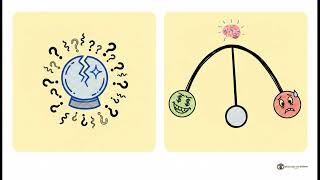
Why? because when the bubble ultimately bursts, capital preservation is the only thing that matters. And this brings us to a brilliant tension in his entire philosophy. On one hand, he'll be the first to tell you that modern markets are wildly unpredictable. There is no crystal ball. No one knows what happens tomorrow.
But on the other hand, he insists you can still master the cycle by understanding human psychology. You see, markets swing like a giant pendulum between greed and fear. You might not know exactly when the pendulum is going to swing back, but you can absolutely know where it is right now. How? Well, you look at practical indicators.
You watch for aggressive credit spreads. You observe IPO frenzies where companies with zero profits are heavily oversubscribed. And you look at whether lenders are just throwing cheap money at terrible ideas. When that's happening, the pendulum is at maximum greed. And that is your signal to prepare for the swing back.
Let's dive into part three. AI and modern markets adapting to the future. Now, you might be thinking, okay, an old school value investor, he probably ignores tech. No way. It is genuinely surprising to see a 78-year-old traditionalist famous for buying distressed industrial debt become laser focused on artificial intelligence.
There's this fascinating contrast right now between his deeply established roots and his intense recent focus on AI. He isn't writing it off as a fad. He's actively analyzing how AI is going to disrupt the very foundations of financial modeling, corporate efficiency, and global labor markets. In fact, in his recent, highly publicized appearances at the Wharton School and on Bloomberg TV, Markx made it absolutely clear.
Adapting to unpredictability means you have to evolve with new market forces. You simply cannot rely on the exact same playbook from 1985. A billionaire stays wealthy by remaining intellectually flexible. And his insight here is huge. He is rigorously studying how AI will inevitably make certain legacy business models completely obsolete overnight.
And think about what that means for a distressed asset firm like Oak Tree. Obsolescence means a massive new wave of corporate bankruptcies is coming. And within those bankruptcies lies an entirely new frontier of highly profitable distressed asset opportunities. He's already planning for the next cycle.
Finally, let's wrap this up with part four, golden lessons, time, timing, and ownership. First up is this. absolutely crucial concept he unpacked in a major Baron's interview. Ownership versus debt. The basic definitions are simple, but Markx highlights a deeper philosophy about risk and reward here.
When you take on debt, you are stripping away your staying power. Think about it. In a market downturn, debt triggers margin calls and forces you into bankruptcy before the market ever has a chance to recover. But when you hold equity, when you own a piece of a resilient business entirely in cash, you have the staying power to survive that extreme volatility.
Equity lets you ride out the absolute bottom of the cycle, keeping you in the game so you can actually participate in the limitless upside of human innovation when the recovery inevitably begins. And then there's this one rule he insists on above all others. Successful investing is about time, not timing.
Trying to perfectly time the absolute tops and absolute bottoms of the market is just a fool's errand. Even the billionaires can't do it perfectly, and trying to do so usually just leads to you missing out on the biggest days of the recovery. What actually generates generational wealth is buying highquality assets at reasonable prices and letting time do the heavy lifting through uninterrupted compounding.
So, let's bring it all together. If we were to hand you a super investor syllabus based on Howard Marks, it boils down to three non-negotiable steps. One, read the memos. Continually educate yourself using the exact same primary sources that Warren Buffett relies on. Two, avoid disaster. Protect your downside by understanding exactly where the pendulum is in the market cycle.
making sure you never get swept up in masquerade. And three, prioritize time in the market over timing the market. Give your investments the runway they actually need to compound. Which leaves us with a pretty critical reflection for your own financial journey as we navigate this deeply unpredictable modern economy full of AI disruptions and wild market cycles?
Are you stressing yourself out trying to rely on perfect daily timing? Or are you building a highly resilient portfolio that simply relies on time? Think about that for a second. Consider your own strategy as you evaluate your investments this week.
댓글 0